Episodios

  • Jillian Michaels vs Body Positivity: INTENSE Surrounded Debate Reaction
    Mar 30 2026

    Is body positivity actually helping people… or is it missing something important?

    In this video, I break down the Jubilee “Surrounded” debate featuring Jillian Michaels and 20 body positivity activists, looking at the claims, the arguments, and most importantly, the data behind them.

    We get into:
    • The difference between association and causation in obesity research
    • Mendelian randomization and what it actually tells us about risk
    • The “metabolically healthy obesity” debate and why definitions matter
    • Intuitive eating and whether hunger cues can be trusted
    • Hormonal changes like leptin resistance and ghrelin dysregulation
    • Weight bias in healthcare and what the data actually shows
    • The role of perception and interpretation in social interactions

    Coaching inquiries email me at randall@alwaysadaptive.com or visit alwaysadaptive.com

    Más Menos
    28 m
  • Is Zone 2 Training Overhyped?
    Mar 23 2026

    If you’ve been told that zone 2 cardio is the gold standard for health, fat loss, and performance… it’s time to take a closer look.

    In this video, I take a look at the current state of some evidence comparing zone 2 vs HIIT, looking at VO2 max improvements, mitochondrial adaptations, and fat loss outcomes.

    You’ll learn whether zone 2 training benefits are truly superior, or if higher intensity methods are a more time-efficient way to improve VO2 max and overall fitness.

    We also dive into one of the biggest questions in fitness right now:
    Does HIIT burn more fat than zone 2, or is low intensity cardio still the best approach for fat loss?

    Topics covered:

    • Zone 2 vs HIIT for VO2 max
    • Zone 2 cardio benefits vs higher intensity training
    • Best cardio for fat loss based on research
    • Mitochondrial adaptations and exercise intensity
    • Time efficiency and real world training application

    If you’re trying to figure out whether zone 2 cardio is necessary, or just want a smarter way to train, this will give you the full picture.

    Coaching inquiries email me at randall@alwaysadaptive.com or visit alwaysadaptive.com

    Más Menos
    28 m
  • Muscle Soreness or Damage Doesn't Equal Better Results
    Mar 9 2026

    For decades, lifters have been told that soreness is a sign of a great workout. The idea that “no pain no gain” means your muscles need to be damaged in order to grow has become one of the most common beliefs in fitness culture. But modern hypertrophy research paints a very different picture.

    In this video, I break down the relationship between muscle soreness, muscle damage, and hypertrophy. We examine whether or not you should be chasing muscle soreness or DOMS by damaging your muscles.

    If you're the type of person who gets mad at others for resting too long or are constantly critical of people for not training hard enough, then this video is for you.

    Coaching inquiries email me at randall@alwaysadaptive.com or visit alwaysadaptive.com

    Más Menos
    14 m
  • Big and Weak vs Small and Strong
    Mar 2 2026

    Does muscle size really predict strength?

    You’ve probably seen smaller powerlifters deadlifting insane weight while bigger bodybuilders struggle with less. So what’s actually going on?

    In this video, I review a couple clips from the great TNF and Coach Mundy.

    Being bigger increases your potential for strength. But strength expression depends on skill, motor learning, and how you train.

    I break it all down, so check it out and let me know what you think in the comments!

    Coaching inquiries email me at randall@alwaysadaptive.com or visit alwaysadaptive.com

    Más Menos
    20 m
  • Fascia Doesn't Work Like Functional Patterns Says
    Feb 23 2026

    You've probably heard claims about fascia release, myofascial release, and even specific fascia training methods that promise to unlock movement, reduce stiffness, and improve performance.

    But what do these terms actually mean and can fascia really be targeted the way many people suggest?

    In this video, we take a closer look at the growing conversation around fascia release exercises, modern movement culture, and the ideas popularized by systems like Functional Patterns.

    You will see how different training philosophies interpret connective tissue, why certain techniques feel effective, and where the discussion around fascia continues to evolve.

    Coaching inquiries email me at randall@alwaysadaptive.com or visit alwaysadaptive.com

    Más Menos
    29 m
  • Are BOSU Balls Bad for Muscle Growth and Strength?
    Feb 9 2026

    In this video, I’m responding to some comments that have piled up over the past 6 months about some BOSU ball comments I made.

    I break down some data behind BOSU ball training, instability exercises, force production, and why so many people misunderstand what this equipment actually does.

    BOSU balls were originally designed for balance training, proprioception, rehab, and fall prevention, not for building strength or muscle. Yet somehow, they became a staple in gyms during the early 2000s “functional training” boom.

    I walk through:

    • Why EMG data is often misinterpreted
    • How instability diverts neural drive away from large motor units
    • Why force production and rate of force development matter for strength, hypertrophy, and injury prevention
    • Why single-leg training on stable ground beats BOSU ball exercises for real-world stability

    If you’re thinking about adding a BOSU ball to your training regime, watch this video first.

    Coaching inquiries email me at randall@alwaysadaptive.com or visit alwaysadaptive.com

    Más Menos
    15 m
  • Heavy Strength Training SPANKS "Functional Training"... Here's Why
    Feb 2 2026

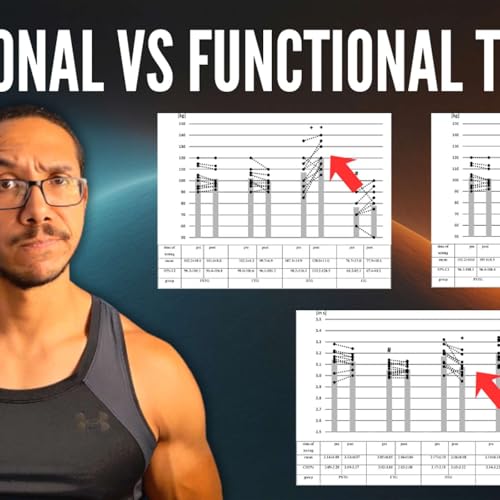
    In this video, I break down a 10 month lifting study that compared traditional strength training, plyometrics and sprint training, functional training, and a control group in trained athletes. The researchers tested squat strength, jump height, sprint speed, and change of direction to see which style of training actually improved athletic performance the most.

    The results weren’t even close.

    But as impressive as the findings were, the study also had some important flaws in how power training and functional training were designed and progressed. I walk you through the raw data, explain what the graphs really show, and break down why strength raises your performance ceiling while skill and explosiveness sit on top of that foundation.

    We also dive into concepts like GPP vs SPP, progressive overload, sample size issues, and why “functional” movement without meaningful load often isn’t enough to drive real adaptation.

    If you care about getting stronger, faster, and more athletic without falling for flashy fitness trends, this one’s for you.

    Ready to reset your training and nutrition with a clear, custom plan? Book your Always Adaptive Premium Program Audit Bundle here: https://calendly.com/alwaysadaptive/premium-program-audit

    Coaching inquiries email me at randall@alwaysadaptive.com or visit alwaysadaptive.com

    Más Menos
    15 m
  • Is Creatine ACTUALLY a Brain Boosting Supplement?
    Jan 27 2026

    Creatine is one of the most researched supplements in fitness, but its effects on brain health and cognition are often oversimplified.

    In this episode, I break down the actual human research on creatine and cognitive performance, separating the idea of “brain boosting” from what the data really show.

    We walk through randomized controlled trials examining creatine under sleep deprivation, hypoxia, mental fatigue, aging populations, and healthy young adults, looking closely at where benefits appear, where they don’t, and why the effects seem to be task-specific and stress-dependent rather than universal.

    I also share my own personal experimentation with higher-dose creatine during periods of poor sleep and how it’s affected my cognition, mood, and training performance.

    The goal isn’t hype or dismissal, but an honest look at where creatine may help, where it likely doesn’t, and why individual response matters.

    If you’ve heard claims that creatine “boosts the brain” or that it does nothing at all, this episode lays out the full evidence-based picture.

    Coaching inquiries email me at randall@alwaysadaptive.com or visit alwaysadaptive.com

    Más Menos
    16 m