

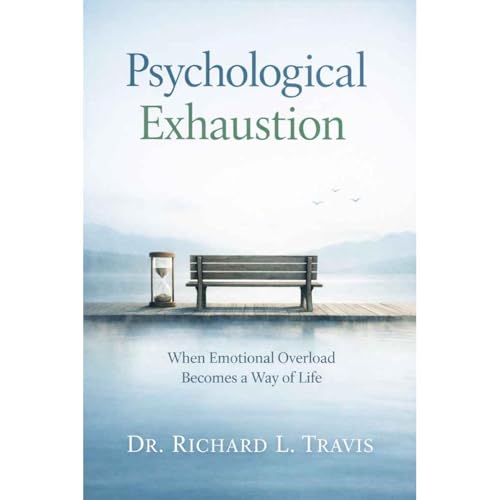
Psychological Exhaustion
When Stress, Overthinking, and Emotional Burnout Take Over—and How to Recover
No se pudo agregar al carrito
Solo puedes tener X títulos en el carrito para realizar el pago.
Add to Cart failed.
Por favor prueba de nuevo más tarde
Error al Agregar a Lista de Deseos.
Por favor prueba de nuevo más tarde
Error al eliminar de la lista de deseos.
Por favor prueba de nuevo más tarde
Error al añadir a tu biblioteca
Por favor intenta de nuevo
Error al seguir el podcast
Intenta nuevamente
Error al dejar de seguir el podcast
Intenta nuevamente
Prueba gratis de 30 días de Audible Standard
Selecciona 1 audiolibro al mes de nuestra colección completa de más de 1 millón de títulos.
Es tuyo mientras seas miembro.
Obtén acceso ilimitado a los podcasts con mayor demanda.
Plan Standard se renueva automáticamente por $8.99 al mes después de 30 días. Cancela en cualquier momento.

Psychological Exhaustion
Narrado por:
Virtual Voice
Compra ahora por $3.99
-
Narrado por:
-
Virtual Voice

Este título utiliza narración de voz virtual
Voz Virtual es una narración generada por computadora para audiolibros..
It is not depression.
And it cannot be fixed by self-care alone.
Many people today feel depleted in a way rest doesn’t touch. They are still functioning, still caring, still showing up — but something inside feels worn down, narrowed, or quietly disengaged. Motivation fades. Tolerance drops. Joy feels distant. The future feels heavier than it once did.
This book names what many people are experiencing but struggle to describe.
Drawing on decades of clinical insight, Dr. Richard L. Travis explores the hidden cost of prolonged adaptation, emotional overload, political and cultural instability, and constant readiness. He explains why capable, responsible people are often the most affected — and why familiar strategies like pushing through, positive thinking, or surface-level self-care often fail.
This is not a book about fixing yourself.
It is a book about understanding what prolonged strain does to the nervous system, why exhaustion becomes psychological rather than situational, and how recovery begins not with effort, but with restoration.
Inside, you’ll discover:
• Why psychological exhaustion is different from burnout or depression
• How constant vigilance and emotional absorption quietly drain capacity
• Why motivation disappears and decision-making becomes overwhelming
• How pushing through deepens exhaustion rather than resolving it
• What true restoration looks like — and how to live without constant endurance
Written with warmth, clarity, and deep respect for the reader, Psychological Exhaustion offers language, insight, and permission — permission to slow down, to reduce load, and to build a life that no longer requires constant internal strain.
You are not broken.
You are overextended.
And recovery is possible.
Todavía no hay opiniones