

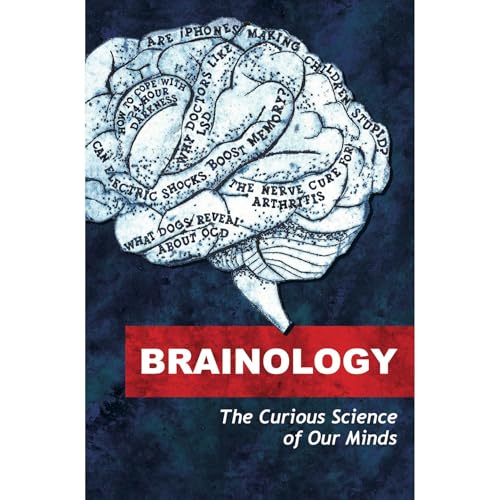
Brainology
The Curious Science of Our Minds
No se pudo agregar al carrito
Add to Cart failed.
Error al Agregar a Lista de Deseos.
Error al eliminar de la lista de deseos.
Error al añadir a tu biblioteca
Error al seguir el podcast
Error al dejar de seguir el podcast
Prueba gratis de 30 días de Audible Standard

Brainology
Compra ahora por $8.99
-
Narrado por:
-
Virtual Voice

Este título utiliza narración de voz virtual
Why can pain feel unbearable even when tests show “nothing wrong”? How can a simple mirror calm phantom limb pain? What does neuroscience reveal about the interpreter’s brain when thoughts become speech in real time? Why do dark winters affect mood and sleep for some people but not others? Are smartphones and screen time really rewiring children’s brains — or are we worrying about the wrong things?
Created from trusted long‑form stories first published by Mosaic Science (from Wellcome) and gathered by Canbury Press, Brainology blends neuroscience, cognitive science, psychology, psychiatry, neurology and medicine into 16 unforgettable chapters. You’ll move from clinics to labs, from rehabilitation centres to emerging tech, meeting patients, researchers, parents, translators, soldiers and doctors — and seeing what the evidence says about how minds and brains really work.
In this book you’ll explore:
• Acute pain and chronic pain, the brain’s prediction systems, and why “ouch” is more than a signal from the body
• Psychedelic therapy and the return of LSD, MDMA (ecstasy) and psilocybin research—plus what carefully controlled studies suggest for PTSD, depression, anxiety, addiction and trauma
• Seasonal affective disorder (SAD), circadian rhythms, melatonin and blue‑light pathways that link the eye to mood and sleep
• Language, bilingualism and simultaneous interpreting: cognition under pressure, meaning, intent and the networked brain (including the caudate nucleus)
• Parenting, child development and the truth behind screen‑time panic: learning, attention and stress
• The placebo and nocebo effect, conditioning, and how the brain can learn to “receive” medicine, shaping symptoms and even immune responses
• Deep grief, prolonged grief and complicated grief therapy (CGT), including cognitive behavioural therapy (cognitive behavioural therapy, CBT) and exposure techniques
• Mirror therapy, neuroplasticity and body maps in the cortex—how the brain can generate sensations (and pain) from a missing limb
• The myths and realities of neuroplasticity, personality change and self‑transformation—what science can (and can’t) promise
• Childhood adversity, resilience research and what it takes to survive a troubled childhood and still thrive as an adult
• Obsessive‑compulsive disorder (OCD) and compulsive behaviour, from tail‑chasing dogs to serotonin and glutamate pathways in the human brain
• Autoimmune disease, inflammation and arthritis through a radical mind‑body connection: treating the immune system via the nervous system and bioelectronic approaches such as nerve stimulation
• Virtual reality (VR) for pain relief, opioids, and the search for non‑addictive tools that can quiet suffering and reduce dependence
• Homesickness, identity, belonging and the psychology of leaving home in the 21st century
• Brain‑tumour surgery tools, “tumour paint,” MRI/PET imaging, and the quest to light up cancer cells so surgeons can see what to remove—and what to save
• Neurotechnology, DARPA, tDCS brain stimulation, cognitive enhancement and the ethics of “supercharging” attention, learning and performance
Whether you’re looking for an accessible neuroscience book for beginners, a psychology book that’s actually readable, or a fascinating mind and brain book to spark conversations, Brainology delivers. It’s also a smart gift for students, therapists, healthcare workers and science lovers. Perfect for readers of brain science, mental health, and medical mystery nonfiction.
Scroll up and grab your copy — then get ready to see your own thoughts, emotions and behaviours with fresh eyes.
Note: This book is designed to inform and entertain; it is not medical advice.
Las personas que vieron esto también vieron:

