Women of the Bible in Context: Her God, Her Story, Her Voice Podcast Por Jessica LM Jenkins | We Who Thirst arte de portada

Women of the Bible in Context: Her God, Her Story, Her Voice

Women of the Bible in Context: Her God, Her Story, Her Voice

De: Jessica LM Jenkins | We Who Thirst
Escúchala gratis

Rediscovering women of the Bible at the intersection of trauma, ancient historical context, and Biblical languages with Jessica LM Jenkins of We Who Thirst.

................................................

For a complete bibliography for each episode visit: https://rb.gy/xx0no6

If you'd like to support research into women of the Bible in their historical context, join my Patreon: www.patreon.com/wewhothirst

© 2025 Jessica LM Jenkins | We Who Thirst
Cristianismo Desarrollo Personal Espiritualidad Ministerio y Evangelismo Mundial Éxito Personal
Episodios
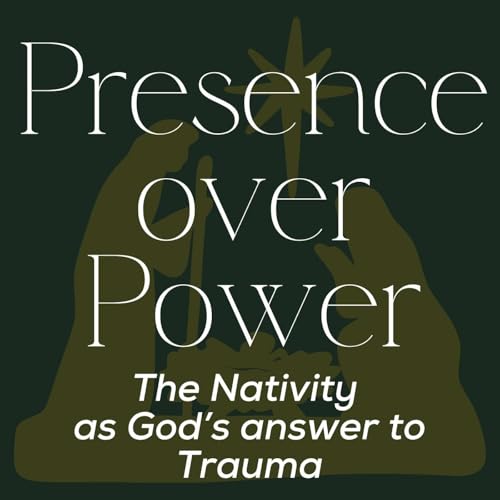
  • 031 Presence Over Power: The Nativity As God’s Answer To Trauma
    Dec 16 2025

    Send us a text

    Advent isn’t a glossy postcard here; it’s a story told under the stare of a fortress and the echo of marching boots. We open the Nativity in the time of Herod and Rome, where fear, taxes, and crushed revolts shape daily life—and where lament becomes a holy practice of agreeing with God that the world is not as it should be. From Zechariah’s once‑in‑a‑lifetime temple moment to Mary’s dangerous “yes” in Galilee, we follow the threads of personal shame, public pressure, and prophetic hope that converge on a peasant birth with cosmic consequences.

    Zechariah hears that John will prepare a people, turning hearts when loyalty is fractured. Mary sings the Magnificat, announcing a great reversal that lifts the humble and disorients the proud. Joseph learns that salvation addresses corporate sin and covenant faithfulness, not just private faults. Shepherds receive a proclamation guarded by a heavenly host—an army announcing peace not enforced by empire, but born in God’s favor. In the temple, Simeon and Anna name the child as light for the Gentiles and glory for Israel, while warning that the path of redemption will pass through suffering.

    When Magi honor the newborn king, Herod’s rage explodes, and the family flees as refugees to Egypt. The trauma doesn’t stop after the manger; it molds Jesus’ childhood in Nazareth, surrounded by unrest and stories of revolt. And yet, when he speaks as a man, he refuses the lever of power. Presence, not power, defines his kingdom. Bread for the hungry, healing for the sick, dignity for the lowly—this is how God answers lament. Christmas, then, is God with us in the thick of it, holding our hands through grief while moving history toward renewal.

    If this season feels heavy, you’re not outside the story—you’re inside its very heart. Listen, share with someone who needs steady hope, and leave a review to help others find this conversation.

    For more nativity episodes, be sure to catch:

    • 013 Historical Context of the Nativity: Part 1
    • 014 Historical Context of the Nativity: Part 2
    • 020 Boy Jesus in Trauma's Shadow (Interview with Joan Taylor)

    Support the show

    ...................
    Follow We Who Thirst on Instagram, Threads, or YouTube!

    To join Jessica LM Jenkins' mailing list, or access the full research bibliography for this episode visit www.wewhothirst.com/links .

    Thank you for supporting the Women of the Bible in Context podcast, your contributions make this ministry possible!


    Más Menos
    58 m
  • 030 Bathsheba, Power, And A Better Hermeneutic - Interview with Liz Daye
    Dec 3 2025

    Send us a text

    Bathsheba’s story has been trimmed into a tidy cautionary tale for far too long. We open the text back up with hospital chaplain and theologian Liz Day to confront the real dynamics at work: power, consent, silence, and the cost borne by survivors when churches protect kings and blame women. Starting with how Bathsheba is framed from pulpits and commentaries, we unpack the myths—like “lust made him do it”—and trace how Scripture itself reads the moment through Torah ethics and Nathan’s parable, where the stolen lamb mirrors the life-altering harm Bathsheba endures.

    Together, we ask better hermeneutical questions: Where is God in this text? What is God like? We notice God’s refusal to endorse abuse, God’s prophet confronting a king, and Scripture’s pattern of letting survivors like Tamar speak. We challenge the popular use of Psalm 51 as a shortcut back to platform, naming why confession without justice, repair, and power relinquished is not repentance. From there, we move into practice: how to become trauma-informed communities that believe disclosures, make space for lament, and choose presence over platitudes. We talk about sharing power, setting real limits on leadership, empowering survivors, and reshaping discipleship at the grassroots so children learn a truer story—one where righteousness and justice belong together.

    If you’ve wrestled with David and Bathsheba, sensed a disconnect in how the story is preached, or wondered how churches can genuinely be safe for the wounded, this conversation offers language, tools, and hope. Listen, share with a friend who needs it, and then tell us: what one change would make your community safer for survivors? Subscribe, leave a review, and keep the conversation going.

    Get the PDF download: “Evidence That Bathsheba’s Story Is Rape, Not Adultery.” Link in the episode description and on our website

    Support the show

    ...................
    Follow We Who Thirst on Instagram, Threads, or YouTube!

    To join Jessica LM Jenkins' mailing list, or access the full research bibliography for this episode visit www.wewhothirst.com/links .

    Thank you for supporting the Women of the Bible in Context podcast, your contributions make this ministry possible!


    Más Menos
    59 m
  • 029 Bathsheba: Her story is not adultery but abuse
    Nov 19 2025

    Send us a text

    (TW: Rape, sexual assault, abuse of power, murder)

    Start with the text, and the story starts to sound very different. We walk through 2 Samuel 11–12 line by line and confront the hard truth: Bathsheba was not a seductress or a co-conspirator; she was a woman overpowered by a king who chose to abuse his authority. From ancient bathing practices to royal protocol, we dismantle common myths and show how the power gap makes consent impossible. The Hebrew details matter, and so does the narrative’s moral center: what David did was evil in the eyes of the Lord.

    We explore how Deuteronomy’s city-and-field framework helps modern readers understand rescue, consent, and why Bathsheba had no defender within the palace. Then we trace David’s escalating choices—coverup attempts, manipulation, and the engineered death of Uriah that cost other soldiers their lives. Nathan’s parable reframes everything: the rich man steals the poor man’s lamb, and God links this theft to a kind of murder. That biblical image is a trauma-informed insight long before we had the term, revealing how sexual assault destroys something vital in a person’s life.

    Yet the chapter also carries a thread of hope. After judgment and grief, Bathsheba bears Solomon, and God names him Jedidiah—beloved of the Lord. In a world where a woman’s future rests in her children, that name becomes a promise to her that she is seen and her child is cherished. Our goal is to give listeners a clear, faithful reading that centers survivors, names abuse without euphemism, and honors God’s justice and mercy.

    If this episode helped you see Bathsheba’s story with fresh clarity, share it with a friend, subscribe for the next part of our mini-series with Liz Day, and leave a review to help others find the show. Your reflections and questions shape where we go next.

    Get the PDF download: “Evidence That Bathsheba’s Story Is Rape, Not Adultery.” Link in the episode description and on our website

    Support the show

    ...................
    Follow We Who Thirst on Instagram, Threads, or YouTube!

    To join Jessica LM Jenkins' mailing list, or access the full research bibliography for this episode visit www.wewhothirst.com/links .

    Thank you for supporting the Women of the Bible in Context podcast, your contributions make this ministry possible!


    Más Menos
    1 h y 6 m
Todavía no hay opiniones