Episodios

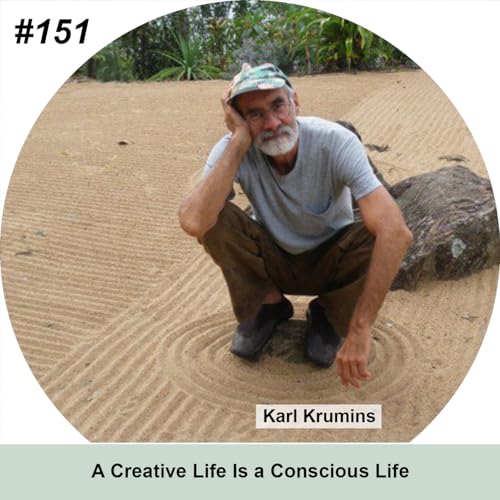
  • A Creative Life Is a Conscious Life (Karl Krumins)
    Apr 9 2026

    Creativity is going into the unknown with intention. Two “wings” of creativity are passion and play. Some people have titles for their role in creating, such as painter, writer, sculptor. Art connects us to who we really are; it’s an expression of our essence. Creativity is a purpose of the universe. It isn’t a luxury; it’s a primary function of consciousness itself. The big picture is that our life is art. We can develop our own uniqueness so the divine power can express itself in an original way. Working with resistance may be the best way to open to the human impulse to be creative. When we are fully absorbed and engaged, we produce refined energies that the universe needs. Creativity is a kind of prayer. The main payoffs of creativity are our transformation and the benefit to the universe. The tangible result of creativity that is produced is icing on the cake. Art is one of the first things to be censored or banned in totalitarian regimes. Creative people draw outside the lines, and society is all about staying within the lines. Beginner’s mind sees beauty, but it’s hard for professional artists to keep beginner’s mind. Objective art or aesthetic is hard to define but easy to get across through music, theater, painting and other art forms to viewers who are able to see it. Art can objectify the shadow and help us to face ourselves and the healing needed. Ways of bringing creativity into everyday life, such as in mothering, are discussed. Various forms of art are considered including painting and graffiti, architecture and cathedrals, and land art. Framing is also a way of creating beauty in art and in life. How we use our consciousness, where we put our attention—which is all we have—is the ultimate creative act. Karl Krumins has been a spiritual practitioner for forty years. He lived in India for seven years and has a passion for considering the essential similarities of spiritual traditions.

    Más Menos
    55 m
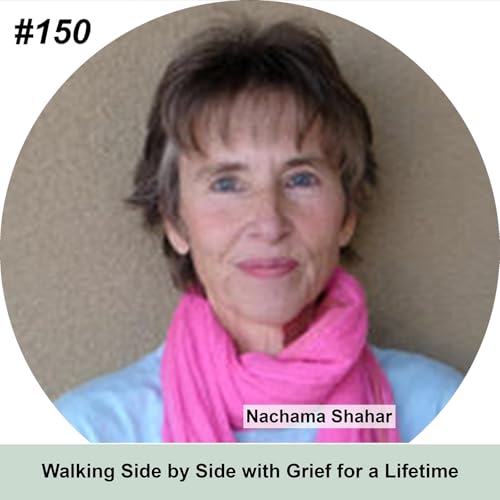
  • Walking Side by Side with Grief for a Lifetime (Nachama Shahar)
    Mar 26 2026

    We move through cycles of death and rebirth through the entirety of our lives. Walking side by side with grief doesn’t mean being condemned to a life without joy; it is to live with the bittersweet truth of impermanence. Depression can arise due to unexpressed, undigested grief. It is a holy time when things decay and break down. Sorrow is part of the Earth’s great cycles. It can connect us to the current of life and the source of comfort and solace. Somatic trauma work can put us in touch with grief that has been held in the body for many years. It is common in spiritual circles for dharma to be used as a shield to overlay grief. Francis Weller identified five gates of grief that can expand understanding of it. These are losing someone we love, places in ourselves that have not known love, sorrows of the world, what we expected but did not receive, and ancestral grief. It’s a holy thing to love what death can touch. We tend to avoid grief, but it puts us in contact with such deep feeling. When we grieve, we praise the one we loved and allow love to touch the core of our being. We can welcome back parts of ourselves we have dismissed. The “remedy” for grief is to feel it and allow it to move through us. Grief is always there because impermanence is always there. It opens us like nothing else. It can be a doorway to the embodied realization of our true nature, to seeing that we are inseparable from the universe and connected to the circuitry of love that flows through everything. Grief has a shattering quality which takes us beyond what we think we can handle and breaks down the reality we thought we knew. It can catapult us into the unitive state and awaken us to boundless love without conditions. Nachama Shahar (formerly Nachama Greenwald) is a physical therapist, editor, and musician who for 17 years was a member of the Shri blues band which performed Western Baul music.

    Más Menos
    1 h y 10 m
  • Accessing Sources of Spiritual Inspiration (VJ Fedorschak)
    Mar 12 2026

    What’s seen as inspiring in the world are ego’s triumphs. But there’s another kind of inspiration we can feel when we hear about people who give themselves for others. We can also be inspired by those who exhibit essential qualities on the spiritual path. We innately feel an urge to embody qualities that feed a higher purpose. We can work to develop a “Work I” by observing ourselves and not letting lower qualities rule. This part of ourselves can arise out of conscience and be strengthened by practice. Inspirational stories are impression food that can enliven essential qualities that are in all of us. Whether any story is factually true in all of its details isn’t the point. Stories are told about forgiveness, generosity, service, and the importance of working with childish parts of ourselves. There is discussion of inspiring circumstances including the request the Dalai Lama made to never to speak badly about the Chinese after the brutal takeover of Tibet; Garchen Rinpoche’s training to generate loving kindness in a way that seemed impossible when he was young; the Zen master Hakuin’s lack of concern for reputation; Orage’s response to strong criticism by the enigmatic mystic Gurdjieff; the need for the character Siddhartha in Hesse’s book to experience ordinary life in order to spiritually develop; the courage of Meher Baba’s disciples to leave their lives behind in deciding to follow their master on the New Life; the all-consuming love in the Sufi tale of Layla and Majnun; the commitment of Gandhi to Hindu-Moslem unity which he demonstrated by fasting; the wandering of Swami Ramdas who viewed everything as divine after his realization; and the magical events that occurred in the relationship of Yogi Ramsuratkumar and Lee Lozowick. VJ Fedorschak is the organizer of the Western Baul Podcast Series and author of The Shadow on the Path and Father and Son.

    Más Menos
    1 h y 4 m
  • Halfway Up the Mountain: 25 Years Later (Mariana Caplan)
    Feb 26 2026

    A teacher's relationship to power can create a lot of difficulty. Just because a teacher has a profound spiritual awakening does not mean he or she is psychologically mature or integrated or has knowledge about everything. Even with a problematic spiritual teacher, students still find their way. There are common threads of things that go wrong even in spiritual groups free of corruption or scandals. Enlightenment may not be a useful notion in our time. If there is no goal to reach, we are OK, undefined in relationship to that, and do not have to evaluate or project. The Indian psyche is radically different than the Western psyche. Trauma may open us to a need for something much greater. Psychiatric medication if needed and well used can support growth. The guru model as it has been imported and used has been problematic in the West. Abdicating responsibility to another can be a huge trap, as can an inner circle phenomenon of favorites and not favorites. Teachers can burn out students who have endless willingness to volunteer. Crazy wisdom has been an excuse for abuse. Psychedelics may have a role for some people for a period of time, but they are potentially dangerous. Spiritual bypassing is when spiritual ideas are used to avoid psychological work and developmental tasks. Trust in inner wisdom is often not taught by spiritual teachers. A teacher’s blind spot can be reflected in those around him. Life humbles and softens us over time. Systems of feedback can be useful for teachers, but many do not avail themselves of it. Listening to teachers is a very complex issue. Issues that can be problematic for teachers to get involved in with students are considered. Mariana Caplan, PhD, is a psychotherapist, consultant, and author of nine books in the fields of psychology and spirituality, including a forthcoming book about the global mental health crisis (https://marianacaplan.com).

    Más Menos
    1 h y 8 m
  • Gurdjieff's Aphorisms 3: The Nature of the Path (Carl Grimsman)
    Feb 12 2026

    Seven of the aphorisms of Gurdjieff are considered in this third talk on the subject. Teaching refers to the ideas we draw from, while the path is our individual road. No two paths are the same, even when they emanate from a common source. The Fourth Way, which the Gurdjieff Work has been called, refers to the premise that we are three-centered beings. The work of the fakir focuses on mastery of the body or moving center, the monk on mastery of the heart or emotional center, and the yogi on mastery of the mind or intellectual center. Each way only encompasses part of the process. The Fourth Way develops all three centers in tandem. We all need cosmology, which describes the structure of the universe. Most traditions are mixes, but we are wise to take care in mixing elements of various teachings before having stabilized on our path. Reasons for finding a path may be different for each of us. Conditions can be fostered for spiritual development, but actual help comes from God. Three practices are discussed: simplicity, super efforts, and working with impressions. We have enough energy to work on ourselves; we only need to save the greater part of what we have. Through experiences calling for extra effort, we open to new levels of being. Only super efforts count. We can hardly advance in our comfort zone. Taking in impressions means taking in the energy that comes with them. An overview of faith, hope, and love from Beelzebub’s Tales is discussed. Self-healing is separate from teaching and yet is a necessary component of the path. Carl Grimsman was born into the Gurdjieff Work environment of the early years of the New York Foundation, attended the children’s group there, and later worked with Mrs. March, a direct Gurdjieff student, at East Hill Farm. The first two books in his “The Soul’s Traverse” series are Sun Bridge and The Kindling.

    Más Menos
    1 h y 7 m
  • Rhythm, Ritual & Reverie (Mary Angelon Young)
    Jan 29 2026

    Rhythm, ritual and reverie are interconnected. They are interwoven in a way that has invoked an experience of the sacred as long as humans have been around. Rhythm gives birth to cycles of becoming and ending. We can align ourselves to existence by paying attention to life's rhythms, which bring us to feel our connection and place in the weave of everything. In ordinary life, rhythm shows up in our routines. These can become portals, sacred doorways which help us to ground and self-regulate. Having a conscious relationship to fluid and creative routines is different than having a collection of mechanical habits that buffer us from reality. Awareness of our state is healing in itself. Ancient people answered big questions of life through communal ritual. The winter solstice is a threshold moment in the rhythm of the year. In times of craziness that come from woundedness, routine and ritual can make a difference. Little practical things can be anchored and ritualized. Rituals are a way we can invoke divine help. When we ask for help, it’s the beginning of laying our burdens down. What burdens do we carry that are not ours to carry? What burdens are we meant to carry? Sometimes we must turn our burdens over to a power that is greater than us. There are three levels of symbols: practical, metaphorical and universal. Sometimes we carry each other when a burden is very great. Through presence we can experience wonder and awe, and court the possibility of reverie. In reverie, we lay our burdens down, open a doorway to revelation, and attune to our deepest Self without effort. Mary Angelon Young is a workshop leader with a background in Jungian psychology, an editor, and author of As It Is, Under the Punnai Tree, The Baul Tradition, Caught in the Beloved’s Petticoats, Enlightened Duality (with Lee Lozowick), The Art of Contemplation, and other books. If you are interested in more on this topic by Mary, visit hohmsahajmandir.org and click on the Sahaja blog.

    Más Menos
    1 h y 6 m
  • Union (Lama Barbara DuBois)
    Jan 15 2026

    A look into the union of the Two Truths, absolute and relative: the two that are not two. How all appearances and phenomena and all beings are this union, in every instant. How mind of separation, dualistic consciousness, arises with the erroneous conceptualization of “self” or “selfness” in anything, including us…and how this is continuously generating samsara, the realms of wandering in suffering. How any fixation, identity formation and clinging, reactivity, defensiveness, or even slight tension is a sign and signal of this “self”-grasping. And how all of this is suffering—created by mind of separation. How our spiritual work is to love all and to know directly the true nature of being. There is no separation. Lama Barbara Du Bois, PhD, is a longtime teacher in the Tibetan wisdom stream of Buddhdharma, working with students in the United States and Europe. She has for many years been serving as Lopön (Master Dharma Teacher) for the Garchen Buddhist Institute, Western seat of His Eminence Garchen Rinpoche. She is known for her wisdom, clarity, joy, and humor—and for her fierce and tender love. Lama Barbara is the author of Light Years: A Spiritual Memoir; Brave, Generous, & Undefended: Heart Teachings on the 37 Bodhisattva Practices; and Original Innocence (forthcoming).

    Más Menos
    1 h y 30 m
  • Eating Impressions: Staying Put in Your Vibratory Atmosphere (Red Hawk)
    Jan 1 2026

    Most postures are mechanical and are unconsciously accompanied by a mood, which invokes attitude. The Divine feeds on a very fine vibratory energy or food. The Work teaches that there are three being-foods: physical food, air, and impressions. Everything in the world is an energetic configuration vibrating at a certain rate. The lower the vibration the more the appearance of solidity. It is possible to extract finer elements from air, a refined food called prana. Impressions are all energetic phenomena that the senses pick up. When taken in consciously, they serve a crucial function that allows the body to begin the work of creating a higher being-body. The Work teaches that Earth is a school for incomplete beings. We can verify that we are incomplete if we practice self-observation and see that we can’t remember ourselves and drift in and out of consciousness constantly. Gurdjieff wrote about five being-obligations, such as the conscious striving to know more about the laws of creation and world maintenance. The law of reciprocal maintenance is that we are fed and we feed. We are fed by God, and we can feed the Divine with our work on ourselves. Another being-obligation is the striving to pay for our arising and individuality. We pay through intentional suffering. When we see that the ego structure resists manifesting love of God, we begin to consciously suffer and conscience begins to awaken. Change of heart is the only true change. The body is a transformational instrument and everything is food. If we know how to digest, we can find nourishment in everything. We can work up to and through the point of death. Real freedom is freedom from identification. Red Hawk is an acclaimed poet and the author of 13 books, including Self Observation, Self Remembering, The Way of the Wise Woman, Return to the Mother, and Book of Lamentations.

    Más Menos
    1 h y 10 m