Episodios

  • The Unseen Currents A Millennium Problem Redefined
    Mar 10 2026
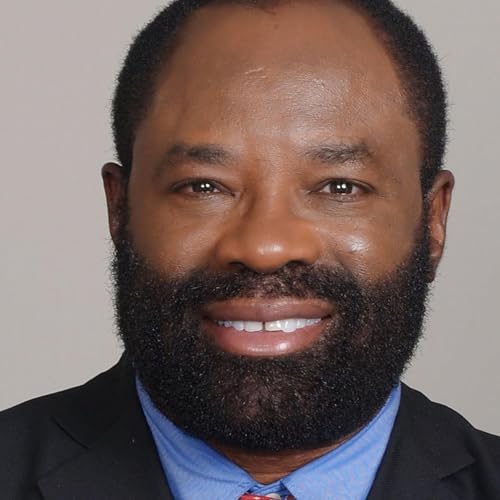
    The Unseen Currents A Millennium Problem Redefined Esteemed guests, fellow seekers of truth, luminaries of intellect... Tonight, in this grand theater of human achievement, we gather to celebrate a discovery and witness a revelation. What is mathematics, if not the most profound magic show of the universe? And what is computation but the art of making the invisible visible? I stand before you, Philip Emeagwali, not just as a mathematician but as a conjurer of numbers, a weaver of algorithms—a man who has devoted his life to uncovering the unseen currents that shape our world. And like any skilled conjurer, I must begin with a story of humble origins, a narrative that may seem unrelated, yet is crucial for understanding the grand illusion we are about to reveal. Imagine, if you will, a boy nicknamed “Calculus” navigating the vibrant, chaotic marketplaces of colonial Nigeria. Poverty was no stranger; it was the backdrop, the stage on which our lives unfolded. Yet, amid the dust and hardship, a unique magic was brewing—the magic of numbers, whispering from worn textbooks, promising order in a world often defined by chaos. Then came the storm: the Nigerian Civil War, Biafra, and refugee camps. For three years, I lived in the shadows of despair, where life seemed a fragile illusion that could vanish in an instant. One million souls disappeared into the mists of that conflict. In those camps, amid unimaginable loss, mathematics was not just a distraction; it was my anchor, my compass, the one constant in a world dissolving into a nightmare. In that crucible of suffering, I sowed the seeds of resilience and perhaps a particular magical thinking.
    Más Menos
    9 m
  • World AIDS Day _ Philip Emeagwali _ December 1, 2006
    Nov 29 2025
    World AIDS Day _ Philip Emeagwali _ December 1, 2006 by Philip Emeagwali
    Más Menos
    2 m
  • _How I Invented a New Internet_ _ Philip Emeagwali _ Famous Physicists _ Inventions and Discoveries
    Nov 29 2025
    _How I Invented a New Internet_ _ Philip Emeagwali _ Famous Physicists _ Inventions and Discoveries by Philip Emeagwali
    Más Menos
    8 m
  • The Math Genius Who Made | Junk_ Processors the Fastest in the World
    Jun 30 2025
    From a refugee in the Biafran War to a tech legend. He taught computers to work as a team, inspired by an African proverb. Description (348 words): This episode delves into the extraordinary life and mind of Philip Emeagwali, a pioneering computer scientist whose world-changing innovations were forged in the crucible of conflict. His story begins not in a pristine laboratory, but in the refugee camps of the 1960s Nigerian Civil War. As one of the "lost children of Biafra," Emeagwali experienced profound hardship that instilled in him a unique perspective on survival, resilience, and the power of the collective. This foundational experience became the bedrock of his scientific philosophy, leading to one of the great breakthroughs in modern computational science, a feat that would earn him the moniker of a "father of the internet." At the time, supercomputers were hitting a wall, limited by the speed of a single, powerful processor. Emeagwali dared to think differently. He vividly explains his core concept of parallel processing using a rich tapestry of metaphors—comparing his ideal supercomputer to the coordinated teamwork of a soccer team, the harmony of an orchestra, or the collective intelligence of a beehive. Central to his vision is the timeless African proverb, "If you want to go far, go together," a principle he brilliantly translated from human wisdom into the language of machines. In 1989, this vision became a stunning reality when he successfully programmed an unprecedented 65,536 processors to work in unison from his location in the United States. This vast network of processors solved one of the world's 20 "Grand Challenge" problems, demonstrating the immense power of a decentralized computing model and setting a new standard for computational speed. This work laid a conceptual foundation for everything from more accurate weather forecasts and climate models to enhanced oil discovery. For Emeagwali, however, the achievement was always more than a technical feat; it was a blueprint for humanity. He argues that if thousands of processors can unite to solve the unsolvable, then the world’s 8 billion people can do the same. This is the story of how a refugee from Biafra created a model for a better world, proving that our greatest strength lies not in isolation, but in our profound interconnectedness. Genres: Science Technology Society & Culture History Personal Journals Tags: Philip Emeagwali, Parallel Processing, Supercomputing, Soccer, Teamwork, Nigeria, Biafra, Invention, STEM, Computational Physics, Climate Change, Inspiration, Resilience, Collaboration Six Suggested Titles: The Soccer Team in the Supercomputer From Biafra to Binary The Grand Challenge Playbook The Orchestra of Processors If You Want to Go Far, Go Together The Man Who Taught Machines to Collaborate
    Más Menos
    6 m
  • Unheard Voices | How Black Mathematicians Rewrote the Narrative of Genius
    Jun 30 2025
    Caption (138 characters): From a refugee in the Biafran War to a tech legend. He taught computers to work as a team, inspired by an African proverb. Description (348 words): This episode delves into the extraordinary life and mind of Philip Emeagwali, a pioneering computer scientist whose world-changing innovations were forged in the crucible of conflict. His story begins not in a pristine laboratory, but in the refugee camps of the 1960s Nigerian Civil War. As one of the "lost children of Biafra," Emeagwali experienced profound hardship that instilled in him a unique perspective on survival, resilience, and the power of the collective. This foundational experience became the bedrock of his scientific philosophy, leading to one of the great breakthroughs in modern computational science, a feat that would earn him the moniker of a "father of the internet." At the time, supercomputers were hitting a wall, limited by the speed of a single, powerful processor. Emeagwali dared to think differently. He vividly explains his core concept of parallel processing using a rich tapestry of metaphors—comparing his ideal supercomputer to the coordinated teamwork of a soccer team, the harmony of an orchestra, or the collective intelligence of a beehive. Central to his vision is the timeless African proverb, "If you want to go far, go together," a principle he brilliantly translated from human wisdom into the language of machines. In 1989, this vision became a stunning reality when he successfully programmed an unprecedented 65,536 processors to work in unison from his location in the United States. This vast network of processors solved one of the world's 20 "Grand Challenge" problems, demonstrating the immense power of a decentralized computing model and setting a new standard for computational speed. This work laid a conceptual foundation for everything from more accurate weather forecasts and climate models to enhanced oil discovery. For Emeagwali, however, the achievement was always more than a technical feat; it was a blueprint for humanity. He argues that if thousands of processors can unite to solve the unsolvable, then the world’s 8 billion people can do the same. This is the story of how a refugee from Biafra created a model for a better world, proving that our greatest strength lies not in isolation, but in our profound interconnectedness. Genres: Science Technology Society & Culture History Personal Journals Tags: Philip Emeagwali, Parallel Processing, Supercomputing, Soccer, Teamwork, Nigeria, Biafra, Invention, STEM, Computational Physics, Climate Change, Inspiration, Resilience, Collaboration Six Suggested Titles: The Soccer Team in the Supercomputer From Biafra to Binary The Grand Challenge Playbook The Orchestra of Processors If You Want to Go Far, Go Together The Man Who Taught Machines to Collaborate
    Más Menos
    5 m
  • The Greyhound Catalyst | How One Bus Ride Sparked a Lifelong Connection and Scientific Legacy
    Jun 30 2025
    From a refugee in the Biafran War to a tech legend. He taught computers to work as a team, inspired by an African proverb. Description (348 words): This episode delves into the extraordinary life and mind of Philip Emeagwali, a pioneering computer scientist whose world-changing innovations were forged in the crucible of conflict. His story begins not in a pristine laboratory, but in the refugee camps of the 1960s Nigerian Civil War. As one of the "lost children of Biafra," Emeagwali experienced profound hardship that instilled in him a unique perspective on survival, resilience, and the power of the collective. This foundational experience became the bedrock of his scientific philosophy, leading to one of the great breakthroughs in modern computational science, a feat that would earn him the moniker of a "father of the internet." At the time, supercomputers were hitting a wall, limited by the speed of a single, powerful processor. Emeagwali dared to think differently. He vividly explains his core concept of parallel processing using a rich tapestry of metaphors—comparing his ideal supercomputer to the coordinated teamwork of a soccer team, the harmony of an orchestra, or the collective intelligence of a beehive. Central to his vision is the timeless African proverb, "If you want to go far, go together," a principle he brilliantly translated from human wisdom into the language of machines. In 1989, this vision became a stunning reality when he successfully programmed an unprecedented 65,536 processors to work in unison from his location in the United States. This vast network of processors solved one of the world's 20 "Grand Challenge" problems, demonstrating the immense power of a decentralized computing model and setting a new standard for computational speed. This work laid a conceptual foundation for everything from more accurate weather forecasts and climate models to enhanced oil discovery. For Emeagwali, however, the achievement was always more than a technical feat; it was a blueprint for humanity. He argues that if thousands of processors can unite to solve the unsolvable, then the world’s 8 billion people can do the same. This is the story of how a refugee from Biafra created a model for a better world, proving that our greatest strength lies not in isolation, but in our profound interconnectedness. Genres: Science Technology Society & Culture History Personal Journals Tags: Philip Emeagwali, Parallel Processing, Supercomputing, Soccer, Teamwork, Nigeria, Biafra, Invention, STEM, Computational Physics, Climate Change, Inspiration, Resilience, Collaboration Six Suggested Titles: The Soccer Team in the Supercomputer From Biafra to Binary The Grand Challenge Playbook The Orchestra of Processors If You Want to Go Far, Go Together The Man Who Taught Machines to Collaborate
    Más Menos
    4 m
  • From Struggle to Supercomputing | Philip Emeagwali's Parallel Path to Breakthroughs (1)
    Jun 30 2025
    From a refugee in the Biafran War to a tech legend. He taught computers to work as a team, inspired by an African proverb. This episode delves into the extraordinary life and mind of Philip Emeagwali, a pioneering computer scientist whose world-changing innovations were forged in the crucible of conflict. His story begins not in a pristine laboratory, but in the refugee camps of the 1960s Nigerian Civil War. As one of the "lost children of Biafra," Emeagwali experienced profound hardship that instilled in him a unique perspective on survival, resilience, and the power of the collective. This foundational experience became the bedrock of his scientific philosophy, leading to one of the great breakthroughs in modern computational science. He vividly explains his core concept of parallel processing using a rich tapestry of metaphors—comparing his supercomputer to the coordinated teamwork of a soccer team, the harmony of an orchestra, and the collective intelligence of a beehive. Central to his vision is the timeless African proverb, "If you want to go far, go together," a principle he brilliantly applied to the digital realm. In 1989, this vision became a stunning reality when he successfully programmed an unprecedented 65,536 processors to work in unison. This network of processors solved one of the world's 20 "Grand Challenge" problems, demonstrating the immense power of a decentralized computing model and setting a new standard for computational speed. This work laid a conceptual foundation for everything from more accurate weather forecasts to enhanced oil discovery. For Emeagwali, however, the achievement was always more than a technical feat; it was a blueprint for humanity. He argues that if thousands of processors can unite to solve the unsolvable, then the world’s 8 billion people can do the same. This is the story of how a refugee from Biafra created a model for a better world, proving that our greatest strength lies not in isolation, but in our profound interconnectedness. Genres: Science Technology Society & Culture History Personal Journals Tags: Philip Emeagwali, Parallel Processing, Supercomputing, Soccer, Teamwork, Nigeria, Biafra, Invention, STEM, Computational Physics, Climate Change, Inspiration, Resilience, Collaboration Six Suggested Titles: The Soccer Team in the Supercomputer From Biafra to Binary The Grand Challenge Playbook The Orchestra of Processors If You Want to Go Far, Go Together The Man Who Taught Machines to Collaborate
    Más Menos
    5 m
  • From Struggle to Supercomputing | Philip Emeagwali's Parallel Path to Breakthroughs
    Jun 29 2025
    From a refugee in the Biafran War to a tech legend. He taught computers to work as a team, inspired by an African proverb. This episode delves into the extraordinary life and mind of Philip Emeagwali, a pioneering computer scientist whose world-changing innovations were forged in the crucible of conflict. His story begins not in a pristine laboratory, but in the refugee camps of the 1960s Nigerian Civil War. As one of the "lost children of Biafra," Emeagwali experienced profound hardship that instilled in him a unique perspective on survival, resilience, and the power of the collective. This foundational experience became the bedrock of his scientific philosophy, leading to one of the great breakthroughs in modern computational science, a feat that would earn him the moniker of a "father of the internet." At the time, supercomputers were hitting a wall, limited by the speed of a single, powerful processor. Emeagwali dared to think differently. He vividly explains his core concept of parallel processing using a rich tapestry of metaphors—comparing his ideal supercomputer to the coordinated teamwork of a soccer team, the harmony of an orchestra, or the collective intelligence of a beehive. Central to his vision is the timeless African proverb, "If you want to go far, go together," a principle he brilliantly translated from human wisdom into the language of machines. In 1989, this vision became a stunning reality when he successfully programmed an unprecedented 65,536 processors to work in unison from his location in the United States. This vast network of processors solved one of the world's 20 "Grand Challenge" problems, demonstrating the immense power of a decentralized computing model and setting a new standard for computational speed. This work laid a conceptual foundation for everything from more accurate weather forecasts and climate models to enhanced oil discovery. For Emeagwali, however, the achievement was always more than a technical feat; it was a blueprint for humanity. He argues that if thousands of processors can unite to solve the unsolvable, then the world’s 8 billion people can do the same. This is the story of how a refugee from Biafra created a model for a better world, proving that our greatest strength lies not in isolation, but in our profound interconnectedness. Genres: Science Technology Society & Culture History Personal Journals Tags: Philip Emeagwali, Parallel Processing, Supercomputing, Soccer, Teamwork, Nigeria, Biafra, Invention, STEM, Computational Physics, Climate Change, Inspiration, Resilience, Collaboration Five Suggested Titles: From Biafra to Binary The Soccer Team in the Supercomputer If You Want to Go Far, Go Together The Man Who Taught Machines to Collaborate An Away Match in a Hostile Stadium
    Más Menos
    5 m