The Regenerative Real Estate Podcast Podcast Por Neal Collins arte de portada

The Regenerative Real Estate Podcast

The Regenerative Real Estate Podcast

De: Neal Collins
Escúchala gratis

A show that explores how land, capital, and community come together in practice.


Hosted by Neal Collins, the show features conversations with landowners, developers, investors, and practitioners navigating the real-world challenges of regenerative development, including financing, governance, land stewardship, and long-term value creation.


Rather than focusing on theory or trends, the podcast examines the tradeoffs, constraints, and decisions that determine whether regenerative projects actually endure.

© 2026 The Regenerative Real Estate Podcast
Ciencias Sociales Economía Finanzas Personales
Episodios
  • Building Organic Farms Inside Large-scale Housing Developments with Carmen & Tripp Eldridge
    Apr 2 2026

    We sit down with Carmen and Tripp Eldridge of Convivial Foodscapes to unpack what it really takes to design, launch, and sustain farms embedded inside large scale residential agrihoods. We dig into distribution models, staffing realities, and why a neighborhood farm succeeds only when it is treated like essential infrastructure instead of a pretty backdrop.

    • Carmen’s route from family gardens to food politics, Peace Corps teaching, and statewide nutrition incentives
    • Tripp’s CSA “light bulb” and why restaurants and ecology led him into organic agriculture
    • What an agrihood is and why the model is “like an onion” with many hidden layers
    • How Arden was designed and staffed during early construction
    • Why they shifted from a fixed CSA pickup to a farm store with household currency
    • Land restoration challenges and the patience required to build soil and trust
    • The HOA funded amenity model and what it means for farmer autonomy
    • The importance of SOPs, operations manuals, and long transition runways
    • What Convivial Foodscapes provides: land vetting, design, budgeting, infrastructure, hiring, training, ongoing support
    • Upgrades from Arden to Carnes Crossroads including app based farm bucks and better resident experience
    • Why agrihood roles can professionalise farming while increasing “fishbowl” pressure
    • The talent pipeline problem and how agrihood jobs can lower the risk for new farmers

    If you're a landowner investor or developer exploring regenerative projects or if you're sitting on land and wondering what's possible you can learn more or reach out to the links in the show notes and if this conversation was useful consider subscribing or sharing it with someone working at the intersection of real estate investment and impact


    ———————-
    This podcast isn’t just about ideas—it’s about action. From these conversations, two organizations have emerged to bring regenerative real estate to life:

    Latitude Regenerative Real Estate is the world’s first regenerative-focused real estate brokerage, dedicated to aligning values-driven buyers and sellers. With a strong presence in the Pacific Northwest and Great Lakes regions, Latitude also supports purpose-driven developments across North America through strategic marketing and branding services. If you're looking to buy, sell, or amplify a regenerative project, Latitude is your trusted partner.

    Hamlet Capital is an investment and development firm committed to building resilient communities rooted in working farms. If you’re developing an agrihood or conservation community, we’d love to hear from you. Together, we can turn visionary ideas into thriving, place-based investments.

    Más Menos
    48 m
  • Listening to Children: Mara Mintzer on Designing Cities for Belonging
    Feb 12 2026

    In this episode, I’m joined by Mara Mintzer of Growing Up Boulder for a deep dive into youth-led placemaking and what it reveals about how cities can look, feel, and function differently—often at a fraction of the expected cost. From five-minute neighborhoods and safe routes to school to water play, native habitat, and spaces that invite lingering, kids consistently point to choices that make places healthier, more social, and more sustainable for everyone.

    Mara shares how small, hands-on experiments sparked a citywide culture shift: children standing on a giant map to show what works and what doesn’t; teen consultants designing engagement for their peers; and preschool “picnics in the park” that use observation—not surveys—to uncover what little ones truly need. We explore the power of loose parts and nature play, including a $14,000 log-and-stone installation that dramatically outperformed a conventional playground costing many times more.

    We also get practical for planners, designers, and developers. Mara breaks down tools that build trust and reduce friction—Place It model-building, intergenerational walks, and clear “what we heard / what we did” updates—and explains how these approaches can actually accelerate approvals rather than slow projects down.

    At a systems level, we examine how child-friendly planning reduces car dependence, improves air quality, lowers injury risk, and tackles loneliness by making social connection easy and free. We talk about teen-friendly parks that prioritize autonomy over programming, affordable food options that give kids independence, and emerging “naturehoods” that link schools, libraries, and parks with safe, shaded routes and micro-habitats.

    If you’ve been told the only answers are ball fields and plastic slides, this conversation will challenge the brief—and expand what you think is possible.

    Resources mentioned: UNICEF’s Child Friendly Cities, Safe Routes to School, Green Schoolyards, and Growing Up Boulder’s new course on building a child-friendly city map with your community.

    Subscribe, share this episode with a planner or developer who needs fresh tools, and leave a review to help more people find conversations about making better places possible.


    ———————-
    This podcast isn’t just about ideas—it’s about action. From these conversations, two organizations have emerged to bring regenerative real estate to life:

    Latitude Regenerative Real Estate is the world’s first regenerative-focused real estate brokerage, dedicated to aligning values-driven buyers and sellers. With a strong presence in the Pacific Northwest and Great Lakes regions, Latitude also supports purpose-driven developments across North America through strategic marketing and branding services. If you're looking to buy, sell, or amplify a regenerative project, Latitude is your trusted partner.

    Hamlet Capital is an investment and development firm committed to building resilient communities rooted in working farms. If you’re developing an agrihood or conservation community, we’d love to hear from you. Together, we can turn visionary ideas into thriving, place-based investments.

    Más Menos
    1 h y 1 m
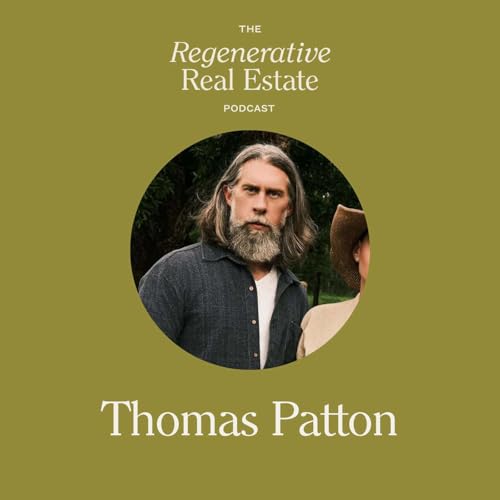
  • Redefining Luxury: Soil, Sovereignty, and Community with Thomas Patton of Lega Vera Farm Village
    Jan 8 2026

    Modern life offers speed and convenience, but often at the cost of connection to the systems that sustain us. In this episode, regenerative rancher and developer Thomas Patton joins us from just outside Panama City, Panama to explore what happens when land, food, and daily life are brought back into relationship.

    Thomas shares the evolution of his family’s 7,000 hectare property from conventional agriculture to the Coquira Soil Project, and how that work expanded into Lega Vera—a farm village designed around soil health, food sovereignty, and community. This conversation explores regeneration as a practical pathway forward and a redefinition of luxury rooted in resilience, stewardship, and belonging.


    ———————-
    This podcast isn’t just about ideas—it’s about action. From these conversations, two organizations have emerged to bring regenerative real estate to life:

    Latitude Regenerative Real Estate is the world’s first regenerative-focused real estate brokerage, dedicated to aligning values-driven buyers and sellers. With a strong presence in the Pacific Northwest and Great Lakes regions, Latitude also supports purpose-driven developments across North America through strategic marketing and branding services. If you're looking to buy, sell, or amplify a regenerative project, Latitude is your trusted partner.

    Hamlet Capital is an investment and development firm committed to building resilient communities rooted in working farms. If you’re developing an agrihood or conservation community, we’d love to hear from you. Together, we can turn visionary ideas into thriving, place-based investments.

    Más Menos
    1 h y 14 m
Todas las estrellas
Más relevante
I was excited to run into this podcast and thought I would learn a lot and it was so generalized and big words and all the industry moving towards electrical and whatnot which is all good, I thought I would hear cultural practices mowing practices watering practices the meats and potatoes about regenerative changes over common landscaping practices. so I will conclude in that I am sitting here wondering what you guys do and how you do and the application done to call your landscaping company real estate company whatever this is regenerative.

you guys talk a lot but you don't say very much

Se ha producido un error. Vuelve a intentarlo dentro de unos minutos.

As a Change Agent with Latitude Regenerative RE, I continue to proudly share these thoughtful, informative interviews full of actionable resources. Have a listen to these stories and I dare you to be anything less than inspired:)

Ready to make a difference?

Se ha producido un error. Vuelve a intentarlo dentro de unos minutos.