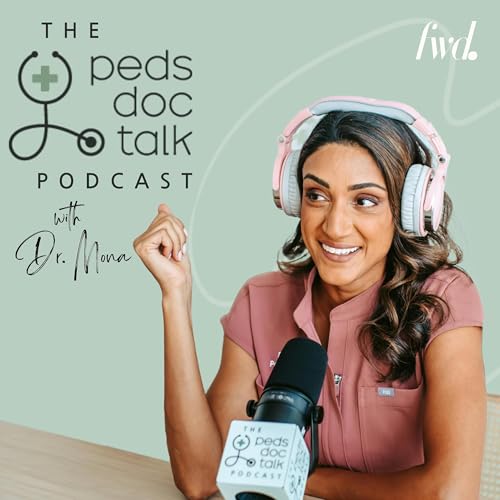
The PedsDocTalk Podcast: Child Health, Development & Parenting—From a Pediatrician Mom Podcast Por Dr. Mona Amin arte de portada

The PedsDocTalk Podcast: Child Health, Development & Parenting—From a Pediatrician Mom

The PedsDocTalk Podcast: Child Health, Development & Parenting—From a Pediatrician Mom

De: Dr. Mona Amin
Escúchala gratis

The PedsDocTalk Podcast is your go-to parenting resource, hosted by Dr. Mona Amin, a trusted pediatrician, parenting expert, and mom of two. As a top 30 Parenting Podcast in the U.S., this show delivers expert-backed guidance on child development, health, illness, behavior, feeding, and sleep—giving parents the confidence to navigate every stage from baby to teen. Each episode dives into real-life parenting challenges, featuring conversations with specialists in pediatrics, child psychology, nutrition, and parental well-being. From potty training and sleep training to tackling tantrums, picky eating, discipline, screen time, postpartum recovery, and developmental milestones, Dr. Mona provides practical, science-backed advice that actually works. Tune in on Mondays and Wednesdays for actionable insights, mindset shifts, and expert interviews that empower you to raise healthy, resilient, and happy kids—while thriving as a parent yourself!© 2023 The PedsDocTalk Podcast - 890893 Crianza y Familias Enfermedades Físicas Higiene y Vida Saludable Relaciones
Episodios
  • The Follow-Up: Why Independent Play Matters
    Apr 6 2026
    If you’ve ever felt guilty for not entertaining your child 24/7, this conversation is going to feel like a deep exhale. In this episode, we tackle one of the biggest modern parenting misconceptions: that good parents are constant playmates. Somewhere along the way, many of us absorbed the idea that we need to be fully engaged, fully available, and fully entertaining at all times. But that shift has come at a cost, both for kids and for parents. We talk about why independent play is not neglect. It is developmental gold. When children play alone or without adult direction, they are practicing creativity, problem-solving, emotional regulation, and flexibility. That kind of play is not second best. It is often the highest level of developmental work they can do. We also explore the other side of the equation. When adults skip meals, chores, work, or rest to constantly entertain their child, stress builds. Resentment builds. Exhaustion builds. That is not healthy for anyone. In this episode, we cover: ✔️ Why you are not required to play all day ✔️ The difference between connection and constant entertainment ✔️ Why some kids struggle more with independent play ✔️ How to break the entertain-me cycle ✔️ A practical step-by-step plan to build this skill ✔️ Why consistency matters more than intensity Want more? Listen to the full, original episode. Our podcasts are also now on YouTube. If you prefer a video podcast with closed captioning, check us out there and ⁠subscribe to PedsDocTalk⁠. Get trusted pediatric advice, relatable parenting insights, and evidence-based tips delivered straight to your inbox—join thousands of parents who rely on the PDT newsletter to stay informed, supported, and confident. ⁠⁠⁠⁠Join the newsletter⁠⁠⁠⁠! And don’t forget to follow ⁠⁠⁠⁠@pedsdoctalkpodcast⁠⁠⁠⁠ on Instagram—our new space just for parents looking for real talk and real support. We love the sponsors that make this show possible! You can always find all the special deals and codes for all our current sponsors on the ⁠PedsDocTalk Podcast Sponsorships⁠ page of the website. Learn more about your ad choices. Visit podcastchoices.com/adchoices
    Más Menos
    14 m
  • Co-Sleeping, Sleep Training, and the Conversation We Need to Have About Infant Sleep
    Apr 1 2026
    Infant sleep has become one of the most polarizing topics in modern parenting. In this thoughtful and nuanced conversation, I sit down with sleep consultant and family therapist Chrissy Lawler to unpack co-sleeping, sleep training, safety data, and the emotional charge surrounding these decisions. As a pediatrician, I was trained to follow AAP safe sleep guidelines, but real-world parenting, cultural practices, and honest conversations with families have pushed me to approach this topic with more openness and clarity. We discuss what the data actually shows, where the gaps exist, and why shame and fear-based messaging don’t help families make safer decisions. Whether you co-sleep, sleep train, or are still figuring it out, this episode focuses on evidence, harm reduction, attachment, parental well-being, and finding what works for your unique family system. In this episode, we discuss: Why co-sleeping is so controversial, especially coming from a pediatrician AAP guidelines vs cultural sleep practices around the world The dangers of polarized, shame-based sleep messaging Harm reduction principles for families who choose to co-sleep Risk factors that increase sleep-related infant deaths What the data does and does not tell us about co-sleeping safety The “Safe Sleep Seven” and its limitations Sleep training myths, cortisol concerns, and attachment Why parental sleep and mental health matter just as much as baby sleep The impact of sleep deprivation on relationships and long-term family dynamics How to filter social media noise and make evidence-based decisions Foundational newborn sleep strategies to reduce desperation and unsafe practices The role of resilience, stress tolerance, and “good enough” parenting To connect with Chrissy Lawler follow her on Instagram @the.peaceful.sleeper, check out all her resources at https://www.thepeacefulsleeper.com/ and buy her book “The Peaceful Sleeper: An Intuitive Approach to Baby Sleep”: https://www.thepeacefulsleeper.com/book 00:00 – Intro 01:15 – A Pediatrician’s Experience With Unsafe Sleep 02:07 – Why Parents Secretly Bedshare 02:54 – Introducing Chrissy Lawler and Her Work 05:04 – Why Safe Sleep Messaging Often Misses Real Life 07:03 – The Cultural Differences Around Infant Sleep 11:03 – Why Parents Feel Pressure Around Sleep Training 16:04 – What Actually Makes Co-Sleeping Dangerous 20:01 – Harm Reduction: If Families Choose to Bedshare 28:00 – Sleep Training Myths and Misunderstandings 38:00 – The Emotional Side of Infant Sleep Decisions 39:01 – How Shame Impacts Honest Conversations With Pediatricians 45:01 – Practical Ways to Make Infant Sleep Safer 48:02 – The Bigger Takeaway: Safety, Support, and Informed Choices Our podcasts are also now on YouTube. If you prefer a video podcast with closed captioning, check us out there and ⁠subscribe to PedsDocTalk⁠. Get trusted pediatric advice, relatable parenting insights, and evidence-based tips delivered straight to your inbox—join thousands of parents who rely on the PDT newsletter to stay informed, supported, and confident. ⁠⁠⁠⁠Join the newsletter⁠⁠⁠⁠! And don’t forget to follow ⁠⁠⁠⁠@pedsdoctalkpodcast⁠⁠⁠⁠ on Instagram—our new space just for parents looking for real talk and real support. We love the sponsors that make this show possible! You can always find all the special deals and codes for all our current sponsors on the ⁠PedsDocTalk Podcast Sponsorships⁠ page of the website. Learn more about your ad choices. Visit podcastchoices.com/adchoices
    Más Menos
    56 m
  • The Follow-Up: Biting, Hitting, Throwing Explained
    Mar 30 2026
    Few things trigger parents faster than physical behavior. It can feel embarrassing, frustrating, and sometimes even personal. But what if these behaviors are less about “bad behavior” and more about a brain that simply isn’t ready yet? In this episode, we break down why toddlers lean into physical, reactive behaviors when big feelings take over. Their emotional capacity is growing quickly, but their ability to pause, regulate, and explain what they’re feeling is still catching up. So they use what works fast - their bodies. We talk about how to respond in the moment without shaming, lecturing, or asking rhetorical questions toddlers cannot answer. Instead of saying “Why are you biting me?” or “That’s not nice,” we explore how to set firm boundaries while still guiding the skill that is developing. You’ll learn how to: ✔️ Separate the action from the intention ✔️ Redirect behavior without minimizing the need behind it ✔️ Offer appropriate outlets for physical impulses ✔️ Reinforce correct behavior at home, even if incidents are happening at daycare ✔️ Partner with teachers to prevent behaviors before they escalate ✔️ Avoid common mistakes like shaming, over-talking, or making it personal Want more? Listen to the full, original episode. Our podcasts are also now on YouTube. If you prefer a video podcast with closed captioning, check us out there and ⁠subscribe to PedsDocTalk⁠. Get trusted pediatric advice, relatable parenting insights, and evidence-based tips delivered straight to your inbox—join thousands of parents who rely on the PDT newsletter to stay informed, supported, and confident. ⁠⁠⁠⁠Join the newsletter⁠⁠⁠⁠! And don’t forget to follow ⁠⁠⁠⁠@pedsdoctalkpodcast⁠⁠⁠⁠ on Instagram—our new space just for parents looking for real talk and real support. We love the sponsors that make this show possible! You can always find all the special deals and codes for all our current sponsors on the ⁠PedsDocTalk Podcast Sponsorships⁠ page of the website. Learn more about your ad choices. Visit podcastchoices.com/adchoices
    Más Menos
    12 m
Todavía no hay opiniones