The Next Page Podcast Por United Nations Library & Archives Geneva arte de portada

The Next Page

The Next Page

De: United Nations Library & Archives Geneva
Escúchala gratis

Are you curious about the power of international cooperation? And how it affects our future? Then tune in to the #NextPagePod, the podcast designed to advance the conversation on multilateralism!Copyright 2019 All rights reserved. Ciencia Política Política y Gobierno
Episodios
  • The state of multilateralism: crisis or renaissance?
    Feb 20 2026

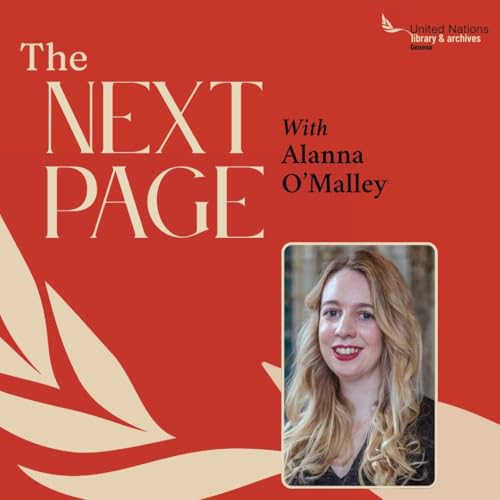
    Historian Alanna O'Malley explores how Global South actors have shaped the United Nations, arguing we should view today's challenges as an opportunity for a UN 'renaissance' rather than a collapse. She highlights invisible histories, multi-alignment strategies, regional and minilateral developments, and the need for Charter reform, greater legitimacy, accountability and public engagement to renew multilateralism.

    Professor O'Malley reflects from a historical point of view on the upcoming process of selection and appointment of the next Secretary-General highlighting the importance that broad global perspective and public traction need to play and urges recognizing the UN as a flexible, multipurpose institution that must be retooled and better resourced to protect sovereignty, human rights and equal representation.

    Resources: Ask a Librarian!

    https://www.eur.nl/en/people/alanna-sylver-omalley

    Where to listen to this episode

    • Apple podcasts: https://podcasts.apple.com/us/podcast/the-next-page/id1469021154
    • Spotify: https://open.spotify.com/show/10fp8ROoVdve0el88KyFLy
    • YouTube: https://youtu.be/

    Content

    Guest: Professor Dr. Alanna O'Malley

    Host, production and editing: Amy Smith, UN Library & Archives Geneva

    Recorded & produced at the United Nations Library & Archives Geneva

    Más Menos
    34 m
  • AIxMultilateralism: Can AI Predict A Crisis? with Dr. Martin Waehlisch
    Feb 13 2026

    This is AI x Multilateralism, a playlist of conversations at the Commons, our space at the UN Library & Archives Geneva for sharing knowledge on multilateralism. In this series, we’re joined by experts who help us unpack the many ideas and issues at the nexus of AI and international cooperation.

    In this episode we ask: can AI help us better predict, respond to, and recover from crises? We’re joined by Dr. Martin Waehlisch, Associate Professor of Transformative Technologies, Innovation and Global Affairs at the University of Birmingham. He’s also part of the Research Team of the Crisis Computing Project, a global community of scholars and practitioners who are driven to put computation to better use. He shares:

    • what drives his teaching today on transformative technologies, and why he prefers the term “computational global affairs” to “international affairs” in today’s world
    • what exactly crisis computing means, and the kinds of crises he hopes that AI can help us to address, from complex climate prediction to public participation in decision-making
    • the potential of crisis computing at the local, regional and multilateral level, and his thoughts on how crisis computing can be addressed as part of the UN’s Global Dialogue on AI and the Independent International Scientific Panel on AI, both established by the UN General Assembly in 2025, and
    • what is still missing in the global debate when it comes to how we use AI individually and collectively.

    Resources mentioned:

    • The Crisis Computing Project: https://crisiscomputing.org/
    • The Peace and Security Data Hub : https://psdata.un.org/
    • The Complex Risk Analytics Fund (CRAF’d): https://crafd.io/ and the Humanitarian Data Exchange: https://data.humdata.org/

    Production:

    Guest: Dr. Martin Waehlisch Host, production and editing: Natalie Alexander Julien

    Podcast Music credits: Sequence: https://uppbeat.io/track/img/sequence Music from Uppbeat (free for Creators!): https://uppbeat.io/t/img/sequence License code: 6ZFT9GJWASPTQZL0 Recorded & produced at the Commons, United Nations Library & Archives Geneva #AI #Multilateralism #CrisisComputing #CrisisResponse

    Más Menos
    29 m
  • Open Science: How Sharing Knowledge Can Save the Planet
    Jan 31 2026

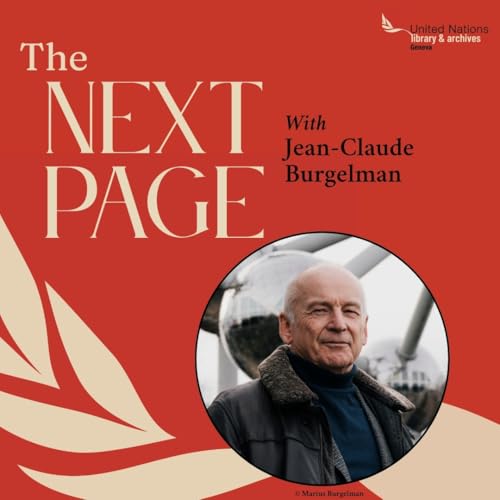
    In this episode we speak with Jean-Claude Burgelman about what open science means, why it accelerates innovation, and why we need it now.

    Jean-Claude Burgelman discusses practical benefits for businesses and NGOs, barriers like paywalled publishing and academic incentives, and the urgent need to make publicly funded data usable.

    Jean-Claude argues for multilateral infrastructure—a global open science cloud—and a new social contract for science, drawing on insights from this year's Frontiers Science House at Davos.

    The episode closes with a call to rethink institutions and governance so open science can drive faster, fairer solutions to global challenges.

    Resources: Ask a Librarian!

    Frontiers Planet Prize: https://www.frontiersplanetprize.org/

    Where to listen to this episode

    • Apple podcasts: https://podcasts.apple.com/us/podcast/the-next-page/id1469021154
    • Spotify: https://open.spotify.com/show/10fp8ROoVdve0el88KyFLy
    • YouTube: https://youtu.be/QBWMVpmW3pI

    Content

    Guest: Jean-Claude Burgelman

    Hosts: Amy Smith and Wouter Schallier

    Production and editing: UN Library & Archives Geneva

    Recorded & produced at the United Nations Library & Archives Geneva

    Más Menos
    40 m
Todavía no hay opiniones