Episodios

  • Smart Steps in Industry 4.0 (Part 1)
    Mar 31 2026

    What You’ll Learn in This Episode:

    In this episode, Andy Olrich, Patrick Adams, and guest John Broadbent break down what Industry 4.0 really means, and why it’s not as complex or expensive as many think.

    You’ll learn how to start small, connect existing systems, and use data more effectively to improve operations. The conversation highlights why Industry 4.0 is about integration, not technology, and how even simple steps, like auditing spreadsheets or connecting one machine, can kickstart your transformation.

    If you’ve ever thought “we’re not ready for Industry 4.0,” this episode will challenge that belief and give you a practical starting point.

    Key Takeaways:

    1. Industry 4.0 isn’t about technology, it’s about integration

    2. Industry 4.0 is a journey, NOT a one-time project

    3. Visibility is the first step to transformation

    4. Context matters more than data

    Links:

    Lean Solutions 2026 Summit

    Lean Solutions Website

    https://realisepotential.com.au/

    Email: john@realisepotential.com.au

    Más Menos
    22 m
  • Stop Selling Lean: Start Solving Problems
    Mar 24 2026

    What You’ll Learn in This Episode:

    In this episode of the Lean Solutions Podcast, Andy Olrich and Catherine McDonald break down one of the biggest reasons Lean fails in organizations, and how it has nothing to do with the tools.

    Most companies try to “sell Lean” as a program or initiative, which immediately creates resistance. Employees see it as something being done to them instead of for them. But the real key to success is much simpler: stop selling Lean and start solving real problems that people face every day.

    The conversation dives into how leadership behaviors shape culture, why small wins matter more than big projects, and how building trust through employee involvement can transform an organization. You’ll also learn why traditional reward systems often backfire, and how to create a continuous improvement system that actually sticks.

    If your Lean efforts feel stuck—or your team isn’t buying in—this episode will completely change how you approach transformation.

    Key Takeaways:

    1. Stop selling Lean—start solving real problems

    2. Leadership behavior—not tools—determines success

    3. Small wins build trust faster than big initiatives

    4. Lean must be a system, not an event

    Links:

    Lean Solutions 2026 Summit

    Lean Solutions Website

    Más Menos
    31 m
  • How to Accelerate Your Business Transformation
    Mar 17 2026

    What You’ll Learn in This Episode:

    In this episode of the Lean Solutions Podcast, Patrick Adams and Shayne Daughenbaugh sit down with Lean expert Darren Walsh to uncover why most Lean transformations stall, and what leaders must do to accelerate real business transformation.

    With more than 25 years of experience working with world-class organizations, Darren explains why many companies struggle with continuous improvement despite investing heavily in Lean tools like Kaizen and value stream mapping. The problem isn’t the tools; it’s the leadership mindset, flawed improvement strategies, and a focus on efficiency instead of value flow.

    The conversation explores how daily management systems, visual management, leadership routines, and better problem-solving can dramatically accelerate Lean results. Darren also shares practical strategies leaders can use to ensure teams work on the right problems, remove organizational blockers, and build sustainable continuous improvement habits.

    If your Lean initiative feels stuck, this episode reveals the leadership shifts needed to unlock faster transformation and lasting operational excellence.

    Key Takeaways:

    1. Most Lean transformations fail because leaders focus on efficiency instead of value flow

    2. Delegating improvement kills continuous improvement

    3. Daily management is the foundation of Lean success

    4. Most teams are solving the wrong problems

    Links:

    Lean Solutions 2026 Summit

    Lean Solutions Website

    Click Here for Darren Walsh's LinkedIn

    https://www.makingleanwork.org/

    Más Menos
    32 m
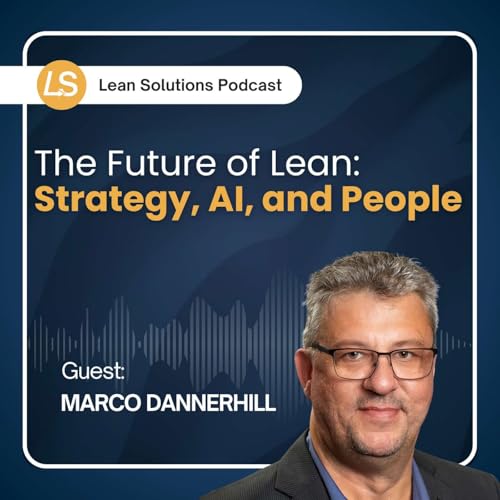
  • The Future of Lean: Strategy, AI, and People
    Mar 10 2026

    What You’ll Learn in This Episode:

    In this episode of the Lean Solutions Podcast, hosts Patrick Adams and Shayne Daughenbaugh are joined by Marco Dannerhill to explore how Lean thinking must evolve in today’s fast-changing business environment. Drawing on more than three decades of experience in the plastics industry, Marco shares how Lean has shifted from focusing on localized process improvements to becoming a more strategic approach that supports long-term business success.

    The conversation dives into how global uncertainty, supply chain disruption, and emerging technologies like AI are changing the way organizations operate. Marco emphasizes that while technology can enhance productivity, people remain the heart of Lean, and leadership must prioritize coaching, mentoring, and building trust across teams. The discussion also highlights the importance of aligning improvement initiatives with strategic goals, empowering employees to lead smaller improvements, and ensuring that Lean efforts contribute to long-term growth rather than just short-term gains.

    Key Takeaways:

    1. Lean must evolve from local improvements to strategic impact
    2. Technology should support people, not replace them
    3. Leaders must coach and mentor to build a culture of improvement
    4. Strategy must be translated so frontline teams understand their role

    Links:

    Lean Solutions 2026 Summit

    Lean Solutions Website

    Click Here for Marco Dannerhill's LinkedIn

    Más Menos
    31 m
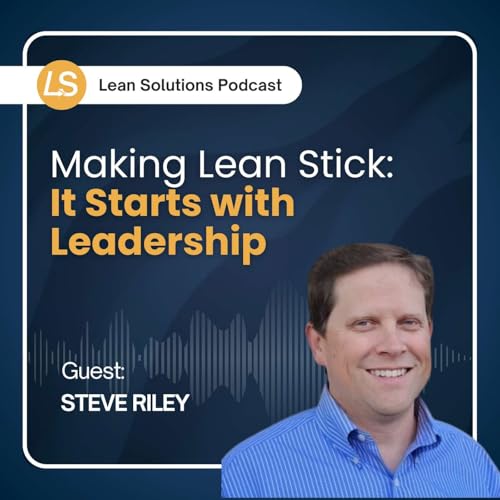
  • Making Lean Stick: It Starts with Leadership
    Mar 3 2026


    What You’ll Learn in This Episode
    :


    In this episode of the Lean Solutions Podcast, hosts Patrick Adams, Andy Olrich, and guest Steve Riley discuss the importance of leadership behaviors in maintaining Lean initiatives. They highlight how unintentional actions, such as not picking up trash or not following standard work, can undermine Lean efforts. Steve Riley, a manufacturing operations leader with over 30 years of experience, emphasizes the need for consistent leadership presence, protecting standards under pressure, and fostering team-led improvements. They also explore the significance of measuring both leading and lagging indicators to ensure continuous improvement. Additionally, Riley introduces his company's digital shadow board service, which simplifies the creation of tool organization systems.


    Key Takeaways:

    1. Leadership behavior matters more than Lean tools
    2. What leaders do in the moment defines credibility
    3. Lean breaks when standards are optional
    4. Improvement must be part of daily work


    Links:

    Lean Solutions 2026 Summit

    Lean Solutions Website

    Click Here for Steve Riley's LinkedIn

    bespoketooltrays@gmail.com

    Tool Box Foam, 5S Lean, 5 S Lean | BespokeToolTrays.com

    Más Menos
    25 m
  • The First 90 Days of Lean: What Actually Matters (Part 2)
    Feb 24 2026


    What You’ll Learn in This Episode
    :

    In this second part episode of the Lean Solutions Podcast, Patrick Adams and Shane Daughenbaugh discuss the initial steps for a new leader implementing Lean principles. They emphasize understanding the current state through one-on-one interviews and Jeff Liker's leadership development model, which includes personal development, coaching others, daily Kaizen, and establishing a vision. Patrick advises starting with a model area to experiment with Lean concepts on a smaller scale. Shayne shares his experience of finding a champion and creating a safe space for experimentation. They both stress the importance of learning from failures, building team capability, and gradually introducing Lean practices to achieve organizational goals.


    Key Takeaways:

    1. Start Lean by Understanding the Current State—Not by Teaching Tools
    2. Your First 90 Days Should Focus on Leadership Development, Not Control
    3. Create a “Sandbox” or Model Area to Learn Fast and Safely
    4. Failure Is a Win When Learning Is the Goal

    Links:
    Lean Solutions 2026 Summit

    Lean Solutions Website

    ⁠⁠Click Here For Shayne Daughenbaugh’s LinkedIn⁠

    ⁠⁠⁠Click Here For Patrick Adams’ LinkedIn⁠⁠

    Más Menos
    17 m
  • The First 90 Days of Lean: What Actually Matters (Part 1)
    Feb 17 2026

    What You’ll Learn in This Episode:

    In this episode of the Lean Solutions Podcast, Patrick Adams and Shane Daughenbaugh explore what the first 90 days should look like after discovering Lean or stepping into a new organization. Once someone understands the principles of continuous improvement, what should they actually do first? They discuss how your approach must shift depending on your level of influence. Whether you’re an executive, middle manager, or individual contributor, rushing into tools and events can create resistance instead of momentum.

    They advise spending time in direct reports' roles, having one-on-one conversations, and documenting feedback to identify common issues and improve processes. They also highlight the value of using emotions as flags and leveraging AI to analyze data for better decision-making. They agree on the importance of empathy and trust-building in leadership.

    Key Takeaways

    1. Your Role Determines Your Strategy
    2. Start with Listening, Not Implementing
    3. Culture Before Tools
    4. Perspective Changes Everything

    Links:
    Lean Solutions 2026 Summit

    Lean Solutions Website

    ⁠⁠Click Here For Shayne Daughenbaugh’s LinkedIn⁠

    ⁠⁠⁠Click Here For Patrick Adams’ LinkedIn⁠⁠

    Más Menos
    16 m
  • Going from Strategy to Starting
    Feb 10 2026

    What You’ll Learn in This Episode:

    In this episode of the Lean Solutions Podcast, Andy Olrich and Catherine McDonald explore what happens after the strategy day is over. Once goals are set, how do organizations move from planning to real execution? They highlight the challenges of managing too many goals and the necessity of engaging teams in the strategy process.

    They unpack why teams often struggle—not because they lack ideas—but because they have too many priorities and not enough clarity on where to start. The discussion focuses on practical frameworks for filtering, prioritizing, and executing goals in a way that aligns strategy with daily work.

    Key Takeaways:

    • Teams don’t struggle from a lack of ideas—they struggle from too many priorities.
    • Don’t start where it’s exciting—start where it’s expensive.
    • Use structure to remove subjectivity.

    Links:
    Lean Solutions 2026 Summit

    Lean Solutions Website

    ⁠⁠Click Here For Catherine McDonald’s LinkedIn⁠⁠
    ⁠⁠Click Here For Andy Olrich’s LinkedIn⁠⁠

    Más Menos
    30 m