Episodios

  • What Does Flourishing Mean for School Systems?
    Mar 31 2026
    Dean interviews Dr. Christopher Fuzessy, superintendent of Foothills School Division in High River, Alberta, about making “flourishing” a central system focus and why it is ongoing, mutual work rooted in interconnected community rather than a checklist. Fuzessy draws on research including Martin Seligman, Robin Wall Kimmerer’s idea that “flourishing is mutual,” and Michael Ungar’s reframing of resilience as “stepping back” supported by redundant systems. They discuss reflective practice, workplace wellness as a system responsibility, and Fuzessy’s self-reflective book Emanate and related partnership with the University of Calgary on leadership support frameworks. The conversation also covers Foothills’ AI journey, including in-house tools to reduce administrative burden and increase time for relationships, student and parent perspectives, and creating flexible AI guardrails, plus Fuzessy’s move from Quebec to Alberta and examples of community-based flourishing in schools.

    00:00 Defining Flourishing
    00:47 Why Education Changed
    02:52 Foothills F Word
    05:49 Flourishing Research Roots
    06:31 Resilience and Community Support
    10:24 Reflective Practice Habits
    12:47 Book Emanate Overview
    16:31 Flourishing in Schools
    21:50 Local Agency Against Anxiety
    25:47 AI and Human Flourishing
    26:54 Building In House AI Tools
    31:40 Early Feedback and Concerns
    31:54 Student Driven AI Skills
    33:08 Building Division AI Vision
    34:14 Parents as AI Partners
    36:38 Guardrails and Flourishing
    38:52 From Quebec to Alberta
    43:22 Government and CAS Support
    48:55 Gratitude for a Mentor
    50:34 Reading for Systems Change
    53:16 Unwinding and Building
    54:54 Hidden Gems and Farewell
    Más Menos
    57 m
  • How Many Times Do I Have to Tell You?
    Mar 24 2026
    Dean's guest is Katherine MacIver, Director of Education at Hastings Prince Edward District School Board in Eastern Ontario, about leadership in education amid constant “noise” and competing demands. MacIver describes focusing on the “big rocks” and keeping conversations centered on students and achievement, while staying connected to classroom learning through tough, curious questions. She emphasizes a skill-based approach grounded in literacy and numeracy, notes qualitative community feedback and improving results in achievement and graduation, and highlights a simple, one-page strategic plan. The discussion explores building culture and trust through everyday interactions, de-siloing central teams, and communicating the “why” repeatedly and with purpose and audience in mind, including practical examples like cybersecurity password changes. MacIver also discusses buffering staff from rhetoric and governance challenges, developing leadership through opportunity and mentorship, and credits mentor Mary Ann Bishop for shaping her approach.


    00:00 Why Explain The Why
    01:28 Meet Director Katherine
    02:18 Blocking Out The Noise
    04:19 Staying Close To Classrooms
    06:40 Skills First Literacy Math
    07:38 Measuring Life After Graduation
    10:36 Keeping Talent Local
    12:57 Pride Strategic Plan Wins
    15:25 Building Trusting Culture
    18:49 Communicate Nine Times
    20:50 Purpose And Audience
    22:31 Parent Focused Messaging
    23:15 Staying On Mission
    27:32 Calm Under Pressure
    29:40 Developing Future Leaders
    32:21 Biggest Career Jump
    34:37 Mentor Who Shaped Me
    36:20 Quick Hitters And Wrap
    Más Menos
    41 m
  • What Can Educators Learn from Woodworkers in a Pub?
    Mar 17 2026
    Dean talks with ed tech consultant Andy McKiel as an example of innovative professional learning that happens outside traditional workshops and even outside education, then they recall first meeting at the 2007 Manitoba Ed Blogger Con focused on early social media and virtual connections. Andy describes moving from a Grade 4 teacher to a district-level digital learning coach role supporting K–12 teachers, and reflects on how classroom technology use has shifted from learning tools to bigger pedagogical purposes, including supporting increasingly diverse and high-needs learners. They discuss critiques that technology hasn’t changed schools, the value of inquiry learning, and how COVID-19 required rapidly training hundreds of teachers on Microsoft Teams and new communication systems. The conversation centers on building community through social, network-driven PD like Ignite events, challenges to in-person participation post-pandemic, and advice for aspiring coaches

    00:00 Learning Beyond the Bubble
    02:42 Meeting Andy in 2007
    05:02 From Classroom to Coach
    07:04 How Teacher Tech Use Evolved
    09:19 Has Tech Really Changed Schools
    12:49 Rethinking Professional Learning
    18:41 Post Pandemic PD Challenges
    25:18 Collaboration Culture in Schools
    28:41 Pandemic Leadership Test
    31:06 Live Event Momentum
    31:57 Post Pandemic Tool Hangover
    32:47 Sharing Culture in Teaching
    34:09 Advice for Aspiring Coaches 37:34 Curiosity and Vulnerability
    39:10 Gratitude for Ryan Miller
    42:20 ISTE Award Backstory
    44:53 What Im Reading and Watching
    48:39 Winnipeg Hidden Gems
    Más Menos
    52 m
  • How Do You Design the Perfect, Most Impactful PD Experience?
    Mar 10 2026
    Dean reunites with retired Ontario educator Rodd Lucier (“the Clever Sheep”) to unpack seminal professional-learning experiences that shaped their work, from early networked learning and the unconference-style Edcon to the creation of Unplugged in 2012. They describe gathering about 30–39 educators from across Canada (and later beyond) to travel from Toronto to an offline retreat at Northern Edge Algonquin, where participants—self-selected, like-minded, and already leading without titles—built relationships, collaborated in small groups, and wrote and published a book in three days using pre-work and story videos. They discuss why the setting, disconnection, shared responsibility, and informal “hallway” time made it transformative yet hard to replicate, note resources like photos, blog reflections, and a facilitation guide, and reflect on today’s fragmented online spaces, AI, robotics, and the enduring need for human connection in education.

    00:00 Leaders Before Titles
    00:22 Writing A Book Together
    01:03 Seminal Learning Moment
    03:19 First Meeting At Edcon
    05:54 Rodd The Clever Sheep
    09:00 Edcon Joy And Tribe
    12:13 Unplugged Origins
    13:20 Designing The Retreat
    17:49 Measuring Long Term Impact
    21:26 Shared Moments Matter
    21:52 Six String Nation Metaphor
    26:25 Facilitation Guide Takeaways
    30:26 Allstar Team Professional Learning
    38:09 AI Raises Human Stakes
    39:08 What He Reads Now
    42:33 Advice to Teachers Try Stuff
    43:12 London Hidden Gem Nature Walk
    Más Menos
    45 m
  • How Does Economic Collaboration Support Truth and Reconciliation?
    Mar 3 2026
    In this podcast episode, Dean interviews Cadmus Delorme, former First Nation chief (elected at 33) and the 10th Chancellor of the University of Regina (appointed July 2025), about leadership that models calm, heart, and relationship-building. Delorme explains the chancellor’s ceremonial and governance duties, shares how his education, upbringing with residential school survivor parents, and golf shaped his leadership, and describes staying composed during the 2021 unmarked graves discovery to avoid triggering survivors and demonstrate reconciliation. He discusses gaps in Canadians’ education about truth, the need for provinces to treat First Nations and Métis as rights holders, mental health as foundational to leadership, collaboration between on- and off-reserve schools, language preservation challenges in Saskatchewan, advice for young leaders amid social media, parenting approaches, and his One Hoop consulting work on reconciliation and economic inclusion.

    00:00 Duty to Reconcile
    01:25 Meeting Cadmus Delorme
    03:55 Chancellor Role Explained
    05:57 Becoming a Young Chief
    08:31 Early Leadership Roots
    10:43 Leading With Heart
    15:19 Collaboration in Education
    18:00 Unmarked Graves Response
    22:35 Policy and Funding Realities
    27:16 Schooling Then and Now
    31:52 Language as Relationship
    33:23 Humor and Harmony
    34:23 Saskatchewan Language Map
    36:13 AI and Cultural Tradeoffs
    36:54 Advice for Young Leaders
    38:10 Social Media and Focus
    39:10 Everyday Leadership Habits
    40:42 Parenting in the iPad Era
    45:06 Mentors Who Shaped Me
    48:42 One Hoop Consulting
    49:56 Golf Course Favorites
    51:22 Books and Learning Habits
    53:47 Binge Watching Picks
    55:49 Hidden Gems to Visit
    56:34 Powwow Invitation and Wrap


    Más Menos
    58 m
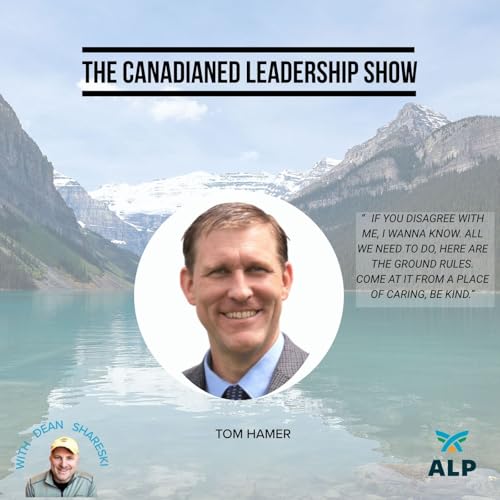
  • When Do You Move Fast and When Do you Go Slow?
    Feb 24 2026
    Superintendent Tom Hamer (Palliser School Division, Lethbridge) discusses Canadian education and leadership, emphasizing that leaders must model the best parts of the job. He compares Quebec and Alberta as similarly proud and “distinct,” but with different approaches: Quebec relies more on government laws and rules embedded in education (including the move from Catholic/Protestant systems to English/French with no religious links in schools), while Alberta emphasizes parent and community choice—reflected in Palliser’s small-school “boutique” mix, K–12 models, a national sports school in Calgary with 19 alumni headed to the Winter Olympics, and both Christian and Islamic schools. Hamer shares how he moved from Quebec to Alberta at 44, his early-career experience in Quebec’s Eastern Townships during one-to-one laptop innovation (and its challenges), and how those lessons helped Palliser shift from computer labs to mobile tools and respond quickly during COVID. He also outlines a leadership approach centered on culture and climate: clear mission/values, making urgent decisions when needed, and creating safe team spaces for disagreement, iteration, and shared problem-framing. He notes his pride in staff resilience after an October Alberta “blip” that harmed teachers, and closes with rapid-fire personal topics and a Lethbridge recommendation (Galt Museum area and coulee trails to Helen Schuler Nature Centre).

    00:00 Quebec vs Alberta Mindsets

    04:29 From Quebec to Lethbridge

    08:16 Quebec Tech Innovation Era

    13:47 One to One Lessons Learned

    16:56 Pandemic Readiness Playbook

    20:48 Leading Culture at Palliser

    25:41 Decision Speed and Triage

    28:02 Leading Through Resistance

    30:09 Proud After the Blip

    35:02 Autonomy and Identity

    37:24 Mentor Shout Out

    39:10 Rapid Fire Personal

    40:13 Running and Longevity

    42:33 Books and Binge Picks

    46:30 Hidden Gem Lethbridge

    48:09 Closing Thanks
    Más Menos
    49 m
  • Does Your Team Know What You Believe?
    Feb 17 2026
    Ainsley Rose on Leadership, Learning, and Rethinking School

    In this episode,I speaks with education consultant and former principal Ainsley Rose about leadership, professional learning, and why school systems need to be rethought. Ainsley explains how consulting began unexpectedly on the day he retired, giving him more freedom to speak boldly about teaching and learning. He challenges the traditional “grade-level boxes” model, arguing that linear teaching contradicts continuous progress and can fuel disengagement when students are ahead or already know the material. The conversation covers persistent assessment challenges, the mismatch between collaboration and school hierarchies, and the need to elevate student and teacher voice. Ainsley emphasizes that leaders must model the positive, instructional parts of their role—principals as instructional leaders rather than administrators—and shares his non-negotiables for professional learning: focus on only three priorities, reduce initiative fatigue, and build PD that strengthens existing practice. He also recounts a formative leadership moment in a large bilingual high school, where an “I believe” speech, clear decision-making, and consensus-building shifted school culture. The episode closes with advice for aspiring leaders—clarify your values, read widely, and listen well—plus a mentor shout-out, current reads, and a few personal quick hitters.

    00:00 Why the ‘grade-level boxes’ model fails kids (and fuels misbehavior)

    01:08 Meet Ainsley Rose: bold leadership, second-half strengths, and a different lens on schools

    02:57 Retirement that wasn’t: the phone call that launched his consulting career

    11:56 System redesign: structure, assessment, collaboration, and real teacher/student voice

    17:10 Professional learning that sticks: the ‘triangle’ focus and non‑negotiables

    28:00 From Phys Ed Teacher to Principal: Thrown Into a 5,000-Student Bilingual School

    31:43 The “I Believe” Speech Showdown: Union Pushback, Staff Meeting, and a New Direction

    38:24 Advice for Aspiring Leaders: Values, Influence, Reading, and Listening

    43:03 Shout-Out Mentor: Gordon El Hard and the Discovery of Human Talent

    44:37 Quick Hitters: What He’s Reading, Guilty Pleasures, and Okanagan Hidden Gems
    Más Menos
    52 m
  • Does Anyone Want Your Job?
    Feb 10 2026
    In this episode, we delve into how leaders can maintain and model positivity even during challenging times. The conversation features Dean MacInnis, Principal of Sir John Franklin High School in Yellowknife, Northwest Territories. We discuss his journey, the challenges of northern education, strategies for retaining staff, and the vital role of principals in fostering a positive school culture. Dean also shares insights about his role as president of the Canadian Association of Principals (CAP) and the upcoming CAP conference in Regina. Join us as we uncover the essence of effective leadership in the face of adversity.

    00:00 Introduction to the Diverse Staff
    00:46 Longevity in Education: Pros and Cons
    01:32 Conversation with Dean McInnis
    03:34 Life in Yellowknife: Embracing the Northern Climate
    06:50 Navigating Education in the Northwest Territories
    09:10 Challenges and Changes in Curriculum
    14:21 Recruitment and Retention of Teachers
    19:27 Leadership Challenges and Reflections
    29:15 Building Respect and Overcoming Challenges
    30:50 The Importance of Positivity and Authenticity
    32:25 Gratitude and Mentorship
    34:25 Introduction to CAPS
    35:32 CAPS' Role and Impact
    43:44 Upcoming CAP Conferences
    47:21 Personal Interests and Recommendations
    50:28 Hidden Gems of Yellowknife
    52:04 Conclusion and Final Thoughts
    Más Menos
    53 m