Episodios

  • How Raphael Made—and Unmade—the Renaissance
    Apr 2 2026
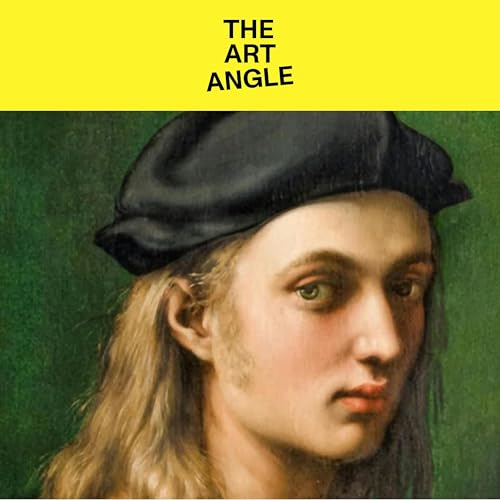
    Raphael is one of those names that everyone knows. He is the prince of painters, a master of the High Renaissance. And the Metropolitan Museum of Art has given him the full blockbuster treatment in a highly anticipated exhibition called "Raphael: Sublime Poetry." The show is the first comprehensive international loan exhibition ever dedicated to him in the United States. There are 237 works in total—33 paintings, 142 drawings—and his Sistine Chapel tapestries. There are loans from the Louvre, the Vatican Museums, the Prado, the Uffizi, and the British Museum. Many of these works, according to the Met, have never been shown together, and some have never previously left Europe. Curated by Carmen C. Bambach, it took 17 years to assemble. No one quite captured divine beauty like Raphael did. But what is the story within the story of this artist who left indelible mark on western art? Kate Brown is joined by art critic and podcast co-host Ben Davis, who has just published a review of the exhibition, to dive into that question. Register for the live discussion: ⁠The Intelligence Report, Year Ahead 2026 Edition
    Más Menos
    39 m
  • Whitney Biennial Trends, a New Baroque Art Star, and Banksy Unmasked
    Mar 26 2026
    Spring is upon us. March has seen a burst of big art events—the true start of a busy year. This week, Kate Brown and Ben Davis are joined by senior writer Eileen Kinsella to discuss some of the biggest art stories of the month. In this episode, will be discussing: — The 2026 Whitney Biennial, which opened at the beginning of the month. It always gives a snapshot of who’s in and who’s out, and what’s on curators minds. (I've written two pieces on it, here and here) — The rise of a new art historical art star: the Flemish baroque painter Michaelina Wautier (1604–1689). — And a new investigation that claims to definitively, absolutely, positively once and for settle the question of who Banksy really is. Do we think they did it? Does it matter?
    Más Menos
    43 m
  • Are We Entering a Post-Individual Era of Art?
    Mar 19 2026
    The New Museum opens its new building this week. And it’s doing so with a big show called “New Humans: Memories of the Future,” about how artists rethought what it means to be human through technology. It’s a topic on a lot of people’s minds. Among the many artists whose visions feature in the show is Christopher Kulendran Thomas. Kulendran Thomas has a lot going on. Aside from the New Museum, he’s got another video installation up at the Museum of Modern Art right now, while last fall, his work “Peace Core” showed at Gagosian Gallery in New York. He also runs a project space, Earth, on the Lower East Side in New York and in Echo Park in L.A. Kulendran Thomas's works are complicated. They often feature paintings, inspired by A.I.-generated images. His video installations at MoMA and the New Museum involve deepfake interviews with celebrities like Taylor Swift, Kim Kardashian, or even other artists, together with documentary footage about Sri Lanka, where his family is from. Beneath all these complex parts, Kulendran Thomas is weaving together an ambitious and maybe even unsettling argument, about political systems, philosophy, technology, human creativity, post-human creativity, and where we might be heading in the future—as artists and as a civilization.
    Más Menos
    45 m
  • Kim Gordon Was Always an Artist First
    Mar 12 2026
    Kim Gordon—artist, musician, writer, and co-founder of the iconic rock band Sonic Youth—is one of the most restlessly creative figures in American culture. Over the past four decades moved between mediums with an ease that few can achieve. She published her memoir Girl in a Band in 2015 to wide acclaim. Her visual work has been shown at institutions including the Andy Warhol Museum, the Irish Museum of Modern Art, and the Busan Biennale. Her 2024 solo album The Collective, a record built on trap beats and with sharp cultural commentary, earned her two Grammy nominations, a career first. But Gordon was always an artist first. Now, she is the subject of two concurrent exhibitions now open at Amant, the Brooklyn-based arts organization. The first is her solo survey "Count Your Chickens," which brings together painting, ceramics, film, and readymades spanning nearly 20 years of work. The second is "Folded Group," a group show she co-curated with Bill Nace, her collaborator in the experimental guitar duo Body/Head, featuring 19 artists and artist-musicians many of whom, like Gordon, have never accepted the boundary between making art and making music. Her third solo album, Play Me, is out on March 13. In her conversation with senior editor Kate Brown, Gordon discusses her visual practice, her relationship to the art world and the music world, and what these two universes share and where they diverge. She reflects on album art as a curatorial act, on how the internet has transformed what it means to make and disseminate work, and on what it has meant to spend a career resisting every category people tried to put her in.
    Más Menos
    36 m
  • The Young Painter Curators Are Rushing to Work With
    Mar 5 2026
    The Whitney Biennial is here. That would be the Whitney Museum’s big curated show which every two years brings together dozens of artists, always closely watched by critics and public as a statement about what is important now in art. Hot on its heels, next month, MoMA PS1 is staging "Greater New York." That event happens every five years, bringing together dozens more artists to take the temperature of art in New York. Taína H. Cruz, my guest today, is featured in both these shows at once. For the Whitney, she is even, in a way, the face of the show: a work by Cruz, a green-tinged close-up painting of a grinning child, called I Saw the Future and It Smiled Back, is blown up on a billboard outside the museum in the Meatpacking District. This is a lot of attention for an artist who is relatively young, born in 1998, and just getting her MFA from the famed Yale School of Painting last year. She’s worked in a variety of media, but is known now for paintings, often featuring images of Black female figures with a moody, woozy, sometimes unsettled or unsettling atmosphere. Sometimes Cruz works in suggestions of African American and Caribbean folklore, or intimations of horror and fantasy. Sometimes, she’s played on the images of celebrities like Halle Berry or Tyra Banks. Sometimes she reworks her own personal photos of neighbors from New York. Since Cruz is an artist that the curators of these big shows are looking to, art critic, Ben Davis, wanted to get a sense of the influences—from art and otherwise— that are shaping her approach to art, and what she makes of all the attention.
    Más Menos
    40 m
  • The Art Boom in the Middle East, Are Old Masters Cool Now?, and a Fresco Fracas in Italy
    Feb 26 2026
    It’s time for our monthly news roundup where we discuss some of the biggest stories emerging in the art world. On the heels of the first-ever Art Basel Qatar, we will be discussing the Middle Eastern art market and the regional art scenes. Is this simply another fair on the global circuit, or something more structural—an attempt to recalibrate where cultural power sits? We will doing a vibe check on the Ultra-Contemporary art scene’s current obsession with Old Masters, art history, and dead artists. As market pressures mount and institutions increasingly turn toward estates and historical figures, we’ll ask whether this is a genuine intellectual reckoning or a marketing strategy dressed up as scholarship. Maybe it is both? Finally, we will rove over to Rome, Italy, where where a church fresco featuring an angel that bore a striking resemblance to Italian Prime Minister Giorgia Meloni was abruptly removed, sparking debate within and well beyond the church about restoration, iconography, and the politics of sacred imagery. We reminisce about the great many botched art restorations of years past. To discuss these topics, Ben Davis and Kate Brown are joined this month by London-based Artnet News editor Margaret Carrigan. Carrigan is the host of our sister podcast, the Art Market Minute, and co-author of our weekly Artnet Pro market newsletter, The Back Room.
    Más Menos
    37 m
  • What Epstein's Emails Tell Us About the Art Market
    Feb 19 2026
    There are many ways to read the vast trove of documents tied to the convicted sex offender and financier Jeffrey Epstein, who died by suicide in prison in 2019. The Epstein files offer a window into the rarefied, power-brokering circles he inhabited. But the latest tranche—released by the U.S. Department of Justice in late January and comprising some three million pages, 2,000 videos, and 180,000 images—also provides a behind-the-scenes view of high-level financial maneuvering, including Epstein’s connections to the art and cultural worlds. Revelations in the latest files have already had consequences: former French culture minister Jack Lang resigned as president of the Arab World Institute after disclosures connecting him to Epstein, and French financial-crimes prosecutors have opened a preliminary investigation into him and his daughter for alleged “aggravated tax-fraud laundering.” Art collector and film producer Steve Tisch is also facing scrutiny over email correspondence with Epstein in 2013 concerning multiple women. In early February, David A. Ross, chair of the Master of Fine Arts in Art Practice at New York’s School of Visual Arts, resigned after documents showed ties to Epstein. The files also shed additional light on the art holdings of the billionaire Leon Black and his dealings with Epstein. Black, who served as chairman of the board of trustees of the Museum of Modern Art in New York from 2018 to 2021, stepped down from that role after backlash over his financial ties to Epstein, though he remained on the board as a trustee. Black has faced civil lawsuits and allegations that he sexually assaulted women introduced to him through Epstein. Black has denied the claims, and no criminal charges have been filed. So we knew about Black and Epstein, to an extent. But my colleague, senior reporter Katya Kazakina, recently focused on how the latest documents illuminate Epstein’s sophisticated use of financial structures to enhance the value of Black’s vast art holdings—and just how much of his wealth was effectively stored in art. This enormous release is wide-ranging, touching people and industries far beyond the criminal sexual activity in which Epstein was involved. Because of its sheer breadth, it bears emphasizing that inclusion in the files does not imply criminal wrongdoing. More will come to light as journalists and the public sift through the documents.
    Más Menos
    42 m
  • An Artist's Guide to Psychedelic Mushrooms
    Feb 12 2026
    There is an enduring association with creative experiment and psychedelic experiences. Recently, psychedelics have become more mainstream, explored not just for their far-out spiritual associations but as medicine, as therapy, and even just to make you more productive. How should we think about psychedelics and how they relate to art and art-making now? Ryan McGinness has had a long and well-known career as an artist. His densely layered, colorful abstract paintings have been shown at museums and galleries around the world. He’s also long explored world-building through his art, expanding his designs to maze-like environments and staging sprawling events and parties. Recently, however, McGinness has showed a new side of his creative journey. He has just published an art book, Trip Advisor: Notes From over 25 Years of Psychedelic Voyages, from Blurring Books. The colorful tome collages together images of McGinness's paintings and photos of his studio and life with the raw diaries he kept beginning in 1999, as he chronicled his own mind’s voyages on psilocybin mushrooms, alongside essays reflecting on what they have meant and continue to mean to him. So, what insight do these trips offer about art and life? What might you gain creatively and what are the pitfalls? Ryan McGinness is our guide into the world of psychedelics and art today.
    Más Menos
    29 m