Tell Me Something Good About Retail Podcast Por Bob Phibbs The Retail Doc arte de portada

Tell Me Something Good About Retail

Tell Me Something Good About Retail

De: Bob Phibbs The Retail Doc
Escúchala gratis

Conversations with retailers and their suppliers that shine a light on the most positive aspects of retail. Get tips about competing in brick and mortar retail, resources for retail sales training, retail-specific marketing advice, ways to make your retail operations run more smoothly, and much more. New episodes release every week!

2021, The Retail Doc
Economía Exito Profesional
Episodios
  • Russ Flips Whips on Turning Views Into Sales
    Apr 2 2026

    This episode explores how social media is changing the way people choose where to buy long before they ever walk into a store. Bob talks with Russell Richardson, better known as Russ Flips Whips, about his path from washing cars at 15 to becoming a top automotive sales creator and trainer. The conversation focuses on how trust now matters more than old-school closing tactics, why consistency beats perfection in content creation, and how retailers can use social platforms to become the person customers already know, like, and trust before the sale begins.

    Three Key Learnings
    1. Customers often choose the salesperson before they choose the product.
    2. Russ explains that people increasingly make buying decisions based on who they trust online, not just which brand or store they visit. For retailers, that means the employee or owner can become a meaningful part of the product itself.
    3. Attention and trust are not the same thing.
    4. Viral content can generate visibility, but visibility alone does not drive sales. Russ draws a clear distinction between content that gets views and content that converts, arguing that businesses need both top-of-funnel attention and trust-building content that answers questions and reduces buying friction.
    5. Consistency matters more than early polish.
    6. One of Russ’s strongest points is that most people overthink content before they build the habit. His advice is to start, post consistently, publish across platforms, and improve through repetition rather than waiting for a perfect strategy.

    Show Notes

    In this episode, Bob welcomes Russell Richardson, known online as Russ Flips Whips, one of the most recognizable automotive sales personalities on social media.

    Russ shares how he started in the car business washing vehicles at a Lincoln dealership as a teenager, then moved into sales and eventually built a national reputation by posting simple videos online. What began as a way to attract local customers turned into a larger lesson: buyers increasingly decide who they want to work with before they ever visit a store.

    The conversation covers:

    • How starting at the bottom gave Russ a full view of dealership operations
    • Why social media helped him improve personally as well as professionally
    • The difference between content that gets attention and content that builds trust
    • Why many traditional sales approaches feel outdated to today’s buyers
    • How scripts work best when they move from memorized to personalized
    • Why retailers in any category should think of themselves, not just their merchandise, as part of the product
    • How social content can create referrals, repeat business, and long-distance sales


    This episode matters for retailers, sales managers, and business owners because it reframes social media as more than promotion. Russ argues that it is now a trust-building system that can shorten the path to purchase, reduce customer anxiety, and help a salesperson become the obvious choice before a conversation even starts.

    A key takeaway for listeners outside automotive: the same principles apply in apparel, specialty retail, service businesses, and any environment where customers want confidence before they buy. The store may matter, but the person still makes the difference.


    Best Quotes
    1. “There’s a difference between attention and trust.”
    2. “You are also the product you individually.”
    3. “They want it to be easy to buy a car.”
    4. “Focus on the people who aren’t in front of us and get ’em to know us before they need us.”
    5. “People make the difference.”

    Big ideas
    1. Most retailers are still trying to win the customer in-store. Russ says the decision is often made long before they arrive.
    2. Viral content does not guarantee sales. This episode breaks down the difference between getting attention and earning trust.
    3. What happens when customers walk in already asking for you by name? Russ explains how social media made that happen.
    4. Old-school sales pressure is losing ground. Buyers want confidence, familiarity, and a reason to trust the person helping them.
    5. Retailers are not just selling products anymore. They are selling themselves, their process, and the experience around the purchase.
    Más Menos
    42 m
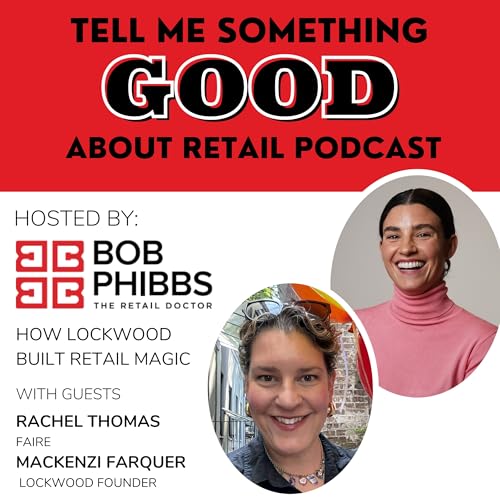
  • How Lockwood Built Retail Magic
    Mar 12 2026

    How do independent retailers build stores customers love while avoiding the trap of looking like every other shop?

    In this episode of Tell Me Something Good About Retail, Bob Phibbs talks with Lockwood founder Mackenzi Farquer and Rachel Thomas from Faire, the global wholesale marketplace connecting independent retailers with brands.

    They discuss how retailers can discover new products, build a unique assortment, and create a store experience that keeps customers coming back. The conversation covers wholesale buying strategies, visual merchandising, retail promotions, and the realities of growing from one store to multiple locations.

    If you run a boutique, gift shop, lifestyle store, or independent retail business, this episode explores practical ways to buy smarter, merchandise better, and grow without losing your point of view.

    What You'll Learn in This Episode
    • How independent retailers source products using Faire
    • How Lockwood grew from a small neighborhood shop into a multi-location retail brand
    • Why buying what you like is not the same as buying what sells
    • How retailers can differentiate their assortment instead of becoming a “look-alike store”
    • Visual merchandising strategies that make a store feel exciting, fresh, and memorable
    • Why payment terms and inventory testing can reduce buying risk
    • How social media, promotions, and events help drive retail foot traffic

    Key Takeaways for Retailers


    1. Great stores have a clear point of view

    Successful independent retailers curate products that reflect their community, customers, and brand identity, not just current trends.

    2. Wholesale platforms work best when used strategically

    Platforms like Faire help retailers discover brands and test new products, but buyers still need to search intentionally and build an assortment that stands out.

    3. Expansion only works when the first store is solid

    A powerful reminder from the episode:

    “You never open the second location to save the first.”

    Retail growth works best when the original store is profitable, stable, and repeatable.

    Topics Covered


    • Independent retail strategy
    • Wholesale buying for boutiques
    • Using Faire wholesale marketplace
    • Retail inventory planning
    • Visual merchandising ideas
    • Boutique retail growth
    • Retail promotions and events
    • Expanding a retail store to multiple locations

    Featured in This Episode


    Bob Phibbs – The Retail Doctor

    Retail speaker, consultant, and host of Tell Me Something Good About Retail

    Mackenzi Farquer – Founder of Lockwood

    A multi-location lifestyle retailer known for curated gifts, neighborhood pride merchandise, and creative in-store experiences.

    Rachel ThomasFaire

    An online wholesale platform helping independent retailers discover products, streamline ordering, and reduce buying risk.

    Suggested SEO keywords
    • independent retail podcast
    • Faire wholesale marketplace
    • Lockwood retail
    • wholesale buying for boutiques
    • retail merchandising tips
    • inventory planning for retailers
    • how to open a second retail store
    • visual merchandising ideas
    • retail growth strategy
    • independent store owner advice
    • gift shop buying strategy
    • local retail brand building
    Más Menos
    36 m
  • Community Beats Cheap Every Time Episode: 140
    Oct 30 2025

    John Robison didn't follow a traditional path. After engineering sound effects for Kiss and designing early video games, he built a thriving luxury automotive service business by rejecting the dealership playbook. In this episode, John explains why leasing models create service nightmares, how his autism gave him unusual focus for complex mechanical problems, and why his customers thank him for $10,000 repairs while dealership customers rage over $1,000 bills. He breaks down the fundamental difference between selling products and selling expertise, why throwing away specialists for cheaper options backfires as you move upscale, and how his clients called during the pandemic offering work to keep his shop alive. Whether you're in automotive, apparel, or any service business, John's insights on building trust through competence, creating community through specialized knowledge, and why affluent customers need relationships more than transactions will change how you think about premium service.


    Key takeaways:

    • Your needs become more specialized as you move upscale - cheap fixes don't work for complex problems.
    • Service loyalty comes from competence, not charm - know your product deeply and explain it clearly
    • The dealership model (leasing + volume) creates customers who can't afford repairs; ownership creates customers who expect investment
    • Community is insurance - his customers protected his business because specialized expertise is rare and valuable
    • Neurodivergent thinking can be a business advantage when it creates abilities others don't have


    https://www.robisonservice.com/

    https://www.linkedin.com/in/johnelderrobison/


    John Elder Robison John Elder Robison, founder of Robison Service and the Springfield Automotive Complex, is a renowned master automotive restorer and best-selling author known for his work on neurodiversity and human experience. His forthcoming book explores “money, wealth, and security,” challenging how conventional financial wisdom often fails people who think differently or live unconventional lives. In the 1970s, Robison worked as an engineer in the music industry, where he created the iconic special effects guitars used by the band KISS. He gained prominence with his 2007 memoir *Look Me in the Eye*, which recounts his life with undiagnosed Asperger syndrome and his unique cognitive abilities, followed by three additional books. Since 2012, he has served as the Neurodiversity Scholar in Residence at the College of William & Mary in Williamsburg, Virginia, advocating that while disabilities can pose challenges, autism itself is not a problem.


    Más Menos
    31 m
Todavía no hay opiniones