Specifically for Seniors - A New Direction Podcast Por Specifically for Seniors arte de portada

Specifically for Seniors - A New Direction

Specifically for Seniors - A New Direction

De: Specifically for Seniors
Escúchala gratis

Change is an integral part of growth, and as we progress, it becomes crucial to adapt and evolve. It is with great excitement that we announce the refocusing of our podcast, Specifically for Seniors. By refocusing the direction of the podcast, we invite individuals of all ages to join the conversation and embark on a lifelong journey of learning and connection. In this new direction, Specifically for Seniors, The Next Generation will not only cater to the interests of older adults but will also engage their children, grandchildren, and younger individuals who share a curiosity for life.Specifically for Seniors Ciencias Sociales
Episodios
  • "Fossils Against Fossil Fuels: Bill McKibben on Why Seniors Are Climate's Secret Weapon"
    Apr 12 2026

    Specifically for Seniors • Guest: Bill McKibben

    About the GuestBill McKibben is a journalist, author of 20+ books, and professor at Middlebury College. He wrote the first major book on climate change in the 1980s and founded 350.org — the world's first global grassroots climate campaign — and Third Act, an organization mobilizing Americans over 60 on climate and democracy.

    Episode Summary

    McKibben joins host Dr. Larry Barsh to argue that cheap solar and wind power represent the most powerful climate tool humanity has ever had — and that older Americans are uniquely positioned to lead the fight.

    The Solar Revolution.

    About five years ago, solar and wind became cheaper than fossil fuels. China now installs 3 gigawatts of solar daily — one coal plant's worth every eight hours. California regularly generates 100%+ of its electricity from renewables, with batteries storing the surplus. Every tenth of a degree of warming we prevent matters: each pushes 100 million people from safe to dangerous climate zones.

    Sunlight vs. Oil.

    "Sunlight travels 93 million miles to reach Earth — none of them through the Strait of Hormuz." Oil is the truly intermittent energy source. A handful of drones can shut down global supply. Nobody can embargo the sun.

    Batteries.

    Lithium-ion batteries are recyclable. The total minerals needed for the renewable battery revolution through mid-century are less in volume than one year's global coal mining. Lithium lasts 25 years and can be reused. Coal gets burned once and requires constant replacement.

    Health Costs.

    Fossil fuels cause roughly 9 million deaths per year worldwide — 1 in 5 deaths globally. Canada's 2023 wildfires, driven by climate change, caused 80,000 US deaths from smoke inhalation alone. Home insurance costs are skyrocketing as climate risk makes underwriting nearly impossible.

    Third Act & Senior Power.

    With 120,000 members nationwide, Third Act is proving seniors are a political force. Recent wins: legalized plug-in balcony solar in Utah, Virginia, and Maine; won a clean-energy majority on Arizona's Salt River Project board (serving 2M people); launched Gray PAC and phone banks for key elections. The "Rocking Chair Rebellion" shut down big-bank branches in 100 cities to protest fossil fuel financing.

    America's Self-Sabotage.

    The first solar cell was invented at Bell Labs in 1956. The first industrial wind turbine was built in Vermont in 1943. These American technologies have been handed to China while the US rolls back clean energy policy — what McKibben calls "economic national self-sabotage" without precedent.

    Legacy.

    "We're in danger of being the first generation that left the world a lot worse off than we found it." Young people aren't just anxious about climate — they're anxious about being abandoned. McKibben's call: use the time, skills, and political power that come with age to organize, vote, and fight.

    Key Quotes

    "There is no known way to stop old people from voting. We come preloaded with real power."— Bill McKibben

    "Solar energy takes power away from billionaires. That makes it ipso facto good."— Bill McKibben

    "Sunlight travels 93 million miles to reach Earth — none of them through the Strait of Hormuz."— Bill McKibben"

    There is no known way to stop old people from voting. We come preloaded with real power."— Bill McKibben

    "We live in a world where billionaires have too much power. Things that take power and money away from billionaires are ipso facto good — and solar energy is one of them."— Bill McKibben

    "We're in danger of being the first generation that left the world a lot worse off than we found it — which we do not want to do."— Bill McKibben

    Resource

    thirdact.org

    350.org

    Book: Here Comes the Sun by Bill McKibbenSpecifically for Seniors Podcast • Follow or subscribe wherever you listen

    Más Menos
    31 m
  • AI in the Doctor’s Office: Is Your Physician Being Replaced? | Featuring Dr. Adam Rodman
    Mar 22 2026

    Artificial Intelligence is no longer a tool of the future—it’s already in the exam room. In this episode of Specifically for Seniors, host Dr. Larry Barsh sits down with Dr. Adam Rodman, a Harvard professor and internal medicine physician, to discuss how AI is fundamentally changing the way doctors practice and how patients manage their health.

    From "AI scribes" that record visits to patients using ChatGPT for a second opinion, we explore the benefits, the risks, and the future of healthcare in an AI-driven world.

    In this video, you will learn:

    The Rise of AI Scribes: How automated recording tools are allowing doctors to focus on patients instead of computer screens.

    The "Second Opinion" in Your Pocket: Why Dr. Rodman believes it’s actually okay (and even helpful) for patients to consult AI before their appointment.

    Accuracy vs. Human Intuition: Can AI out-diagnose a human doctor?.

    Privacy & Security: Understanding HIPAA compliance and how your medical data is protected when using AI tools.

    About Our Guest:

    Dr. Adam Rodman is a general internist at Beth Israel Deaconess Medical Center, an assistant professor at Harvard Medical School, and the Director of AI programs for the Carl J. Shapiro Center. He is also the author of Shortcuts to Medicine and the host of the Bedside Rounds podcast.

    Más Menos
    43 m
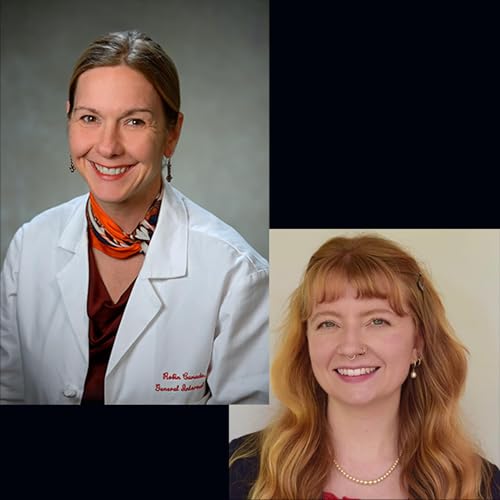
  • "Our Patients Are More Frightened and Sicker Than Ever" with Dr. Robin Canada and Elizabeth Whidden
    Mar 8 2026

    Host Dr. Larry Barsh sits down with two frontline Philadelphia healthcare providers to discuss the mounting health crisis driven by fear of immigration enforcement in immigrant communities.

    The conversation draws on a powerful New York Times op-ed the guests co-authored in February, titled "Our Patients Are More Frightened and Sicker Than Ever," and explores real patient stories, systemic failures, and what listeners can do to help.

    Dr. Robin Canada - Professor of Clinical Medicine, University of Pennsylvania's Perelman School of Medicine. Primary care physician and community health leader serving as Associate Division Chief for Community Engagement and Director of Residency Education at a clinic specifically for immigrant patients in South Philadelphia. Co-author of the February New York Times op-ed.

    Elizabeth Whidden - Fifth-year MD/MPH student at the University of Pennsylvania, months away from beginning her residency in internal medicine. Former immigrant case manager. Current leader of an organization coordinating medical-legal partnerships for asylum seekers. Co-author of the February New York Times op-ed.Widespread fear in immigrant communities is causing patients to avoid medical care, even those with legal status.ICE activity has been described as indiscriminate — affecting documented residents, mixed-status families, and U.S. citizens.

    Medical Consequences of Detention

    Interruption of medications for diabetes, hypertension, post-stroke care, dialysis, and addiction leads to rapid deterioration.Reportedly 40+ detainee deaths in 2025; 6–8 already reported in 2026 (exact figures uncertain).

    An ACLU analysis found roughly 95% of detention deaths between 2021–2024 were preventable with proper medical care.Detained individuals face lack of food access, irregular bathroom schedules, absence of exercise, and extreme psychological stress.

    How Clinics Are Responding

    Switching to phone-based telemedicine appointments when ICE threat levels are high.Locking clinic waiting rooms to prevent unannounced ICE entry; installing security in the vestibule.Increased proactive outreach to high-risk patients who have stopped coming in.

    Writing letters of medical necessity for detained patients to support legal and consulate efforts.

    Coordinating medical-legal partnerships for asylum seekers through student-led organizations.

    Relevance to Seniors

    Many caregivers in senior living and skilled nursing facilities come from immigrant communities — ICE enforcement directly disrupts elder care.Undocumented seniors are also directly affected — the episode highlights a man in his late 60s on dialysis being worked up for cancer who lives under dual threats of illness and deportation.

    How You Can Help

    Donate to legal aid organizations in your city — immigration lawyers are working around the clock on habeas petitions and there is a serious shortage.

    Support safety-net clinics caring for immigrant patients — these communities often have no access to Medicaid, Medicare, or food assistance.

    Search for immigrant rights organizations in your city — most have a "how to help" section on their website with both financial and volunteer opportunities.

    Attend protests and rallies — as Dr. Canada notes, the world is watching, and advocacy from seniors carries special weight.

    Stay informed and speak out — sharing the realities of what is happening in your community can shift the conversation.

    Referenced Article

    "Our Patients Are More Frightened and Sicker Than Ever" — New York Times op-ed, February 2025, by Dr. Robin Canada and Elizabeth Whidden.

    The piece describes the devastating health consequences of immigration enforcement on patients in Philadelphia's South Side and calls for systemic reform.

    Article by Dr, Canada

    https://closler.org/passion-in-the-medical-profession/detained

    Más Menos
    40 m
Todavía no hay opiniones