Rise To More Podcast Por Jasna Burza arte de portada

Rise To More

Rise To More

De: Jasna Burza
Escúchala gratis

Welcome to Rise to More—where who you become next is what matters. I’m Jasna Burza, a war survivor turned advisor to the world’s top minds. From the wildly successful lost at the top to visionaries chasing more, I’ve helped them elevate. How? Cut the noise. Act with grit. Lead with purpose. This isn’t just about success—it’s about becoming resilient, grounded and unshakable. Here, transformation is real, personal, and lasting—and whether you’re leading a company or rebuilding your life…you're ready to… rise to more. Come say hi on Instagram @jasna.burza ♥️ Buy book here: https://a.co/d/agOUrzv Please rate and review the podcast if you enjoy it. Remember, you are the one you have been waiting for.

jasnaburza.substack.comJasna Burza
Ciencias Sociales Desarrollo Personal Filosofía Éxito Personal
Episodios
  • The Reality of Not Giving Up
    Mar 31 2026
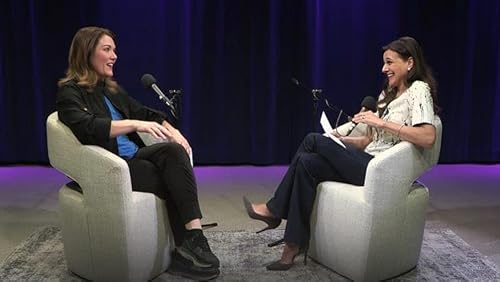
    When I sat down with Beth Benike on Rise to More, I expected we’d talk about business, tariffs, entrepreneurship, and the challenges she’s faced as the founder of Busy Baby. And we did. But what stayed with me wasn’t just her business story. It was who she is underneath all of it: the woman, the mother, the inventor, and the person who keeps showing up no matter what.Beth is an Army veteran, a mom, and the inventor of Busy Baby. The idea came while she was out at lunch with friends, their babies were tossing toys, grabbing everything, making a mess like babies do. And she had that thought so many people have: there has to be an easier way.The difference is, she didn’t stop there. She went home and started figuring it out, playing with silicone molds and creating a prototype, which at the time she called just a “mom hack”. So many of us notice problems and talk about them. We say someone should create something for this. Beth actually went home and started figuring out a solution. Busy Baby wasn’t just about spotting a gap in the market. It came from her own experience as a mom who felt overwhelmed and just wanted something to make daily life a bit easier. The business boomed, she ended up on Shark Tank, didn’t take the deal and he business still continues to grow and expand. Everything was going well, until the tariffs almost destroyed everything. In 2025, when tariffs surged, her business took a huge hit. The timing couldn’t have been worse. She had just gotten into Walmart and Target, had invested heavily into her product, had inventory ready to ship. And almost overnight, the numbers shifted so much that bringing her own product into the country didn’t make sense anymore.From the outside, people talk about things like tariffs and supply chains in very abstract ways. But behind all of that are real people and real consequences.She had to leave her inventory in China. She lost momentum, lost sales, and still had a business to run with employees, bills, and responsibilities that don’t pause just because things get hard.This is where her story became bigger than her company.She started speaking openly about what was happening, not because she planned to be a voice for others, but because she was willing to be honest. To say this is hard. This is breaking people. And that kind of honesty matters, especially when so many people stay quiet out of fear or shame.But that honesty also came with a cost.One of the most powerful moments in our conversation was when she talked about her mental health. At a time when her business looked successful from the outside, she went through a severe breakdown. Later, she understood it was situational depression. She had gone through pregnancy, postpartum, fertility struggles, rapid business growth, family dynamics, and constant stress without enough space to recover.At her lowest point, her mind convinced her everyone would be better off without her. That’s hard to hear because the people who seem the strongest are often the ones struggling quietly. When you’re capable and high-functioning, there’s a lot of pressure to keep it together. A lot of shame around admitting you’re not okay.Beth didn’t hide from that. She talked about it openly, and that takes courage. She made it clear that strength isn’t about never breaking. It’s about recognizing when something’s off, asking for help, and learning how to take care of yourself too.And the truth is, she’s still in it. This isn’t a finished story. She’s still navigating risk, still talking to banks, still trying to hold everything together for her family and her business.But even in that, she doesn’t come across as a victim. She keeps coming back to one question: what’s the next step? Not how do I fix everything forever. Not how do I undo what already happened. Just, what’s next?And she comes back to this idea often: do the best you can with what you have, where you are. Not where you wish you were….not with someone else’s resources…just with what’s in front of you right now. There’s something very grounding about that. That’s why her story matters. It’s not just about business. It’s about being human. It’s about building something from care, dealing with the weight of ambition, navigating mental health under pressure, and continuing anyway.I walked away from that conversation feeling grateful. For her honesty, for her willingness to say the hard things out loud, and for people like her who keep showing up even when it would be easier not to.She calls herself stubborn. I’d call her resilient. Honest. Human.And in a world that loves polished success stories but avoids the reality behind them, this kind of story feels necessary. Because strength doesn’t always look impressive. Sometimes it’s just taking the next step when you’re unsure. Standing up to what is right even when it feels hard. Asking for help when you need it. Admitting things are hard and ...
    Más Menos
    56 m
  • The War Within
    Mar 10 2026
    Over the past few weeks I have had the same conversation with many different people. Friends, clients, parents at school events, strangers who stop me after a talk. The topic is always the same: the state of the world.Another war appears in the news. Political tensions rise. Economists warn about instability. The questions people ask me are simple and sincere. Is the world falling apart? Where are we heading? What are we supposed to do about all of this?These questions matter because war is real and the suffering it brings is real. For years I have spoken openly about the tragedy of men playing war, while the true cost is paid by women, children, and young men who are sent to fight battles that are rarely their own. So when people feel uneasy about what is happening globally, I understand it. I feel it too.But the longer I observe what is happening around us, the more convinced I become that the greatest battle of our time is not happening between countries.It is happening inside people.Most of us are fighting a quiet war for our attention, and we do not even realize it.Human beings are not built to absorb the amount of information we now consume every day. News alerts arrive by the minute, social media feeds never end, and opinions are stacked on top of opinions until it becomes almost impossible to think clearly about anything.The result is simply a mental chaos.People are anxious, reactive, and exhausted. Families argue about issues they barely understand. Friendships break over headlines that will be forgotten in a week. Many of us spend more time following the drama of the world than paying attention to the small, real details of our own lives.The problem is not only distraction. The deeper problem is that constant consumption leaves no room for creation.Every person I have ever worked with carries some form of creative potential. It may be raising thoughtful children, building a meaningful business, writing, teaching, helping others, or simply bringing kindness and intelligence into a community. But creativity requires attention, and attention has become the most stolen resource of our time.The more noise we absorb, the harder it becomes to hear our own thoughts and the whispers of your own soul. Eventually people begin to feel lost, not because they lack purpose, but because their inner voice has been buried under endless input.There is also something else we rarely discuss. Human beings affect each other emotionally far more than we like to admit. When someone is angry or unstable, the whole room feels it and our nervous systems react to one another constantly.When millions of people are living in a constant state of agitation and distraction, that energy spreads through families, workplaces, and communities. Personal chaos slowly becomes cultural chaos and global chais. It’s a form a virus, an energetic one. This is why protecting your attention is no longer a small lifestyle choice. It is a form of responsibility.In my own home we have a simple rule. At a certain hour in the evening the phones go away, we turn off screens and the house becomes quiet again. We talk, read, and prepare for the next day.It sounds almost trivial, but those quiet hours restore something modern life keeps taking from us: a regulated nervous system and a clear mind.The world may remain unstable for some time and NONE of us has full control over those forces.What we do have control over is the state of our own mind.The future will need people who can think clearly, stay calm, and resist the emotional storms that sweep through society. That kind of stability does not come from consuming more information but from creating moments of stillness where clarity can return.So if there is one small experiment worth trying, it is this. Put the phone down earlier tonight. Step outside. Sit quietly long enough to hear your own thoughts again.Beneath the noise, something important is still there. Never left us….Your attention. Your creativity. Your ability to bring something meaningful into the world. Most importantly- an exhale you haven’t had in a while. Less anxiety, more laughter, more joy, more AWE….And right now, protecting that may be one of the most important things any of us can do.Rise To More is a Twin Cities Show rooted in meaningful conversation and real transformation. This Minneapolis self-development podcast offers thoughtful dialogue for listeners who want clarity, confidence, and depth—not hype. Explore one of the most intentional Minnesota podcasts for leaders, entrepreneurs, and seekers ready to rise. This is a public episode. If you would like to discuss this with other subscribers or get access to bonus episodes, visit jasnaburza.substack.com
    Más Menos
    15 m
  • Are We Broken Or Overmedicated? What Patients Aren’t Told About Mental Health Medication
    Mar 3 2026
    There are certain stories that do not simply inform you — they rearrange you.In 2003, a healthy thirty-seven-year-old man kissed his wife goodnight and went to sleep. He had just begun a dream job at a startup company. He and his wife were planning in vitro treatments to start a family. He was disciplined, responsible, a runner, deeply loved. He did not have a history of depression. He was not spiraling. He was not unraveling. He simply could not sleep.His doctor handed him a three-week sample pack of an antidepressant and assured him it would take the edge off.Five weeks later, he hanged himself in the garage.When Kim Witczak tells this story, she does not speak as a crusader or an ideologue. She speaks as a woman who once trusted. A woman who believed that if something carried serious risk, someone in authority would have warned her. At the time, there were no black box warnings about increased suicide risk during early treatment. There was no public awareness about akathisia — the profound, drug-induced inner agitation that can make a person feel disconnected from their own mind. There was no widespread conversation about off-label prescribing or incomplete clinical transparency. There was only the assumption that prescribed meant safe.When Woody began describing terrifying sensations — “My head feels like it’s outside my body” — neither of them questioned the medication. Why would they? The doctor said it could take four to six weeks to adjust. He was under stress from a new job. Perhaps this was simply part of the transition. Kim recalls coming home from a work trip and finding her husband collapsed on the kitchen floor, drenched in sweat, sobbing because he did not understand what was happening inside his own mind. They prayed. They practiced breathing exercises. They reassured each other it would pass.It did not pass.After his death, a coroner asked whether Woody had been taking any medication. A bottle of Zoloft sat on the kitchen counter. That same day, the front page of the Star Tribune carried an article about a possible link between antidepressants and suicide risk in teens in the United Kingdom. Time, for Kim, split cleanly into before and after.Grief can hollow a person out. It can silence them permanently. Or it can clarify something so fiercely that silence becomes impossible.Kim did not set out to challenge an industry. She was a marketing professional, not an activist. She calls herself an accidental advocate. But as she began researching with her brother-in-law, what they uncovered unsettled them deeply. They learned of earlier FDA hearings in the 1990s that had raised concerns about violence and suicide linked to similar medications. They learned that certain clinical trial data had not been fully visible to the public. They learned about akathisia — described in internal language as a state so unbearable that, for some patients, death could feel like relief. They realized this was not simply a tragic anomaly. It was a pattern that had not been adequately confronted.What followed was not theatrical outrage but disciplined persistence. Kim brought binders of documents to Washington. She testified. She met with regulators who initially regarded stories like hers as isolated incidents. She sat across from pharmaceutical executives and advisory panels while carrying the image of her husband’s final weeks. In 2004 and again in 2006, black box warnings were added to antidepressants for young people, later extended to include those up to age twenty-four. Today, Kim sits on the FDA’s psychopharmacologic advisory committee, participating in discussions about the very medications that once altered the course of her life.What struck me most in our conversation was not anger. It was precision. She is not anti-medicine. She is not arguing that psychiatric medications have no place. She is asking for informed consent. She is asking that patients and families receive full information — benefits and risks — so that decisions are made consciously rather than reflexively. She is asking that doctors slow down long enough to consider whether non-pharmaceutical interventions might be appropriate before reaching for a prescription pad. She is asking that we remember we are not passive recipients of care, but participants in our own health.We live in a time when diagnostic language has expanded rapidly. Ordinary human experiences are increasingly categorized and medicalized. One in five Americans now takes a psychiatric medication. Some of this reflects meaningful progress; mental health conversations are more open than in previous generations. Suffering that was once hidden is now acknowledged. But beneath that progress lies an uncomfortable question: are we more broken, or are we more medicated?After Woody’s death, Kim was offered medication to blunt her grief. She declined. Not because she romanticized pain, but because she understood that numbing it would not restore what had...
    Más Menos
    1 h y 9 m
Todavía no hay opiniones