Episodios

  • Lost in Translation (2003) vs Her (2013)
    Mar 31 2026

    Send us Fan Mail

    A warm beer, a cold opening week, and then the emotional whiplash of two movies that won’t let us stay comfortable. We start with the simple stuff we love, Mets Opening Day traditions, season-ticket routines, and why we sometimes just want entertainment that feels easy to pick up and enjoy. That’s also why the Crimson Desert discourse grabs us: if a game takes eight hours before it “clicks,” is that depth or unnecessary friction?

    Then we get personal with film talk. Lost in Translation becomes our lens for expatriate loneliness, quiet friendship, and the way Sofia Coppola lets meaning live in pauses instead of plot twists. We dig into Bill Murray’s understated comedy, Scarlett Johansson’s divisive character beats, and why the ending can feel either honest or maddening depending on what you want from a story.

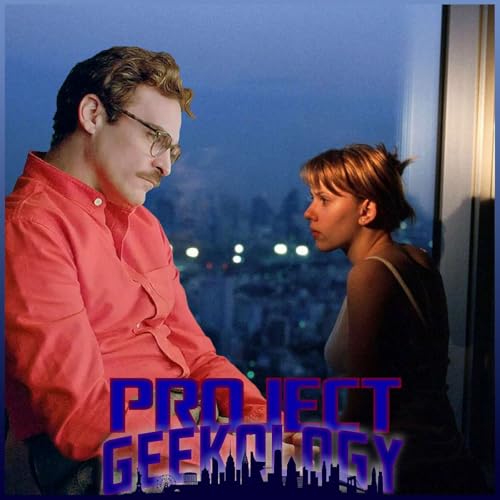
    From there we step into the unsettled territory of Her. Spike Jonze turns AI romance into a mirror for modern relationships, attachment, and emotional dependence, and we don’t dodge how uncomfortable that can be. We connect it to sci-fi history like Star Trek, argue about how fast “AI emotions” should evolve, and unpack the gut-punch moment that turns love into impossible math.

    If you like smart movie analysis, big feelings, and the occasional baseball rant, hit play. Subscribe, share this with a friend, and leave a review, then tell us: which film hits harder for you, Lost in Translation or Her?

    Support the show

    Más Menos
    1 h y 23 m
  • One Piece: Season 2 (Live Action)
    Mar 24 2026

    Send us Fan Mail

    One Piece is huge, weird, and surprisingly heartfelt, so why does the Netflix live action adaptation actually work, especially in Season 2? We dig into it as a crew, with Anthony and Dakota joined by Rich and Jen. We start with a genuine newcomer perspective and build toward why this season finally feels like it finds its rhythm. If you’ve ever been burned by live action anime before, we talk about the difference between just copying plot points and actually capturing what the story is trying to say.

    We get into the choices that make Season 2 feel more focused. The exposition is cleaner, the pacing doesn’t drag as much, and the show fully commits to its world instead of trying to tone down how strange it can be. We also break down Devil Fruits in simple terms, including Zoan, Logia, and Paramecia, and why abilities like Smoker’s smoke powers or the wax powers actually work on screen. Along the way, we talk about the Baroque Works casting, the myth and fable feeling of the world, and the small details that make everything feel lived in, like Crocus’ lighthouse.

    And yes, we spend time on the moment that changes everything: Tony Tony Chopper. We talk about why his introduction lands so emotionally, how the adaptation balances tragedy with warmth, and why this one character can turn a skeptic into someone who finally understands what One Piece is about. We also get into what is gained and lost when a live action series compresses long anime arcs, and what we hope Season 3 does differently if the wait between seasons stays this long.

    If you enjoyed the conversation, subscribe, share it with a friend who thinks One Piece is too big to start, and leave a five star review to help more people find the show.


    Twitter handles:
    Project Geekology: https://twitter.com/pgeekology
    Anthony's Twitter: https://twitter.com/odysseyswow
    Dakota's Twitter: https://twitter.com/geekritique_dak

    Instagram:
    https://instagram.com/projectgeekology?igshid=1v0sits7ipq9y

    YouTube:
    https://www.youtube.com/@projectgeekology

    Geekritique (Dakota):
    https://www.youtube.com/channel/UCBwciIqOoHwIx_uXtYTSEbA

    Support the show

    Más Menos
    1 h y 17 m
  • Major League (1989)
    Mar 17 2026

    Send us Fan Mail

    What started as a simple baseball-season pick turned into a reminder of why sports movies work so well in the first place. This week we’re breaking down Major League (1989), and even the non-baseball fans on the mic ended up getting pulled in once the underdog story really starts to click. The Cleveland roster is basically designed to fail, the Yankees are perfectly hateable, and the final game is staged so clearly that every out and every risky decision makes sense, even if you’ve never cared about a box score in your life.

    We dig into the characters that make the movie stick: Charlie Sheen’s chaotic “Wild Thing” energy, Wesley Snipes’ electric Willie Mays Hayes, Jake Taylor trying to squeeze one last shot out of his career, and the way the whole roster feels like a team of talented players who all have one big flaw holding them back.

    We also talk about the comedy and why it still works. It’s funny without feeling loud or over-the-top, and Bob Uecker’s broadcast booth commentary adds a layer of baseball authenticity that a lot of modern sports comedies still try to capture.

    Of course, not everything has aged perfectly. We also get into some of the stereotypes and the old Cleveland branding that feel different watching it today, and why those things are worth talking about when revisiting a classic.

    By the end, we zoom out to the bigger idea behind it all: baseball fandom is built on psychology, rituals, and emotional attachment. One moment, one risky call, one win you didn’t see coming, that’s the stuff that sticks with you for life.

    If you’re looking for a sports movie breakdown with laughs, context, and a lot of appreciation for great team chemistry, give the episode a listen. Subscribe, share it with a friend, and if you enjoy the show, drop us a five-star review.


    Twitter handles:
    Project Geekology: https://twitter.com/pgeekology
    Anthony's Twitter: https://twitter.com/odysseyswow
    Dakota's Twitter: https://twitter.com/geekritique_dak

    Instagram:
    https://instagram.com/projectgeekology?igshid=1v0sits7ipq9y

    YouTube:
    https://www.youtube.com/@projectgeekology

    Geekritique (Dakota):
    https://www.youtube.com/channel/UCBwciIqOoHwIx_uXtYTSEbA

    Support the show

    Más Menos
    1 h y 7 m
  • Fallout - Season 2 (2025)
    Mar 11 2026

    Send us Fan Mail

    A nuked world shouldn’t feel this alive. We dive headfirst into Fallout Season 2 and unpack how it turns deep-cut lore into gripping television without leaving newcomers behind. From NCR and Caesar’s Legion to the fractured Brotherhood of Steel and Mr. House’s clockwork vision, we trace the power plays that make New Vegas more than a backdrop—it’s a living argument about who gets to decide the future.

    What hooked us most is the character engine driving all that spectacle. Lucy walks out of the vault with rules and runs into moral weather she can’t predict. The Ghoul carries a memory of the old world and the stamina to outlast the new one, shaping the story with hard-earned patience instead of easy violence. Hank’s “minimize” project reframes villainy as research, and one button press turns memory into a weapon. It’s a season obsessed with identity: who you are without your past, what love looks like when trust is gone, and how choice survives after the world ends.

    If you’ve played the games, you’ll feel the satisfaction: deathclaws that terrify in numbers, super sledges and power armor that hit like freight trains, a Ron Perlman-voiced super mutant, and small details like sugar bombs and chems that actually matter. But the real trick is how the show uses those pieces to move the plot, not just wink at fans. We also wrestle with big adaptation questions—why this succeeds where Halo stumbled—and map what Colorado might bring next, from cryptids to consequences.

    Hit play to join us in the wasteland. If this breakdown sparks your brain, share it with a friend, subscribe for more deep dives, and drop a five star juicy review so other wanderers can find the show. What theory are you betting your caps on?

    Twitter handles:
    Project Geekology: https://twitter.com/pgeekology
    Anthony's Twitter: https://twitter.com/odysseyswow
    Dakota's Twitter: https://twitter.com/geekritique_dak

    Instagram:
    https://instagram.com/projectgeekology?igshid=1v0sits7ipq9y

    YouTube:
    https://www.youtube.com/@projectgeekology

    Geekritique (Dakota):
    https://www.youtube.com/channel/UCBwciIqOoHwIx_uXtYTSEbA

    Support the show

    Más Menos
    1 h y 20 m
  • Kiki's Delivery Service (1989)
    Mar 3 2026

    Send us Fan Mail

    A thirteen‑year‑old witch, a borrowed broom, and a city that doesn’t owe you anything—that’s the quiet magic that makes Kiki’s Delivery Service unforgettable. We dive into why this story still hits hard: the sweetness of small kindnesses, the sting of indifference, and the way work can both drain you and define you. From the bakery’s warm light to the wind over red rooftops, we trace how Miyazaki builds a world that feels lived‑in without overexplaining its rules, letting emotion and texture do the heavy lifting.

    We compare first impressions, highlight the European inspirations behind the seaside city, and talk about how Osono’s simple act of hospitality becomes the turning point for Kiki’s sense of belonging. Then we tackle the big question: why does Gigi stop talking? We explore it as both a magical bond loosening and a metaphor for leaving childhood behind, and how that silence reframes Kiki’s isolation and resilience. The blimp set piece gets a close read too—why the battered street broom matters, how action restores purpose, and what it says about skill versus heart.

    Along the way, we have fun with dubs and voice casting, swap Disney pin‑trading lore, and debate Tombow’s friend group in a world suddenly obsessed with flight. If you love Studio Ghibli, coming‑of‑age stories, or just want to feel the wind in your face for an hour, this one’s for you. Hit play, then tell us your take: is Kiki Miyazaki’s most rewatchable film, and what do you think really happened to Gigi’s voice? Subscribe, share with a friend, and drop a rating to help more listeners find the show.


    Twitter handles:
    Project Geekology: https://twitter.com/pgeekology
    Anthony's Twitter: https://twitter.com/odysseyswow
    Dakota's Twitter: https://twitter.com/geekritique_dak

    Instagram:
    https://instagram.com/projectgeekology?igshid=1v0sits7ipq9y

    YouTube:
    https://www.youtube.com/@projectgeekology

    Geekritique (Dakota):
    https://www.youtube.com/channel/UCBwciIqOoHwIx_uXtYTSEbA

    Support the show

    Más Menos
    1 h y 13 m
  • Predator: Badlands (2025)
    Feb 23 2026

    Send us Fan Mail

    A Predator with a heartbeat changes everything. We take you into Badlands, where Dek, the runt of a Yautja clan, hunts a nightmare that even his father fears, and where Thia, a synth with surprising empathy, rewrites the rules of survival. This isn’t just another invisibility-cloak stalk-and-slash. It’s a character-first story built on honor, trust, and a planet that wants you dead the second you step on it.

    We unpack how Badlands bridges Predator and Alien without feeling like homework. From Weyland-Yutani fingerprints to the chilling return of “MU / TH / UR,” the film plants canon ties that feel earned. The ecosystem is more than a backdrop: razor grass shapes armor strategy, aerial hunters weaponize the environment, and the Kalisk’s regeneration forces smarter tactics. We dive into the “baby” Kalisk twist, why it works beyond cute-factor, and how it reframes Deck’s mission from trophy to responsibility.

    Our conversation goes deep on synth morality, Thia’s evolving conscience vs Tessa’s corporate directives, and why giving a Predator visible emotion can expand the myth without neutering it. We call out the clean action geography, expressive creature work, and why the PG-13 rating still lands visceral impact through alien fluids, industrial carnage, and mounting dread. Then we look ahead: the final shot hints at a matriarchal reckoning, possible crossover momentum, and a sequel path that could let Predator carry the honor-and-tactics banner while Alien brings the biotech nightmares.

    If you’re here for lore, we’ve got it; if you’re here for a smart, modern hunt story, you’ll find that too. Hit play, join the debate on Yautja culture, synth ethics, and the Kalask design, and tell us: should the Predator evolve emotionally, or stay mask-and-mystery forever? Subscribe, share with a friend, and drop a milky, juicy five-star review to boost the signal.


    Twitter handles:
    Project Geekology: https://twitter.com/pgeekology
    Anthony's Twitter: https://twitter.com/odysseyswow
    Dakota's Twitter: https://twitter.com/geekritique_dak

    Instagram:
    https://instagram.com/projectgeekology?igshid=1v0sits7ipq9y

    YouTube:
    https://www.youtube.com/@projectgeekology

    Geekritique (Dakota):
    https://www.youtube.com/channel/UCBwciIqOoHwIx_uXtYTSEbA

    Support the show

    Más Menos
    51 m
  • Twin Peaks: The Return (Part 2)
    Feb 17 2026

    Send us Fan Mail

    What if the one act of heroism you’ve waited decades to see unthreads the very world you love? We dive headfirst into Twin Peaks: The Return and follow Dale Cooper across timelines, motel thresholds, and shifting identities to ask whether saving Laura Palmer heals anything or erases everything. Along the way we confront the show’s anti‑nostalgia engine: familiar faces that feel strange, a town that looks the same but hums at the wrong frequency, and a finale that swaps closure for a single, devastating question.

    We start with the raw texture of The Return; Woodsmen drifting like static, a convenience store that shouldn’t have stairs, and a glass box that births nightmares then map those images back to Fire Walk With Me to show how Lynch and Frost turned “deleted lore” into a working cosmology. Our debate sharpens around Audrey and Diane as tulpas, Mr. C as pure predation, and Sarah Palmer as a vessel for Judy, the old name for an older evil. If Episode 8 is a bomb-blast origin story, then every echo after that is fallout: long takes, looping songs at the Roadhouse, and a green glove that seems ridiculous until it lands the punch that ends an era.

    We also make space for the human pulse; Ed and Norma’s overdue grace, Bobby’s quiet respect for Major Briggs, Ben Horne trying to be better, and the Mitchum brothers turning pie into providence. Even Dougie’s halting wonder has weight, asking how love persists when language fails. The Return keeps daring us to want neat answers while rewarding attention with rhymes and reversals instead. Maybe that’s the point: some mysteries won’t resolve; they resonate.

    Hit play if you want theory, argument, and a few laughs about arm wrestling, pie, and whether James has really always been cool. Then tell us your boldest take: did Cooper make the right choice? If this journey moved you, tap follow, share with a friend, and drop a five‑star review to help others find the show.


    Twitter handles:
    Project Geekology: https://twitter.com/pgeekology
    Anthony's Twitter: https://twitter.com/odysseyswow
    Dakota's Twitter: https://twitter.com/geekritique_dak

    Instagram:
    https://instagram.com/projectgeekology?igshid=1v0sits7ipq9y

    YouTube:
    https://www.youtube.com/@projectgeekology

    Geekritique (Dakota):
    https://www.youtube.com/channel/UCBwciIqOoHwIx_uXtYTSEbA


    Support the show

    Más Menos
    1 h y 29 m
  • Twin Peaks: Fire Walk With Me + The Return (Part 1)
    Feb 5 2026

    Send us Fan Mail

    A small town secret can feel like a universe, and Twin Peaks makes that literal. We mark episode 150 by plunging into Fire Walk With Me and the first eight parts of The Return—two works that trade cozy nostalgia for raw impact, then expand the mystery until it touches the edges of reality. Laura Palmer’s story becomes heartbreakingly concrete, Leland’s possession both supernatural and human, and the “entities above the convenience store” start to look less like flavor and more like a map.

    From there, The Return scatters the pieces in brilliant, unnerving ways. We break down three Coopers—Mr. C’s predatory calm, Dougie’s hollow innocence, and a good man trying to surface—as well as the infamous glass box murders that set a new ceiling for Lynchian dread. Episode 8 gets a full autopsy: the Trinity test as cosmic rupture, the Woodsmen as soot-streaked messengers, and a frog-moth that turns evil into something you can almost feel crawl down your throat. Along the way we celebrate the town’s evolutions—Bobby’s arc, Hawk’s leadership, the Log Lady’s farewell—and the show’s human choices: Diane is real and not here to coddle anyone; Denise is respected with a line that lands like a gavel; Jacoby sells golden shovels to “dig yourself out of the shit,” and somehow it all fits.

    We also have fun with the absurd: Wally Brando’s monologue, Mr. Jackpots’ lucky streak, and those nightly Roadhouse performances that punctuate scenes like breath between chapters. If you’re hunting for a clean answer key, Twin Peaks won’t give it to you. It offers patterns, symbols, and characters who feel painfully alive inside impossible rules. We’re here to guide you through the terror and the tenderness, connecting lore, highlighting performances, and asking the questions that keep this story burning.

    Hit play, share your theory on the frog-moth, and tell us: genius tapestry or beautiful chaos? If you’re enjoying the show, subscribe, leave a juicy five-star review, and pass this along to a friend who still thinks creamed corn is innocent.


    Twitter handles:
    Project Geekology: https://twitter.com/pgeekology
    Anthony's Twitter: https://twitter.com/odysseyswow
    Dakota's Twitter: https://twitter.com/geekritique_dak

    Instagram:
    https://instagram.com/projectgeekology?igshid=1v0sits7ipq9y

    YouTube:
    https://www.youtube.com/@projectgeekology

    Geekritique (Dakota):
    https://www.youtube.com/channel/UCBwciIqOoHwIx_uXtYTSEbA

    Support the show

    Más Menos
    1 h y 35 m