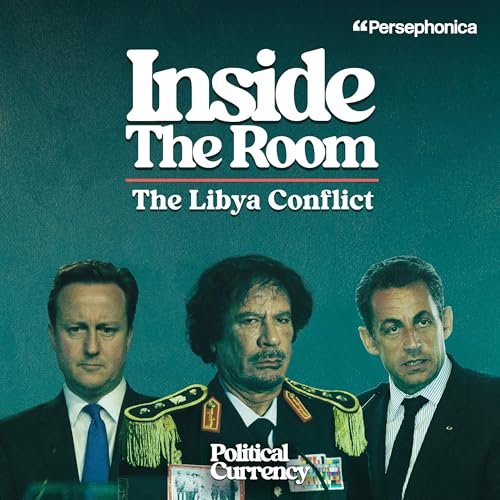
Political Currency Podcast Por Persephonica arte de portada

Political Currency

Political Currency

De: Persephonica
Escúchala gratis

Ed Balls and George Osborne take us behind closed doors into the rooms where decisions are made. Having battled it out across the despatch box, the former Chancellor and shadow chancellor now meet in the studio to discuss the decisions that affect the nation’s pockets. Our frenemies have the knowledge and experience to explain how good politics follows the economics - and expose how the powerful become powerless when faced with market forces and political currents they can’t control. Join us every Thursday.


Send your messages or voice notes to questions@politicalcurrency.co.uk


Find us on social media @polcurrency


Political Currency is a Persephonica production.

Hosted on Acast. See acast.com/privacy for more information.

Persephonica
Ciencia Política Política y Gobierno
Episodios
  • Inside The Room - The Libya Conflict: The Campaign (Part Two)
    Apr 6 2026

    Planes are in the air and the military intervention in Libya has now begun. But how does the operation progress from here? And what actually happens in a war room?


    In the second part of this mini series, Ed Balls and George Osborne ask Sir John Sawers about how MI6 gathered intelligence to guide the path forwards. He tells the story of leaving William Hague "aghast" by securing a visa for the Libyan foreign minister, who he then flattered with dinner at one of the service’s secure locations in return for crucial information…


    The pair also speak to former deputy national security adviser Hugh Powell about why David Cameron always felt that action was better than inaction, and hear from Cathy Ashton about why the fall of Tripoli was a moment of success for the PM and Nicolas Sarkozy.


    However, with Gaddafi still alive and the UN mandate not accounting for regime change, there was still reason to be apprehensive about the “huge challenge ahead”. Sawers and Powell discuss Gaddafi's skill of staying hidden, why MI6 doesn’t actually have a “license to kill”, and their approaches to negotiations with the dictator in his final weeks – including asking Tony Blair for help.


    Thanks for listening. In our third episode we take you right behind the scenes of the day Gaddafi was killed, and ask who was responsible for the post-war failures… Can’t wait? Subscribe now to get all three parts of Inside the Room: The Libya Conflict. You will also get access to our debrief episode The Inquiry, as well as early and ad-free access to our regular episodes of EMQs.


    For even more perks, including our exclusive newsletter, join our Kitchen Cabinet today:


    👉 patreon.com/politicalcurrency

    👉 Apple Podcasts


    Please note: Kitchen Cabinet is only available via Patreon.


    Credits:

    Research: Monica Lillis, Ayla Krachai, and Sam Burton

    Production support: Tom Jackson

    Production: Caillin McDaid and Nasreen Arain

    Video Editor: Avi Asher and Oliver Geraghty

    Executive Producer: Ellie Clifford and Henrietta Harrison

    Hosted on Acast. See acast.com/privacy for more information.

    Más Menos
    35 m
  • Inside The Room - The Libya Conflict: The Build Up (Part One)
    Apr 2 2026

    As renewed violence erupts across the Middle East, governments have been forced into crisis mode... but when is the right time to intervene, how involved should you get and when, if ever, is it time for 'boots on the ground'?


    It's these dilemmas and more that are currently facing Keir Starmer and other world leaders, but it's not the first time a UK government has had to find answers for such big questions about international intervention.


    Fifteen years ago the civil unrest of the Arab Spring spread to Libya. The violent crackdowns against anti-government protestors that followed sparked seven months of NATO military intervention and led to the killing of Muammar Gaddafi, putting an end to his 42-year dictatorship.


    In this special mini series, Ed Balls and George Osborne are joined by former MI6 Chief Sir John Sawers to discuss the key decisions, missteps, and aftermath of the Libya crisis. We take you inside the war rooms and hear unique insights from John, George and two other officials who saw key decisions being made first-hand: former EU High Representative for Foreign and Security Policy, Cathy Ashton, and deputy national security adviser to the coalition government, Hugh Powell.


    What can the wars of the past can teach us lessons for the wars of today?


    In part one, we look at how the UK government reacted to the escalating situation, why David Cameron and then-French President Nicolas Sarkozy pushed for military action, and the steps that led to the first bomb being dropped… and how it managed to surprise Britain.


    Thanks for listening. In our next episode we take you right behind the scenes of the military action and hear about all of the drama that ensued, including the moment Sir John Sawyers took an informant for a secret dinner…


    Can’t wait? Subscribe now to get all three parts of Inside the Room: The Libya Conflict. You will also get access to our debrief episode The Inquiry, as well as early and ad-free access to our regular episodes of EMQs.


    👉 patreon.com/politicalcurrency

    👉 Apple Podcasts


    Please note: Kitchen Cabinet is only available via Patreon.


    Credits:

    Research: Monica Lillis, Ayla Krachai, and Sam Burton

    Production support: Tom Jackson

    Production: Caillin McDaid and Nasreen Arain

    Video Editor: Avi Asher and Oliver Geraghty

    Executive Producer: Ellie Clifford and Henrietta Harrison


    Hosted on Acast. See acast.com/privacy for more information.

    Más Menos
    40 m
  • EMQs: Is Wes Streeting a good health secretary?
    Mar 30 2026

    Fellow ex-MP and former health minister Steve Brine sends in a question asking Ed Balls and George Osborne how we judge the performance of a health secretary, and in particular Wes Streeting. They lay out the historical challenges of the role, and where Streeting has risen or succumbed to them thus far.


    A colleague of Ed’s from King’s College then asks how useful it is for benefits to be so conditional, in particular for care leavers. They debate the fairness in having conditional benefits systems, and why people are more sympathetic to care leavers than other disadvantaged groups.


    They then discuss the perks of pedestrianising Bruton, George’s stomping ground, in a manner similar to Paris. Would George lead the campaign to see this through? Or is it an enticing but unrealistic idea?


    Finally, a former Tory parliamentary candidate raises his concerns around Nick Timothy’s controversial comments on a Ramadan event in London. They discuss the dangerous direction these comments represent for both the Tories, and British politics more widely.


    We love hearing from you, so please don’t forget to send all your EMQs to questions@politicalcurrency and make sure to include a voice note of your question.


    This podcast is sponsored by Chip. Join 400,000 customers building long term wealth.


    T&Cs apply, you must be a new Chip customer, over 18, a UK tax resident, and it’s app only. Chip is a trading name of Chip Financial Limited. Savings products are provided by Clearbank and are protected up to the FSCS limit. When investing, your capital is at risk.


    Thanks for listening. To get episodes early and ad- free join Political Currency Gold or our Kitchen Cabinet. If you want even more perks including our exclusive newsletter, join our Kitchen Cabinet today:


    👉 patreon.com/politicalcurrency

    👉 Apple Podcasts


    Please note: Kitchen Cabinet is only available via Patreon.


    Credits:


    Research: Sam Burton

    Production: Caillin McDaid & Henrietta Harrison

    Video Editor: Avi Asher

    Executive Producer: Ellie Clifford


    Political Currency is a Persephonica Production and is part of the Acast Creator Network.

    Hosted on Acast. See acast.com/privacy for more information.

    Más Menos
    36 m
Todavía no hay opiniones