Episodios

  • 140: Psychoanalysis for the People feat. Loren Dent
    Apr 11 2026

    Abby and Patrick welcome returning guest Loren Dent. As co-director of Brooklyn’s Greene Clinic, Loren is the ideal person to unpack the history, meaning, and contemporary landscape of community psychoanalysis. Drawing on Brazilian analyst Gabriel Tupenambá’s idea of the “institutional circuit,” Loren walks Abby and Patrick through a history extending from Freud’s hopes for a “psychoanalysis for the people” to the refugee analyst diasporas of WW2 to the interventions of Jacques Lacan to contemporary efforts to bring a community psychoanalytic orientation to analytic institutions around the United States. As Loren, Abby, and Patrick explore, the idea of community also psychoanalysis raises questions about the communities psychoanalysis can serve, communities it has previously excluded, and psychoanalytic institutions as communities in their own right. Topics include the relationship between theory, practice, and doctrine; differing national histories of psychoanalysis; ego psychology and the question of adaptation; the embededness of signifiers; hierarchies and antagonisms within analytic institutions, as well as efforts to reconstellate them; the complicated stakes of “expanding access”; burnout as both an individual condition and institutional symptom; what drives people to practice psychoanalysis in the first place, and more.

    More about Loren at the Greene Clinic and about his courses at the Brooklyn Institute for Social Research.

    Works cited:

    Gabriel Tupinambá, The Desire of Psychoanalysis, Exercises in Psychoanalytic Thinking.

    Sigmund Freud, The Question of Lay Analysis.

    Elizabeth Ann Danto, Freud’s Free Clinics: Psychoanalysis and Social Justice 1918-1938.

    Emily Kuriloff, Contemporary Psychoanalysis and the Legacy of the Third Reich.

    Resources:

    Foundation for Community Psychoanalysis

    Psychoanalytic Institute of Northern California (PINC) Community Psychoanalysis Track & Consortium

    The Greene Clinic

    Chicago Center for Psychoanalysis & Psychotherapy

    The Kedzie Center, Chicago

    Washington Baltimore Center for Psychoanalysis, Community Psychoanalysis Certificate Program

    Boston Psychoanalytic Society & Institute Concentration in Community Psychoanalysis

    DIVISION/Review, Special Issue on Community Psychoanalysis, 2022


    A podcast about psychoanalysis, politics, pop culture, and the ways we suffer now. New episodes on Saturdays. Find us online:

    http://www.ordinaryunhappiness.com
    X: @UnhappinessPod
    Instagram: @OrdinaryUnhappiness
    Patreon: http://www.patreon.com/OrdinaryUnhappiness

    Theme song:
    Formal Chicken - Gnossienne No. 1
    https://open.spotify.com/album/2MIIYnbyLqriV3vrpUTxxO
    Provided by Fruits Music


    Más Menos
    1 h y 19 m
  • 139: Standard Edition Volume 2 Part 11: Studies on Hysteria, Part XI: Technique and Resistance: Fräulein Elisabeth von R Continued Teaser
    Apr 4 2026

    Subscribe to get access to the full episode, the episode reading list, and all premium episodes! www.patreon.com/OrdinaryUnhappiness

    Abby and Patrick cover the “second phase” of Freud’s treatment of Elisabeth von R. Their focus this time is on Freud’s technique, and especially on Freud’s insistence that his patient pursue her associations no matter where they might lead. What are we to make of Freud’s apparent confidence here – is it self-confidence, confidence in the process, confidence in Elisabeth, or some combination of all three? What is the character of “resistance” in this text – who or what is doing the resistance, and what is being resisted? How does Freud’s theory of psychic injuries that become manifested in bodily symptoms relate to the practice of interpretation, and the mechanism of therapeutic action in general? Close-reading Freud’s own words in some passages of remarkable candor, Abby and Patrick address these questions and more.

    Have you noticed that Freud is back? Got questions about psychoanalysis? Or maybe you’ve traversed the fantasy and lived to tell the tale? Leave us a voicemail! (646) 450-0847

    A podcast about psychoanalysis, politics, pop culture, and the ways we suffer now. New episodes on Saturdays. Find us online:

    http://www.ordinaryunhappiness.com
    X: @UnhappinessPod
    Instagram: @OrdinaryUnhappiness
    Patreon: http://www.patreon.com/OrdinaryUnhappiness

    Theme song:
    Formal Chicken - Gnossienne No. 1
    https://open.spotify.com/album/2MIIYnbyLqriV3vrpUTxxO
    Provided by Fruits Music


    Más Menos
    4 m
  • 138: Genocide and the Politics of Hospitality feat. Avgi Saketopoulou
    Mar 21 2026

    Abby and Patrick welcome psychoanalyst Avgi Saketopoulou for a frank conversation about politics, psychoanalysis, and the politics of psychoanalysts and of psychoanalytic institutions. Recent years have seen multiple psychoanalytic schools, museums, and other entities invite lecturers and panelists to discuss ongoing events in Israel and Palestine, only to then variously cancel, alter, or otherwise walk back those invitations. Avgi, who has both witnessed and been on the receiving end of such “disinvitations,” joins Abby and Patrick to reflect on their significance on multiple levels. In what ways do these events reflect how institutional psychoanalysis has responded to the genocide in Gaza more generally? How do such events play out as communications, both in terms of the language and rationales invoked by people involved, and in terms of what they implicitly convey as unspoken norms? If we see such “disinvitations” as enactments, then what are the underlying fantasies and anxieties they express? What is their immediate social and political context, what are their precedents, and what deeper histories and traumas might underwrite them? Avgi leads Abby and Patrick in a conversation that expands into topics including: the question of what is or isn’t “outside” the consulting room and what does or doesn’t get considered “political”; our fantasies about our capacities for tolerance, both in terms of distress and in terms of dissent; the uses of anger, the pathologization of affect, and the stakes of “making a scene”; tokenism, inclusivity, exclusion, and professional ethics; the weaponization of analytic concepts and intellectualization as a defense; transphobia, anti-Arab prejudice, anti-Semitism, and the impacts of oppression and historical traumas; the many meanings of resistance; the clinical encounter and Laplanche’s idea of “translation”; the creation of new spaces for psychoanalytic education and community; and much, much more.


    Selected Texts Cited:

    Avgi Saketopoulou, “Just Say Genocide: The Problem of Truth Sadism” in Battleground

    Avgi Saketopoulou, “Against Transantagonism: A Metapsychology for the Flourishing of Trans Children (Or, Did you all think pronouns were enough?)”

    Avgi Saketopoulou, “Genocide and the Screen of Irreverence,” in Petrucelli, J. and Schoen, S. (eds.), Proceedings of William Allanson White’s Conference on Irreverence

    Edward Said (with Christopher Bollas and Jacqueline Rose), Freud and the Non-European

    Franz Kafka, “On Parables”

    John Stuart Mill, On Liberty

    P-HOLE (Psychoanalytic Hub for Online Liberatory Education) https://p-hole.com.

    Have you noticed that Freud is back? Got questions about psychoanalysis? Or maybe you’ve traversed the fantasy and lived to tell the tale? Leave us a voicemail! (646) 450-0847

    A podcast about psychoanalysis, politics, pop culture, and the ways we suffer now. New episodes on Saturdays. Find us online:

    http://www.ordinaryunhappiness.com
    X: @UnhappinessPod
    Instagram: @OrdinaryUnhappiness
    Patreon: patreon.com/OrdinaryUnhappiness

    Theme song:
    Formal Chicken - Gnossienne No. 1
    https://open.spotify.com/album/2MIIYnbyLqriV3vrpUTxxO
    Provided by Fruits Music

    Más Menos
    1 h y 33 m
  • 137: Repression, Resistance, and Reenactment feat. Séamus Malekafzali Teaser
    Mar 14 2026

    Subscribe to get access to the full episode, the episode reading list, and all premium episodes! www.patreon.com/OrdinaryUnhappiness

    Abby and Patrick are joined by Séamus Malekafzali, a journalist whose reportage and commentary has proven indispensable to processing the United States’ war with Iran, and whose historical research and critical essays are vital for thinking about the modern Middle East in general. Séamus begins by talking about his work, setting ongoing events in context, and reflects on the differences between public discourse in English versus Arabic-language spaces. Toggling between contemporary headlines and historical texts, Séamus, Abby, and Patrick reflect on how material realities and geopolitical antagonisms have interacted with competing fantasies, traumatic memories, and logics of identification to produce our current juncture. What ensues is an earnest and searching conversation about dynamics of family, ethnicity, religion, race, and nationality; intergenerational experiences of historical traumas; identification with the aggressor; repression, resistance, and enactment as material and libidinal concepts; nationalism, chauvinism, and settler colonialism; Israeli-US relations as a “feedback loop”; the politics of language; the advocacy of diaspora communities; the difficulties of talking about what’s obvious; and much more.

    Have you noticed that Freud is back? Got questions about psychoanalysis? Or maybe you’ve traversed the fantasy and lived to tell the tale? Leave us a voicemail! (646) 450-0847

    A podcast about psychoanalysis, politics, pop culture, and the ways we suffer now. New episodes on Saturdays. Follow us on social media:

    Linktree: https://linktr.ee/OrdinaryUnhappiness
    X: @UnhappinessPod
    Instagram: @OrdinaryUnhappiness
    Patreon: patreon.com/OrdinaryUnhappiness

    Theme song:
    Formal Chicken - Gnossienne No. 1
    https://open.spotify.com/album/2MIIYnbyLqriV3vrpUTxxO
    Provided by Fruits Music

    Más Menos
    18 m
  • 136: Ideology and Family History feat. Jordy Rosenberg
    Mar 7 2026

    Abby and Patrick welcome novelist and academic Jordy Rosenberg to discuss his brand-new novel, Night Night Fawn. Alternately hilarious and devasting, Night Night Fawn is written in the voice of Barbara Rosenberg, an embittered New York Jewish woman penning a deathbed memoir that documents her many disappointments and frustrations – with life, love, friendship, money, and, above all her trans son, whom she hallucinates as a large and ominous bird. Night Night Fawn is also incredibly overdetermined with respect to genre, representing an effort on Rosenberg’s part to write from the perspective of a fictionalized version of his own mother. On yet another level, it’s a sustained interrogation of the complex and painful interactions between material conditions and ideological systems, the forces that shape our experiences of family, class, religion, and ethnicity, and the specific histories of twentieth century American Jewishness as it relates to Zionism and the horrors of our twenty-first century present. In this wide-ranging conversation, Abby, Patrick, and Jordy discuss the social reproduction of bigotry; the relationship between ethnonationalism and the heteropatriarchal family form; the ethics and aesthetics of representation; the contemporary landscape of the political novel, and much, much more.


    Selected Works Cited:

    Jordy Rosenberg, Night Night Fawn: https://www.penguinrandomhouse.com/books/689017/night-night-fawn-by-jordy-rosenberg/

    Rosenberg, Confessions of the Fox: https://www.penguinrandomhouse.com/books/556691/confessions-of-the-fox-by-jordy-rosenberg/

    Rosenberg, “Gender Trouble on Mother’s Day”: https://avidly.org/2014/05/09/gender-trouble-on-mothers-day/

    Rosenberg, “The Daddy Dialectic”: https://lareviewofbooks.org/article/the-daddy-dialectic/

    Sigmund Freud, “Mourning and Melancholia”

    Karl Marx, Capital, Vol I

    Leon Trotsky, “Literature and Revolution”

    Have you noticed that Freud is back? Got questions about psychoanalysis? Or maybe you’ve traversed the fantasy and lived to tell the tale? Leave us a voicemail! (646) 450-0847

    A podcast about psychoanalysis, politics, pop culture, and the ways we suffer now. New episodes on Saturdays. Follow us on social media:

    Linktree: https://linktr.ee/ordinaryunhappiness

    X: @UnhappinessPod

    Instagram: @ordinaryunhappiness

    Patreon: patreon.com/OrdinaryUnhappiness


    Más Menos
    1 h y 45 m
  • 135: Standard Edition Volume 2 Part 10: Studies on Hysteria, Part X: Daddy’s Daughter or Some Man’s Husband: Fräulein Elisabeth von R Continued Teaser
    Feb 28 2026

    Subscribe to get access to the full episode, the episode reading list, and all premium episodes! www.patreon.com/OrdinaryUnhappiness

    Abby and Patrick resume the case history of Elisabeth von R. in the wake of her revelation of a previously unmentioned character – a would-be suitor. Unpacking the tale of Elisabeth’s courtship, and the sad circumstances of its end, Abby and Patrick itemize the conflicts, anxieties, and fantasies that seem to structure Elisabeth’s underlying psychic distress. As they explain, this grammar of suffering is at once singular to Elisabeth as an individual but also resonant for readers in the present, and sets the stage for a dramatic Freudian intervention as well as a resolution to the mystery of why Elisabeth’s symptoms are embodied in her legs.

    Have you noticed that Freud is back? Got questions about psychoanalysis? Or maybe you’ve traversed the fantasy and lived to tell the tale? Leave us a voicemail! (646) 450-0847

    A podcast about psychoanalysis, politics, pop culture, and the ways we suffer now. New episodes on Saturdays. Follow us on social media:

    Linktree: https://linktr.ee/OrdinaryUnhappiness
    Twitter: @UnhappinessPod
    Instagram: @OrdinaryUnhappiness
    Patreon: patreon.com/OrdinaryUnhappiness

    Theme song:
    Formal Chicken - Gnossienne No. 1
    https://open.spotify.com/album/2MIIYnbyLqriV3vrpUTxxO
    Provided by Fruits Music

    Más Menos
    5 m
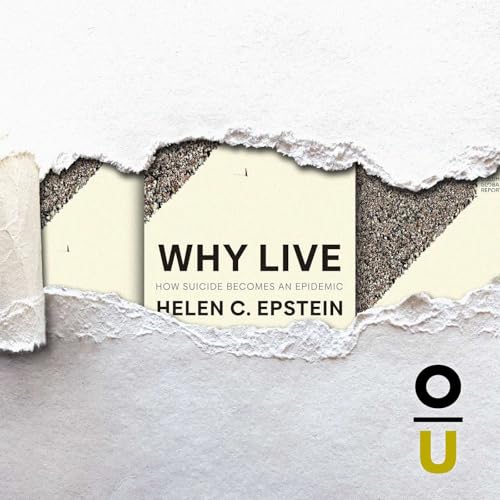
  • 134: On Suicide and the Indifference of Others feat. Helen Epstein
    Feb 21 2026

    Abby and Patrick welcome Helen Epstein, Visiting Professor of Human Rights and Global Public Health at Bard College and author of the new book Why Live: How Suicide Becomes an Epidemic. After sketching out the history of contemporary western sociological and philosophical accounts of suicide in general from Durkheim to the existentialists and beyond, the three turn to the specific focus of Epstein’s research: suicide epidemics. As Epstein elaborates, suicide epidemics – wherein entire communities experience sudden and acute spikes in suicide rates – raise urgent questions about the social, economic, and emotional contexts of suicidal distress. What broad conditions can make people feel like life is no longer worth living? What models of meaningful life do communities transmit intergenerationally, and how do those models – and those communities – crumble under pressure? Exploring examples from Micronesia to Nunavut and from 1990s Russia to the contemporary United States and taking up communities from 19th century industrial workers to contemporary American military veterans, Epstein walks Abby and Patrick through her findings, leading the three to reflect on how societies metabolize historical change and economic dislocation on the level of families and across generations.

    Helen Epstein, Why Live: When Suicide Becomes an Epidemic.

    Have you noticed that Freud is back? Got questions about psychoanalysis? Or maybe you’ve traversed the fantasy and lived to tell the tale? Leave us a voicemail! (646) 450-0847

    A podcast about psychoanalysis, politics, pop culture, and the ways we suffer now. New episodes on Saturdays. Follow us on social media:

    Linktree: https://linktr.ee/ordinaryunhappiness

    Twitter: @UnhappinessPod

    Instagram: @ordinaryunhappiness

    Patreon: patreon.com/OrdinaryUnhappiness


    Más Menos
    1 h y 21 m
  • 133: Laplanche Part Two: The Primal Situation feat. Danielle Drori Teaser
    Feb 14 2026

    Subscribe to get access to the full episode, the episode reading list, and all premium episodes! www.patreon.com/OrdinaryUnhappiness

    Abby and Patrick welcome Danielle Drori of the Brooklyn Institute for Social Research for the second installment of a two-part series on the thought of French psychoanalyst Jean Laplanche. Together, the three discuss a pivotal chapter in New Foundations for Psychoanalysis, unpacking Laplanche’s “universalized” transformation of Freud’s seduction hypothesis; Laplanche’s “primal situation” and its roots in anthropology and phenomenology; and what these ideas reveal about our invariably messy experiences of parenting, therapy, and more.

    Have you noticed that Freud is back? Got questions about psychoanalysis? Or maybe you’ve traversed the fantasy and lived to tell the tale? Leave us a voicemail! (646) 450-0847

    A podcast about psychoanalysis, politics, pop culture, and the ways we suffer now. New episodes on Saturdays. Follow us on social media:

    Linktree: https://linktr.ee/OrdinaryUnhappiness
    Twitter: @UnhappinessPod
    Instagram: @OrdinaryUnhappiness
    Patreon: patreon.com/OrdinaryUnhappiness

    Theme song:
    Formal Chicken - Gnossienne No. 1
    https://open.spotify.com/album/2MIIYnbyLqriV3vrpUTxxO
    Provided by Fruits Music

    Más Menos
    8 m