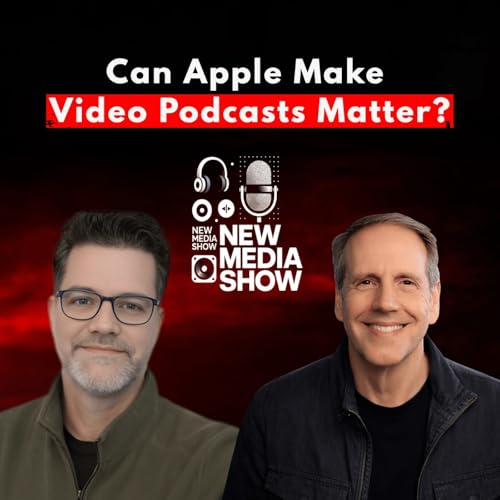
New Media Show (Audio) Podcast Por Rob Greenlee arte de portada

New Media Show (Audio)

New Media Show (Audio)

De: Rob Greenlee
Escúchala gratis

New Media Show with Rob Greenlee formerly co-hosted by Todd Cochrane RIP discussing the new media and podcasting space with new weekly guest co-hosts.Spoken Life Media Rob Greenlee © 2025-6 Economía Marketing Marketing y Ventas
Episodios
  • Can Apple Make Video Podcasts Matter? | Jay Nachlis #656
    Mar 25 2026
    In episode 656 of the New Media Show, Podcast Hall of Famer Rob Greenlee is joined by Jay Nachlis, Media Research VP at Coleman Insights. “It’s a timely and deeper conversation about Apple Podcasts moving more aggressively into HLS video streaming and what that really means for the future of podcasting, audience behavior, platform competition, and creator strategy in 2026.” This episode goes far beyond the Apple announcement itself. Jay brings a strong audience research and brand strategy perspective to the conversation, and together we dig into the real question behind all of this: will Apple’s push into video actually change listener and viewer behavior, or is this simply Apple trying to catch up to audience habits that are already being shaped by YouTube and Spotify? “Apple Podcasts still has major brand recognition in podcasting, but may face an uphill battle in the current environment where YouTube has become the default platform for video-based podcast discovery, and Spotify continues to build a more native monetization and creator ecosystem.” We talk about how audience habits often outweigh platform features, why consumer perception matters as much as technical innovation, and whether Apple can reclaim any meaningful momentum in a category it helped establish years ago. We also discuss how this shift is creating a more fragmented publishing environment for creators. Audio and video are no longer just different formats. They increasingly represent different user expectations, different discovery paths, and different monetization opportunities. “We discuss the growing need for creators to think strategically about separate audio and video feeds, platform-native publishing, HLS streaming delivery, audience experience, and the long-term risks of overreliance on closed ecosystems.” Jay and I also explore the broader competitive chessboard. That includes YouTube’s dominance in video & video podcast consumption, Spotify’s continued attempts to define its role in both audio and video, and even whether players like Netflix could successfully move into podcast-adjacent content formats. This episode is really about where podcasting is headed as a medium, not just one Apple feature update. If you are a podcaster, creator, media strategist, advertiser, or platform watcher trying to understand where podcasting, video, discovery, and monetization are all heading next, this is an episode you should not miss. Chapters: 00:00 Apple Video Podcast Push 00:47 Meet the Hosts 01:56 Apple Streaming Update 03:14 Early Podcasting Era 05:19 YouTube Spotify Takeover 07:05 Can Apple Compete 08:25 Research YouTube Wins UX 10:30 Awareness Drives Usage 12:07 Netflix Podcasting Fit 15:58 Discovery Algorithms Habits 18:10 Apple Video Hidden Toggle 19:26 Audio Quality vs Video 22:22 Brand Content Trust Matrix 24:05 Apple Podcasts Brand Gap 24:51 Differentiation Over Video 25:41 RSS and HLS Debate 27:09 Why Listeners Choose Apple 28:03 Zune Era Video Podcasts 30:07 YouTube Parallel History 30:59 Winning Tech Standards 33:16 Reaching Younger Audiences 36:48 Hosting Costs and HLS 39:05 Creator Burden of Video 41:20 Future Screens in Cars 43:23 Marketing and Discovery Fixes 45:35 Alternative Enclosures Path 46:49 Wrap Up and Where to Follow Guest Jay Nachlis LinksJay Nachlis LinkedIn: https://www.linkedin.com/in/jaynachlis/Coleman Insights: https://colemaninsights.com/Tuesdays with Coleman: https://colemaninsights.com/blog/ Host Rob Greenlee and Show LinksNew Media Show: https://newmediashow.com/Rob Greenlee: https://robgreenlee.com/Trust Factor Lab: https://trustfactorlab.com/Adore Creator Network: https://adorenetwork.com/Podcast Hall of Fame: https://podcasthall.com/Rob Greenlee YouTube: https://youtube.com/@robgreenleeRob Greenlee LinkedIn: https://linkedin.com/in/robgreenleeRob Greenlee Instagram: https://instagram.com/robwgreenlee The post Can Apple Make Video Podcasts Matter? | Jay Nachlis #656 first appeared on New Media Show.
    Más Menos
    48 m
  • Apple Video Podcasts, RSS vs API, Rise of Synthetic Creators | Justin Jackson #657
    Apr 7 2026
    If you are trying to understand where podcasting is going in 2026 and beyond, this is one of those conversations that clarifies the whole board. On Episode 657 of The New Media Show, Host Rob Greenlee shares a microphone and a video camera with Justin Jackson, CEO and Co-Founder of Transistor.fm, to unpack two forces reshaping the medium at the same time: Apple’s push back into video podcasts using HLS streaming, and the accelerating rise of synthetic creators and human clones powered by AI. The real takeaway in this episode is that this is no longer just a podcasting story. It’s a media transformation story, and creators who treat it that way will have the advantage. Justin brings a rare combination to this topic because he is not just watching the ecosystem from the outside. He is building one of the most respected independent podcast hosting platforms and is deeply involved in coordinating the industry’s progress through the Podcast Standards Project. One of the most useful parts of this episode is hearing how standards actually get adopted. Podcasting has a coordination problem, and the only way the open ecosystem keeps evolving is when hosting providers, apps, and major platforms agree on what becomes “standard.” Justin explains why this work is slower than people want and why it matters, using real examples such as transcript support and creator-recommendation tooling via Podroll. From there, we go straight into the big shift: Apple leaning harder into video again, this time through HLS. The practical impact for creators is obvious. Video becomes easier to distribute, monetize, and measure across platforms. The strategic impact is bigger. Apple’s move creates a cascade effect. As more hosts build HLS workflows, those streams can increasingly appear not only within Apple’s experience but also through open standards like alternate enclosures, especially if apps continue to adopt them. Justin is bullish on RSS-based open podcasting surviving, not because it is nostalgic, but because consumer demand and creator distribution needs keep pulling it forward. A core theme in this episode is that creators and consumers decide what “a podcast” is, not the industry. Justin puts it plainly: if everyday listeners think podcasts are something they watch on YouTube, that belief drives behavior, and behavior drives platforms. This is why the listen-and-watch switching paradigm matters. Consumers want to start in audio and seamlessly jump into video. That pressure changes production habits over time, because the “audio from the video” becomes the default in many workflows. For some audio-first producers, that feels like a loss. For video-first creators, it is an opportunity to build a more fluid media experience that meets people where they are, whether they are watching closely or listening in the background. Rob and Justin also dig into a topic most platforms are not talking about enough: demographics and attention. Apple Podcasts remains a valuable audience, often older, higher-income, harder-to-reach, and premium-friendly. But YouTube and short-form feeds have already shaped younger consumer habits. Justin raises an interesting possibility that a backlash is forming among Gen Z against addictive, brain-rotting feeds. If that continues, there is a real opening for more mindful media experiences, which could benefit audio- and podcast-style consumption and even give Apple an unexpected positioning angle if they choose to lean into it. Then move into the other major shift: synthetic creators, AI cloning, and AI-generated media at scale. We talk about what is real, what is hype, and what’s already happening in the market. Justin’s perspective is grounded: audiences still choose what they care about, and a lot of AI-generated “slop” is being produced with no real demand. At the same time, I warn that this is the worst the tech will ever be, and that quality is moving fast. The deeper layer is that AI is already part of the content distribution pipeline, because algorithms decide what gets surfaced and recommended. As cloning and synthetic production improve, trust and identification become the bigger story. If people cannot tell what is real, standards for disclosure, verification, and labeling become essential to preserve credibility. This episode ultimately lands on a simple reality: creators do not need to panic, but they do need to adapt. Video is becoming a default entry point. RSS is still resilient, but platform native APIs are expanding. AI will increase volume, forcing platforms to filter more aggressively. The winning creators will be the ones who build trust, produce content people actually want, and package it so it travels across environments without losing the core promise that made the audience show up in the first place. Quick answers What does Apple HLS video mean for podcast creators in 2026?It signals a stronger platform push toward seamless listen-and-watch...
    Más Menos
    2 h y 11 m
  • Podcast Growth and Discovery in 2026 | Arielle Nissenblatt #655
    Mar 18 2026
    Podcast discovery feels harder in 2026, not because creators stopped trying, but because attention is now split across podcast apps, YouTube, short-form video feeds, newsletters, and search-driven recommendations. On this recorded episode of the New Media Show, host Rob Greenlee shares the screen and a microphone with Arielle Nissenblatt, 2026 Podcast Hall of Famer and Founder of EarBuds Podcast Collective and Head of Community and Content at Pinwheel by Audily, to break down what is actually changing right now and what creators can still do that consistently grows audience and trust. “Arielle brings a listener-first, creator-first perspective that cuts through the noise. Platforms matter, but they are not the whole story. If a show is not clearly positioned, consistently delivered, and genuinely recommendable, the best metadata in the world will not create retention.” This episode focuses on the practical middle ground: respect the power of platforms, but build your growth strategy around behaviors you can control. “A big part of that conversation is Apple’s renewed push into video podcasts and what an HLS-based video experience signals for the direction of distribution.” Rob frames it as part of a broader convergence toward a unified listen-and-watch experience, where measurement and monetization are easier for platforms when content is native. “Arielle agrees that video is becoming an important top-of-funnel entry point, not because every show should be video-first, but because platforms can more easily optimize what they can see, track, and sell.” We also talk through Spotify’s monetization strategy and what it means when major platforms keep building native paths to get paid. The underlying point is that creators need to understand the economics behind product decisions. “The more platforms own the experience, the more they can shape the rules of distribution, monetization, and visibility.” Then we get into the part that matters most for working creators: what still works. “Arielle argues that recommendation culture remains one of the most underused growth engines in podcasting. Word of mouth, curated lists, and community flywheels can outperform algorithm chasing, especially for shows that serve a clear audience with a clear promise.” That is exactly why EarBuds has remained durable for years in a market that constantly reinvents itself. “Human curation is still a superpower because it creates trusted signals that travel even when platforms turn the knobs.” Community comes up too, with a reality check. Not every show needs a community, and not every audience wants one. “The test is whether people are already reaching for a deeper connection and shared identity around your content. When that demand exists, the community can compound trust and retention. When it does not, forcing it can drain your energy and distract you from the actual product, the show.” If you are building in 2026, the creators who win are not the ones who panic-switch formats every quarter. They are the ones who lock in a format strategy, build audience ownership where possible, and package their content for multiple environments without losing the core promise that makes listeners return. Quick answers people are searching for: Is podcast discovery broken in 2026? It is fragmented. People discover shows across apps, video platforms, newsletters, and search experiences, so creators need packaging that works across multiple paths. Do I need a video to grow a podcast? Not always. Video is becoming a common entry point, but growth still comes from clarity, consistency, and ease of recommendation. What is the fastest reliable growth lever right now? Recommendation loops: collaborations, curated lists, newsletters, and audience sharing that create real trust signals. What should creators prioritize this year? Format strategy, audience ownership, cross-platform packaging, and a repeatable workflow you can sustain. Show and Guest Links: Host Rob Greenlee https://robgreenlee.com/ (Rob Greenlee) New Media Show https://newmediashow.com/ (New Media Show) Rob Greenlee Live Podcasts https://robgreenlee.com/live-podcasts/ (Rob Greenlee) Rob Greenlee & New Media Show YouTube https://www.youtube.com/@RobGreenlee (Rob Greenlee) Spoken Human Show – YouTube https://www.youtube.com/@spokenhuman (Rob Greenlee) LinkedIn – Rob Greenlee https://www.linkedin.com/in/robgreenlee (Rob Greenlee) Instagram – Rob Greenlee https://www.instagram.com/robwgreenlee (Rob Greenlee) X.com – Rob Greenlee https://x.com/robgreenlee (Rob Greenlee) Adore Podcast Network https://AdoreNetwork.com (Rob Greenlee) Podcast Hall of Fame https://PodcastHall.com (Rob Greenlee) Guest Arielle Nissenblatt LinkedIn: https://www.linkedin.com/in/arielle-nissenblatt EarBuds Podcast Collective: https://earbuds.audio/ Pinwheel by Audily: https://pinwheelshows.com/The post Podcast Growth and Discovery in 2026 | Arielle Nissenblatt #655 first ...
    Más Menos
    1 h y 3 m
Todavía no hay opiniones