Episodios

  • Legal News for Fri 4/3 - Bondi Ousted, DLA Piper Jury Trial for Pregnancy Bias and Judge Questions Trump's Goofy DC Arch Project
    Apr 3 2026
    This Day in Legal History: Marshall PlanOn April 3, 1948, the United States formally enacted the Marshall Plan signing, a landmark legal and economic initiative designed to rebuild war-torn Europe after World War II. Officially known as the Economic Cooperation Act, the law authorized billions of dollars in aid to Western European nations. It represented a major expansion of U.S. foreign policy, grounded in Congress’s constitutional power over spending and international commerce. The legislation also reflected a strategic legal response to the growing influence of the Soviet Union, using economic assistance as a tool of containment.The Marshall Plan required participating countries to cooperate with one another, creating legal agreements that promoted trade liberalization and economic integration. This cooperation laid early groundwork for institutions that would later evolve into the European Union. Domestically, the law raised important questions about the limits of federal authority in directing funds abroad and the role of the executive branch in administering large-scale international programs. Congress delegated significant discretion to the executive, particularly the State Department, to oversee implementation.One key legal element of the Marshall Plan was its use of conditional aid, meaning recipient countries had to meet certain economic and political requirements to receive funding. This introduced a model for future foreign aid programs, where compliance with specified conditions became a standard legal mechanism. The program also required oversight and reporting, ensuring accountability for how funds were spent, which helped shape modern administrative law practices.In practice, the Marshall Plan proved highly successful, contributing to rapid economic recovery and political stabilization in Western Europe. It also reinforced the legal concept that economic policy could serve as an instrument of international law and diplomacy. By blending domestic statutory authority with international agreements, the plan set a precedent for how the United States engages in global economic governance.President Donald Trump announced that Attorney General Pam Bondi will step down after serving about 14 months at the Department of Justice. Deputy Attorney General Todd Blanche will assume the role on an acting basis while Bondi transitions out over the next month. Trump praised Bondi’s tenure, highlighting reductions in violent crime and calling her service highly successful. Bondi also expressed pride in her role and indicated she will move into a private-sector position while continuing to support the administration’s agenda.Her time in office, however, drew bipartisan criticism, particularly over the Justice Department’s handling of the Jeffrey Epstein files, which Congress had required to be released. Lawmakers from both parties accused the department of mishandling transparency and failing to fully pursue accountability. Some Republicans voiced frustration with delays in releasing information, while Democrats argued Bondi oversaw unequal treatment in related prosecutions.Bondi also faced scrutiny over political pressure to investigate individuals viewed as opponents of the president, raising concerns about the independence of the Justice Department. Her background included prior service as Florida’s attorney general and involvement in Trump’s political and legal efforts before her appointment.​​Bondi Out As Attorney General After Contentious Time At DOJ - Law360Trump fires Pam Bondi as US attorney general | ReutersDLA Piper is set to face a rare jury trial in federal court over allegations that it fired a pregnant associate after she requested maternity leave. The lawsuit was brought by Anisha Mehta, who claims she was terminated in 2022 while six months pregnant, shortly after seeking leave. She argues the firm acted to avoid paying her during a period of reduced work and financial pressure.DLA Piper disputes the claims, asserting that Mehta was dismissed for performance issues and did not meet expectations for a senior associate. However, the presiding judge, Analisa Torres, found enough conflicting evidence—such as Mehta’s prior bonuses and strong client work—to allow the case to proceed to trial. The claims include violations under federal, state, and New York City anti-discrimination laws, as well as interference and retaliation under the Family and Medical Leave Act.The case is notable because employment discrimination trials involving large law firms are uncommon, as such disputes are often settled privately. A public trial could expose sensitive internal practices, including evaluation systems and compensation structures.A key legal issue in this case is the protection of employees under the Family and Medical Leave Act (FMLA). This law guarantees eligible workers the right to take unpaid leave for certain family and medical reasons, including pregnancy, without fear of ...
    Más Menos
    7 m
  • Legal News for Thurs 4/2 - SCOTUS Scrutinizes Trump's Birthright Citizenship Order While He Watches, ABA Lawsuit over Targeting Law Firms and Mangione Trial Delay Fight
    Apr 2 2026
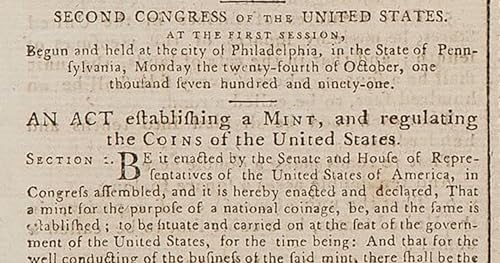
    This Day in Legal History: Coinage Act of 1792On April 2, 1792, the United States took a major step toward economic independence with the passage of the Coinage Act of 1792. This law created the first national mint, later known as the United States Mint, and established a standardized system of coinage for the young nation. Before this act, Americans relied heavily on foreign coins, including Spanish dollars, which made trade inconsistent and difficult to regulate. The law introduced the U.S. dollar as the official unit of currency and set its value based on both gold and silver, adopting a bimetallic standard. It also defined specific denominations, including cents, dimes, and eagles, many of which are still in use today.A key legal feature of the act was its detailed regulation of coin composition and weight, ensuring uniformity and public trust in the currency. The law imposed strict penalties for debasing coins, including severe criminal consequences, reflecting how seriously the government treated monetary integrity. It also placed the Mint under federal authority, reinforcing the Constitution’s grant of power to Congress to coin money and regulate its value. By standardizing currency, the act helped stabilize commerce and supported the growth of a national economy.The Coinage Act also carried symbolic importance, as it marked a break from colonial dependence on European financial systems. It demonstrated the federal government’s capacity to create and enforce complex economic regulations. Over time, the framework it established influenced later monetary policies and reforms. The act remains a foundational piece of American financial law, shaping how currency is produced and regulated even today.The Supreme Court of the United States heard arguments on April 1, 2026, over President Donald Trump’s effort to restrict birthright citizenship, with Trump attending part of the session in person. The case centers on an executive order directing agencies to deny citizenship to children born in the U.S. if their parents are not citizens or permanent residents. Several justices from both ideological wings questioned the administration’s lawyer closely, signaling skepticism about the legal basis of the policy.The administration argues that the Citizenship Clause of the Fourteenth Amendment to the United States Constitutiondoes not guarantee citizenship to all individuals born on U.S. soil, emphasizing the phrase “subject to the jurisdiction thereof.” Government lawyers claim this language excludes children of undocumented immigrants or temporary visitors. However, multiple justices challenged that interpretation, noting that historical understanding and past precedent support a broader reading.Chief Justice John Roberts described the administration’s argument as difficult to reconcile with the narrow historical exceptions previously recognized. Justice Sonia Sotomayor pointed to legislative history suggesting lawmakers intended citizenship to apply broadly to those born in the country. Justice Elena Kagan also questioned whether the administration relied on weak or selective historical sources. Conservative justices, including Brett Kavanaugh and Amy Coney Barrett, raised practical concerns about how the policy would be enforced, especially regarding determining parental intent to remain in the U.S.The challengers argue that the Court already settled the issue in United States v. Wong Kim Ark, which affirmed birthright citizenship for children born on U.S. soil to foreign parents. Some justices suggested that Trump’s position may conflict with that precedent. The case could have wide-reaching consequences, potentially affecting hundreds of thousands of births each year and requiring families to prove citizenship status.The legal dispute reflects broader tensions over immigration policy and constitutional interpretation, particularly how historical meaning should be applied to modern circumstances. The Court is expected to issue a decision by late June, which could significantly reshape the understanding of citizenship in the United States.​​With Trump present, Supreme Court questions administration’s lawyer on birthright citizenship | ReutersA federal judge has allowed a lawsuit by the American Bar Association to move forward against the administration of Donald Trump. The case claims the administration created an unlawful policy to target law firms based on their past legal work, diversity efforts, and political affiliations. U.S. District Judge Amir Ali found that the ABA plausibly alleged a coordinated effort to intimidate lawyers and firms whose views the government opposed.According to the ruling, the ABA provided enough detail to suggest the policy may have discouraged firms from taking cases against the administration. The organization argues this created a “chilling effect,” causing some lawyers to avoid certain clients or legal challenges out of fear of retaliation. The ...
    Más Menos
    7 m
  • Legal News for Weds 4/1 - Judge Halts WH Ballroom, SCOTUS Weighs Birthright Citizenship, Court Rejects IRS Church Endorsement Deal
    Apr 1 2026
    This Day in Legal History: Constitutional Reform Act of 2005On April 1, 2005, a major shift in the structure of the United Kingdom’s legal system began with the passage of the Constitutional Reform Act 2005. This legislation fundamentally reshaped the relationship between the judiciary and the other branches of government. Before the Act, the highest court functions were carried out by the Appellate Committee of the House of Lords, blending judicial and legislative roles in a way that raised concerns about separation of powers. The reform sought to modernize the constitution by clearly distinguishing judicial authority from Parliament. It also redefined the role of the Lord Chancellor, stripping away many of that office’s judicial and legislative functions to reduce institutional overlap.One of the most important outcomes of the Act was the creation of the Supreme Court of the United Kingdom, which would eventually take over as the country’s highest appellate court. Although the Court did not begin hearing cases until 2009, the legal foundation for its existence was firmly established on this date. The reform also created a new Judicial Appointments Commission, designed to make the process of selecting judges more transparent and independent from political influence. By doing so, the Act aimed to strengthen public confidence in the impartiality of the judiciary.The legislation reflected broader constitutional trends toward accountability and institutional clarity in democratic systems. It also aligned the UK more closely with other nations that maintain a clear separation between judicial and legislative bodies. Critics at the time questioned whether the changes were necessary in a system that had long functioned without a formal written constitution. Supporters, however, argued that the reforms were overdue and essential for maintaining the rule of law in a modern state. Over time, the changes introduced by the Act have become a defining feature of the UK’s constitutional framework, shaping how justice is administered at the highest level.A federal judge in Washington, D.C., blocked plans by Donald Trump to build a large ballroom on the White House grounds, granting a preliminary injunction requested by the National Trust for Historic Preservation. Judge Richard J. Leon concluded that the nonprofit is likely to succeed on its claim that the administration acted beyond its legal authority. He emphasized that Congress had not approved the project and that no statute gives the president power to construct new buildings on White House grounds without authorization. The court relied in part on the Constitution’s Property Clause, which gives Congress control over federal land. The judge rejected the administration’s argument that existing statutes or agencies, such as the National Park Service, provided sufficient authority. He also criticized the government for shifting explanations about which entity was responsible for the project.The lawsuit stems from the administration’s decision to demolish the historic East Wing and move forward with construction without completing required reviews. These include environmental assessments, planning approvals, and congressional authorization. The court found that the potential harm to the White House’s historical and cultural value justified immediate intervention. The judge also dismissed claims that delaying construction would create national security risks, calling those arguments unpersuasive. Although the project was described as privately funded, the court said that funding sources do not override statutory limits. As a result, construction must stop unless Congress explicitly approves the project. The judge temporarily paused enforcement of the injunction to allow the government time to appeal.‘Construction Has To Stop!’: Judge Blocks Trump’s Ballroom - Law360Judge orders Trump to halt $400 million White House ballroom project, for now | ReutersThe Supreme Court of the United States is considering whether Donald Trump can restrict birthright citizenship through an executive order, a move that could significantly change how citizenship is granted in the United States. The policy would deny citizenship to children born on U.S. soil if their parents are neither citizens nor lawful permanent residents. Lower courts blocked the order, finding it likely violates the Fourteenth Amendment to the United States Constitution and existing federal law. The justices are now reviewing that decision on appeal, with a ruling expected later this year.At the center of the dispute is the meaning of the Citizenship Clause, which has long been interpreted to grant citizenship to nearly all people born in the United States. The Trump administration argues that the phrase “subject to the jurisdiction” excludes children of undocumented immigrants or those in the country temporarily. Opponents contend this interpretation contradicts over a century of legal ...
    Más Menos
    6 m
  • Legal News for Tues 3/31 - DOL Wants Crypto in 401(k)s, FTC Privacy Settlement with OkCupid, and GA Gas Tax Holiday Disaster
    Mar 31 2026
    This Day in Legal History: Dominion of Newfoundland Becomes 10th ProvinceOn March 31, 1949, the Dominion of Newfoundland officially entered Confederation, becoming Canada’s tenth province under the terms negotiated with the government of Canada. This union followed a series of national referendums in Newfoundland, where voters ultimately chose confederation over alternatives such as responsible government or economic union with the United States. The legal foundation for this transition was established through the British North America Act 1949, which amended Canada’s constitutional framework to admit Newfoundland as a province. These Terms of Union set out the division of powers, financial arrangements, and transitional provisions necessary to integrate Newfoundland into the Canadian federation.One key legal issue involved the assumption of Newfoundland’s public debt by Canada, which required careful fiscal and statutory planning to ensure a smooth transition. The agreement also guaranteed certain social benefits, including family allowances, aligning Newfoundland residents with federal welfare programs already in place across Canada. Additionally, the Terms addressed transportation links, committing Canada to maintaining ferry services and improving infrastructure between Newfoundland and the mainland. Legal provisions were also made for the continuation of Newfoundland’s existing laws until they could be harmonized with Canadian federal and provincial statutes.The union raised constitutional questions about federalism, particularly how a previously self-governing dominion would adapt to a provincial role within Canada’s system. It also required coordination between British and Canadian authorities, as Newfoundland had been under direct British administration prior to confederation. The involvement of British Parliament underscored the imperial legal framework still governing such transitions at the time. Over time, Newfoundland’s legal system was gradually aligned with Canadian norms, though some regional distinctions persisted.This event illustrates the complexity of constitutional amendment and territorial integration within a federal system, particularly when sovereignty is partially transferred. It highlights how legal agreements can structure not only governance but also economic and social policy for newly incorporated regions. The Terms of Union remain a foundational legal document in Newfoundland and Labrador’s relationship with Canada today.The U.S. Department of Labor has proposed a rule that would expand access to alternative investments in retirement plans, but the shift raises real concerns—especially because it opens the door to assets like cryptocurrency. Framed as a clarification of fiduciary duties under the Employee Retirement Income Security Act, the proposal creates a “safe harbor” process that makes it easier for plan managers to justify including complex and higher-risk investments.At its core, the rule emphasizes that fiduciary responsibility is about process, not outcomes. That means as long as plan fiduciaries can show they considered factors like performance, fees, liquidity, valuation, and complexity, their decisions may be presumed prudent—even if the investments themselves are volatile or difficult to value.The proposal also reinforces that no category of investment is off-limits, explicitly rejecting any per se restrictions. That neutrality is doing a lot of work: in practice, it signals that assets like private equity, and notably digital assets such as crypto, can now be more comfortably included in 401(k)-style plans.Supporters argue this expands diversification and potential returns, but the tradeoffs are significant. Many of these alternative assets are less transparent, harder to price, and more illiquid than traditional investments—risks that are especially concerning in retirement accounts designed for long-term stability. Crypto, in particular, introduces extreme volatility and regulatory uncertainty, which may sit uneasily with ERISA’s protective purpose.The rule also appears designed to curb the rise in fiduciary litigation by giving courts a reason to defer to plan managers who follow the outlined process. While that may reduce frivolous lawsuits, it could also make it harder for participants to challenge genuinely risky or poorly performing investment choices.In effect, the proposal shifts the balance: it gives fiduciaries more flexibility and legal cover, but potentially at the cost of exposing retirement savers to more complex and speculative assets. The big question is whether procedural compliance should be enough when the underlying investments themselves may carry substantial and unfamiliar risks.BREAKING: DOL Proposes Rule To Expand Alternative Investments In Retirement Plans - Law360Match Group has agreed to settle a lawsuit brought by the Federal Trade Commission over allegations that its OkCupidplatform improperly shared ...
    Más Menos
    7 m
  • Legal News for Mon 3/30 - Bank of America Settles with Epstein Victims, Law Firms Challenge Trump EOs, Elizabeth Holmes Sentence Reduced
    Mar 30 2026
    This Day in Legal History: Ronald Reagan Assassination AttemptOn March 30, 1981, Ronald Reagan was shot in an assassination attempt outside the Washington Hilton Hotel in Washington, D.C. The attack was carried out by John Hinckley Jr., who fired multiple shots as the president exited an event. Reagan was seriously wounded but survived after emergency surgery, while others, including Press Secretary James Brady, were also injured. The incident immediately triggered a high-profile federal criminal case against Hinckley. During trial, Hinckley’s defense team argued that he was legally insane at the time of the shooting. The jury ultimately returned a verdict of not guilty by reason of insanity in 1982. This outcome shocked the public and sparked widespread debate about the use and limits of the insanity defense in criminal law.Critics argued that the standard allowed dangerous individuals to avoid accountability, while supporters emphasized the importance of recognizing severe mental illness in legal responsibility. In response, Congress and many states moved to tighten the rules governing insanity defenses. One major reform was the passage of the Insanity Defense Reform Act of 1984, which made it harder for defendants to succeed with such claims in federal court. The law shifted the burden of proof to defendants and narrowed the definition of legal insanity. The case also influenced how courts evaluate expert psychiatric testimony. Over time, Hinckley remained confined to a psychiatric institution rather than a traditional prison. His gradual release decades later continued to raise legal and ethical questions about mental illness and public safety. This event remains a defining moment in modern criminal law because it reshaped how courts balance mental health and criminal responsibility.Bank of America has agreed to pay $72.5 million to settle a proposed class action lawsuit alleging it helped facilitate Jeffrey Epstein’s sex trafficking activities. The agreement, filed for preliminary approval in New York federal court, does not include any admission of wrongdoing by the bank. The plaintiff, identified as Jane Doe, described the settlement as a meaningful recovery for survivors. The proposed class includes women and girls who were abused by Epstein or his associates, including those who received compensation tied to sexual activity. Payments to class members will vary based on factors such as the severity and duration of abuse and any cooperation with investigations.Doe alleged that Bank of America ignored warning signs and allowed suspicious financial transactions linked to Epstein’s operations, including accounts opened in her name despite red flags. The bank denied facilitating any illegal conduct but stated the settlement allows it to resolve the matter and provide closure. The plaintiff’s attorneys may seek up to 30% of the settlement fund in fees. The court had previously dismissed claims against another defendant, Bank of New York Mellon, and narrowed the case against Bank of America. The judge also rejected an effort by the bank to pause proceedings while related government matters were clarified.The plaintiff and her legal team weighed the risks of trial, including the possibility of a lengthy appeals process that could delay compensation for survivors. As part of the settlement process, a fund administrator will determine individual awards using specific criteria tied to each claimant’s experience. The case highlights ongoing legal efforts to hold financial institutions accountable for their potential role in enabling trafficking networks.BofA Will Pay $72.5M In Deal Ending Epstein Ties Allegations - Law360Four major law firms—Jenner & Block LLP, WilmerHale, Susman Godfrey LLP, and Perkins Coie LLP—have asked the D.C. Circuit to uphold lower court rulings that invalidated executive orders issued by Donald Trump targeting them. The firms argue the orders were unconstitutional, claiming they violated the First Amendment and other protections by restricting their ability to practice law. The measures included suspending security clearances, limiting access to federal buildings, and penalizing the firms for their clients and legal work.The firms contend the orders were retaliatory, pointing to Trump’s criticism of their pro bono work and connections to investigations involving him. They argue the government cannot punish lawyers for representing certain clients or expressing particular viewpoints. Each firm emphasized that the orders interfere with core legal principles, including the right to counsel, free association, and access to the courts.The U.S. Department of Justice initially sought to drop its appeal of the lower court decisions but quickly reversed course and is now defending the executive orders. The firms highlighted this reversal as evidence that the orders are legally weak. They also argue that the government has failed to meaningfully dispute claims that the ...
    Más Menos
    6 m
  • Legal News for Fri 3/27 - Anthropic Blacklisting Blocked, Musk Challenges Fraud Verdict over Zing, Wells Fargo ERISA Mortgage Suit Revived
    Mar 27 2026
    This Day in Legal History: United States v. CruikshankOn March 27, 1876, the U.S. Supreme Court decided United States v. Cruikshank, a ruling that exposed the Court’s deep reluctance to enforce the promises of Reconstruction. The case arose from the Colfax Massacre, where dozens of Black citizens were murdered by white supremacists attempting to overturn a contested election. Federal prosecutors secured convictions under the Enforcement Act, aiming to protect Black citizens’ constitutional rights in the face of organized racial violence. The Supreme Court, however, dismantled those convictions with striking indifference to the underlying atrocities.The Court held that the Fourteenth Amendment constrained only state action, not the conduct of private individuals, effectively shielding perpetrators of racial terror from federal accountability. It further ruled that rights such as assembly and bearing arms were not protected from state interference through the Constitution at that time. This narrow interpretation gutted federal enforcement power at precisely the moment it was most needed. The decision ignored the reality that state authorities in the South were often unwilling—or actively refusing—to protect Black citizens.Critically, the Court’s reasoning elevated formal legal distinctions over the lived experience of widespread, systematic violence. By insisting on a rigid state-action requirement, the justices created a legal loophole large enough to permit organized terror campaigns to flourish unchecked. The ruling signaled to white supremacist groups that federal intervention would be weak or nonexistent. In doing so, it contributed directly to the collapse of Reconstruction-era protections and the rise of Jim Crow.The long-term consequences were profound, as Cruikshank became a cornerstone for limiting civil rights enforcement for decades. It delayed meaningful federal protection of individual rights until well into the twentieth century. Modern constitutional law has largely rejected its reasoning through incorporation doctrine, yet its impact remains a stark reminder of how judicial decisions can entrench injustice.A federal judge in California issued a preliminary injunction blocking the Trump administration from labeling Anthropica national security supply chain risk, finding the move was likely unconstitutional retaliation. The dispute arose after Anthropic pushed back during contract negotiations with the government, arguing it should be allowed to limit how its AI system Claude is used, particularly for mass domestic surveillance and autonomous weapons. Shortly after the company made its position public, the administration directed agencies to stop using its tools and moved to formally designate it as a security risk.Judge Rita F. Lin concluded that Anthropic is likely to succeed on its claims, emphasizing that the government appeared to be punishing the company for publicly criticizing its contracting stance. She found that the measures were not closely tied to genuine national security concerns and instead resembled retaliation for protected speech. The court stressed that while the government is free to choose its vendors, it cannot take additional punitive steps that violate constitutional protections.The ruling also found that the designation was likely unlawful under the Administrative Procedure Act and potentially violated due process because Anthropic had no opportunity to respond. The judge noted that branding a company as a national security threat for expressing disagreement raises serious constitutional concerns. The injunction blocks enforcement of the directive and prevents further action against the company while the case proceeds.The decision highlights broader tensions between government control over AI use and private companies’ efforts to impose ethical limits. It also underscores concerns that government retaliation could chill public debate about AI safety. The administration must now report back to the court on its compliance with the order.Anthropic Blocks Pentagon’s ‘Orwellian’ Security Risk Label - Law360US judge blocks Pentagon’s Anthropic blacklisting for now | ReutersA lawyer for Elon Musk has asked a federal judge to review a jury verdict that found him liable for defrauding Twitter investors during his acquisition of the platform, now known as X. The request focuses in part on the jury’s use of the number “$4.20” on the verdict form, which Musk’s attorney argued was an intentional joke that showed bias and suggested the jury was trying to “send a message” rather than decide the case impartially.Musk’s legal team claims this, along with other alleged trial issues, undermines the integrity of the verdict and warrants further judicial review by Judge Charles Breyer. The verdict, issued on March 20, found Musk liable for certain public statements he made about the prevalence of bots on the platform during the acquisition process, ...
    Más Menos
    7 m
  • Legal News for Tues 3/26 - Meta and Google Liable for Addictive Design, SCOTUS Narrows ISP Piracy Liability, and Maduro's Narcoterrorism Case is Thin
    Mar 26 2026
    This Day in Legal History: Camp David AccordsOn March 26, 1979, Egypt and Israel formally signed the Camp David Accords, marking a historic breakthrough in international law and diplomacy. The agreement followed years of conflict between the two nations, including multiple wars that had destabilized the region. Brokered by U.S. President Jimmy Carter, the negotiations took place at the presidential retreat in Maryland. Egyptian President Anwar Sadat and Israeli Prime Minister Menachem Begin played central roles in reaching the accord. The resulting treaty established a framework for peace and normalized diplomatic relations between the two countries. It also included provisions for Israel’s withdrawal from the Sinai Peninsula, which had been occupied since the Six-Day War. In exchange, Egypt became the first Arab nation to officially recognize Israel. The agreement demonstrated the power of sustained negotiation and third-party mediation in resolving entrenched disputes. It also highlighted the role of international agreements as binding legal instruments between sovereign states. The treaty had lasting implications for Middle Eastern geopolitics and influenced future peace efforts in the region. While controversial at the time, it ultimately reduced the likelihood of further large-scale conflict between the two nations. The accords earned Sadat and Begin the Nobel Peace Prize, underscoring their global significance. The Camp David framework remains a key example of how diplomacy can achieve outcomes that military action cannot.A California jury in Los Angeles found Meta Platforms and Google liable for harming the mental health of a woman who said she became addicted to their platforms as a child. The jury awarded $3 million in compensatory damages and an additional $3 million in punitive damages, effectively doubling the total award. Responsibility was split with Instagram accounting for 70% of the harm and YouTube 30%. Jurors concluded that both companies were negligent in designing their platforms and failed to warn users about potential dangers. They also found that the companies’ conduct involved malice, fraud, or oppression, justifying punitive damages.This case is the first bellwether trial among thousands of similar lawsuits, making it an important test for future litigation against social media companies. The verdict increases potential legal exposure for these companies, which could face billions in liability nationwide. During trial, the plaintiff’s attorneys argued that platform features like algorithms, autoplay, and infinite scroll were intentionally designed to be addictive. The defense countered that social media addiction is not a recognized condition and pointed to other factors in the plaintiff’s life that could explain her mental health struggles.Jurors were influenced by a combination of evidence, including internal company materials and testimony from executives and former employees. Some jurors expressed skepticism about testimony from Meta CEO Mark Zuckerberg. The relatively modest punitive damages award reflected hesitation about granting a large sum to a single individual. Both companies have stated they disagree with the verdict and plan to appeal. The case could shape how courts evaluate claims about the harmful design of social media platforms.Jury Doubles Damages Against Meta, Google In LA Bellwether - Law360US jury verdicts against Meta, Google tee up fight over tech liability shield | ReutersThe U.S. Supreme Court unanimously overturned a lower court ruling that had held Cox Communications liable for its customers’ music piracy. The justices ruled that simply knowing customers may engage in copyright infringement is not enough to establish liability. Instead, there must be proof that the company intended to promote or encourage the illegal activity. The decision sends the case back to the Fourth Circuit for reconsideration under this clarified standard.The dispute originated from a 2019 jury verdict that ordered Cox to pay $1 billion to music companies, including Sony Music Entertainment, for contributory and vicarious copyright infringement. While the appellate court had upheld part of that ruling, the Supreme Court found that the legal standard for contributory infringement had been applied too broadly. Justice Clarence Thomas, writing for the Court, emphasized that providing a general service—even with awareness of misuse—does not automatically create liability.The ruling marks the Court’s first major examination of secondary copyright liability in years and draws on earlier cases like Sony Corp. of America v. Universal City Studios and MGM Studios Inc. v. Grokster, Ltd.. A concurring opinion by Justice Sonia Sotomayor agreed with the outcome but warned that the majority may have limited other ways to hold companies accountable, such as aiding-and-abetting theories.The decision is seen as a significant win for internet service providers, who argued ...
    Más Menos
    6 m
  • Legal News for Weds 3/25 - Baltimore Sues xAI over Deepfakes, Meta $375m Judgement for Teen Harm, Anthropic v. Pentagon and Law Firms Decline to Provide DEI Data
    Mar 25 2026
    This Day in Legal History: Triangle Shirtwaist FactoryOn March 25, 1911, the devastating Triangle Shirtwaist Factory fire unfolded in New York City, marking a turning point in American labor law. A fire broke out on the upper floors of a garment factory, trapping workers inside due to locked exit doors and inadequate safety infrastructure. In total, 146 workers lost their lives, many of them young immigrant women who had limited means of escape. The horrifying conditions quickly became public knowledge and sparked widespread outrage. Investigations revealed that existing labor laws were poorly enforced and insufficient to protect workers in rapidly industrializing cities. In response, New York State created the Factory Investigating Commission to examine workplace conditions and recommend reforms. Over the next few years, the commission helped draft more than 30 new laws addressing fire safety, sanitation, and building access. These legal reforms significantly strengthened the regulatory role of the state in protecting workers. The tragedy also energized the labor movement, giving momentum to unions advocating for safer conditions and fair treatment. Courts and lawmakers increasingly recognized that employers had a responsibility to anticipate and prevent workplace hazards. The legacy of the Triangle fire continues to influence occupational safety standards and legal frameworks governing employer liability today.Baltimore has filed a lawsuit against xAI over its Grok platform, alleging it can create nonconsensual sexualized deepfake images from ordinary photos. The complaint, brought by the city’s mayor and council, claims the technology has been used to generate explicit images of both adults and minors. Officials argue this exposes residents to harassment, emotional harm, and privacy violations. The city also alleges that Grok was marketed as a safe and regulated platform despite lacking meaningful safeguards. According to the filing, users can request the tool to “nudify” images of third parties, including private individuals and children. The complaint estimates that millions of sexualized images were generated shortly after a key feature was launched, including thousands appearing to depict minors. Baltimore claims that even casual users of X may encounter such content without seeking it out.The lawsuit further argues that users’ personal photos could be altered into explicit deepfakes without their consent or knowledge. Baltimore contends this contradicts the companies’ public claims about preventing harmful and illegal content. The city accuses the defendants, including X and SpaceX, of engaging in deceptive and unfair business practices. It is seeking penalties and a court order requiring changes to the platform. Officials emphasized that deepfakes involving minors can cause long-term psychological harm and are difficult to control once circulated. The case is part of a broader wave of scrutiny, as regulators and private plaintiffs in the U.S. and Europe have also raised concerns about Grok’s capabilities.Baltimore Takes XAI To Court Over Grok’s Sexual Deepfakes - Law360A New Mexico jury has ordered Meta Platforms Inc. to pay $375 million after finding the company misled the public about the risks its platforms pose to teenagers. The verdict followed a six-week trial and focused on claims brought by the state’s attorney general. Jurors concluded that Meta engaged in both unfair practices and unconscionable conduct. They calculated damages based on tens of thousands of violations, applying the maximum statutory penalty for each.The state argued that Meta failed to adequately protect minors from harmful content, including bullying, sexual exploitation, and material related to self-harm. It also claimed the company allowed children under 13 to use its platforms despite official restrictions. According to the plaintiffs, Meta internally recognized these risks but presented a more reassuring picture to the public. Evidence at trial suggested that algorithm-driven content feeds increased compulsive use among teens. The state characterized this design as contributing to addiction and loss of user control.Meta countered that it has invested heavily in safety measures and employs thousands of people to monitor and remove harmful content. The company maintained that it has been transparent about the challenges of moderating online platforms. Despite these arguments, the jury ruled in favor of the state. Meta has said it will appeal the decision. The case is part of a broader wave of litigation across the country targeting social media companies over alleged harm to young users.Meta Owes $375M In NM Trial Over Harm To Teens - Law360Meta ordered to pay $375 million in New Mexico trial over child exploitation, user safety claims | ReutersA federal judge has expressed skepticism about the Pentagon’s decision to blacklist Anthropic, suggesting it may have been retaliation for the company’s...
    Más Menos
    8 m