Minimum Competence Podcast Por Andrew and Gina Leahey arte de portada

Minimum Competence

Minimum Competence

De: Andrew and Gina Leahey
Escúchala gratis

Minimum Competence is your daily companion for legal news, designed to bring you up to speed on the day’s major legal stories during your commute home. Each episode is short, clear, and informative—just enough to make you minimally competent on the key developments in law, policy, and regulation. Whether you’re a lawyer, law student, journalist, or just legal-curious, you’ll get a smart summary without the fluff. A full transcript of each episode is available via the companion newsletter at www.minimumcomp.com.

www.minimumcomp.comAndrew Leahey
Ciencia Política Política y Gobierno
Episodios
  • Legal News for Fri 4/3 - Bondi Ousted, DLA Piper Jury Trial for Pregnancy Bias and Judge Questions Trump's Goofy DC Arch Project
    Apr 3 2026
    This Day in Legal History: Marshall PlanOn April 3, 1948, the United States formally enacted the Marshall Plan signing, a landmark legal and economic initiative designed to rebuild war-torn Europe after World War II. Officially known as the Economic Cooperation Act, the law authorized billions of dollars in aid to Western European nations. It represented a major expansion of U.S. foreign policy, grounded in Congress’s constitutional power over spending and international commerce. The legislation also reflected a strategic legal response to the growing influence of the Soviet Union, using economic assistance as a tool of containment.The Marshall Plan required participating countries to cooperate with one another, creating legal agreements that promoted trade liberalization and economic integration. This cooperation laid early groundwork for institutions that would later evolve into the European Union. Domestically, the law raised important questions about the limits of federal authority in directing funds abroad and the role of the executive branch in administering large-scale international programs. Congress delegated significant discretion to the executive, particularly the State Department, to oversee implementation.One key legal element of the Marshall Plan was its use of conditional aid, meaning recipient countries had to meet certain economic and political requirements to receive funding. This introduced a model for future foreign aid programs, where compliance with specified conditions became a standard legal mechanism. The program also required oversight and reporting, ensuring accountability for how funds were spent, which helped shape modern administrative law practices.In practice, the Marshall Plan proved highly successful, contributing to rapid economic recovery and political stabilization in Western Europe. It also reinforced the legal concept that economic policy could serve as an instrument of international law and diplomacy. By blending domestic statutory authority with international agreements, the plan set a precedent for how the United States engages in global economic governance.President Donald Trump announced that Attorney General Pam Bondi will step down after serving about 14 months at the Department of Justice. Deputy Attorney General Todd Blanche will assume the role on an acting basis while Bondi transitions out over the next month. Trump praised Bondi’s tenure, highlighting reductions in violent crime and calling her service highly successful. Bondi also expressed pride in her role and indicated she will move into a private-sector position while continuing to support the administration’s agenda.Her time in office, however, drew bipartisan criticism, particularly over the Justice Department’s handling of the Jeffrey Epstein files, which Congress had required to be released. Lawmakers from both parties accused the department of mishandling transparency and failing to fully pursue accountability. Some Republicans voiced frustration with delays in releasing information, while Democrats argued Bondi oversaw unequal treatment in related prosecutions.Bondi also faced scrutiny over political pressure to investigate individuals viewed as opponents of the president, raising concerns about the independence of the Justice Department. Her background included prior service as Florida’s attorney general and involvement in Trump’s political and legal efforts before her appointment.​​Bondi Out As Attorney General After Contentious Time At DOJ - Law360Trump fires Pam Bondi as US attorney general | ReutersDLA Piper is set to face a rare jury trial in federal court over allegations that it fired a pregnant associate after she requested maternity leave. The lawsuit was brought by Anisha Mehta, who claims she was terminated in 2022 while six months pregnant, shortly after seeking leave. She argues the firm acted to avoid paying her during a period of reduced work and financial pressure.DLA Piper disputes the claims, asserting that Mehta was dismissed for performance issues and did not meet expectations for a senior associate. However, the presiding judge, Analisa Torres, found enough conflicting evidence—such as Mehta’s prior bonuses and strong client work—to allow the case to proceed to trial. The claims include violations under federal, state, and New York City anti-discrimination laws, as well as interference and retaliation under the Family and Medical Leave Act.The case is notable because employment discrimination trials involving large law firms are uncommon, as such disputes are often settled privately. A public trial could expose sensitive internal practices, including evaluation systems and compensation structures.A key legal issue in this case is the protection of employees under the Family and Medical Leave Act (FMLA). This law guarantees eligible workers the right to take unpaid leave for certain family and medical reasons, including pregnancy, without fear of ...
    Más Menos
    7 m
  • Legal News for Thurs 4/2 - SCOTUS Scrutinizes Trump's Birthright Citizenship Order While He Watches, ABA Lawsuit over Targeting Law Firms and Mangione Trial Delay Fight
    Apr 2 2026
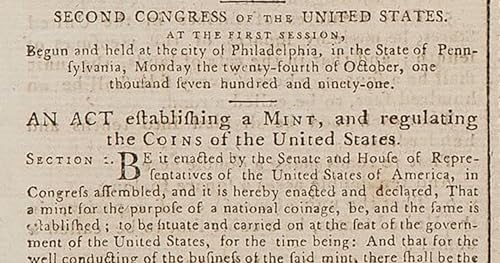
    This Day in Legal History: Coinage Act of 1792On April 2, 1792, the United States took a major step toward economic independence with the passage of the Coinage Act of 1792. This law created the first national mint, later known as the United States Mint, and established a standardized system of coinage for the young nation. Before this act, Americans relied heavily on foreign coins, including Spanish dollars, which made trade inconsistent and difficult to regulate. The law introduced the U.S. dollar as the official unit of currency and set its value based on both gold and silver, adopting a bimetallic standard. It also defined specific denominations, including cents, dimes, and eagles, many of which are still in use today.A key legal feature of the act was its detailed regulation of coin composition and weight, ensuring uniformity and public trust in the currency. The law imposed strict penalties for debasing coins, including severe criminal consequences, reflecting how seriously the government treated monetary integrity. It also placed the Mint under federal authority, reinforcing the Constitution’s grant of power to Congress to coin money and regulate its value. By standardizing currency, the act helped stabilize commerce and supported the growth of a national economy.The Coinage Act also carried symbolic importance, as it marked a break from colonial dependence on European financial systems. It demonstrated the federal government’s capacity to create and enforce complex economic regulations. Over time, the framework it established influenced later monetary policies and reforms. The act remains a foundational piece of American financial law, shaping how currency is produced and regulated even today.The Supreme Court of the United States heard arguments on April 1, 2026, over President Donald Trump’s effort to restrict birthright citizenship, with Trump attending part of the session in person. The case centers on an executive order directing agencies to deny citizenship to children born in the U.S. if their parents are not citizens or permanent residents. Several justices from both ideological wings questioned the administration’s lawyer closely, signaling skepticism about the legal basis of the policy.The administration argues that the Citizenship Clause of the Fourteenth Amendment to the United States Constitutiondoes not guarantee citizenship to all individuals born on U.S. soil, emphasizing the phrase “subject to the jurisdiction thereof.” Government lawyers claim this language excludes children of undocumented immigrants or temporary visitors. However, multiple justices challenged that interpretation, noting that historical understanding and past precedent support a broader reading.Chief Justice John Roberts described the administration’s argument as difficult to reconcile with the narrow historical exceptions previously recognized. Justice Sonia Sotomayor pointed to legislative history suggesting lawmakers intended citizenship to apply broadly to those born in the country. Justice Elena Kagan also questioned whether the administration relied on weak or selective historical sources. Conservative justices, including Brett Kavanaugh and Amy Coney Barrett, raised practical concerns about how the policy would be enforced, especially regarding determining parental intent to remain in the U.S.The challengers argue that the Court already settled the issue in United States v. Wong Kim Ark, which affirmed birthright citizenship for children born on U.S. soil to foreign parents. Some justices suggested that Trump’s position may conflict with that precedent. The case could have wide-reaching consequences, potentially affecting hundreds of thousands of births each year and requiring families to prove citizenship status.The legal dispute reflects broader tensions over immigration policy and constitutional interpretation, particularly how historical meaning should be applied to modern circumstances. The Court is expected to issue a decision by late June, which could significantly reshape the understanding of citizenship in the United States.​​With Trump present, Supreme Court questions administration’s lawyer on birthright citizenship | ReutersA federal judge has allowed a lawsuit by the American Bar Association to move forward against the administration of Donald Trump. The case claims the administration created an unlawful policy to target law firms based on their past legal work, diversity efforts, and political affiliations. U.S. District Judge Amir Ali found that the ABA plausibly alleged a coordinated effort to intimidate lawyers and firms whose views the government opposed.According to the ruling, the ABA provided enough detail to suggest the policy may have discouraged firms from taking cases against the administration. The organization argues this created a “chilling effect,” causing some lawyers to avoid certain clients or legal challenges out of fear of retaliation. The ...
    Más Menos
    7 m
  • Legal News for Weds 4/1 - Judge Halts WH Ballroom, SCOTUS Weighs Birthright Citizenship, Court Rejects IRS Church Endorsement Deal
    Apr 1 2026
    This Day in Legal History: Constitutional Reform Act of 2005On April 1, 2005, a major shift in the structure of the United Kingdom’s legal system began with the passage of the Constitutional Reform Act 2005. This legislation fundamentally reshaped the relationship between the judiciary and the other branches of government. Before the Act, the highest court functions were carried out by the Appellate Committee of the House of Lords, blending judicial and legislative roles in a way that raised concerns about separation of powers. The reform sought to modernize the constitution by clearly distinguishing judicial authority from Parliament. It also redefined the role of the Lord Chancellor, stripping away many of that office’s judicial and legislative functions to reduce institutional overlap.One of the most important outcomes of the Act was the creation of the Supreme Court of the United Kingdom, which would eventually take over as the country’s highest appellate court. Although the Court did not begin hearing cases until 2009, the legal foundation for its existence was firmly established on this date. The reform also created a new Judicial Appointments Commission, designed to make the process of selecting judges more transparent and independent from political influence. By doing so, the Act aimed to strengthen public confidence in the impartiality of the judiciary.The legislation reflected broader constitutional trends toward accountability and institutional clarity in democratic systems. It also aligned the UK more closely with other nations that maintain a clear separation between judicial and legislative bodies. Critics at the time questioned whether the changes were necessary in a system that had long functioned without a formal written constitution. Supporters, however, argued that the reforms were overdue and essential for maintaining the rule of law in a modern state. Over time, the changes introduced by the Act have become a defining feature of the UK’s constitutional framework, shaping how justice is administered at the highest level.A federal judge in Washington, D.C., blocked plans by Donald Trump to build a large ballroom on the White House grounds, granting a preliminary injunction requested by the National Trust for Historic Preservation. Judge Richard J. Leon concluded that the nonprofit is likely to succeed on its claim that the administration acted beyond its legal authority. He emphasized that Congress had not approved the project and that no statute gives the president power to construct new buildings on White House grounds without authorization. The court relied in part on the Constitution’s Property Clause, which gives Congress control over federal land. The judge rejected the administration’s argument that existing statutes or agencies, such as the National Park Service, provided sufficient authority. He also criticized the government for shifting explanations about which entity was responsible for the project.The lawsuit stems from the administration’s decision to demolish the historic East Wing and move forward with construction without completing required reviews. These include environmental assessments, planning approvals, and congressional authorization. The court found that the potential harm to the White House’s historical and cultural value justified immediate intervention. The judge also dismissed claims that delaying construction would create national security risks, calling those arguments unpersuasive. Although the project was described as privately funded, the court said that funding sources do not override statutory limits. As a result, construction must stop unless Congress explicitly approves the project. The judge temporarily paused enforcement of the injunction to allow the government time to appeal.‘Construction Has To Stop!’: Judge Blocks Trump’s Ballroom - Law360Judge orders Trump to halt $400 million White House ballroom project, for now | ReutersThe Supreme Court of the United States is considering whether Donald Trump can restrict birthright citizenship through an executive order, a move that could significantly change how citizenship is granted in the United States. The policy would deny citizenship to children born on U.S. soil if their parents are neither citizens nor lawful permanent residents. Lower courts blocked the order, finding it likely violates the Fourteenth Amendment to the United States Constitution and existing federal law. The justices are now reviewing that decision on appeal, with a ruling expected later this year.At the center of the dispute is the meaning of the Citizenship Clause, which has long been interpreted to grant citizenship to nearly all people born in the United States. The Trump administration argues that the phrase “subject to the jurisdiction” excludes children of undocumented immigrants or those in the country temporarily. Opponents contend this interpretation contradicts over a century of legal ...
    Más Menos
    6 m
Todavía no hay opiniones