Episodios

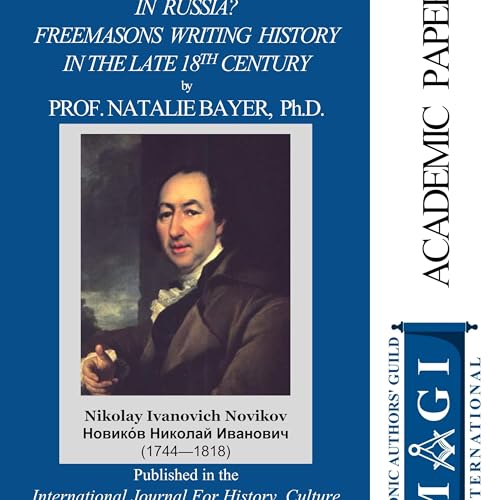
  • Enlightenment or Counter-Enlightenment in Russia? Freemasons Writing History in the Late Eighteenth Century by Prof. Natalie Bayer, Ph.D.
    Mar 16 2026

    The article explores the themes of Enlightenment and Counter-

    Enlightenment through the lens of Freemasonry, and, more specifically,

    Freemasons in Russia who wrote history. It tests the approaches of

    Masonic history writers against Berlin’s definitions of the Enlightenment

    and Counter-Enlightenment. Whilst a definitive break between the

    Enlightenment and Counter-Enlightenment seems attractive, the article

    advances a more nuanced picture of the plurality of religious and

    secular discourse in Russia. Instead of opposing the Enlightenment,

    many late eighteenth-century Masonic writers of history provided their

    own, alternative interpretative models of history as a way out of the

    perceived crisis between the mind and the soul.

    Keywords: counter-enlightenment, eighteenth century, enlightenment,

    freemasonry, Russia

    Read by the Author

    Natalie Bayer specializes in European intellectual history and Russian/Soviet history, offering courses on European Enlightenment, nationalism in Modern Europe, the French Revolution, freemasonry and fraternalism in Modern European history, Russian Imperial history, the history of the USSR, and Soviet experience. She also teaches world history.

    Published in INTERNATIONAL JOURNAL FOR HISTORY, CULTURE AND MODERNITY Vol 7, 2019 : 1089-1120,

    Más Menos
    17 m
  • EARLY RHODE ISLAND MASONIC SCIENCE - An Interview with SAMUEL BIAGETTI, Ph.D. - SHORT
    Mar 9 2026

    Enjoy the first 6 Minutes of this Sixth Episode of THE WIDE MASONIC WORLD - Join hosts Robert Cooper and Mark Tabbert for a in-depth discussion with Samuel Biagetti Ph.D., of Historiansplaning.com - a podcast.

    We discuss his paper:

    Section iii: The Masonic Degree Rituals from Chapter 2: The Unfinished Temple- Interpreting Masonic Ritual, taken from his 2015 dissertation is titled : The Only Universal Monarchy Freemasonry, Ritual, and Gender in Revolutionary Rhode Island, 1749-1803. Dr. Biagetti's dissertation is over 750 pages with 19 chapters, plus Introduction, conclusion, bibliography, & glossary. It begins with the formation of British freemasonry in the 1500s and then grand lodges the 1700s, moves to American with the first lodge in Rhode Island in 1740s, through the American revolution, ends in the in 1804.

    Along with a narrative, your various sections and chapters address the social make up / demographics of lodges, the so-called higher degrees perpetuated by Thomas Smith Webb and Moses Michael Hayes, and at the end the limits of Rhode Island Freemasonry as relating to the slave trade, women and gender.

    Samuel Biagetti holds a Ph.D. in early American history from Columbia University, and has had research published in Early American Studies, Journal of Caribbean History, and Yale Journal of Law and the Humanities, as well as social commentary in various outlets. He has been consulted and interviewed on NPR. He lives in central Massachusetts, where he holds a very minor local elective office.

    He hosts a great podcast: HISTORIANSPLAINING https://historiansplaining.com/

    Más Menos
    6 m
  • THE NATURE OF MASONIC SCIENCE by SAMUEL BIAGETTI, Ph.D. - SHORT
    Mar 2 2026

    Enjoy the first 16 minutes of the author reading Section iii: The Masonic Degree Rituals from Chapter 2: The Unfinished Temple- Interpreting Masonic Ritual, taken from his 2015 dissertation is titled : The Only Universal Monarchy Freemasonry, Ritual, and Gender in Revolutionary Rhode Island, 1749-1803. Dr. Biagetti's dissertation is over 750 pages with 19 chapters, plus Introduction, conclusion, bibliography, & glossary. It begins with the formation of British freemasonry in the 1500s and then grand lodges the 1700s, moves to American with the first lodge in Rhode Island in 1740s, through the American revolution, ends in the in 1804.

    Along with a narrative, your various sections and chapters address the social make up / demographics of lodges, the so-called higher degrees perpetuated by Thomas Smith Webb and Moses Michael Hayes, and at the end the limits of Rhode Island Freemasonry as relating to the slave trade, women and gender.

    Samuel Biagetti holds a Ph.D. in early American history from Columbia University, and has had research published in Early American Studies, Journal of Caribbean History, and Yale Journal of Law and the Humanities, as well as social commentary in various outlets. He has been consulted and interviewed on NPR. He lives in central Massachusetts, where he holds a very minor local elective office.

    He hosts a great podcast: HISTORIANSPLAINING https://historiansplaining.com/

    Más Menos
    18 m
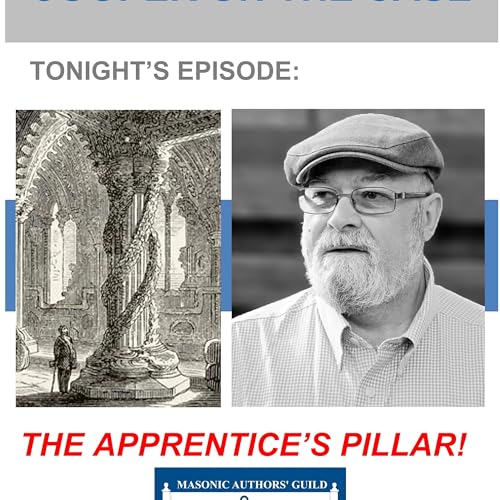
  • COOPER ON THE CASE: The Apprentice's Pillar
    Feb 26 2026

    Join the intrepid Masonic investigator, Robert L. D. Cooper as he investigates the Grand Lodge of Great Britain and Scotland's Rosslyn Chapel and its famous "Apprentice's Pillar"! Whether its Scottish history or scotch whisky-- Cooper is on the Case!!

    Más Menos
    18 m
  • BRAZILIAN FREEMASONRY IN THE 21st CENTURY - AN INTERVIEW WITH PROF. KENNYO ISMAIL - SHORT
    Feb 23 2026

    Enjoy the First Nine Minutes of the Fifth Episode of THE WIDE MASONIC WORLD - Join hosts Robert Cooper and Mark Tabbert for a in-depth discussion with Prof. Kennyo Ismail of the University of Brazil of Rio de Janeiro.

    We discuss his paper: Brazilian Freemasonry in the 21st Century

    Brazilian Freemasonry is the second largest in the world, with more than 230 thousand regular Freemasons. The Brazilian grand lodges of the mainstream form three major national strands: the Grand Orient of Brazil, with its state districts; the state grand lodges of Brazil, confederated with the Confederation of Symbolic Freemasonry of Brazil (CMSB); and the independent State Grand Orients, gathered in COMAB – Masonic Confederation of Brazil.

    This research aimed, in general, to know the opinion of Brazilian regular Freemasons members of thirty-two grand lodges and grand orients confederated to the CMI – Inter-American Masonic Confederation, about their perception of Freemasonry and the Masonic perspectives for this 21st century.

    With its results, it seeks to know a little more about the opinions and perceptions of the Brazilian Freemason about the strengths and weaknesses of his Freemasonry, as well as his desires for its realization for the coming years. Thus, in addition to an analysis of the internal environment of Brazilian Freemasonry, which can serve as useful information for the development of action plans by the different grand lodges and grand orients; one can, above all, understand the different organic strands of thought that stand out among the Freemasons who form the base of the Masonic pyramid.

    Pro. Kenny Ismail graduated from the University of Brazil in 2006 and earned a MBA. He is Editor-in-Chief of the journal “Science & Freemasonry”, the first academic-scientific journal dedicated to the study of Freemasonry in South America, linked to the NP3-CEAM-UnB; was a postgraduate professor in “History of Freemasonry” by Unileya; is a postgraduate professor in “Masonology” and in “Democracy, Contemporary Thought and Freemasonry” He also acts as Communication Advisor to CMSB and CMI.

    Since a boy active in Demolay, Prof. Ismail has participated in many Masonic organizations, both serving as a Master of a lodge, a 33rd Degree in the SR and Serves as Grand Librarian and Grand Secretary

    Más Menos
    11 m
  • BRAZILIAN FREEMASONRY IN THE 21st CENTURY - PART TWO - SHORT
    Feb 18 2026

    ENJOY THE FIRST 16 MINUTES OF PART TWO OF THIS GROUND-BREAKING PAPER ON BRAZILIAN FREEMASONRY

    Brazilian Freemasonry is the second largest in the world, with more than 230 thousand regular Freemasons. The Brazilian grand lodges of the mainstream form three major national strands: the Grand Orient of Brazil, with its state districts; the state grand lodges of Brazil, confederated with the Confederation of Symbolic Freemasonry of Brazil (CMSB); and the independent State Grand Orients, gathered in COMAB – Masonic Confederation of Brazil.

    This research aimed, in general, to know the opinion of Brazilian regular Freemasons members of thirty-two grand lodges and grand orients confederated to the CMI – Inter-American Masonic Confederation, about their perception of Freemasonry and the Masonic perspectives for this 21st century.

    With its results, it seeks to know a little more about the opinions and perceptions of the Brazilian Freemason about the strengths and weaknesses of his Freemasonry, as well as his desires for its realization for the coming years. Thus, in addition to an analysis of the internal environment of Brazilian Freemasonry, which can serve as useful information for the development of action plans by the different grand lodges and grand orients; one can, above all, understand the different organic strands of thought that stand out among the Freemasons who form the base of the Masonic pyramid.

    Pro. Kenny Ismail graduated from the University of Brazil in 2006 and earned a MBA. He is Editor-in-Chief of the journal “Science & Freemasonry”, the first academic-scientific journal dedicated to the study of Freemasonry in South America, linked to the NP3-CEAM-UnB; was a postgraduate professor in “History of Freemasonry” by Unileya; is a postgraduate professor in “Masonology” and in “Democracy, Contemporary Thought and Freemasonry” He also acts as Communication Advisor to CMSB and CMI.

    Since a boy active in Demolay, Prof. Ismail has participated in many Masonic organizations, both serving as a Master of a lodge, a 33rd Degree in the SR and Serves as Grand Librarian and Grand Secretary

    Más Menos
    17 m
  • BRAZILIAN FREEMASONRY IN THE 21st CENTURY - PART ONE - SHORT
    Feb 16 2026

    ENJOY THE FIRST 17 MINUTES OF PART TWO OF THIS GROUND-BREAKING PAPER ON BRAZILIAN FREEMASONRY

    Brazilian Freemasonry is the second largest in the world, with more than 230 thousand regular Freemasons. The Brazilian grand lodges of the mainstream form three major national strands: the Grand Orient of Brazil, with its state districts; the state grand lodges of Brazil, confederated with the Confederation of Symbolic Freemasonry of Brazil (CMSB); and the independent State Grand Orients, gathered in COMAB – Masonic Confederation of Brazil.

    This research aimed, in general, to know the opinion of Brazilian regular Freemasons members of thirty-two grand lodges and grand orients confederated to the CMI – Inter-American Masonic Confederation, about their perception of Freemasonry and the Masonic perspectives for this 21st century.

    With its results, it seeks to know a little more about the opinions and perceptions of the Brazilian Freemason about the strengths and weaknesses of his Freemasonry, as well as his desires for its realization for the coming years. Thus, in addition to an analysis of the internal environment of Brazilian Freemasonry, which can serve as useful information for the development of action plans by the different grand lodges and grand orients; one can, above all, understand the different organic strands of thought that stand out among the Freemasons who form the base of the Masonic pyramid.

    Pro. Kenny Ismail graduated from the University of Brazil in 2006 and earned a MBA. He is Editor-in-Chief of the journal “Science & Freemasonry”, the first academic-scientific journal dedicated to the study of Freemasonry in South America, linked to the NP3-CEAM-UnB; was a postgraduate professor in “History of Freemasonry” by Unileya; is a postgraduate professor in “Masonology” and in “Democracy, Contemporary Thought and Freemasonry” He also acts as Communication Advisor to CMSB and CMI.

    Since a boy active in Demolay, Prof. Ismail has participated in many Masonic organizations, both serving as a Master of a lodge, a 33rd Degree in the SR and Serves as Grand Librarian and Grand Secretary

    Más Menos
    18 m
  • THE DUPLICITIES OF HISTORY - AN INTERVIEW WITH DR. ROBERT JAMES, Ph.D. - SHORT
    Feb 9 2026

    ENJOY THE FIRST NINE MINUTES of the Fourth Episode of THE WIDE MASONIC WORLD - Join hosts Robert Cooper and Mark Tabbert for a in-depth discussion with Dr. Robert James Ph.D. of New South Wales, Australia.

    We discuss his paper:

    THE DUPLICITIES OF HISTORY : THE CENTRAL PROBLEM OF FREEMASONRY

    from his Book : "No More Conspiracy Theories" : https://www.amazon.com.au/More-Conspiracy-Theories-Bob-James-ebook/dp/B0F324X52C?s=digital-text

    "The Reality of Freemasonry

    For Grand Lodge decision-makers the lack of clarity has been a useful but accidental result of a need to satisfy factional agendas. The London fraternity of Freemasonry, aka ‘the Order’, was neither alone nor unique. The idea often labelled ‘freemasonry’ was a multi-faceted phenomenon, Already in the 18th century: ‘There were (and still are) many varieties existing side by side, practised simultaneously by different lodges.’

    For some members, Grand Lodge was an energy centre of an exclusive but free-wheeling club scene, for some it was an arm of the government, for others it was a money-making exercise. Overlapping agendas, fluid alliances and uneven administrations threatened viability, even as its potential for political usefulness became clearer and was more fully harnessed. Unpredictable noble leadership damaged collective capacity to balance military, commercial and industrial demands until a manufactured mystique of Empire provided cohesion. Tensions between political and religious agendas have remained. Official ‘mission statements have made serious discussion of ‘the past’ impossible. For three centuries, Grand Lodge have claimed to be unified while being endlessly conflicted internally and externally. They have exhorted regularity and conformity while appearing in a multitude of guises and combinations; they have claimed to be passionate about learning while discouraging research and while insisting ‘it’ already knew everything humans needed to reach fulfilment. While preaching tolerance and openness they have been discriminatory and unwilling to publicly discuss its decisions. They have insisted they observed political and religious neutrality while being clearly in lock-step with the dominant elements of their respective society even as that ‘evolved’. "

    For more than 20 years, Dr. Robert James, Ph.D. has published and lectured widely on Australian Masonic and fraternal history. He was born in Stockton, New South Wales, Australia, in 1940. He earned his BA with honours in Southeast Asian Studies at Australian National University, and spent most of his career as a primary school teacher. He earned his Masters again in Southeast Asian Studies from the London School of African and Oriental Studies, with an additional Master's in Australian History from La Trobe University in Melbourne. Since retiring as a teacher, he studied as an independent researcher while gaining his PhD in Australian history at the University of Newcastle. Dr. James is a Brother Freemason, and an Oddfellow, and a member of the Ancient Order of Druids, all of which are in New South Wales.

    His other major publications is “They Call Each Other Brother” in 2010

    https://www.amazon.com.au/They-Call-Each-Other-Brother-ebook/dp/B00SQLIGTM

    Más Menos
    9 m