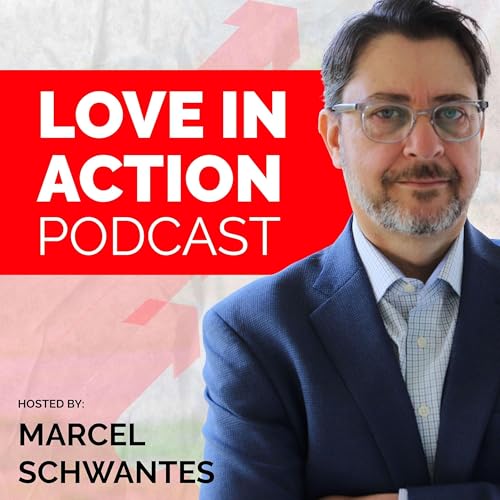
Love in Action Podcast Por Marcel Schwantes arte de portada

Love in Action

Love in Action

De: Marcel Schwantes
Escúchala gratis

The Love in Action Podcast—ranked #33 among the 100 Best Leadership Podcasts and in the top 2% of shows worldwide—is where leadership meets humanity. Hosted by global influencer, author, and executive coach Marcel Schwantes, the show features candid conversations with bestselling authors, visionary executives, and thought leaders who are redefining what it means to lead. Whether you want to sharpen your leadership skills, create a culture people love to work in, or grow your business by putting people first, you’ll find practical wisdom and inspiring stories to help you get there.© 2025 Love in Action Economía Gestión Gestión y Liderazgo
Episodios
  • How to Best Manage Yourself Before You Lead Others with Margaret C. Andrews
    Mar 27 2026

    Episode recap:

    Marcel sat down with Margaret C. Andrews to discuss her book "Manage Yourself to Lead Others: Why Great Leadership Begins with Self-Understanding." Margaret discussed leadership derailment and self-awareness, emphasizing that the factors that got leaders to their current positions may not be sufficient for future success. She shared six key questions to help leaders understand themselves and highlighted the importance of self-management, noting that many leadership training programs focus more on technical skills than interpersonal skills.

    Bio:

    Margaret C. Andrews is a seasoned executive, academic leader, speaker, and instructor. She teaches leadership courses and professional and executive programs at Harvard University and is the founder of the MYLO Center, a private leadership development firm. 

    Quotes:

    • We judge ourselves by our intentions, but other people judge us by our behaviors.
    • Leadership emerges from your life story and your unique portfolio of experiences, not from a checklist of best practices.
    • What got you here won’t get you there, especially when you move from individual contributor to leading others.
    • People do not care how much you know until they know how much you care about them as human beings.
    • We are all a work in progress, continually riding new learning curves as we grow into the leaders we want to become.

    Takeaways:

    • Self-understanding is the foundation of effective leadership, and without it, all the standard tips and tactics remain shallow.
    • Career derailment often happens right after a promotion when leaders fail to realize that their new role requires different behaviors, not just more effort.
    • High achievers commonly struggle with interpersonal relationships, team-building, and adaptability, which can ultimately sabotage their success.
    • Asking deep questions about who shaped you, what you value, and how your behavior impacts others is essential to building self-awareness.
    • Leading with love and care means treating people as human beings, not resources, and consistently managing your own behavior to match your best intentions.

    Timestamps:

    0:00 – Welcome, episode setup, and introduction of Margaret C. Andrews

    2:59 – Margaret’s origin story and wake-up call about self-awareness

    7:20 – How lack of self-awareness derails high achievers and careers

    17:39 – Six foundational questions for self-understanding and self-management

    25:39 – Roadblocks, vulnerability, and why leadership training must go deeper

    28:24 – The MYLO process and what it means to lead with love in action

    31:32 – Final lessons, being a work in progress, and where to find Margaret

    Conclusion:

    Today’s conversation showed that great leadership doesn’t begin with a job title or a promotion. It begins with you, with understanding your own story, your values, and even your blind spots. Margaret reminded us that we are all a work in progress, learning and growing as we practice new behaviors and step into the leaders we want to become. The challenge is simple to say but hard to live out: get honest about who you are, manage yourself with intention, and notice how your relationships and results start to shift.

    Links/Resources:

    Book on Amazon: https://a.co/d/0gzLmPl2

    LinkedIn: https://www.linkedin.com/in/margaretcandrews/

    Website: https://www.margaretandrews.com/

    Substack: https://marcelschwantes.substack.com/

    LinkedIn: https://www.linkedin.com/in/marcelschwantes/

    Twitter/X: https://x.com/MarcelSchwantes

    YouTube: https://www.youtube.com/channel/UC9fO2r_ZQ3wy5ie522f-DTQ

    Instagram: https://www.instagram.com/marcel.schwantes/

    Más Menos
    35 m
  • How to Master Your Emotions to Become a Better Leader
    Mar 13 2026
    Episode recap In this powerful conversation, Marcel sits down with Joshua Freedman, a global leader in emotional intelligence and the CEO of Six Seconds, to explore the ideas behind his new book, Emotion Rules. Drawing from 30 years of research and more than a million emotional intelligence assessments, Joshua shares why he believes we are living through an “emotional recession” and what leaders must do about it. Joshua discusses how many leaders struggle with old patterns that no longer serve them, especially when moving from being a high-performing doer to a leader who must grow others. Marcel highlights two major shifts leaders must make: from knowing to learning, and from doing to being. The episode closes with a fast-paced speed round and reflections on what it truly means to lead with practical, actionable love in business. Bio: Joshua Freedman is CEO and cofounder of Six Seconds, the world’s largest  emotional intelligence network. A pioneer in applying EQ to business and social impact, he directs The State of the Heart  study, a landmark longitudinal analysis tracking global trends in emotional intelligence, which first identified the  “Emotional Recession” – a sustained worldwide decline in emotional and relational capacities affecting wellbeing, engagement, and organizational resilience. His frameworks and tools are used by over a million people in 150+ countries, delivering measurable improvements in performance and culture. Quotes “There are no negative feelings. They’re all data.” “Emotions are great advisors but horrible bosses.” “Your feelings are here for a reason—your next step is to learn to trust them more.” “Maybe the struggle isn’t the obstacle; maybe the struggle is the curriculum.” “We must shift from knowing to learning, and from doing to being.” Takeaways Emotional wisdom goes beyond emotional intelligence—it’s the ability to use emotional signals to navigate ambiguity when there is no clear path or precedent. We are in a global “emotional recession” where optimism, intrinsic motivation, and purpose are declining, yet higher EQ in these areas is strongly linked to better life and work outcomes. All emotions are information, not problems; even uncomfortable feelings like fear or anxiety are messages about important needs and values that require attention. Leaders often get stuck in old emotional patterns—like over‑controlling or withdrawing—that once helped them succeed but now block trust, growth, and empowerment in their teams. Simple practices—such as choosing who you want to be each day and adopting a coach‑like, question‑driven approach—can transform leadership from transactional control to human‑centered connection and learning. Timestamps 00:00:02 – Introduction & Joshua’s Background 00:04:11 – The Emotional Recession 00:07:42 – Emotional Intelligence vs. Emotional Wisdom 00:15:11 – Decline in Key EQ Capabilities 00:18:14 – Fighting Our Emotions 00:23:40 – Emotions as Data & Needs 00:31:04 – Emotions as Advisors, Not Bosses 00:34:24 – Patterns That Keep Leaders Stuck 00:43:03 – The To‑Be List Practice 00:46:22 – Wisdom Lives Within 00:52:39 – Leading with Love 00:54:39 – Final Takeaway Conclusion This episode ultimately makes the case that emotional wisdom is not about perfection or sentimentality, but about honestly listening to what our feelings are telling us so we can build more humane, resilient, and high‑performing lives and workplaces; when leaders stop fighting emotions, treat them as data, and model curiosity and courage, they unlock deeper engagement, stronger cultures, and a more sustainable way to navigate a chaotic world. Links/Resources Emotion Rules book: https://www.6seconds.org/emotionrules/ Six Seconds - https://www.6seconds.org/ Emotional Wisdom Wheel (Constellation Map): https://www.6seconds.org/emotionrules/wheel/ Episode #191 with Joshua Freedman: https://www.marcelschwantes.com/josh-freedman-emotional-intelligence-and-how-to-use-it-to-get-results-ep-191/ Social Media Links: https://www.linkedin.com/company/six-seconds/ https://www.instagram.com/6secondseq/ https://www.facebook.com/sixseconds/ Substack: https://marcelschwantes.substack.com/ LinkedIn: https://www.linkedin.com/in/marcelschwantes/ Twitter/X: https://x.com/MarcelSchwantes YouTube: https://www.youtube.com/channel/UC9fO2r_ZQ3wy5ie522f-DTQ Instagram: https://www.instagram.com/marcel.schwantes/
    Más Menos
    58 m
  • Why Fear-Based Workplaces Need to Disappear with Marcel Schwantes
    Mar 6 2026
    Episode recap Don’t forget Marcel’s special offer to join his Substack community for $8.00/month. Subscribe here: https://marcelschwantes.substack.com/subscribe In this solo episode, Marcel Schwantes discussed the impact of fear in the workplace, explaining how it stifles creativity, innovation, and collaboration. He highlighted that fear-based environments lead to disengagement, turnover, and low morale, while human-centered leadership fosters psychological safety and trust. Marcel emphasized the importance of leaders addressing their blind spots and modifying behaviors to create a positive workplace culture. He stressed that hiring and developing leaders based on technical competence alone is insufficient, urging a focus on humanity and human-centered attributes. Marcel encouraged listeners to subscribe to his Substack for further insights on effective human-centered leadership. Bio: Marcel Schwantes is a leadership coach, speaker, author, and advocate for more humane workplaces. He partners with organizations tired of burnout, disengagement, and hollow cultures — and ready to build something better. Marcel’s work includes: Executive coaching Leadership development programs for managers Keynote speaking and workshops Executive roundtables and culture strategy sessions Marcel is the author of Humane Leadership: Lead with Radical Love, Be a Kick-Ass Boss. Whether coaching a CEO or training a leadership team, Marcel’s #1 goal is the same: To help leaders become the kind of people others want to follow. Episode Timeline: [00:03] Introduction: Why fear remains a workplace epidemic [00:19] How fear kills creativity, collaboration, and profitability [01:06] Silence in meetings: The hidden cost of fear [01:58] Why fear stops innovation and risk-taking [02:34] Fear shrinks organizations from the inside out [03:51] Psychological safety and team performance (Harvard research) [04:26] Why leaders still dismiss “soft skills” [05:13] The cost of waiting for marching orders [05:49] Burnout, turnover, and quiet disengagement [06:03] What human-centered leadership looks like [07:10] Surfacing problems early vs. kicking the can down the road [08:10] Shared accountability and self-correcting teams [09:40] Leadership blind spots and fear-driven management [10:29] Burnout as the final warning sign [11:30] Why technical skills alone no longer qualify someone to lead [12:04] Raising human leadership capacity in the AI era [12:31] Closing thoughts and call to action Quotes: “If you want to know why creativity dies, why collaboration stalls, why your most talented people are quietly quitting — look for one thing: fear.” “When fear is prevalent, people protect themselves instead of serving the mission.” “You cannot afford to choose leaders based only on technical competence or individual performance. Those days are over.” Key Takeaways: Fear Is Expensive - Fear doesn’t just hurt feelings — it damages profitability, innovation, and long-term growth.Silence Is a Warning Sign - if meetings are full of nodding heads but no pushback, fear may be driving compliance instead of commitment.Psychological Safety Drives Performance - When employees feel safe to speak up, admit mistakes, and challenge ideas, performance and productivity increase.Human-Centered Leadership Solves Problems Early - Empowered teams raise concerns quickly, solve issues on the spot, and share accountability across levels.Leadership Blind Spots Create Fear - Many fear-based environments stem from leaders who fear losing control or respect. Coaching and self-awareness are critical.Technical Skills Aren’t Enough Anymore - In the age of AI and automation, the differentiator is human leadership capacity — the ability to help people flourish. Conclusion: Fear quietly shrinks organizations from the inside out. It limits creativity, slows innovation, and pushes good people toward burnout and disengagement. Marcel’s message is clear: if you care about performance, profitability, and long-term growth, you must care about human-centered leadership. The future of leadership isn’t louder authority or tighter control — it’s building environments where people feel safe enough to contribute their best thinking. The question every leader must ask: Am I creating safety — or am I creating fear? Because that answer determines everything. Resources: The book: https://www.amazon.com/Humane-Leadership-Lead-Radical-Kick-Ass-ebook/dp/B0CWG3PTL4/ Substack: https://marcelschwantes.substack.com/ LinkedIn: https://linkedin.com/in/marcelschwantes/ X: https://x.com/MarcelSchwantes YouTube: https://youtube.com/@MarcelSchwantes1 Instagram: https://instagram.com/marcel.schwantes/ Dr. James Doty Episode: https://www.marcelschwantes.com/dr-james-doty-the-neuroscience-of-manifestation/
    Más Menos
    14 m
Todavía no hay opiniones