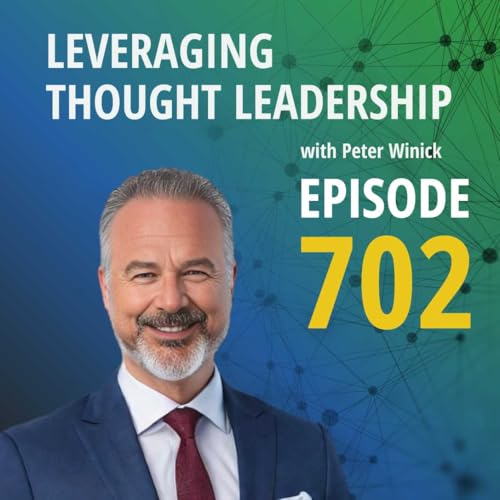
Leveraging Thought Leadership Podcast Por Peter Winick and Bill Sherman arte de portada

Leveraging Thought Leadership

Leveraging Thought Leadership

De: Peter Winick and Bill Sherman
Escúchala gratis

Hear from the people whose ideas shape the business world. Learn what their public stories leave out. Our beat: the business of thought leadership and the people who take ideas to scale. Fortune 500 CEOs. New York Times bestselling authors. Thinkers50 honorees. NSA Hall of Fame speakers. Top business school professors. First-time authors. Emerging keynote speakers. Their support: publishers, speaking coaches, PR experts. We ask thought leaders to share generously. And they don't hold back. How did they get here? What nearly stopped them? What did they learn? And what keeps them going? Your co-hosts, Peter Winick and Bill Sherman of Thought Leadership Leverage, bring two decades of experience working with thought leadership practitioners. We've woven stories from 700+ episodes, our frameworks, and the tools we use every day into The Thought Leadership Handbook. Learn how the experts take their big ideas to scale—and how you can too.Copyright © 2018 - 2026 Thought Leadership Leverage. All Rights Reserved. Economía Exito Profesional Marketing Marketing y Ventas
Episodios
  • How To Turn Books into Thought Leadership Assets | Kevin Anderson | 703
    Mar 29 2026

    What does it really take to turn a book into a business asset instead of a vanity project?

    In this episode of Leveraging Thought Leadership, Peter Winick sits down with Kevin Anderson, CEO of Kevin Anderson & Associates to unpack what authors get wrong about publishing, platform, and the real role a book plays in growing authority. Kevin makes the case that a strong book is not just about writing well. It is about aligning the message, the market, and the outcome from the very beginning.

    Kevin brings a practical lens to the publishing world. He explains why authors should bring in expert guidance earlier, not later. He breaks down how the right support can sharpen the concept, avoid wasted effort, and increase the odds that a book actually achieves its business goal. This is not about writing for writing's sake. It is about building a book that works.

    The conversation also goes deep on platform and promotion. Kevin is clear that publishers are not looking for passengers. They want authors who can reach an audience, activate a network, and contribute to demand. Whether the path is traditional, hybrid, or self-publishing, the core issue stays the same. Authors need a strategy for visibility and buyers.

    Peter and Kevin also tackle one of the biggest misconceptions in thought leadership publishing: the idea that book sales alone define success. Kevin reframes the ROI. For most nonfiction authors, the real return comes from credibility, client growth, speaking opportunities, market differentiation, and the authority that a well-positioned book creates.

    They also explore how authors should think about publishing models, ghostwriting, and AI. Kevin offers a smart, grounded view of where AI can help, where it can hurt, and why authentic voice still matters. He also shares why the best nonfiction books do more than tell a story. They deliver lessons readers can apply, which is what turns expertise into lasting thought leadership.

    Three Key Takeaways:
    • A book should be built as a business asset, not judged only by book sales. The real ROI comes from authority, credibility, client growth, speaking opportunities, and stronger market positioning.

    • Platform and promotion matter as much as the manuscript. Publishers want authors who can already reach an audience and help drive demand, not authors who expect the publisher to create the market for them.

    • Publishing strategy has to match the author's goals. Timing, control, speed to market, and desired outcomes should shape whether traditional, hybrid, or self-publishing makes the most sense.

    If this episode on Kevin Anderson got you thinking about what it really takes to turn a book into a true thought leadership asset, Bronwyn Fryer's episode is a perfect next listen. Both conversations dig into what strong business books have in common: clear positioning, sharp audience focus, and the right support to turn expertise into a message that actually lands. Bronwyn adds another valuable layer by exploring the role of collaboration, editorial shaping, and what it takes to create a book publishers and readers will both respond to. Listen in to go deeper on how great thought leadership books are built to create credibility, impact, and opportunity far beyond the page.

    Más Menos
    19 m
  • Are You Solving the Right Problem? | 702 | Thomas Wedell-Wedellsborg
    Mar 22 2026

    What makes thought leadership actually travel? Not a bigger platform. Not louder marketing. A sharper idea that solves a real problem.

    In this episode, Peter talks with Thomas Wedell-Wedellsborg, coauthor of Innovation as Usual: How to Help Your People Bring Great Ideas to Life and author of What's Your Problem?: To Solve Your Toughest Problems, Change the Problems You Solve. Thomas's work sits at the intersection of innovation, problem framing, and practical execution inside real organizations.

    The conversation focuses on a core truth behind strong thought leadership: the best ideas win because they are useful. Thomas explains that both of his books grew from underserved problems in the market. Innovation as Usual challenged the idea that innovation belongs only to CEOs or startups. It made the case that innovation has to work for managers operating inside the constraints of large organizations.

    Peter and Thomas also unpack why What's Your Problem? has such broad appeal. Its core idea is simple and powerful: most leaders are not bad at solving problems. They are bad at identifying the right problem to solve. That framing gives Thomas thought leadership that works across industries, roles, and even age groups because the problem is universal and the method is practical.

    This episode is also a masterclass in how thought leadership grows after a book is published. Thomas is candid about the anticlimax of launch day and the longer work that follows. A book is not the end goal. It is the platform. The real job is pushing the idea into the world, finding the people it helps, and building traction over time.

    Another standout theme is precision. Thomas argues that you do not start by chasing the audience. You start by naming the problem clearly. That is what helps the right audience find you. It is also why his ideas resonate with leaders, product managers, conference audiences, and executive education clients alike. Clear problem definition becomes clear market positioning.

    Peter also explores the discipline behind work that lasts. Thomas shares how testing ideas, getting blunt feedback, and refining the material made the second book stronger. For leaders building their own platforms, that is the takeaway: thought leadership becomes more powerful when it is pressure-tested, practical, and easy for others to pass along.

    This is a rich conversation about building thought leadership that does more than sound smart. It solves meaningful problems. It earns relevance in the market. And it creates lasting value long after the book hits the shelf.

    Three Key Takeaways:

    • Great thought leadership starts with a real problem, not a broad audience. Thomas makes the case that the breakthrough came from finding a novel angle on a useful issue. Instead of chasing visibility, he focused on problems that were important but underserved—first innovation inside large organizations, then problem framing itself.

    • A book is not the end product. It is the platform. One of the clearest lessons in the episode is that publishing is often anticlimactic. The real work begins after launch, when the author has to push the idea into the world, find the people it helps, and build traction over time.

    • The strongest ideas spread because they are practical and shareable. Thomas talks about testing his work with others and watching for the moment when readers said, "Can I share this with a buddy?" That is the signal that the idea is useful enough to travel. His work on solving the right problems has range because it is clear, practical, and easy for people to apply in very different settings.

    Enjoyed this episode? Queue up our conversation with Thomas Koulopoulos next. Thomas Wedell-Wedellsborg focuses on solving the right problem. Thomas Koulopoulos explores how thought leaders tackle problems that never stand still. Put them together and you get a smart, practical masterclass on innovation, relevance, and how great thought leadership becomes real market value.

    Más Menos
    16 m
  • How Top Sales Performers Think | 701 | Bob Kocis
    Mar 19 2026

    What separates average sellers from elite performers?

    In this episode, Peter Winick sits down with Bob Kocis, author of The President's Club Mindset, to unpack the ideas, behaviors, and disciplines that turn sales expertise into real thought leadership. Drawing from interviews with top performers who have earned more than 150 Presidents Club wins combined, Bob shares a sharper view of what high performance actually looks like.

    This conversation goes beyond sales war stories. Bob's work is focused on codifying what the best sellers do differently and translating those lessons into practical guidance for the next generation. He points to curiosity as a core differentiator. Not surface-level interest. Deep curiosity that helps sellers uncover what truly drives client decisions and paint a clear picture of the outcome a buyer wants after the deal is done.

    Bob also makes the case that elite selling is proactive, not reactive. Top performers think several moves ahead. They anticipate obstacles, understand internal power dynamics, and position themselves to win before others see the opening. His thought leadership is especially strong where sales becomes a team sport. Winning today requires more than finding one decision-maker. It means navigating champions, neutrals, and skeptics with precision and discipline.

    Another key theme is methodology. Bob argues that great sellers do not resist process. They master it. Whether the framework is MEDDIC, MEDDPICC, or Command of the Message, the top performers learn the system, apply it well, and use it to elevate results. That message is timely, practical, and highly relevant for leaders building sales teams that need consistency without losing the human side of the work.

    The episode also tackles AI with a grounded perspective. Bob is clear that technology can raise the bar, speed research, and improve execution. But it does not replace trust. His view is simple and powerful: buyers still want someone who understands their problem, delivers real value, and stays accountable after the contract is signed. That insight gives his thought leadership both credibility and staying power.

    What makes this episode compelling is that Bob is not building thought leadership from the sidelines. He is turning hard-earned executive experience into frameworks others can use. His goal is not personal spotlight. It is impact. Through the book, podcast conversations, speaking, and continued content, he is building a body of work designed to help sellers think better, perform better, and lead better.

    Three Key Takeaways:

    • Elite sellers lead with curiosity, not pressure. Bob's core insight is that top performers go deeper than surface discovery. They stay curious, understand what is really driving the client, and focus on the customer's success after the sale, not just the close.

    • Top performance is proactive and political. The best sellers do not wait for deals to unfold. They think several steps ahead, map the buying environment, build internal support, and neutralize resistance before it becomes a blocker. In Bob's view, winning complex deals is a leadership exercise.

    • Technology helps, but trust still wins. Bob is clear that AI and sales tools can make great sellers faster and smarter, but they do not replace human judgment, value creation, or trust. Buyers still want someone who understands their problem and will stand behind the solution.

    Enjoyed this episode with Bob Kocis? Then listen to Dani Buckley next. Bob explores the mindset of elite selling through curiosity, trust, and strategic thinking, while Dani shows how thought leadership can be turned into practical sales support that drives lead generation and growth. Listen to both, and you'll come away with a smarter view of how sales excellence and thought leadership work together.
    Más Menos
    18 m
Todavía no hay opiniones