Episodios

  • ‘Iran thinks it’s still a great power’: Why the regime won’t surrender
    Apr 3 2026

    Why hasn’t the Iranian regime surrendered yet?


    The Islamic Republic is at the centre of a war sending shock waves around the world, and despite being pummelled by the US and Israel, it remains defiant. The explanation lies in the country's ancient history and myths, which still permeate modern Iranian politics today.


    For this special Easter edition, Ali Ansari, professor of Iranian history at the University of St Andrews, joins Roland Oliphant to take us all the way back to the empire of Cyrus the Great and the legendary heroes of Persian literature on a quest for the origins of the country.


    Who are Iranians? Why do they think of themselves as a great power that can rival the West? And how has their long history shaped the regime at war with Donald Trump today?


    Ansari explains how Iran is not as Islamic as the ayatollahs make out, why Iran adopted Shia rather than Sunni Islam, and how history and myth are used by both the regime and its opponents. Plus, perhaps most importantly, why the ancient Persians loved a drink.


    CONTRIBUTORS:

    Roland Oliphant, co-host and chief foreign affairs analyst @RolandOliphant

    Ali Ansari, professor University of St Andrews @aa51_ansari


    Pic credit: The Elisha Whittelsey Collection, The Elisha Whittelsey Fund, 1949


    Producer: Rachel Porter

    Executive Producer: Louisa Wells


    ► Sign up to our most popular newsletter, From the Editor. Look forward to receiving free-thinking comment and the day's biggest stories, every morning. telegraph.co.uk/fromtheeditor


    ► EMAIL US: Contact the team on battlelines@telegraph.co.uk


    ► GET THE LATEST HEADLINES: Find all our latest Iran coverage here: https://www.telegraph.co.uk/iran-war/

    Hosted on Acast. See acast.com/privacy for more information.

    Más Menos
    40 m
  • 'We’ve trained for this': How US Marines could open the Strait of Hormuz and seize Iran’s uranium
    Apr 2 2026

    Could US amphibious troops re-open the Strait of Hormuz?


    In his first major speech on the Iran war, Donald Trump said America is on course to finish its military campaign in the next three weeks. But to do so, he will have to find solutions to both the Strait, and Iran's remaining stockpile of enriched uranium.


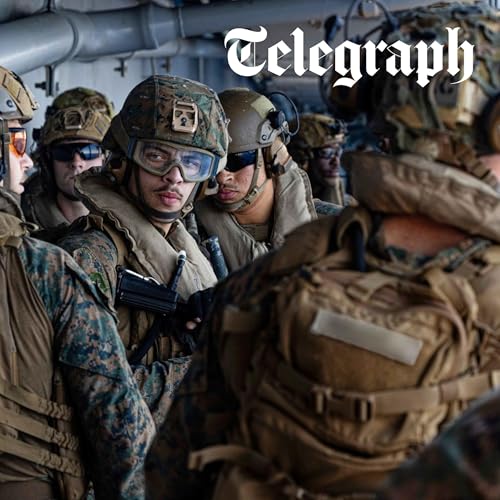
    To discuss, Roland Oliphant is joined from Saudi Arabia by Andrew Milburn, a former US Marine Corps colonel and ex-deputy Commander of Special Operations Command Central (CENTCOM), the headquarters responsible for all American special operations in the Middle East.


    He explains what operations the Marines could undertake in the Strait, why a potential plan to seize Iran’s uranium is do-able but dangerous, and why some in the Gulf are worried there could be a premature ceasefire.


    CONTRIBUTORS:


    Roland Oliphant, co-host and chief foreign affairs analyst @RolandOliphant

    Andrew Milburn, former US Marine Corps colonel and co-host of Eyes-On @andymilburn8


    Producer: Peter Shevlin

    Executive Producer: Louisa Wells


    ► Sign up to our most popular newsletter, From the Editor. Look forward to receiving free-thinking comment and the day's biggest stories, every morning. telegraph.co.uk/fromtheeditor


    ► EMAIL US: Contact the team on battlelines@telegraph.co.uk


    ► GET THE LATEST HEADLINES: Find all our latest Iran coverage here: https://www.telegraph.co.uk/iran-war/

    Hosted on Acast. See acast.com/privacy for more information.

    Más Menos
    36 m
  • Iran's 'zombie regime' & UAE ‘to help force open’ Strait of Hormuz
    Apr 1 2026

    Could the UAE help solve the Strait of Hormuz stalemate caused by the Iran war?


    The US is growing increasingly angry with its allies for refusing to help fully reopen the blocked waterway, which has led to soaring oil prices and dire economic warnings. From President Donald Trump threatening to pull out of Nato (a Telegraph exclusive) to Secretary of Defence Pete Hegseth lambasting the UK, Washington’s ire is palpable.


    Venetia Rainey runs through the latest updates from the Middle East, including Trump’s claim ahead of his big speech tonight that Iran has asked for a ceasefire, and a potentially game-changing report that the UAE is pushing for a coalition to help reopen the Strait by force.


    Plus, Roland Oliphant and senior foreign correspondent Sophia Yan speak to Iranian-American analyst and author of the Iranist newsletter, Holly Dagres. She explains why there haven’t been more protests and how the Islamic Republic is becoming a “zombie regime”.


    CONTRIBUTORS:


    Venetia Rainey, co-host @venetiarainey

    Roland Oliphant, co-host and chief foreign affairs analyst @RolandOliphant

    Sophia Yan, senior foreign correspondent @sophia_yan

    Holly Dagres, Washington Institute analyst @hdagres


    CONTENT REFERENCED:


    Roland Oliphant: The four outcomes if Trump surrenders the Strait of Hormuz to Iran


    Trump interview: I am strongly considering pulling out of Nato


    Iona Cleave: Iranian fortress at the centre of the battle for Hormuz


    Akhtar Makoii: How Iran plans to fight US troops if Trump invades


    Producer: Peter Shevlin

    Executive Producer: Louisa Wells


    ► Sign up to our most popular newsletter, From the Editor. Look forward to receiving free-thinking comment and the day's biggest stories, every morning. telegraph.co.uk/fromtheeditor


    ► EMAIL US: Contact the team on battlelines@telegraph.co.uk


    ► GET THE LATEST HEADLINES: Find all our latest Iran coverage here: https://www.telegraph.co.uk/iran-war/


    Hosted on Acast. See acast.com/privacy for more information.

    Más Menos
    40 m
  • One month of Iran-US war: Assassinations, missiles and the Strait of Hormuz
    Mar 31 2026

    After one month of the US-Iran war, who is winning and who is losing?


    Roland Oliphant and Venetia Rainey step back to examine how much of US President Donald Trump’s original war goals have been achieved, from destroying Iran’s missiles, navy and regional proxies to regime change and preventing the development of nuclear weapons.


    They also look at the role of Israel, the impact of attacks on the Gulf and the global economic shock caused by Iran’s closure of the vital waterway, the Strait of Hormuz.


    Plus, they discuss the depletion of global munition stocks after a month of air strikes, how the conflict has further frayed the Western alliance and what all that means for Ukraine and Russia.


    If you’ve been struggling to keep up with the latest news from the Middle East conflict, this is an update and analysis of everything you need to know from March 2026.


    CONTRIBUTORS:


    Roland Oliphant, co-host and chief foreign affairs analyst @RolandOliphant

    Venetia Rainey, co-host @venetiarainey


    CONTENT REFERENCED:


    Why tens of millions face hunger and poverty in wake of Trump’s Iran war

    American troops forced to withdraw from Middle East bases

    RUSI: Over 11,000 munitions in 16 Days of the Iran War: ‘Command of the Reload’ Governs Endurance


    Producer: Peter Shevlin

    Executive Producer: Louisa Wells


    ► Sign up to our most popular newsletter, From the Editor. Look forward to receiving free-thinking comment and the day's biggest stories, every morning. telegraph.co.uk/fromtheeditor


    ► EMAIL US: Contact the team on battlelines@telegraph.co.uk


    ► GET THE LATEST HEADLINES: Find all our latest Iran coverage here: https://www.telegraph.co.uk/iran-war/

    Hosted on Acast. See acast.com/privacy for more information.

    Más Menos
    41 m
  • Iran vows to ‘rain fire’ on US troops, the Houthi ‘nightmare’ & on the ground in Tehran
    Mar 30 2026

    Is the US about to invade Iran?


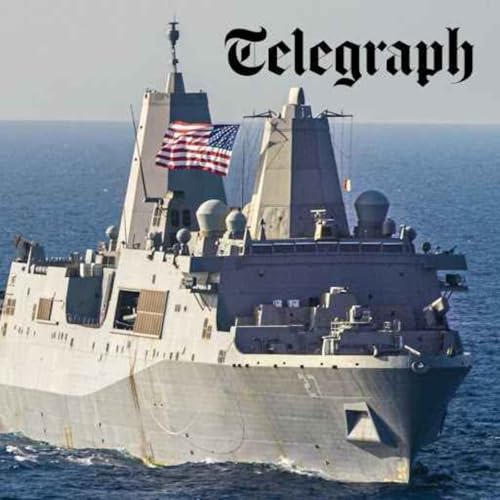
    Warship USS Tripoli has arrived in the Middle East with thousands of fresh troops, and the USS Boxer is not far behind - but Iran has vowed to “rain fire” on any American troops who set foot on its territory. Meanwhile, Trump is said to be considering taking Kharg Island and has been claiming regime change has already happened.


    Venetia Rainey and Roland Oliphant discuss all the latest updates, along with the impact on the price of oil and Israel expanding its offensive in southern Lebanon.


    Yemen expert and University of Cambridge mistress Elisabeth Kendall explains why the Houthis joining the war is so significant and how they could turn things into a “nightmare”.


    Plus, a glimpse into daily life on the ground in Tehran. Norwegian Refugee Council’s Iran director, Martje van Raamsdonk, joins from the Iranian capital to talk about how bombing has intensified in recent days, prompting residents to tape up their windows, and growing fears and uncertainty amid talks of a US invasion.


    CONTRIBUTORS:


    Roland Oliphant, co-host and chief foreign affairs analyst @RolandOliphant

    Venetia Rainey, co-host @venetiarainey

    Elisabeth Kendall, president of Girton College, @Dr_E_Kendall

    Martje van Raamsdonk, Norwegian Refugee Council’s Iran director


    CONTENT REFERENCED:


    Trump needs troops to seize the Strait of Hormuz. These are his options


    ‘Gate of Tears’ could be a strait too far for Trump’s military


    Producer: Peter Shevlin

    Executive Producer: Louisa Wells


    ► Sign up to our most popular newsletter, From the Editor. Look forward to receiving free-thinking comment and the day's biggest stories, every morning. telegraph.co.uk/fromtheeditor


    ► EMAIL US: Contact the team on battlelines@telegraph.co.uk


    ► GET THE LATEST HEADLINES: Find all our latest Iran coverage here: https://www.telegraph.co.uk/iran-war/

    Hosted on Acast. See acast.com/privacy for more information.

    Más Menos
    37 m
  • ‘A full spectrum crisis’: how the Iran war went global
    Mar 27 2026

    Iran’s blockade of the Strait of Hormuz has already pushed up oil prices. But is a bigger global economic disruption yet to come? And how long will it last?


    The Telegraph’s World Economy Editor Ambrose Evans-Pritchard joins Roland Oliphant to explain why the Iran conflict is sending shock waves around the world - and not just in the oil market.


    From fertiliser to helium to sulphur, the block on shipping through the Strait carries other key commodities used by the tech industry, hospitals and farmers. Ambrose explains how the war will almost certainly cause a global food shock in 2027.


    They also discuss how Russia and China are benefitting from the Iran war and why the Houthis in Yemen remain the dog that hasn’t barked - but could make things even worse than they are now.


    Plus, Roland Oliphant and senior foreign correspondent Sohia Yan analyse the latest news from the Iran war, including Donald Trump’s ongoing attempts at peace talks with Tehran, the US Navy’s first ever use of unmanned surface boats and why AP is now calling Israel’s attack on Lebanon an invasion.


    CONTRIBUTORS:


    Roland Oliphant, co-host and chief foreign affairs analyst @RolandOliphant

    Sophia Yan, senior foreign correspondent @sophia_yan

    Ambrose Evans-Pritchard, world economy editor


    CONTENT REFERENCED:


    Roland Oliphant: Trump needs troops to seize the Strait of Hormuz. These are his options


    Ambrose Evans-Pritchard: China has already won the Gulf War


    Ambrose Evans-Pritchard: The longer Trump’s war drags on, the worse the coming global food crisis


    Producer: Peter Shevlin

    Executive Producer: Louisa Wells


    ► Sign up to our most popular newsletter, From the Editor. Look forward to receiving free-thinking comment and the day's biggest stories, every morning. telegraph.co.uk/fromtheeditor


    ► EMAIL US: Contact the team on battlelines@telegraph.co.uk


    ► GET THE LATEST HEADLINES: Find all our latest Iran coverage here: https://www.telegraph.co.uk/iran-war/

    Hosted on Acast. See acast.com/privacy for more information.

    Más Menos
    34 m
  • Iran navy chief killed & why the war 'was based on a lie'
    Mar 26 2026

    Will Israel’s assassination of the IRGC’s naval chief lead to the reopening of the Strait of Hormuz?


    Hosts Roland Oliphant and Venetia Rainey analyse the latest news from the Iran war, from the killing of navy commander Alireza Tangsiri to Donald Trump’s claim that Tehran is “begging” for a deal.


    With thousands of US troops en route to the Middle East, the stakes are high. Among them are the 82nd Airborne Division; acting Defence Editor Tom Cotterill explains what sort of missions this elite group of paratroopers might be able to execute.


    Plus, former UK ambassador to Iran Sir Richard Dalton gives his insights into why striking a deal with the regime will be so difficult and how he thinks the war is based on a lie around Tehran’s nuclear capabilities.


    CONTRIBUTORS:


    Venetia Rainey, co-host @venetiarainey

    Roland Oliphant, co-host and chief foreign affairs analyst @RolandOliphant

    Tom Cotterill, acting Defence Editor @TomCotterillX

    Sir Richard Dalton, UK’s former ambassador to Iran


    CONTENT REFERENCED:


    What 2,000 US paratroopers could do in Iran

    https://www.telegraph.co.uk/world-news/2026/03/25/what-2000-us-paratroopers-could-do-iran-war-america-trump/


    Trump denies it – but two wars are becoming one

    https://www.telegraph.co.uk/world-news/2026/03/26/converging-wars-leave-europe-panicked-and-putin-emboldened/


    Producer: Peter Shevlin

    Executive Producer: Louisa Wells


    ► Sign up to our most popular newsletter, From the Editor. Look forward to receiving free-thinking comment and the day's biggest stories, every morning. telegraph.co.uk/fromtheeditor


    ► EMAIL US: Contact the team on battlelines@telegraph.co.uk


    ► GET THE LATEST HEADLINES:

    Find all our latest Iran coverage here: https://www.telegraph.co.uk/iran-war/

    Hosted on Acast. See acast.com/privacy for more information.

    Más Menos
    38 m
  • Delay tactic? Trump deploys paratroopers as he outlines peace plan
    Mar 25 2026

    Donald Trump has set out a 15-point Iran peace plan, but is he serious about ending the war?


    With news that another 2,000 elite American troops are en route to the Middle East, Tehran has its doubts - particularly as they’ve been here twice before with Trump.


    The Telegraph’s senior foreign correspondent Sophia Yan joins Venetia Rainey to talk through how realistic the proposal is and how it’s being viewed in Iran. They also discuss Turkey’s role as a potential mediator and the impact of the conflict on China.


    From the Telegraph’s US bureau, editor Lottie Tiplady-Bishop explains why Vice President JD Vance is now involved in peace negotiations and how boots on the ground is a red line for Trump’s MAGA base.


    Plus, how is the Iran war being viewed by ordinary Americans? Reporter Natasha Leake takes the temperature on the streets of Washington DC.


    CONTRIBUTORS:


    Venetia Rainey, co-host @venetiarainey

    Sophia Yan, senior foreign correspondent @sophia_yan

    Lottie Tiplady-Bishop, associate US news editor @lottietipbishop

    Natasha Leake, US reporter @NatashaLeake


    CONTENT REFERENCED:


    Trump hands Iran 15-point plan to end war

    https://www.telegraph.co.uk/world-news/2026/03/25/donald-trump-iran-war-15-point-plan-nuclear-missile/


    ‘Where the hell is JD Vance?’: Why Trump’s VP is missing in action

    https://www.telegraph.co.uk/us/politics/2026/03/10/jd-vance-trump-iran-war-missing/


    JD Vance met with Trump security official who quit over Iran war

    https://www.telegraph.co.uk/us/politics/2026/03/18/jd-vance-met-joe-kent-quit-iran/


    Donald Trump said he would be the president of peace

    https://www.telegraph.co.uk/world-news/2026/03/20/trump-promised-peace-then-he-started-war/


    Producer: Peter Shevlin

    Executive Producer: Louisa Wells


    ► Sign up to our most popular newsletter, From the Editor. Look forward to receiving free-thinking comment and the day's biggest stories, every morning. telegraph.co.uk/fromtheeditor


    ► EMAIL US: Contact the team on battlelines@telegraph.co.uk


    ► GET THE LATEST HEADLINES:

    Find all our latest Iran coverage here: https://www.telegraph.co.uk/iran-war/


    Hosted on Acast. See acast.com/privacy for more information.

    Más Menos
    37 m