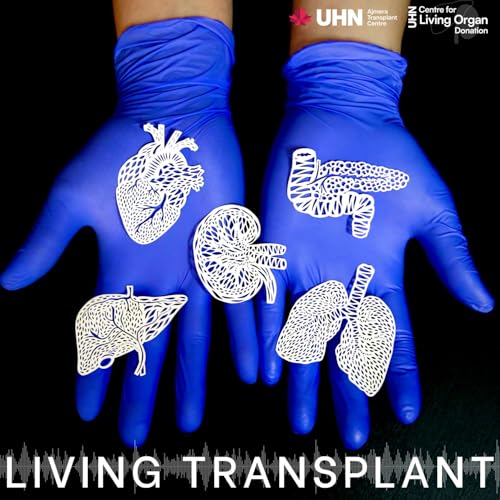
“I See You”: Indigenous Kidney Health, Cultural Safety, and Reimagining Care Podcast Por  arte de portada

“I See You”: Indigenous Kidney Health, Cultural Safety, and Reimagining Care

“I See You”: Indigenous Kidney Health, Cultural Safety, and Reimagining Care

Escúchala gratis

Ver detalles del espectáculo
In this powerful episode of The Living Transplant Podcast, host Candice Coghlan is joined by Crystal Hardy, a First Nations patient, researcher, and advocate whose lived experience with dialysis and kidney transplantation deeply informs her work in Indigenous kidney health.Crystal shares her journey through kidney failure, dialysis, and transplant — not just as a patient navigating a complex healthcare system, but as a researcher working to transform it. She reflects on the moment she realized that life on dialysis could still be full of purpose, the importance of feeling seen within healthcare, and how cultural safety, trust, and community connection directly impact health outcomes.Together, Candice and Crystal explore the systemic barriers First Nations patients face, including geographic isolation, under-referral for transplant, cultural mismatch in care, and inadequate navigation and relocation supports. Crystal introduces the Indigenous Kidney Health Project, explaining how Indigenous storywork and the Two-Eyed Seeing framework are being used to identify gaps in kidney care and reimagine more equitable, culturally congruent systems.This episode is a moving, insightful conversation about advocacy, food sovereignty, patient partnership, and hope — and a reminder that kidney care must meet people where they are, honour who they are, and listen to the stories they carry.What You’ll Learn in This EpisodeHow Crystal’s lived experience as a dialysis and transplant patient shaped her research and advocacyWhy feeling seen and heard is foundational to culturally safe kidney careThe real-world barriers First Nations patients face when accessing dialysis and transplantationWhy Indigenous patients are referred for transplant significantly less often — and what needs to changeWhat the Indigenous Kidney Health Project is and why patient voices lead the workHow Two-Eyed Seeing blends Indigenous knowledge with biomedical researchThe role of food sovereignty and traditional foods in kidney healthWhy connection, purpose, and peer support are essential on the kidney journeyHow healthcare systems can move from “cultural training” to truly individualized, respectful careKey TakeawaysKidney disease is a lifelong journey — transplantation is not a cure, but a transitionCultural safety is not a checklist; it is built through trust, listening, and relationshipsGeography and relocation create profound inequities in access to kidney careIndigenous patients must be partners and leaders in research about their careFood, culture, language, and community are inseparable from health outcomesPurpose and peer connection can be life-sustaining during dialysis and transplant journeysSystemic change is possible — and already beginning — when patients are centeredNotable Quotes“I was my own best case study.”“I see you.”“You can’t reform the system if you don’t know what people are actually living through.”“Transplant isn’t a cure — it’s a different way of living with care.”About the GuestCrystal N. Hardy is a First Nations kidney patient, researcher, and advocate whose work focuses on Indigenous kidney health, cultural safety, and equitable access to transplantation. Drawing from her own experiences with dialysis and transplant, Crystal leads research that centers Indigenous voices, storywork, and patient partnership to address systemic gaps in kidney care.If you are a First Nations patient, caregiver, or healthcare provider interested in supporting or participating in the Indigenous Kidney Health Project, Crystal welcomes connection, please reach out to cnhardy@lakeheadu.ca About the HostCandice Coghlan is the Education & Outreach Coordinator at the Centre for Living Organ Donation at the UHN Ajmera Transplant Centre. She is also a kidney transplant recipient and board member of the National Kidney Foundation. Diagnosed with kidney failure in her early 20s, Candice spent time on dialysis before receiving a living donor kidney transplant from her mother.Resources & LinksLearn more about living organ donation: www.livingorgandonation.caLiving Kidney Donation at UHN: UHN Ajmera Transplant CentreLiving with Kidney Disease Thunder Bay Event Recording: Living with Kidney DiseaseCrystal Hardy Story 1:49:56CanSOLVE CKD Indigenous People’s Engagement & Research CouncilGet In TouchHave questions, comments, or ideas for a future episode?Email the Centre for Living Organ Donation at livingorgandonation@uhn.caDisclaimer:The views and opinions expressed in this episode do not necessarily reflect the official policy or position of Toronto General Hospital or the University Health Network.
Todavía no hay opiniones