Episodios

  • Cinematography of Love Story with Jason McCormick
    Mar 11 2026

    Cinematographer Jason McCormick returns to Go Creative Show to discuss his work on the FX series Love Story, beginning with the story of John F. Kennedy Jr. and Carolyn Bessette. Jason breaks down how he approached the visual language of a romantic story after working on darker projects like Dahmer and Menendez, and how the show's look evolved through instinct, collaboration, and trust.

    Jason shares how the project came together quickly when he stepped in just weeks before shooting the pilot, and how working with director Max Winkler allowed the show's style to develop organically on set. From choosing the 1.85 aspect ratio and developing a custom LUT inspired by 90s film photography, to navigating the challenges of shooting in New York City, Jason explains how cinematography can support emotion, character, and story.

    The conversation also explores the realities of working in today's film industry, the importance of pacing yourself during long production runs, and why great cinematography often comes from staying flexible and responding to the moment.

    What You'll Learn
    • How Jason McCormick developed the visual style of Love Story

    • Why aspect ratio and color pipeline are the first decisions he makes on a project

    • Creating a custom LUT inspired by film photography

    • The challenge of stepping into a project late and making it your own

    • Shooting romance versus darker subject matter like Dahmer

    • Navigating paparazzi and location challenges while filming in New York

    • Why flexibility and instinct are key tools for cinematographers

    Topics Covered
    • Entering the project shortly before shooting the pilot

    • Working with director Max Winkler

    • Developing the show's color palette and LUT

    • Choosing lenses and aspect ratio for the series

    • Building visual language for a romantic story

    • The influence of paparazzi photography from the 1990s

    • Filming in Manhattan and dealing with paparazzi on location

    • Balancing creative instincts with production realities

    • The current state of the film industry in Los Angeles

    Key Takeaways
    • Cinematography starts with the shape of the frame and color pipeline, not the lighting.

    • The best visual ideas often come from reacting to actors and locations in the moment.

    • Trust between departments allows filmmakers to work faster and more creatively.

    • Great cinematography isn't always about complexity — sometimes the right shot is simply putting the camera in the perfect place.

    LINKS

    'Love Story' Series on Hulu
    Jason McCormick's Instagram
    Go Creative Show Instagram

    Más Menos
    50 m
  • Good Luck, Have Fun, Don't Die Cinematography with James Whitaker
    Feb 19 2026

    In this episode of the Go Creative Show, cinematographer James Whitaker discusses his work on the film 'Good Luck, Have Fun, Don't Die,' directed by Gore Verbinski. The conversation covers the film's unique genre-bending narrative, the challenges of cinematography within a limited budget and timeframe, and the creative decisions that shaped its visual style. Whitaker shares insights on lighting techniques, camera choices, and the importance of collaboration in filmmaking. He also expresses concerns about the impact of AI on the creative industry, reflecting on the balance between technology and human artistry.

    Takeaways

    The film's title reflects a parental warning about technology.
    AI poses real challenges that society must address.
    Working with Gore Verbinski is both fun and creatively fulfilling.
    Genre-bending films allow for unique storytelling opportunities.
    Realism in cinematography enhances audience engagement.
    Budget constraints require innovative solutions in filmmaking.
    Lighting plays a crucial role in conveying emotional depth.
    Collaboration with the crew is essential for success.
    Imperfection in filmmaking can serve the story.
    AI's impact on creative jobs is a growing concern.

    Follow our Guest

    https://www.instagram.com/jameswhitaker_dop/

    Follow our Host

    https://www.instagram.com/benconsoli/

    Más Menos
    47 m
  • What Puppetry Teaches Filmmakers with Andrew G Cooper
    Feb 10 2026

    What can puppetry teach filmmakers about acting, storytelling, and cinematography?

    In this episode of The Go Creative Show, host Ben Consoli sits down with puppeteer and filmmaker Andrew G. Cooper (Fraggle Rock) to break down the filmmaking discipline behind puppetry—and why it might be one of the most underrated tools for learning visual storytelling.

    Andrew shares how puppets demand clarity in performance, intentional framing, and disciplined direction, offering lessons that translate directly to working with actors and cameras. They explore in-camera effects, the resurgence of practical filmmaking, and how creative constraints often lead to stronger storytelling. Andrew also dives into his experience working on large-scale productions and how puppetry informs his work as a writer and director, including a feature film currently in development.

    Whether you're a cinematographer, director, or storyteller, this conversation will change how you think about performance on screen.

    TAKEAWAYS

    • Andrew G. Cooper's journey into puppeteering began with his mother's local puppet TV show.
    • The transition from theater to film puppetry involves understanding the frame and camera techniques.
    • Bringing life to puppets involves weight, breath, and focus.
    • Puppeteers are often actors and directors, integrating their skills into performances.
    • The resurgence of practical effects is driven by a desire for tangible, real experiences in media.
    • Constraints in puppetry can lead to creative solutions and improvisation on set.
    • Andrew's experience on Fraggle Rock was a significant leap from theater to television production.
    • Training and passion are essential for aspiring puppeteers and filmmakers.
    • The collaborative nature of film production allows for puppeteers to contribute creatively.
    • Andrew is developing a feature film that explores cosmic horror with puppetry.

    LINKS

    www.andrewgcooper.com

    🎧 Subscribe to the Go Creative Show wherever you get your podcasts

    Más Menos
    41 m
  • The Bear's Filmmaking Secrets with Cinematographer Drew Wehde
    Jul 16 2025

    Join host Ben Consoli as he welcomes back Drew Wehde, the brilliant cinematographer behind The Bear Season 4. Drew dives deep into the chaos and beauty of shooting one of the most creatively daring shows on TV. From the philosophy of forgetting your work to designing lighting systems with 18Ks and Infinimats, Drew breaks down how The Bear achieves its raw, immersive style—and why sometimes, there's no storyboard at all. Whether you're a seasoned DP, an indie filmmaker, or a Bear superfan, this is a must-listen.

    🎬 Topics Covered
    • How to be present — stay focused on the moment while filming
    • Why filmakers should forget past work to unlock fresh creativity
    • Balance between filmmaking and family matters
    • Drew's crew shares his "live in the now" mindset
    • The Bear uses bold, evolving visual techniques
    • Lighting and color are core to the show's style
    • He built a custom lighting system for fast adjustments
    • The Season 4 finale is driven by character, not chaos
    • No storyboards or shot lists — pure flexibility on set
    • Filmmaking is a true collaboration with his team

    🎥 Watch The Bear Season 4 Trailer
    🎧 Subscribe to the Go Creative Show wherever you get your podcasts
    📸 Follow Drew Wehde on Instagram @andrewwehde

    Más Menos
    55 m
  • Filming Black Mirror's Craziest In-Camera Shots with Stephan Pehrsson (USS Callister & Bête Noire)
    Jun 10 2025

    In this episode of the Go Creative Show, cinematographer Stephan Pehrsson returns to discuss his visual approach to the latest Black Mirror episodes, including 'USS Callister: Into Infinity' and 'Bête Noire'. We dive into lighting technology, camera choices, in-camera effects, and the psychological tension behind every frame.

    🎬 Topics Covered
    • How Black Mirror's Visual Style Has Evolved Since Season 4

    • The LED Lighting Revolution: What's Changed Behind the Scenes

    • Green Screen vs LED Wall: The Battle for Better Sci-Fi

    • Keeping a Consistent Look Across Alien Worlds and Realities

    • Realism vs Stylization: How Stephan Shapes Each Scene

    • What It Took to Bring USS Callister Back to Life

    • Inside the Camera Kit: Breaking Down the USS Callister Package

    • Vintage Anamorphics Up Close: Getting That Cinematic Look

    • How They Pulled Off Those Seamless "Double" Shots

    • The Techno Dolly Trick: Making Handheld Magic Repeatable

    • How Stefan Handles the Pressure When the Clock's Ticking

    • Breaking Into the Industry: Stephan's Cinematography Journey

    • Stephan's Big Break: From Soap Operas to Sci-Fi Giants

    • Designing the Look of Bête Noire: Pastels, Paranoia, and Precision

    • Creating Psychological Tension Through Cinematography

    • Why Passion Still Powers the Best Film Work

    • AI in Filmmaking: Helpful Assistant or Creative Threat?

    🎥 Watch the BTS for USS Callister
    🎧 Subscribe to the Go Creative Show wherever you get your podcasts
    📸 Follow Stephan Pehrsson on Instagram @stephan.pehrsson

    Más Menos
    42 m
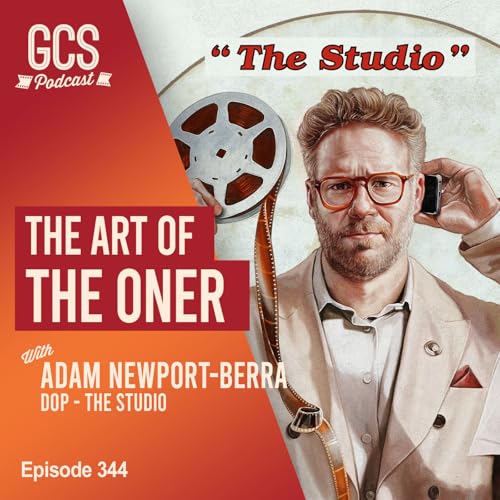
  • Filming Incredible Oners with Adam Newport-Berra of The Studio
    May 30 2025

    The Art of the Oner: In this episode of the Go Creative Show, acclaimed cinematographer Adam Newport-Berra joins us to discuss his work on the hit series 'The Studio'. Adam opens up about his process, the pressure and passion behind one-take sequences, lighting approaches, camera builds, and the philosophy that drives his visual choices. If you're into cinematography, collaboration, or breaking into the industry, this conversation offers both inspiration and tactical insight.

    🎬 Topics Covered
    • The storytelling power of long takes and why The Studio committed to the oner format

    • Prepping like a maniac: location scouting, movement planning, and lookbooks

    • Filming in a live Las Vegas casino
    • The benefits (and madness) of shooting with one lens, one camera, no coverage

    • Which celebrity cameo was Adam most nervous about... Spoiler...Martin Scorsese!
    • Why embracing chaos creates more grounded and exciting performances

    • Lighting for realism vs. stylization in high-glass, high-energy environments

    • The artistic beauty of maximalism and intentional visual anxiety

    • Balancing technical precision with raw human performance

    • Why strong leadership and a positive set culture are essential for creativity

    • Lessons on collaboration, adaptability, and protecting your inspiration outside of work

    🎧 Key Takeaways
    • A relatable script is the heart of great cinematography—it gives every shot purpose.

    • Extensive prep is vital, especially when choreography, camera, and cast all move as one.

    • The show's one-shot format pushed every department to be smarter, faster, and more creative.

    • Working with a supportive crew makes bold risks possible—and fun.

    • Technical constraints (like using a 21mm lens and the Alexa 35) unlocked visual freedom.

    • Collaboration is everything: lighting, production design, and performance must all dance together.

    • Performance always trumps perfection. Capture the moment—then make it beautiful.

    • Spontaneity thrives when you're fully prepared.

    • Your life outside film matters. Inspiration isn't just on set—it's everywhere.

    🎥 Watch the trailer for The Studio
    🎧 Subscribe to the Go Creative Show wherever you get your podcasts
    📸 Follow Adam Newport-Berra on Instagram @adamnberra

    Más Menos
    46 m
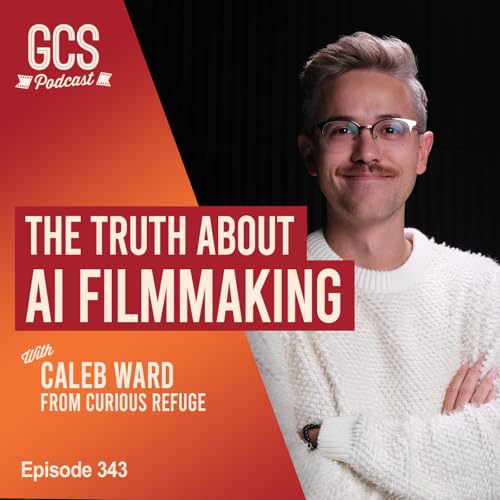
  • AI in Filmmaking: The Good, The Bad, and What You Really Need to Know with Caleb Ward
    Apr 22 2025

    Are filmmakers right to fear AI? Not exactly. In this episode, Ben Consoli sits down with Caleb Ward, co-founder of Curious Refuge, the leading platform for AI storytelling, to break down the real impact of AI on the filmmaking industry. They dive into how AI can enhance—not replace—human creativity, streamline production, and even open the door to entirely new job roles.

    From ethical concerns to wild possibilities like generating full films from a single prompt, this conversation explores the exciting (and sometimes misunderstood) intersection of technology and storytelling. Whether you're AI-curious or AI-cautious, this episode is a must-listen for any modern filmmaker.

    Key Takeaways:
    • Curiosity beats fear — filmmakers shouldn't be afraid of AI, but explore its potential.

    • AI enhances, not replaces — it's a tool to support storytelling, not steal jobs.

    • History repeats — every new tech in filmmaking faced initial skepticism.

    • AI in action — it's already helping with pre-vis, post-production, VFX, and animation.

    • Creativity still rules — AI lacks original storytelling ability; the human touch is essential.

    • New visuals, new possibilities — AI enables visuals once too costly or impossible to achieve.

    • The Sphere example — AI was used to enhance The Wizard of Oz experience in Las Vegas.

    • Inspiration & iteration — AI can speed up creative brainstorming and refine ideas.

    • Ethics & ownership matter — creators must consider legal and moral implications.

    • Jobs are evolving — AI is creating new roles in the industry, not just replacing old ones.

    • The future is hybrid — expect AI-assisted films, but human storytelling remains irreplaceable.

    Links:

    https://curiousrefuge.com
    AI Film News
    GoCreativeShow
    BC Media Productions

    Más Menos
    51 m
  • Directing & Shooting Severance Season 2 with Jessica Lee Gagné
    Mar 3 2025

    In this episode of the Go Creative Show, Jessica Lee Gagné returns to discuss her experience filming Severance Season two, plus her Episode 7 directorial debut. She shares insights into her creative process, the challenges of shooting in unique environments, and the evolution of cinematography from Season One to Season Two. Jessica emphasizes the importance of collaboration, the emotional journey of directing, and the innovative techniques used in the series, including transitions and lighting choices. The conversation highlights her growth as a filmmaker and her aspirations for future projects

    Takeaways

    • Jessica's directorial debut was a significant milestone in her career.
    • The opening shot of Episode 1 was a complex and collaborative effort.
    • Cinematography choices were crucial in maintaining the show's visual language.
    • Lighting evolved significantly from Season One to Season Two.
    • Collaboration with colorists was essential for achieving the desired aesthetic.
    • Directing Episode 7 allowed Jessica to explore new themes and storytelling techniques.
    • The emotional journey of directing was both challenging and rewarding for Jessica.
    • Trust and communication among the crew were vital for the success of the episode.
    • Flashbacks were a unique storytelling device that added depth to the narrative.
    • Innovative transitions in Episode 7 showcased the show's creative evolution.

    LINKS

    Jessica Lee Gagné
    GoCreativeShow
    BC Media Productions

    Más Menos
    1 h