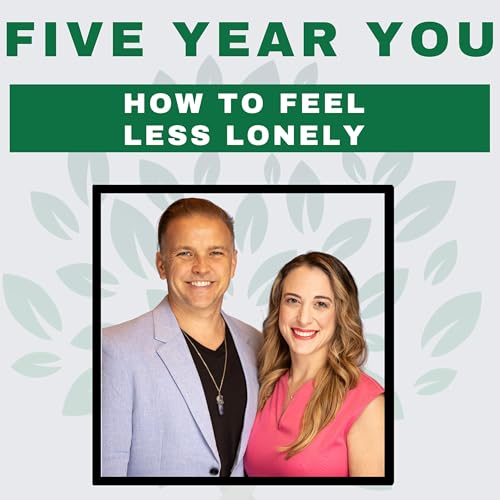
Five Year You Podcast Por Andrew Dewar and Catherine Collins arte de portada

Five Year You

Five Year You

De: Andrew Dewar and Catherine Collins
Escúchala gratis

Welcome to "Five Year You," the podcast that takes you on a transformative journey toward your future self. Join us as we explore the power of self-improvement, tackling challenges, setting goals, and unleashing the potential within you. Our conversations are raw, real, and relatable, offering practical tips and insights to empower you in your growth. Each episode offers useful tips to help you become the person you aspire to be. Tune in, invest in yourself, and let's embark on this adventure together! Get ready for a unique and personal exploration of the honest and relatable moments that will shape the next chapter of your story. In each episode, we dive into the day-to-day experiences that make up the mosaic of your life over the next five years. From the small victories to the inevitable challenges, "Five Year You" captures the essence of the ordinary and extraordinary moments that contribute to your personal growth. Our tagline, "Raw, Real, Relatable," perfectly encapsulates the authenticity of the stories we share. No glossy highlights, just the unfiltered reality of navigating the twists and turns of everyday life. Join us as we connect with individuals from various walks of life who openly share their aspirations, setbacks, and the unexpected surprises that come with each passing day. Whether you're facing career crossroads, building relationships, or discovering new passions, "Five Year You" is here to provide a real-time reflection on the shared human experience. Tune in for a daily dose of inspiration, motivation, and a reminder that you're not alone on this journey.©Five Year You Desarrollo Personal Higiene y Vida Saludable Psicología Psicología y Salud Mental Éxito Personal
Episodios
  • How to Reset After a Bad Day
    Dec 24 2025

    Bad days happen to everyone — the spilled coffee, the rude driver, the overwhelming to-do list, the kid meltdown, or the spiraling thoughts that won’t quit. But a bad day doesn’t have to turn into a bad week or a bad season. In this episode, Andrew and Cat break down exactly what’s happening in your body and mind during a tough day and share practical, science-backed steps to interrupt the spiral and truly reset.

    This is your guide to calming your nervous system, grounding in the present, and giving yourself the compassion you actually need.

    Key Topics Covered
    • Why your brain goes into “fight, flight, or freeze” during a bad day
    • How overstimulation + emotional flooding make everything feel worse
    • The Window of Tolerance and why you pop out of it
    • Why powering through backfires
    • What not to do after a bad day
    • Simple grounding techniques that work in minutes
    • How to shift your environment and regulate your nervous system
    • How to stop the negative momentum before it becomes a bad week

    Actionable Steps to Reset1. Acknowledge You’re Having a Bad Day

    Normalize it: “This is a bad day. It’s temporary.”

    Awareness interrupts the mental tumble.

    2. Ground Yourself in Your Body

    When your mind spins, your body’s in survival mode. Try:

    • Box breathing (4–4–4–4)
    • Double inhale + long exhale
    • Rubbing your arms
    • Feet planted firmly on the ground
    • Repeating: “I am safe right now.”

    3. Move the Stuck Energy Out

    Bad days create physical tension. Release it with:

    • A fast walk
    • Gentle stretching
    • Shaking out your limbs
    • A moment of dancing
    • Stomping your feet (great for kids and adults)

    Movement shifts your physiology faster than thoughts ever will.

    4. Change Your Environment

    Your nervous system needs a scene shift:

    • Step outside for fresh air and sunlight
    • Splash cold water on your face
    • Take a warm shower (Cat’s dad’s universal cure!)

    A new environment interrupts the emotional loop.

    5. Regulate & Co-Regulate

    Once calmer, try:

    • Tea or cool water
    • A short nap
    • A self-hug or safe, comforting touch
    • Journaling what triggered you
    • Asking for a hug from someone you trust

    6. Drop the Story

    Your brain wants to replay the bad moment a hundred times.

    Interrupt it with: “I don’t need to carry this anymore.”

    What Not to Do After a Bad Day
    • Don’t force positivity (“I’m fine” makes it worse)
    • Don’t ruminate — replaying it keeps the stress alive
    • Don’t doom scroll
    • Don’t isolate yourself
    • Don’t make major decisions
    • Don’t self-criticize

    Treat yourself how you’d treat someone you love — gently.

    Quotes from the Episode“A bad day isn’t a bad life — unless you carry it into tomorrow.”“Your body needs to reset before your mind can.”“Treat yourself the way you’d treat a child you adore on a hard day.”Cat’s Aha Moments
    • Realizing she was dysregulated without noticing it — and how helpful it is when someone gently mirrors that back.
    • The reminder that pushing through only leads to overwhelm, overreacting, and unnecessary conflict.

    Andrew’s Aha Moments
    • Understanding the hyperarousal
    Más Menos
    24 m
  • How to Enjoy Christmas This Year
    Dec 17 2025

    Christmas is often described as the most wonderful time of the year — but for many people, it’s one of the hardest. In this episode, Andrew and Cat talk honestly about holiday burnout, grief, pressure, and unrealistic expectations, and offer compassionate, practical ways to experience Christmas in a way that actually feels good for you.

    This episode is especially for anyone who feels overwhelmed, disconnected, grieving, resentful, or simply “not into it” this year. You’re not broken — you’re human.

    In This Episode, We Talk About:

    • Why Christmas can feel emotionally heavy instead of joyful

    • The unrealistic pressure placed on parents (especially moms) during the holidays

    • How social media amplifies comparison, guilt, and expectations

    • Why it’s okay to feel joy and sadness at the same time

    • How grief shows up during the holidays — and why there’s no “right” way to do Christmas

    • The difference between meaningful moments and overdoing gifts and traditions

    • How to stop people-pleasing and start honoring your own emotional needs

    Key Takeaways

    You’re not broken if you’re not feeling festive

    If Christmas feels hard this year, that doesn’t mean something is wrong with you. Stress, grief, loss, illness, burnout, and family dynamics all get amplified during the holidays.

    Christmas is an amplifier

    Whatever you’re already feeling — joy, exhaustion, grief, loneliness — tends to feel bigger this time of year. That doesn’t make those feelings bad or wrong.

    More effort doesn’t equal more joy

    Doing more traditions, buying more gifts, or spending more money doesn’t guarantee happiness. Often, it just leads to more stress and resentment.

    Kids remember how you felt, not what you bought

    Children are far more likely to remember experiences, presence, and emotional safety than the number of presents under the tree.

    Grief and gratitude can coexist

    You can miss someone deeply and still appreciate the people or moments you have now. Smiling doesn’t mean you’ve “moved on,” and sadness doesn’t mean you’re ungrateful.

    Practical Ways to Enjoy Christmas (Your Way)

    Design Christmas around your emotional needs

    Ask yourself:

    – Do I need calm or excitement this year?

    – Do I want togetherness or more quiet?

    – What would actually help me feel rested or supported?

    There is no correct answer — only your answer.

    Simplify traditions

    Traditions don’t have to be expensive or elaborate. Small, repeatable comforts can be just as meaningful:

    – One favorite movie

    – A quiet morning

    – Driving around to look at lights

    – A simple meal

    – One meaningful gift

    You’re allowed to start new traditions or pause old ones.

    Set boundaries without guilt

    You’re allowed to:

    – Say no to travel

    – Leave early

    – Stay home

    – Skip events

    – Change plans

    Disappointing others doesn’t mean you’ve failed — it means you’re honoring yourself.

    If you’re grieving, do what feels safest

    Recreating old traditions might hurt — or it might help. Either choice is valid. Staying home is not “giving up.” It’s creating space to heal.

    Stop forcing cheer

    You don’t need to fix the mood, perform happiness, or make everyone feel joyful. Let emotions come and go naturally.

    What Not to Do This Christmas

    • Don’t force happiness or cheer

    • Don’t compare your holiday to social media

    • Don’t shame yourself for how you’re feeling

    • Don’t override your needs to meet expectations

    • Don’t assume this year defines every future Christmas

    Glimmers from This Episode

    Cat’s...

    Más Menos
    25 m
  • How To Feel Less Lonely
    Dec 10 2025

    You can be surrounded by people and still feel lonely — and that’s something almost everyone experiences. In this episode, Andrew and Cat unpack the difference between being alone and feeling lonely, explore where that emptiness comes from, and share practical, compassionate ways to rebuild connection — both with others and yourself.

    Big ideas
    • Loneliness ≠ isolation. You can feel lonely in a crowded room because connection is about being understood, not just being around others.
    • Your brain lies. The stories you tell yourself — “I’m a burden,” “no one cares,” “I wasn’t invited because I’m not liked” — aren’t facts.
    • It’s often rooted in old wounds. Many of us learned as kids to minimize our needs, which makes adult connection harder.
    • You can rewire the story. Self-compassion and awareness can help you separate what happened from what you made it mean.
    • Connection takes courage. Reaching out feels scary, but it’s the antidote to loneliness.

    Key takeaways

    1️⃣ Name the lie. When your brain says, “nobody cares,” replace it with: “No one knows I need them right now.”

    2️⃣ Reach out first. Send a text, share a funny video, or ask for a coffee. Don’t wait for an invitation — give one.

    3️⃣ Borrow hope. When you see others connecting, use it as proof that connection is possible for you too.

    4️⃣ Say what you need. “Can we talk?” or “I’ve been feeling disconnected” is honest — not needy.

    5️⃣ Get around people. Go for a walk, smile at strangers, sit in a café — you’ll feel energy shift just by being among others.

    6️⃣ Rebuild inner connection. Remind yourself of your worth: write down moments when you’ve been a good friend, helper, or listener.

    7️⃣ Shift focus outward. Helping others — even small acts — often dissolves your own loneliness.

    Gentle scripts to try
    • “Hey, I’ve been thinking of you. How have you been?”
    • “I could use a chat today — do you have time to catch up?”
    • “Want to grab a quick coffee this week?”
    • “I saw this and it made me think of you.”

    Every message doesn’t have to be deep — just real.


    Quotes & reflections“Your brain lies — you’re not a burden, you’re a blessing.”“Loneliness is the space between your heart reaching out and your fear holding back.”“Every time you smile at someone, you remind them — and yourself — that we’re all in this together.”Glimmers
    • Cat: Trader Joe’s ready-made dinners — giving herself grace and ease in a busy week. 🍝
    • Andrew: Binge-watching Stranger Things guilt-free — sometimes comfort and escape are self-care. 📺

    If you’re struggling deeply

    You are not alone. If you’re in crisis or feeling hopeless, reach out for help right now:

    • 988 Suicide and Crisis Lifeline (U.S.) — call or text 988
    • Canada Suicide Prevention Service — call or text 988
    • U.K. Samaritans — call 116 123
    • Australia Lifeline — call 13 11 14
    • Or visit findahelpline.com for international...
    Más Menos
    25 m
Todavía no hay opiniones