Fintech Takes Podcast Por Alex Johnson arte de portada

Fintech Takes

Fintech Takes

De: Alex Johnson
Escúchala gratis

Fintech moves fast. But here at Fintech Takes, Alex Johnson and his rotating panel of guests move faster so that you can stay on top of the latest and greatest news in the industry without breaking a sweat. Welcome to Fintech Takes—the place where fintech’s biggest nerds come to sit back, relax, and completely geek out. Join Alex and a lineup of fintech’s brightest minds as they dissect what’s happening in fintech and banking. Each week, Alex and his guests recap the most interesting developments in fintech and explore the industry’s most pressing questions, diving headfirst into the intricate workings of some of the industry’s most ground-breaking business models and unpacking the emerging players that promise to shape fintech’s future. From riveting conversations with fintech’s most relevant operators to comprehensive recaps of the month's most compelling news stories and in-depth analyses of the latest regulatory developments, Fintech Takes is your one-stop-shop for navigating the fintech universe. Subscribe now to join fintech’s nerdiest podcast around!Copyright 2026 Alex Johnson Economía Finanzas Personales Política y Gobierno
Episodios
  • Fintech Recap: Bilt Breaks, BaaS Unbundles, and NY Flexes
    Apr 1 2026
    Welcome back to Fintech Recap. I'm Alex Johnson, joined as always by my partner in recapping, Jason Mikula. We kick things off with Bilt 2.0. After Wells Fargo pulled the plug on a partnership costing the bank reportedly $10M a month, Bilt rebuilt its stack with Column as the bank partner, Cardless as issuer processor, and Fidem Financial as the capital provider. The transition was not smooth. Picture a free-for-all of declined applications; lower credit limits; missed, failed, or duplicated rent payments; fraud; and an AI customer support bot looping without resolution. My read: Bilt 1.0 worked because Wells Fargo absorbed everything. Bilt 2.0 jerry-rigged a multi-vendor solution and asked customers not to notice. From there, we get into what I'm calling the “graduation problem” in BaaS. As fintech companies like Mercury pursue charters (and deals like Capital One acquiring Brex reshape the landscape), the same partners that fueled growth for sponsor banks are now leaving or vertically integrating. We debate whether BaaS was ever an enduring model or a toll on regulatory scarcity. What happens when that scarcity disappears? From there, we turn to New York’s proposed financial data rights law, which mirrors and extends the CFPB’s 1033 rule. It’s the most ambitious open banking legislation ever introduced in the U.S. It covers consumers and small businesses, applies to every bank serving New Yorkers regardless of charter type, and explicitly bans fees for data access. We close with two Can't Let It Gos: Elizabeth Warren's letter to MrBeast, which resurfaced deleted Step videos coaching teenagers on how to convince their parents to let them invest in crypto, and the prediction market industry's very aggressive March Madness push from Coinbase and Kalshi. This episode is brought to you by Persona. Persona is the identity verification platform trusted by fintech's fastest-growing teams, from YC-backed startups to publicly traded companies. Build your identity program with enterprise-grade tools, starting at $0 with Persona's Startup Program. Fintech Takes listeners can get a full free year through Persona’s Startup Program at withpersona.com/ftt Sign up for Alex’s Fintech Takes newsletter for the latest insightful analysis on fintech trends, along with a heaping pile of pop culture references and copious footnotes. Every Monday and Thursday: https://workweek.com/brand/fintech-takes/ And for more exclusive insider content, don’t forget to check out my YouTube page. Follow Jason: Newsletter: https://fintechbusinessweekly.substack.com/ LinkedIn: https://www.linkedin.com/in/jasonmikula/ Follow Alex: YouTube: https://www.youtube.com/channel/UCJgfH47QEwbQmkQlz1V9rQA/videos LinkedIn: https://www.linkedin.com/in/alexhjohnsonTwitter: https://www.twitter.com/AlexH_Johnson
    Más Menos
    1 h y 37 m
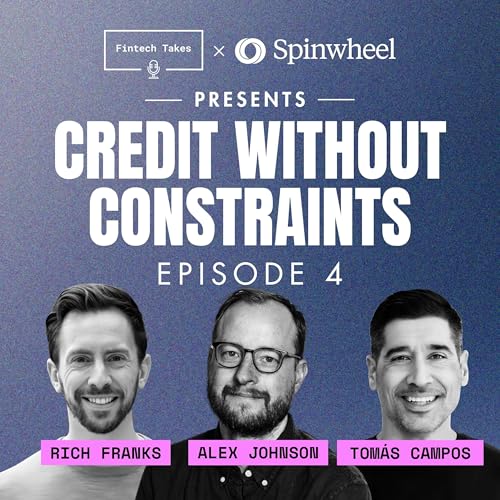
  • Fintech Takes x Spinwheel presents Credit Without Constraints Episode 4: Context
    Mar 31 2026
    Welcome to Credit Without Constraints, a new four-part podcast miniseries from Fintech Takes, presented with our friends at Spinwheel. The series revolves around one question: how do we make the best possible credit decisions for the benefit of both the consumer and the lender? In Episode 4, my cohost Tomás Campos, Co-founder and CEO of Spinwheel, and I sit down with Rich Franks, a fintech advisor who previously worked at Capital One, PayPal, and Credit Karma, including on products like Lightbox and Easy Apply that helped reshape how consumers discover and access credit. This final episode is about context: how people actually shop for credit, the data that shapes those decisions, and where AI may take the process next. Consumers are never shopping for credit in the abstract. They’re trying to buy a car, finance a renovation, consolidate debt, or solve some other concrete problem. Each of those decisions comes with its own timing, tradeoffs, and limitations. Rich pushes against the industry’s habit of treating lending as separate from the outcome the consumer actually cares about. His argument is that underwriting works better when it stays connected to timing and real-world intent. That perspective has implications across the full customer journey, from product discovery and application design to consumer-permissioned data, adverse action, and AI-assisted shopping. What if the real edge in lending is not more offers, but a better understanding of what the borrower is trying to achieve? What if the assumptions the industry and regulators have inherited about how lending is supposed to work are wrong? Spinwheel helps financial innovators instantly verify and act on consumer credit using just a phone number and date of birth. Real-time, consented credit data and embedded payments—no passwords, no friction. Learn more at https://spinwheel.io Sign up for Alex’s Fintech Takes newsletter for the latest insightful analysis on fintech trends, along with a heaping pile of pop culture references and copious footnotes. Every Monday and Thursday: https://workweek.com/brand/fintech-takes/ And for more exclusive insider content, don’t forget to check out my YouTube page. Follow Alex: YouTube: https://www.youtube.com/channel/UCJgfH47QEwbQmkQlz1V9rQA/videos LinkedIn: https://www.linkedin.com/in/alexhjohnson Twitter: https://www.twitter.com/AlexH_Johnson Follow Tomás: https://www.linkedin.com/in/theinnovativeone/ Follow Rich: https://www.linkedin.com/in/richfranks/ Learn more about Spinwheel here: https://spinwheel.io
    Más Menos
    43 m
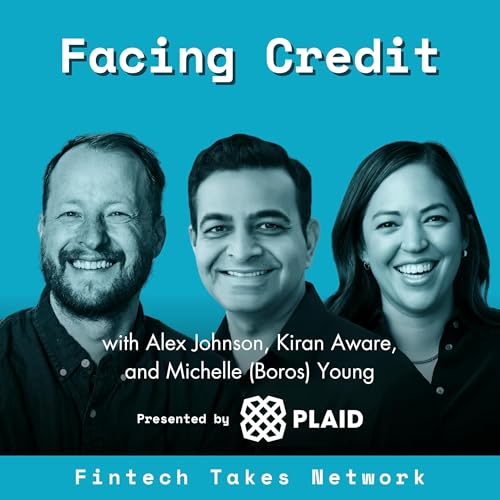
  • Facing Credit: Credit Underwriting as a System
    Mar 25 2026
    Welcome back to the Fintech Takes podcast. I’m Alex Johnson, joined by Kiran Aware (Chief Consumer Credit Officer at LendingClub) and Michelle Young (Credit Product Lead at Plaid) for our new series Facing Credit, where we unpack what’s happening in credit and lending right now. Today’s conversation explores credit underwriting as a system, and why more lenders are finally starting to treat it that way. First, we zoom out to the macro picture and ask how lenders are navigating a market full of uncertainty and changing consumer behavior. Kiran explains how LendingClub thinks about borrower stability, while Michelle shares what lenders across the market are looking for in a more complete picture of risk. Next, we focus on credit underwriting as a system. Kiran breaks down how LendingClub has built a full decisioning operating system across underwriting, pricing, verification, fraud, servicing, and collections. Michelle explains why alternative data is no longer a useful label, and why user-permissioned cash flow data has become more important across origination, verification, and monitoring. Finally, we tackle AI in credit, near-term and long. Explainability requirements mean LLMs won't land in core underwriting tomorrow, but AI’s already changing what's possible in verification and fraud workflows. The longer horizon points toward credit systems that identify new signals autonomously and self-optimize in real time. But what happens when consumers have AI agents making decisions on their behalf, and fraudsters are using the same technology to attack the system? Tune in for a rich conversation about what lenders are really building when they underwrite credit (and why the industry is more open than ever to reimagining the system itself). This episode is brought to you by Plaid. Plaid helps lenders approve more creditworthy borrowers without taking on more risk, combining real-time cash flow data with behavioral insights. It’s a fast, familiar experience people trust, and that actually converts. Learn more at www.plaid.com/ftt Sign up for Alex’s Fintech Takes newsletter for the latest insightful analysis on fintech trends, along with a heaping pile of pop culture references and copious footnotes. Every Monday and Thursday: https://workweek.com/brand/fintech-takes/ And for more exclusive insider content, don’t forget to check out my YouTube page. Follow Kiran LinkedIn: https://www.linkedin.com/in/kiran-aware-6491984/ Follow Michelle LinkedIn: https://www.linkedin.com/in/michelle-boros-young-5a586983/ Follow Alex Johnson: YouTube: https://www.youtube.com/channel/UCJgfH47QEwbQmkQlz1V9rQA/videos LinkedIn: https://www.linkedin.com/in/alexhjohnson X: https://www.twitter.com/AlexH_Johnson
    Más Menos
    48 m
Todavía no hay opiniones