Episodios

  • Why Growth Can Destroy Your Business | Nick Jain on Unit Economics, AI, and Smarter Decision Making
    Mar 31 2026

    In this episode of Business, Finance, and Soul, Shaun sits down with Nick Jain, Founder and CEO of Eagle Rock CFO, to unpack what it really means to run a business with clarity—not just confidence.

    Nick's journey from studying math and physics to working in private equity at Bain Capital shaped a mindset rooted in analytical thinking, experimentation, and understanding how businesses truly operate as interconnected systems. But as he shares, the real learning didn't happen in theory—it happened in the messy, unpredictable reality of execution.

    Together, Shaun and Nick explore the gap between spreadsheets and real life, why growth alone can be dangerous, and how founders can start asking better financial questions that actually drive outcomes.

    This conversation is especially valuable for founders and operators who want to move beyond surface-level metrics and start making decisions with intention, discipline, and clarity.

    🔑 What You'll Learn
    • Why growth can actually destroy cash if fundamentals aren't right
    • The concept of unit economics and how to apply it in real business scenarios
    • The 3 financial metrics every founder should track weekly
    • Why revenue and profit don't always equal business value
    • How to think in probabilities, not certainties, when making decisions
    • The power of an experimental mindset in business strategy
    • Why most leaders struggle because they're asking the wrong questions
    • How AI can surface insights that even experienced operators might miss
    • The balance (or tension) between data vs intuition in decision-making
    • Where founders often misallocate their time when trying to scale
    ⏱️ Timestamps

    00:00 – Intro and Nick's background (math, physics, Bain Capital)
    03:00 – From theory to real-world business complexity
    05:30 – When financial intelligence became critical
    08:00 – Why growth doesn't always create value
    10:00 – Understanding unit economics (simple breakdown)
    11:30 – 3 key financial metrics founders should track
    14:00 – Using AI to ask better business questions
    17:30 – Turning insights into tactical execution
    20:00 – Expected value thinking and decision-making
    24:00 – A real high-stakes investment example
    26:00 – Data vs intuition: what actually works
    30:00 – Universal principles across industries
    33:00 – Where founders misallocate time when scaling

    🎯 Key Takeaway

    The best operators don't rely on gut instinct—they build systems for better decisions.
    And often, the difference between success and failure isn't the answer… it's asking the right question.

    Connect with Nick Jain:

    https://www.eaglerockcfo.com/

    Connect with us:

    www.businessfinanceandsoul.com

    https://www.youtube.com/@Businessfinanceandsoul

    Más Menos
    57 m
  • We Are One Generation From Forgetting
    Mar 18 2026

    In this solo episode of Business, Finance & Soul, Shaun reflects on the role traditions play in shaping cultures, communities, and personal values.

    After relocating from the West Coast to Massachusetts—where towns date back to the 1600s—Shaun began noticing something powerful: traditions create continuity between generations. They pass down not just rituals and holidays, but ways of thinking, problem solving, and understanding the world.

    But there's a fragile truth about traditions:

    We are only one generation away from forgetting them entirely.

    When traditions disappear, societies often begin reinventing life from scratch. Sometimes this leads to progress—but sometimes it leads to repeating mistakes that previous generations already learned the hard way.

    This episode explores why cultural memory matters, how modern society replaces traditions without always questioning why they existed, and why stories from older generations may contain wisdom we desperately need today.

    In This Episode

    Shaun explores:

    • Why traditions are more than holidays or rituals

    • The fragility of cultural memory across generations

    • How communities historically passed down wisdom through stories and habits

    • Why modern society often replaces traditions without understanding their origins

    • The Founding Fathers' attempt to anchor cultural memory through documents like the Constitution

    • How financial traditions like saving and avoiding debt have shifted in modern society

    • The disappearance of community-based living and neighborhood relationships

    • Why mobility and technology may be weakening social structures

    • The danger of cultural engineering when societies forget their past

    • The balance between progress and preserving hard-earned wisdom

    Key Ideas From the Episode Traditions Are Cultural Memory

    Traditions help societies remember what worked—and what didn't. They serve as guardrails built from the experiences of previous generations.

    We're Only One Generation Away From Forgetting

    If a generation decides a tradition is outdated, the knowledge behind it can disappear almost instantly.

    When Traditions Disappear, Guardrails Disappear

    Without historical context, societies begin rebuilding systems from scratch—often repeating old mistakes.

    The Founding Fathers Understood This Risk

    America's founding documents weren't just legal frameworks—they were designed as cultural anchors to remind future generations of lessons learned throughout history.

    Modern Society Replaces Traditions Quickly

    From medicine to finance to food and community life, cultural norms are frequently replaced without always questioning why the previous model existed.

    Technology Is Changing Communities

    As people become more mobile and digitally connected, local communities and neighbor relationships may weaken.

    Stories From Older Generations Contain Hidden Wisdom

    The experiences of parents and grandparents provide context that textbooks and social media rarely capture.

    Questions Worth Asking

    Before discarding a tradition, it may be worth asking:

    • What problem was this tradition originally solving?

    • What lessons did previous generations learn the hard way?

    • Are we progressing—or repeating past mistakes?

    A Challenge for Listeners

    This week, ask someone older than you one simple question:

    "What's something your generation understood that mine might be forgetting?"

    Then listen—without judgment.

    Because buried inside those conversations are often timeless truths.

    https://www.youtube.com/@Businessfinanceandsoul

    www.BusinessFinanceAndSoul.com

    https://www.linkedin.com/in/shaunenders/

    Más Menos
    21 m
  • The Parallel Reality Engineering Framework
    Mar 4 2026
    The Parallel Reality Engineering Framework

    Shaun walks through the practical steps he uses when intentionally designing future outcomes.

    1. Run the Simulation

    Imagine a future reality in detail:

    • A new home

    • A promotion

    • A relocation

    • A different financial lifestyle

    Go beyond the surface and imagine the full experience:

    • Daily routines

    • Responsibilities

    • Trade-offs

    • Emotional impact

    Ask yourself:
    Does this future actually light me up?

    2. Write It Down

    Writing forces clarity.

    Turn imagination into strategy by identifying:

    • What it looks like

    • What it costs

    • What it requires

    • Who you must become

    This is where the metaphysical meets the physical.

    3. Share the Vision

    When appropriate, bring others into the process.

    Whether it's a spouse, partner, or family member, shared futures accelerate progress because multiple people begin adapting to the same possibility.

    Ask yourself:
    Is this a shared future or just my ego future?

    4. Build the Physical Plan

    Manifestation must eventually meet structure.

    Create a real-world framework:

    • Budgets

    • Time commitments

    • Travel expectations

    • Lifestyle adjustments

    When the logistics make sense, the vision becomes real.

    5. Accept the Energy Cost

    Living in multiple potential futures can be exhausting.

    That's normal.

    You are expanding your nervous system and preparing for:

    • New responsibilities

    • New identity levels

    • New financial realities

    Most people quit here because they want instant manifestation.

    6. Use Technology as a Tool

    Modern tools like AI can assist with:

    • Planning scenarios

    • Budget simulations

    • Career mapping

    • Timeline possibilities

    But technology cannot replace the emotional signal that tells you whether a future truly aligns with you.

    7. Release the Timeline

    The final step is critical.

    Feel it.
    Plan it.
    Align with it.
    Act toward it.

    Then detach from when it will happen.

    Ironically, when you stop forcing the timeline, progress often happens faster.

    The Warning: Passive Manifesting

    If you do not intentionally design your future, your subconscious will run the program for you.

    Often that means replaying:

    • Old fears

    • Scarcity thinking

    • Past limitations

    People who consistently stack wins often do so because they have trained themselves to focus on possibility, growth, and positive expectation.

    Final Thought

    Manifesting should be fun.

    But it should also require effort.

    You are not wishing for the future.

    You are:

    • rehearsing it

    • aligning with it

    • engineering it

    And when you consistently step into the emotional and physical reality of your next chapter, your future begins organizing itself around you.

    Connect with Shaun

    Podcast:
    https://podcasts.apple.com/us/podcast/business-finance-and-soul/id1680587418

    https://www.linkedin.com/in/shaunenders/

    Host:
    Shaun Enders

    Follow for more conversations at the intersection of business, personal growth, and intentional living. www.BusinessFinanceAndSoul.com

    Más Menos
    22 m
  • How to Build a Side Hustle Without Building Another Job with Bart Merrell
    Feb 19 2026

    Side hustles aren't just extra cash—they can be a path to freedom, flexibility, and real financial security… if you design them right. In this episode, Shaun Enders sits down with lifelong entrepreneur Bart Merrell to break down what separates a true side hustle from a part-time job, why most people pick the wrong hustle, and how to spot opportunities hiding in plain sight.

    Bart shares stories from building multiple income streams (including dog training, AI consulting, and more), plus the mindset shifts that help people move past fear, imposter syndrome, and overthinking. You'll also hear how to avoid creating a "high-paying job" that traps your time, how to choose a hustle that matches your energy and season of life, and why your best opportunity might be closer than you think—maybe even in your own backyard.

    What you'll learn
    • The difference between a side hustle and a part-time job

    • The #1 mistake people make: building a hustle that becomes another job

    • Bart's simple framework: What you like to do / need to do / already do

    • How to choose a hustle that fits your values, lifestyle, and goals

    • Why mentors matter when you're trying to refine an idea

    • How to beat imposter syndrome and start before you feel "ready"

    • A practical way to evaluate risk before investing money into an idea

    • How to build income streams for "when life happens"

    Memorable moments
    • Bart's "388 days without a day off" lesson—and how he redesigned his hustle

    • A non-tech side hustle example that creates income with minimal marketing

    • "Preparedness + opportunity + action" (and why action is the missing piece)

    • The "acres of diamonds" story… with a Bart-style twist

    Connect with Bart

    Bart's Ideal Side Hustle resource: www.youridealsidehustle.com
    (Find his 1K Blind Spot Assessment and ways to connect.)

    Connect with Shaun / Business, Finance & Soul

    Subscribe on Apple Podcasts + YouTube for weekly conversations at the intersection of business, money, and meaning.

    www.BusinessFinanceAndSoul.com

    Más Menos
    1 h
  • The Chief Emotional Officer: How Moms Shape the Family's Energy with Genia Enders
    Feb 4 2026
    Episode Summary

    What happens when outward success masks inner survival?

    In this powerful and deeply personal conversation, Shaun sits down with Genia Enders, conscious coach and founder of Journey With G, to explore what so many ambitious mothers experience quietly: pressure, over-functioning, emotional overwhelm, and the feeling of holding everything together while slowly losing themselves inside.

    Genia shares her journey from building a multi-million-dollar business to realizing that motherhood didn't create her stress — it illuminated what was already beneath the surface.

    Together, they unpack what it means to move from reactivity to presence, why nervous system regulation is foundational for emotional intelligence and leadership, and how moms truly become the emotional leaders of the home — the "Chief Emotional Officer" of the family.

    This episode is an invitation to slow down, tune inward, and live with more intention, alignment, and peace.

    What You'll Learn in This Episode
    • The difference between survival mode and true wholeness

    • How motherhood reveals unresolved emotional patterns

    • Common survival habits among high-achieving women: overdoing, over-pleasing, ignoring

    • What nervous system dysregulation actually feels like day-to-day

    • Why breathwork and grounding practices create immediate change

    • The shift from self-improvement to self-integration

    • How presence transforms leadership, parenting, and relationships

    • Why moms are the emotional tone-setters of the household

    • The compounding power of living with 1% more intention each day

    Key Moments
    • 00:00 – Genia's story begins: success on the outside, chaos within

    • 03:00 – Motherhood as the great illuminator

    • 05:00 – Healthy drive vs nervous-system over-functioning

    • 07:40 – The litmus test: "What is my emotional home like?"

    • 10:30 – Tools to shift from reactivity to presence

    • 14:00 – Nervous system work and leadership performance

    • 18:30 – Transformation isn't about fixing yourself

    • 21:00 – Self-integration vs self-improvement

    • 41:00 – Moms as the "Chief Emotional Officer"

    • 46:00 – The daily question: living with 1% more intention

    Memorable Quotes

    "Motherhood didn't create the awareness — it illuminated it."

    "Stress and overwhelm aren't proof that you're failing. They're an invitation to grow."

    "Presence is a practice, not a destination."

    "A grounded mom changes the entire emotional fabric of the family."

    "What is one way I can live with more intention today — just 1% better?"

    Resources & Links

    🌿 Learn more about Genia's work: journeywithg.com
    📍 Instagram: @genia.enders

    Mindful Motherhood Program:

    https://journeywithg.com/mindful-motherhood-program/

    Closing Reflection

    If you're a mother, leader, or high achiever who feels like you're functioning… but not fully living — this episode is your reminder:

    Peace is available. Alignment is possible. And presence changes everything.

    Más Menos
    47 m
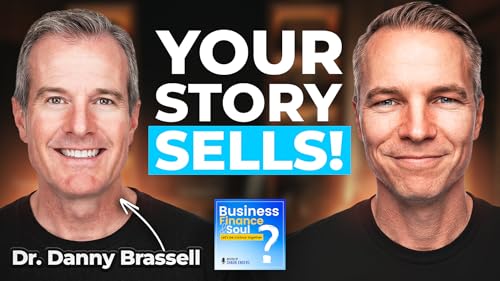
  • Storytelling as a Leadership Requirement with Dr. Danny Brassell
    Jan 27 2026
    If you've ever wondered why some leaders instantly connect and inspire while others struggle to be heard, this episode breaks it down. Dr. Danny Brassell shares how storytelling becomes a leadership requirement and a growth engine that converts audiences into clients. Danny's path includes pivots from journalism to teaching to speaking, a painful financial loss that reshaped his worldview, and a repeatable framework for building talks that drive real results. You'll also hear why vulnerability builds trust, why reading is a competitive advantage in a distracted world, and how to move from applause to measurable ROI. What you'll learn Why storytelling isn't optional for leaders—it's the bridge to trust, influence, and action. How to turn failure into connection (and why audiences relate more to your losses than your wins). The difference between good presenters (who tell stories) and excellent presenters (who tell stories with intention). A practical method for building a personal "story bank" you can pull from anytime. How to design talks that move the needle, not just "get applause." Danny's 5Cs framework for building talks that convert. Why deep reading is a competitive advantage—and how to use your phone to support learning instead of draining attention. How to manage stage fright by naming it and turning discomfort into connection. A simple weekly habit system that creates momentum across your life (Danny's "7 F's"). Key Topics & Timestamps 00:01 – Intro: why storytelling is a leadership requirement 02:18 – Danny's "Pivots" story: journalism → teaching → speaking 05:13 – Shame, vulnerability, and telling the "messy" parts 06:35 – The 2005 real estate seminar scam: losing everything and what it taught him 11:05 – The "story bank" exercise: triggers → themes → intentional stories 14:59 – Relatable stories vs. impressive stories (Everest vs. first grade) 16:25 – Speaking as the fastest way to grow a business (applause vs. next steps) 21:05 – The 5Cs framework: Clarity, Connect, Content, Call to Action, Close 26:57 – Stage fright: embrace the weakness, say it out loud, keep going 35:57 – Reading as competitive advantage + how leaders train attention 48:44 – Misfits, unconventional thinkers, and what school often misses 57:06 – Pre-week planning + Danny's "7 F's" goal categories 1:09:38 – "Intentionally curious" + building a life around better questions 1:10:09 – Free resource: Danny's Story Blueprint + the power of one clear CTA 1:11:52 – Closing: "Stay curious." Danny's Most Actionable Frameworks 1) The "Story Bank" Exercise (Danny's process) Write down story triggers for 60 minutes (hundreds of quick moments). For each, label the message: perseverance, loyalty, awareness, humility, etc. Use stories by intention—to generate a specific emotion and outcome. 2) Applause vs. ROI Danny's measurement of speaking success: How many people took the next step? Examples of "next steps": Subscribe / follow / opt-in (unpaid) Book a consult / buy a product / join a program (paid) 3) The 5Cs Process (Danny's talk-building blueprint) Clarity: Who is the audience? What problem do you solve? Connect: In the first 5 minutes, "RAP" Relatable (I'm like you) Authority (I solved it) Purpose (I'm here to help you) Content: Teach meaningfully (serve the audience) Call to Action: One clear next step Close: Emotional finish people remember 4) Audience Motivation (Income / Freedom / Impact) "20-year-olds" → income "40-year-olds" → freedom "60-year-olds" → impact Notable Moments & Soundbites "Good presenters tell stories. Excellent presenters tell stories with intention." "We want to move hearts—but we also want to move the needle." "The first five minutes are everything." "You don't need artificial intelligence—you need authentic intelligence." "You no longer have to know the answer. It's more important to ask the right question." "Stay curious." YouTube: https://www.youtube.com/@Businessfinanceandsoul
    Más Menos
    1 h y 12 m
  • AI Isn't the End of Humanity It Might Be the Beginning (with Pete Sacco)
    Jan 13 2026

    In this episode of Business, Finance & Soul, Shaun Enders sits down with Pete Sacco—entrepreneur, data center builder, and self-described modern-day mystic—to talk about what happens when high performance meets inner work.

    Pete shares the turning point that changed his life, the framework he calls Commit, Learn, Do, and why his book Living in Bliss is ultimately about building a life rooted in presence, purpose, and prosperity (for yourself—and for others).

    From there, the conversation expands into the frontier: AI as "electricity," decentralization, the future of identity, robotics, and why the next era may not diminish our humanity—but amplify it. Pete also breaks down leadership in the modern world: culture, motivation, vision, and the rituals that keep leaders grounded when everything speeds up.

    If you've ever felt like success and fulfillment were two separate paths, this episode is your reminder: you can be both.

    What we cover
    • Pete's transformation story and the origin of Commit, Learn, Do

    • Defining "bliss" for leaders in high-pressure environments

    • Why meditation is a leadership tool (and where it can lead)

    • AI's pace of change and what it means for identity and purpose

    • Decentralization: workforce, energy, finance, and cloud infrastructure

    • Robotics, caregiving, and the future of "work"

    • The belief Pete would erase: your worth = your productivity

    • Building a personal brand in the AI era

    Guest links
    • Pete's website: www.petesacco.com

    • Book: Living in Bliss: https://www.amazon.com/Living-Bliss-Achieve-Balanced-Existence/dp/1636803725/ref=tmm_hrd_swatch_0

    Connect with Shaun / Business, Finance & Soul

    https://www.youtube.com/@Businessfinanceandsoul

    www.BusinessFinanceAndSoul.com

    Timestamps

    00:00 – Intro / Pete's background: technologist + modern-day mystic
    02:45 – The turning point and Living in Bliss
    06:15 – What "bliss" means for leaders
    09:05 – The CEO shift: culture + motivation
    14:40 – Rituals for grounded leadership (meditation)
    17:08 – Consciousness, connectedness, and "unmeditating"
    22:15 – AI, identity, and the future of work
    32:30 – Decentralization: energy, cloud, currency
    42:20 – Robotics and real-world adoption
    52:00 – The belief Pete would erase
    54:35 – "My job is to love you" (the story)
    56:30 – Where to find Pete

    Más Menos
    1 h y 2 m
  • Why Healthcare is Broken with Donovan Pyle
    Dec 30 2025
    Healthcare premiums keep rising, but plan quality often stays the same (or gets worse). In this conversation, Shaun Enders sits down with Donovan Pyle—CEO of Health Compass and author of Fixing Healthcare—to unpack why the employer-sponsored healthcare market functions the way it does. Donovan explains the "hidden supply chain" behind your healthcare spend, why broker incentives often conflict with employer outcomes, and how CEOs can start reclaiming wasted dollars by getting unbiased, fiduciary-aligned guidance and improving visibility into unit pricing. Key Topics Covered Why employer healthcare spend feels unstoppable, and why that belief is "trained" The healthcare supply chain and how lack of transparency drives waste How brokers were historically designed to function (and why incentives matter) Why networks can hide prices and distort the price/quality relationship The "discount off infinity" problem behind EOBs (Explanation of Benefits) Regulatory capture and why some states limit small-business options Certificate of Need ("CON") laws and how they restrict competition The shift toward fiduciary models (similar to what happened in retirement plans) Practical steps for CEOs: visibility, vendor stack, and unbiased advisory support Chapters / Timestamps (YouTube-style) 00:01 – Welcome + why this topic matters to Shaun (20 years of premium increases) 01:17 – The big numbers: employer-sponsored coverage, $1.3T spend, and the "waste" claim 02:03 – Why finance/HR teams aren't set up to understand healthcare procurement 03:54 – The broker dilemma: "the only voice you have" vs. conflicts of interest 05:29 – Why Donovan focuses on the employer-sponsored market (not Medicare/Medicaid) 07:27 – The origin story: the first U.S. insurance plan (1929) and what became Blue Cross 09:26 – Brokers as "retail distribution" and why costs rising helps the sell-side 11:59 – ACA, cost-plus dynamics, and why vertical integration changed the game 14:52 – Reframing healthcare: not one line item—a supply chain 16:31 – Shaun's parallel: higher education costs and "cracks in the veneer" 19:14 – The strategy universe expands once you get unbiased advice 21:21 – Cash pricing: why individuals sometimes get better pricing than big insurers 23:34 – Shaun's billing experience: allowed vs billed, even in integrated systems 25:35 – EOBs as marketing: "Island Speak" and the illusion of savings 29:40 – Small business reality in CA/NY/WA: limited options and why 34:50 – Certificate of Need ("CON") laws: regulating supply and blocking competition 42:07 – ACA subsidies: what's expiring and what the market may revert to 46:31 – The most practical step: get unbiased, fiduciary-aligned advice 51:16 – Parallels to financial services: commissions → fee-based fiduciary models 57:14 – Real example: PBM RFP leading to multi-million-dollar savings 59:18 – Bringing it back to purpose: time, meaning, and what drives Donovan 01:05:29 – Where to find Donovan + free executive summary roadmap https://assessment.healthcompassconsulting.com/tba Watch on YouTube: https://youtu.be/9vEdj0XBOyI Connect with Shaun: www.CallTSG.com www.BusinessFinanceAndSoul.com https://www.linkedin.com/in/shaunenders/ People / Organizations Mentioned Donovan Pyle – CEO, Health Compass; author of Fixing Healthcare Validation Institute – referenced as a place to find fiduciary-based firms RAND Corporation (2021 study referenced) – cash pricing / employer pricing dynamics David Goldhill – author of Catastrophic Care (chapter: "Island Speak") Harris Rosen – Rosen Hotels (Orlando), example of long-term employer healthcare strategy Resources Mentioned Free executive summary + roadmap: FixingHealthcare.com Book: Fixing Healthcare (Donovan Pyle) Book: Catastrophic Care (David Goldhill) Disclaimer This episode discusses healthcare financing and benefits strategy from an employer perspective. It is not medical, legal, or financial advice.
    Más Menos
    1 h y 7 m