Audio Branding Podcast Por Jodi Krangle arte de portada

Audio Branding

Audio Branding

De: Jodi Krangle
Escúchala gratis

Keeping a consistent sound in how you present your company really is the "hidden gem" of marketing. But audio or sonic branding influences us in many different ways and in many different places within our lives. Education is key! I explore that here, both with my own observations and by interviewing knowledgeable professionals in the field of advertising, marketing, music, technology and science. Want to be a guest on Audio Branding? Do you contribute something unique to the world of sound? Send me a message on PodMatch, here: https://www.podmatch.com/hostdetailpreview/jodikrangle and we'll talk. This podcast uses the following third-party services for analysis: OP3 - https://op3.dev/privacyCopyright 2026 Jodi Krangle Arte Economía Marketing Marketing y Ventas
Episodios
  • The Role of Simplicity in Sonic Branding: A Conversation with Connor Moore – Part 2
    Apr 1 2026
    “I give them a lot of credit because they use that so frequently, and that’s why they have so much success. I mean, it is an iconic melody in and of itself, but it’s that repetition and that usage, you know, whereas I feel like a lot of sound logo projects that come in, we’ll get to the finish line and they’ll be excited to use it, and then a month or two later, they’ll be like, ‘We’re not seeing quite the results that we’d hoped.’ It’s like, A, you’re not going to see it after a month, and B, you’ve got to use it consistently, you know, and potentially in multiple places. State Farm does it right.” – Connor MooreThis episode is the second half of my conversation with founder and creative director of CMoore Sound, Connor Moore, as we talk about where AI voices might be taking sound design, how he became a juror at the International Sound Awards, and how sonic logos are making a comeback.As always, if you have questions for my guest, you’re welcome to reach out through the links in the show notes. If you have questions for me, visit audiobrandingpodcast.com, where you’ll find a lot of ways to get in touch. Plus, subscribing to the newsletter will let you know when the new podcasts are available, along with other interesting bits of audio-related news. And if you’re getting some value from listening, the best ways to show your support are to share this podcast with a friend and leave an honest review. Both those things really help, and I’d love to feature your review on future podcasts. You can leave one either in written or in voice format from the podcast’s main page. I would so appreciate that.(00:00) – Current Trends in Sound DesignThe second half of our discussion starts as Connor talks about neural voices, the latest breakthrough in AI voice clones, and how popular they’re becoming with clients. “It’s a very interesting space,” he says, “having a customized brain and voice that can constantly adapt, you know, and so we’re seeing a lot more of that come through.” He talks about his work on Google Glass and how he might approach its UX design differently in today’s world, and how he helped reshape the famous State Farm sonic logo. “’Here’s a simple tweak at a foundational level,’” he recalls saying, “’Take away the square wave and use a sine wave at a base level.’ And they were like, ‘Oh.’ And we’re already 65% there.”(10:47) – The Importance of SimplicityWe discuss his work with the International Sound Awards and the insights he’s gained from seeing nominees from all over the world. “Most of the work I’ve reviewed in the last four years has been more kind of traditional sonic branding,” he tells us. “It’s just great to be a part of that community and to hear all the cool work coming, because it’s at a global scale.” He talks about the resurgence of sound logos in today’s market, and the lesson to be learned from State Farm’s branding success. “The iconic nature of that example is the melody,” he says, “the melody that’s been around for so long. But I think that what I would say is just, you know, use it lightly. Be careful with overusing it.”(24:47) – The Future of Sonic BrandingOur conversation wraps up with what he’s working on now, and the trends he’s seeing in branding and audio UX design. “Industries that you might not expect,” Connor explains, “old school industries that are becoming more tech focused, for example... which I think is interesting, because I think sound as a technology [is] starting to touch industries of old that are modernizing.” He tells listeners how they can get in touch, and shares his perspective as someone on the forefront of sonic branding. “I’m working on very emerging technologies,” he says. “I’m working on older industry segments that are stepping into new technology, I’m working in automotive... it’s a good balance that keeps me engaged.”Episode SummaryOur discussion on the rise of wearable technology and voice-driven experiences.Exploring how simplicity impacts sound design and brand perception.Connor’s predictions on the evolution of audio branding and its applications.Connect with the Audio Branding Podcast:Book your project with Voice Overs and Vocals by visiting https://voiceoversandvocals.comConnect with me on Instagram - https://www.instagram.com/jodikrangle/Watch the Audio Branding Podcast on YouTube - https://www.youtube.com/c/JodiKrangleVOConnect with me on LinkedIn - https://www.linkedin.com/in/jodikrangle/Leave the Audio Branding Podcast a review at https://lovethepodcast.com/audiobranding (Thank you!)Share your passion effectively with these Tips for Sounding Your Best as a Podcast Guest!https://voiceoversandvocals.com/tips-for-sounding-your-best-as-a-podcast-guest/Get my Top Five Tips for Implementing an Intentional Audio Strategyhttps://voiceoversandvocals.com/audio-branding-strategy/Editing/Production by ...
    Más Menos
    30 m
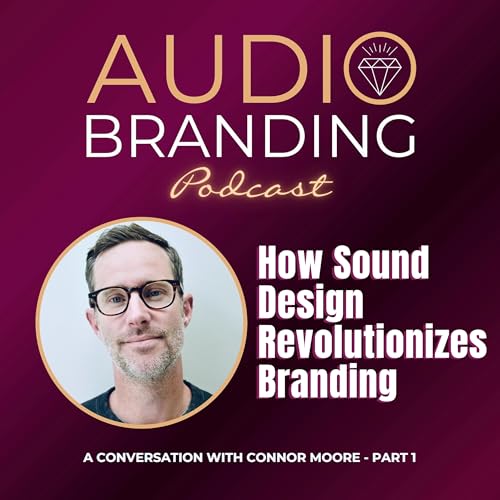
  • How Sound Design Revolutionizes Branding: A Conversation with Connor Moore – Part 1
    Mar 25 2026
    “Too much sound complicates things, it confuses things, and it causes annoyance and fatigue, too much brain power needed. Too much cognitive load, and it’s a known fact. So oftentimes companies will come to me and say, ‘Hey, we have, you know, sixty sounds we want to create.’ And I go, ‘Okay, cool. Let’s take a look at the list. Let me understand your product a little better and let’s try to find ways to strip it back.’ Because, you know, that can be very overwhelming for users.” – Connor MooreThis episode’s guest is a leading expert in audio UX and audio branding. As the founder of CMoore Sound, he’s shaped how major brands like Google, Uber, Peloton, and Airbnb use sound to enhance their products and connect with audiences. Over the past fifteen years, he’s helped define how sound influences everything from brand identity to user experience, and he’s been featured in The New Yorker, NPR, and Google’s Design series. He’s also a fellow judge for the International Sound Awards, which is how we met. His name is Connor Moore and his work shows how sound isn’t just decoration, it’s a powerful tool that shapes how we feel, navigate, and interact with the world.As always, if you have questions for my guest, you’re welcome to reach out through the links in the show notes. If you have questions for me, visit audiobrandingpodcast.com, where you’ll find a lot of ways to get in touch. Plus, subscribing to the newsletter will let you know when the new podcasts are available, along with other interesting bits of audio-related news. And if you’re getting some value from listening, the best ways to show your support are to share this podcast with a friend and leave an honest review. Both those things really help, and I’d love to feature your review on future podcasts. You can leave one either in written or in voice format from the podcast’s main page. I would so appreciate that.(00:00) – Connor’s Audio Eureka MomentOur conversation starts with Connor’s early memories of sound, and how quickly he came to realize in college that audio branding wasn’t really a thing in marketing. “It really begged the question for me of why aren’t brands thinking about sound and music like they are for their visual branding,” he explains. “So that, to me, was a bit of a eureka moment and really kind of set me on my path.” He talks about how both old-time jingles and current audio brands like Netflix get it right when it comes to repetition, and his process for getting clients what they need to establish their audio brand. “With my business,” Connor tells us, “I’m involved at every stage… that’s a big value add. Having a veteran in the industry in the room at all times and really guiding the work, that is really the biggest differentiator.”(12:23) – The Evolution of Sonic BrandingConnor tells us about some of his current projects, including a major car company that needs a creative approach to sonic branding. “They’re a product first company,” he says. “It’s an automotive company. Without the product, you don’t have the brand. So that is the biggest touch point for their customers. And you can do the audio branding process through UX. It’s really the same process.” He shares the insights he gained from working with companies like Samsung and Lucid Motors, and tells us about the early days of audio-first UX. “Back then they were just very simple kind of ringtones and alarms,” he says. “And what I did is I went in and really crafted really long form compositions that gradually pick up over time, you know, with volume, percussion, harmonics, [and] complexity.”(26:15) – Creating a More Thoughtful SoundscapeAs we come to the end of the first half of our discussion, Conner tells us how he balances the functionality of UX with the distinctiveness of audio branding. “There should be a level of cohesion across the experience,” he explains. “But there should also be levels of distinction. So a welcome sound for an in-car experience could be very soft and inviting, whereas, like, for a collision sound, it can’t be soft. You know, it has to be kind of in your face.” We talk about the value of silence, and how knowing when not to make a sonic impression can be as important as making one. “There’s a lot of power in simplicity and silence,” he says. “That is the biggest takeaway of my time in this space.”Episode SummaryConnor discusses his first experiences with sound and sonic branding.We explore how sonic branding has become more intentional over the years.Our discussion turns to the need for thoughtful, pleasing soundscapes.Tune in for next week’s episode as we talk about the latest developments in AI-driven neural voices, Connor’s pioneering work at Google Glass and on State Farm’s famous sonic logo, and how companies that don’t necessarily need a musical jingle can still take advantage of an audio brand.Connect with...
    Más Menos
    30 m
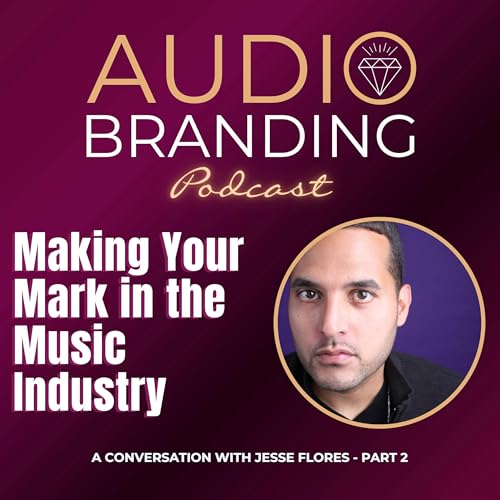
  • Making Your Mark in the Music Industry: A Conversation with Jesse Flores – Part 2
    Mar 18 2026
    “I think, you know, what I mentioned before would really apply, and that’s sit down and really come up with a plan over the next twelve months. What do I want to do? Do I want to release a single every month or maybe it’s a couple of singles leading up to an EP and then actually execute that. And, you know, at the same time, be consistent. You don’t want to be an artist that puts out a few tracks and then, you know, goes away for about four years and tries to come back and do it again, because you’re going to have to really start over. I mean, there’s just too much out there, you know, to consume that, you know, you’re going to lose a lot of your fan base if you don’t engage with them. You have to consistently engage with the fan base, consistently release music and devise a plan, like I said, for each of the platforms so you can gauge and analyze exactly what’s working and what’s not. So the next time you put something out, you know what to do.” – Jesse FloresThis episode is the second half of my conversation with Vice President of Artist and Label Partnerships at Intercept Music Jesse Flores, as we talk about how Intercept Records is balancing AI advances and human creativity, his thoughts on what music genres might take off next, and why rushing to upload your next single might not be the best long-term strategy for building a fan base.As always, if you have questions for my guest, you’re welcome to reach out through the links in the show notes. If you have questions for me, visit audiobrandingpodcast.com, where you’ll find a lot of ways to get in touch. Plus, subscribing to the newsletter will let you know when the new podcasts are available, along with other interesting bits of audio-related news. And if you’re getting some value from listening, the best ways to show your support are to share this podcast with a friend and leave an honest review. Both those things really help, and I’d love to feature your review on future podcasts. You can leave one either in written or in voice format from the podcast’s main page. I would so appreciate that.(00:00) – AI in Music MarketingOur conversation picks up as Jesse talks about how Intercept is putting AI to use for its clients without undermining its artists. “We definitely support AI when it comes to a marketing tool,” he explains, “[but] content creation, not so much, because we really support human-made content that has some soul put behind it, an actual human behind it.” He also offers his advice to musicians on social media. “You have to consistently engage with their fan base, consistently release music and devise a plan,” he says, “for each of the platforms so you can gauge and analyze exactly what’s working.”(9:30) – Strategies for Emerging ArtistsJesse tells us where he sees the future of music heading, and whether AI music could someday become a genre of its own. “Talent is a priority,” he says. “You know, you’ve got to have talent if you’re an artist nowadays. I think that’s always been the case since day one. Making music that is timeless, making music that is undeniable… that’s what’s going to keep you in this for the long run.” As our conversation comes to a close, he shares his thoughts on the power of sound, and what artists can do to help set themselves apart from the background noise. “There are different points and moments in your life when you hear a song,” he tells us, “[and] you know what you were doing when you first heard it, or, you know, it brings back memories of this person that you were dating at the time, or where you were or who your friends were. Like, it’s just always going to be there for me.”Episode SummaryExploring the benefits and challenges of AI in marketing versus music creation.Jesse offers his advice on building a music career and engaging with fans.Connect with the Audio Branding Podcast:Book your project with Voice Overs and Vocals by visiting https://voiceoversandvocals.comConnect with me on Instagram - https://www.instagram.com/jodikrangle/Watch the Audio Branding Podcast on YouTube - https://www.youtube.com/c/JodiKrangleVOConnect with me on LinkedIn - https://www.linkedin.com/in/jodikrangle/Leave the Audio Branding Podcast a review at https://lovethepodcast.com/audiobranding (Thank you!)Share your passion effectively with these Tips for Sounding Your Best as a Podcast Guest!https://voiceoversandvocals.com/tips-for-sounding-your-best-as-a-podcast-guest/Get my Top Five Tips for Implementing an Intentional Audio Strategyhttps://voiceoversandvocals.com/audio-branding-strategy/Editing/Production by Humberto Franco - https://humbertofranco.com/This podcast uses the following third-party services for analysis: OP3 - https://op3.dev/privacy
    Más Menos
    20 m
Todas las estrellas
Más relevante
I especially enjoyed this interview. A lot of good advice for speakers, singers and anyone looking to step up their vocal game.!

Great advice!

Se ha producido un error. Vuelve a intentarlo dentro de unos minutos.