Atypical Dikkatein: A Conversation Podcast Podcast Por Soumya Mishra arte de portada

Atypical Dikkatein: A Conversation Podcast

Atypical Dikkatein: A Conversation Podcast

De: Soumya Mishra
Escúchala gratis

Atypical Dikkatein – a conversation podcast where I, your host Soumya, talk to fellow queer, neurodivergent and disabled folx. This podcast is not just a repository of stories and experiences but also a journey to build solidarity, queer intimacy and a community. Hopefully, by embarking on this journey, we will be able to find a sense of belongingness and a space—where queer and disabled folx can share our unique joys as well as challenges and feel less alone in a world where we face constant invisibilisation. This is a way of taking up space, according to our own terms.Soumya Mishra Ciencias Sociales
Episodios
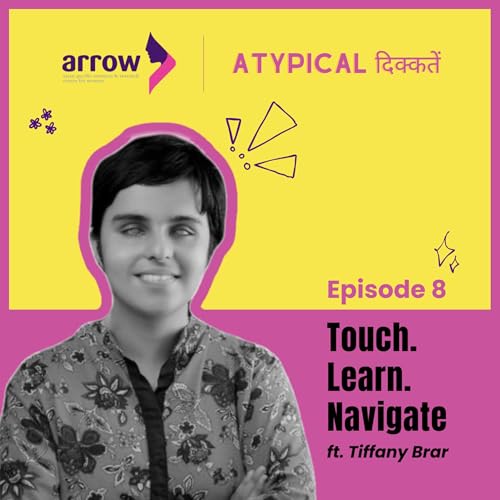
  • Touch. Learn. Navigate.
    Mar 31 2026

    How do you learn about your body when no one shows you how?

    In Episode 8 of Atypical Dikkatein Season 2, we speak with Tiffany Brar, blind activist, educator, and founder of Jyothirgamaya Mobile Blind School, about navigating menstruation, contraception, and SRHR as a visually impaired person.

    Because access isn’t just about information. It’s about how that information is shared.

    You can check out the podcast transcript ⁠here.

    Follow Atypical Dikkatein on ⁠⁠⁠⁠⁠social media⁠⁠⁠⁠⁠.

    ⁠⁠⁠⁠⁠Say hi⁠⁠⁠⁠⁠ to me, your host Soumya.

    Graphic by: ⁠⁠⁠⁠⁠Harshvardhan Bhaskar⁠⁠⁠⁠⁠ and ⁠⁠⁠⁠⁠Khushi (Kay) Solanki⁠⁠⁠⁠⁠

    Transcript by: ⁠⁠⁠⁠⁠Khushi (Kay) Solanki⁠⁠⁠⁠⁠

    Sound editing and production by: ⁠⁠⁠⁠⁠Pranjal Pathak

    Más Menos
    34 m
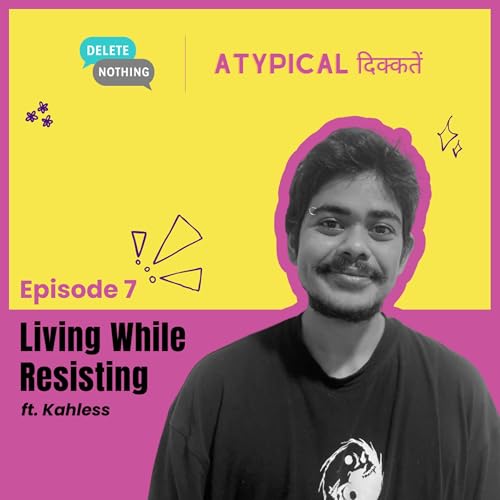
  • Living While Resisting
    Oct 27 2025

    Trans healthcare is treated like an optional extra. But it is life-saving.

    In this episode, we speak with Kahless Jaden Hameed, a trans writer and activist based in Colombo, about what it means to navigate healthcare systems that choose not to see trans and disabled people as fully human.

    From being denied hormones, to being misgendered and dismissed, to walking city after city just to find essential medication, this is not an accident. It is systemic. It is violence.

    You can check out the podcast transcript ⁠here⁠.

    Follow Atypical Dikkatein on ⁠⁠⁠⁠⁠⁠social media⁠⁠⁠⁠⁠⁠.

    ⁠⁠⁠⁠⁠⁠Say hi⁠⁠⁠⁠⁠⁠ to me, your host Soumya.

    Graphic by: ⁠⁠⁠⁠⁠⁠Harshvardhan Bhaskar⁠⁠⁠⁠⁠⁠ and ⁠⁠⁠⁠⁠⁠Khushi (Kay) Solanki⁠⁠⁠⁠⁠⁠

    Transcript by: ⁠⁠⁠⁠⁠⁠Khushi (Kay) Solanki⁠⁠⁠⁠⁠⁠

    Sound editing and production by: ⁠⁠⁠⁠⁠⁠Pranjal Pathak

    Más Menos
    47 m
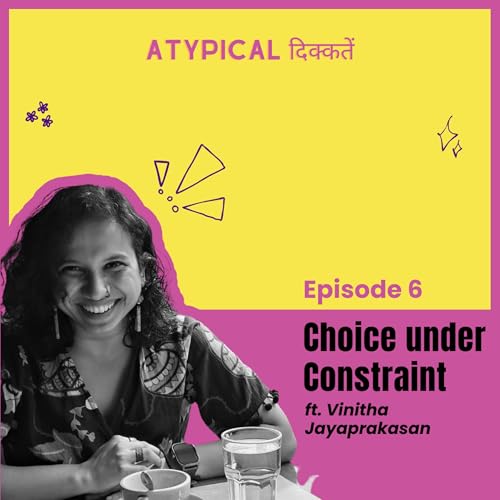
  • Choice under Constraint
    Sep 18 2025

    Abortion isn’t going anywhere.

    In Episode 6 of Atypical Dikkatein Season 2, we speak with Vinitha, a Bahujan queer feminist researcher, about why abortion rights must be seen as central to bodily autonomy and reproductive justice.

    From the gaps in India’s SRHR movement to the rise of anti-choice narratives, this episode unpacks how abortion continues to be stigmatized, even within feminist spaces, and why stronger, intersectional movements are urgently needed.

    You can check out the podcast transcript here.

    Some Data Points and Helpful Links:

    1. A Foundation for Reproductive Health Services study found 32% of respondents were unaware of abortion as a legal right, and that 95.5% of Indian women were uninformed of the existence of the MTP (Amendment) Act, 2021.

    2. According to the Rural Health Statistics (2019-20), released by the Ministry of Health and Family Welfare in May 2021, there was a shortfall of almost 70% for obstetricians and gynaecologists, which severely limits women’s access to safe abortion services

    3. 2 million adolescents lack access to contemporary abortion services, 78% abortions performed for adolescents were unsafe, 190,000 adolescents don’t receive post-abortion care.

    4. Every day, at least 8 women in the country die as a result of unsafe abortion-related causes, making it the third leading cause of maternal death (https://www.guttmacher.org/report/abortion-unintended-pregnancy-six-states-india)

    5. Population, Eugenics and Reproductive Rights: Legalising Abortion in India (by Mytheli Sreenivas): https://www.tandfonline.com/doi/full/10.1080/00856401.2024.2412468


    Follow Atypical Dikkatein on ⁠⁠⁠⁠⁠social media⁠⁠⁠⁠⁠.

    ⁠⁠⁠⁠⁠Say hi⁠⁠⁠⁠⁠ to me, your host Soumya.

    Graphic by: ⁠⁠⁠⁠⁠Harshvardhan Bhaskar⁠⁠⁠⁠⁠ and ⁠⁠⁠⁠⁠Khushi (Kay) Solanki⁠⁠⁠⁠⁠

    Transcript by: ⁠⁠⁠⁠⁠Khushi (Kay) Solanki⁠⁠⁠⁠⁠

    Sound editing and production by: ⁠⁠⁠⁠⁠Pranjal Pathak

    Más Menos
    44 m
Todavía no hay opiniones