Workplace Stories by RedThread Research Podcast Por Stacia Garr & Dani Johnson arte de portada

Workplace Stories by RedThread Research

Workplace Stories by RedThread Research

De: Stacia Garr & Dani Johnson
Escúchala gratis

Workplace Stories is a podcast for HR and people leaders who are tired of noise and need clarity that actually holds up. It is hosted by Stacia Garr and Dani Johnson of RedThread Research.

Each episode features candid conversations with practitioners, thinkers, and executives who are navigating real decisions inside complex organizations. Not hypotheticals. Not vendor promises. Real tradeoffs, real experiments, and real lessons learned along the way.

You’ll hear how leaders are making sense of skills, AI, organizational design, and culture when there’s no clear playbook and pressure to show progress is high. The focus is always the same: what’s actually working, what isn’t, and what leaders are doing next.

Workplace Stories helps you make sense of complexity, build credibility with evidence, and move from ideas to action with more confidence.

Want to be part of the conversation? Join our community for free and connect with others shaping the future of work.

Learn more about RedThread Research here: https://redthreadresearch.com/homeRedThread Research 2026
Economía Gestión Gestión y Liderazgo
Episodios
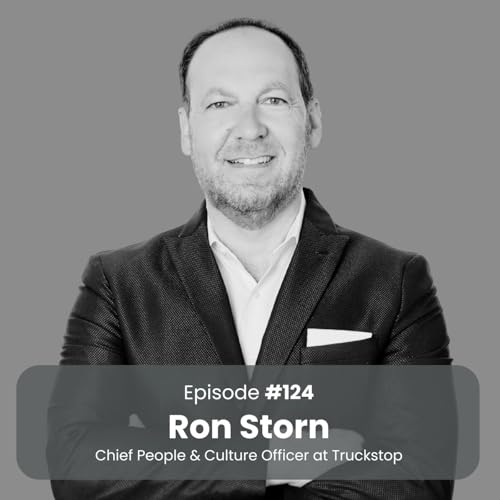
  • How Workplace Culture Shapes Business Success: Ron Storn
    Apr 1 2026
    This week, we’re sitting down with Ron Storn, Chief People and Culture Officer at Truckstop, to discuss culture—how it forms, who owns it, and how it scales in growing organizations. We explore the relationships between systems, processes, and cultural values, and discuss signs of cultural breakdown and the keys to recovery. We also discuss how AI is reshaping workplace dynamics, hiring practices, and performance management, and Ron offers practical, research-based insights and strategies for understanding and supporting positive workplace culture. You will want to hear this episode if you are interested in...00:00 How company culture is formed09:19 Building strong HR and leadership systems11:54 Creating a positive culture for business success18:59 Scaling and preserving company culture22:53 Defining team behaviors and principles29:26 Aligning culture with decision-making32:13 Signs of a broken workplace36:50 Challenges with management and team culture41:45 Advantages of remote vs in-person work44:56 AI's impact on workplace cultureDefining CultureSome companies treat culture as little more than a list of values on the wall, disconnected from the day-to-day decisions and actions that define what it’s really like to work there. Ron believes culture is best understood as a set of shared behaviors, decision rights, and expectations to determine how a company actually executes its strategy when no one is watching. It’s how decisions are made, how people are hired or rewarded, and how work gets done when leadership isn’t in the room.In smaller organizations, culture often starts with a clear vision or set of norms, and systems are built around it. As organizations scale, systems and practices increasingly shape (and sometimes reshape) the prevailing culture, the challenge is finding ways to make culture systemic, woven into processes, rewards, and leadership behaviors, so that the company’s values endure as it grows.Who Owns Culture? Leadership, HR, and SystemsWhile HR is often perceived as the “owner” of culture, Ron believes it should be a shared responsibility, with ultimate ownership being at the very top. CEOs and founders define and embody desired cultural norms, while executive leaders model and cascade those norms through decisions and behaviors. HR’s role is to craft the mechanisms for how people are hired, evaluated, and developed to reinforce the company culture at scale. If only HR champions culture while leadership pays lip service or models different behaviors, culture will break down. Everyone, especially managers, must reinforce and live the culture for it to endure.Signs of Cultural Erosion and How to RecoverWhen culture unravels, it’s usually a gradual process, increasing decision friction, high performers becoming disengaged, and inconsistent behaviors creeping in across teams. If left unchecked, the result is a loss of trust, bureaucracy, and top talent walking out the door.Recovery is possible, but it needs radical transparency and recommitment.Ron recommends that organizations in crisis go back to their roots and principles, engaging teams in candid conversations about what must change. Leaders should model vulnerability, drive clarity on decision-making and expectations, and ensure every manager is accountable for rebuilding the cultural fabric. Resources & People MentionedTruckstop.com Connect with Ron StornRon Storn on LinkedIn Connect With Red Thread ResearchWebsite: Red Thread ResearchOn LinkedInOn FacebookOn TwitterSubscribe to WORKPLACE STORIES
    Más Menos
    56 m
  • A Culture of Development at the Federal Reserve Bank of New York: Jenna Filipkowski
    Mar 18 2026
    On this episode, we’re with Jenna Filipkowski, the Head of Learning and Development at the Federal Reserve Bank of New York. With a background in organizational psychology and research, Jenna brings a fresh, outsider perspective to the world of L&D, challenging traditional approaches and driving innovation within the unique environment of the Fed.We discuss the importance of team development over individual learning, the shift from self-directed "Netflix of learning" approaches to more guided, in-person experiences, and the crucial role of branding and communication in building credibility for L&D organizations. You will want to hear this episode if you are interested in...00:00 Team-based learning evolution05:06 Improving the workforce experience07:59 Embracing opportunity in HR leadership15:46 Team coaching as facilitation19:56 Aligning learning with business goals25:40 In-person vs. virtual leadership training33:12 Improving organizational learning through data37:46 Cohesive branding and storytelling40:20 Leadership accountability and developmentFrom Individual Focus to Team DevelopmentHistorically, L&D programs have targeted individual upskilling and career navigation. At the Federal Reserve Bank of New York, Jenna Filipkowski is pioneering an approach grounded in 6 Team Conditions, a research-backed model that moves beyond one-off workshops.Her Energize program uses diagnostics, assessments like Hogan and Insights Discovery, and customized workshops to identify and strengthen the underlying conditions for team success. Rather than a one-size-fits-all or quick-fix model, teams undergo a tailored process, allowing for deeper systemic improvement. It’s about giving teams the tools and support to accelerate their performance because they’re set up for success, not just treating every challenge as an off-the-shelf problem.The Death of Netflix of LearningFor years, L&D has been swept up by the promise of Netflix learning, providing endless on-demand content and empowering employees to self-direct their learning journeys. But this laissez-faire model has started to unravel, because organizations and individuals are craving more structure and intentionality. At the New York Fed, the move to in-person, cohort-based programs is intentional. In-person learning provides social connection, time to focus, and shared experience, resulting in deeper reflection and lasting impact. While technical upskilling may still leverage digital and asynchronous methods. Blending modalities based on program intent, not defaulting to digital just because it’s easier.Branding L&DStanding out in a large, multifaceted organization is a challenge for any L&D team, and Jenna’s approach is to treat L&D as a brand. Programs at the Fed share unified branding with cohesive names and visual identity, making offerings memorable and fostering a sense of exclusivity and aspiration.Branding goes hand-in-hand with effective communication. Frequent roadshows, town halls, engaging graduation ceremonies, and leadership conferences help communicate value not only to employees but also to senior leadership. Measurement and AccountabilityAt the Fed, Jenna and her team use a mix of reach, participant demand, stakeholder feedback, and practical business cases solved to demonstrate L&D’s value. They push to correlate L&D participation with metrics like engagement and retention—demonstrating impact beyond traditional learning outcomes. The vision for the future includes more robust, passive data collection and real-time intelligence—but for now, using multiple data sources creatively is key.As workplaces shift once again, the future of L&D will center on three things: helping people grow in their roles, building strong leaders, and fostering connection through learning alongside others. The journey away from content chaos and toward strategic, human-centered, and measurement-driven L&D is just beginning. Resources & People MentionedHogan Development Survey Insights Discovery® 6 Team ConditionsConnect with Jenna FilipkowskiJenna Filipkowski on LinkedIn Connect With Red Thread ResearchWebsite: Red Thread ResearchOn LinkedInOn FacebookOn TwitterSubscribe to WORKPLACE STORIES
    Más Menos
    47 m
  • Strategic Workforce Planning: David Edwards
    Mar 4 2026
    Strategic workforce planning is back, and not in a nostalgic “this trend is back around” kind of way. It is back because the old staffing model, react late, hire fast, hope the market delivers, is failing more often than it works. The biggest misunderstanding is still the same one: strategic workforce planning is not long-term headcount forecasting. It is not a spreadsheet exercise dressed up with better visuals. It is a business discipline that exists for one reason, to stop leaders from committing to strategies the workforce cannot deliver.In this episode of Workplace Stories, David Edwards, author of The Strategic Workforce Planning Handbook, lays out a definition of SWP that is refreshingly usable. Strategic workforce planning is workforce planning for the strategic things in the organization, not an attempt to plan the entire workforce. That single shift makes SWP more approachable, more realistic, and far more effective.If you have not listened yet, this is one of those episodes worth hearing end-to-end. The conversation is practical, occasionally blunt, and full of the kind of “this is what actually happens inside companies” detail that most workforce planning content avoids.You will want to hear this episode if you are interested in...[00:00] A clearer, more usable definition of strategic workforce planning.[00:43] Why SWP is back right now.[03:20] How SWP supports scenario thinking without false precision.[09:50] The questions SWP must answer to be useful.[11:40] Uncertainty, talent scarcity, and skills half-life as drivers.[14:30] Why SWP is an exercise in ambiguity, not certainty.[17:20] Why SWP works best as a business process, not an HR project.[20:05] What HR should do if it is not included in strategy conversations.[22:00] How to define “strategic” beyond leadership roles.[25:10] Why tasks matter more than skills for future work.[28:00] The contextual data missing from most workforce planning.[31:15] How AI forces better workforce planning questions.[41:20] What happens when SWP forces leaders to narrow priorities.[45:30] What to do when the business will not listen.[46:45] Why this work matters at the human level.Strategic Workforce Planning Starts With One Uncomfortable QuestionStrategic workforce planning becomes useful the moment it stops pretending it can predict the future. The real starting point is simple: Is the workforce fit for the organization’s future business purpose? That framing does two things immediately. First, it moves SWP out of the “HR process” bucket and into the “business execution” bucket. Second, it forces the conversation away from false certainty and toward risk, trade-offs, and feasibility.One of the most helpful parts of this episode is how clearly the conversation draws a line between strategic and long-term. Strategic does not automatically mean five years out. In some organizations, planning 15 months ahead is strategic compared to how they have historically operated. If you want the cleanest definition of SWP in the most human language possible, it is worth listening to the early part of the conversation where this is unpacked in real time.Why Workforce Planning Has ReturnedWorkforce planning always comes and goes. It resurfaces when the world feels unstable, and it fades when leaders believe they can hire their way out of problems.Right now, hiring your way out of problems is not working.There is too much uncertainty, and it is coming from too many directions at once. Geopolitical instability affects where work can happen. Talent shortages continue to constrain hiring. Skills decay faster than most organizations can reskill. Generational shifts are changing expectations around mobility and development. And technology is changing the shape of work itself.The point is not that leaders suddenly became more disciplined. The point is that the environment is forcing discipline.Strategic workforce planning is the response to that reality. Not because it gives certainty, but because it gives options. It gives a way to talk about what might happen without having to pretend anyone knows exactly what will happen.Strategic Workforce Planning Works When It Stops Being “HR’s Thing”A lot of SWP efforts fail for a predictable reason. They are treated like an HR deliverable. A report. A deck. A spreadsheet. A set of numbers handed over to leadership. Strategic workforce planning is not a deliverable. It is a business process. It is a feasibility process. It is a risk conversation. One of the strongest through-lines in this episode is the idea that HR must initiate this conversation, not because HR owns strategy, but because HR holds the missing information. HR knows things about recruiting realities, workforce behavior, retention patterns, internal mobility, and capability development that business leaders often overlook.But knowledge is not enough. The shift HR has to make is from reporting to synthesis. People analytics without business ...
    Más Menos
    50 m
Todavía no hay opiniones