Episodios

  • Codex Borgia
    Apr 3 2026
    The Codex Borgia is a pre-Columbian Mesoamerican manuscript, a 36-foot folded document made of animal hide, dating from the 13th to early 16th centuries. Created by Indigenous peoples, likely in central Mexico, it serves as a religious and divinatory almanac used by priests. Filled with intricate depictions of deities like Tezcatlipoca, Quetzalcoatl, and Tlaloc, it illustrates the 260-day tonalpohualli ritual calendar. Part of the “Borgia Group,” it survived the Spanish conquest and is now housed in the Vatican Apostolic Library. The codex offers invaluable insight into pre-Hispanic Mesoamerican beliefs, cosmology, and rituals, showcasing complex iconography and artistic skill. It provides crucial information for understanding the history, culture, and religion of ancient Mexican civilizations. Check out my other podcasts Fun Facts Daily | Art Smart | Rainbow Puppy Science Lab Who ARTed is an Airwave Media Podcast. If you are interested in advertising on this or any other Airwave Media show, email: advertising@airwavemedia.com Learn more about your ad choices. Visit megaphone.fm/adchoices
    Más Menos
    11 m
  • Author Interview Kory Stamper | True Color
    Mar 30 2026
    This week, I got to talk to Kory Stamper, author of True Color: The Strange and Spectacular Quest to Define Color, exploring how color is a complex intersection of physics, physiology, and psychology. Human color perception is defined not just by wavelengths of light, but by the brain’s interpretive processes using specialized cells in the retina known as rods and cones. While rods detect light and dark, three types of cones are responsible for firing in response to specific wavelengths, which the brain then blends into the visible spectrum. Linguistics plays a vital role in this experience; studies of cultures like the Himba tribe in Namibia suggest that the specific terms available in a language can influence how quickly an individual differentiates between hues like blue and green. Research on infants even suggests that color recognition may trigger the brain’s language centers before the visual cortex, indicating that the human experience of the spectrum is deeply tied to the need for categorization. Find more information about Kory Stamper and her book, True Color at https://korystamper.com/true-color/ Buy the book on Amazon or wherever you get your books. Be sure to vote for your favorite work in our final round of Arts Madness https://www.whoartedpodcast.com/arts-madness Check out my other podcasts Fun Facts Daily | Art Smart | Rainbow Puppy Science Lab Who ARTed is an Airwave Media Podcast. If you are interested in advertising on this or any other Airwave Media show, email: advertising@airwavemedia.com Learn more about your ad choices. Visit megaphone.fm/adchoices
    Más Menos
    57 m
  • Artemisia Gentileschi | Judith Slaying Holofernes
    Mar 27 2026
    Artemisia Gentileschi (1593–1653) was a preeminent Italian Baroque painter and one of the most accomplished artists of the 17th century. Born in Rome as the daughter of the esteemed painter Orazio Gentileschi, she developed her craft in an era where women were largely excluded from formal art academies and professional guilds. Despite enduring a traumatic assault by a tutor and a grueling, high-profile trial in 1612, Gentileschi forged a highly successful career that spanned Rome, Florence, Venice, and Naples. She broke significant historical barriers in 1616 by becoming the first woman admitted to the Accademia delle Arti del Disegno in Florence, an achievement that granted her the legal right to sign her own contracts and manage her own professional affairs. Gentileschi is celebrated for her mastery of tenebrism—a style characterized by intense contrasts of light and shadow—and her unparalleled ability to render human emotion with raw, visceral intensity. Her most famous work, Judith Slaying Holofernes, exemplifies her unique perspective, portraying the biblical heroine with a focus on physical strength, focused determination, and female solidarity. This depiction stands in stark contrast to versions by male contemporaries, who often portrayed the character as delicate or hesitant. Often interpreted through the lens of her personal resilience and agency, Gentileschi’s paintings frequently feature powerful, complex women. Today, she is recognized not only as a feminist icon but as a defining figure of the Baroque period whose technical skill and narrative depth rivaled the greatest masters of her time. Take a minute and vote in Arts Madness at WhoARTedPodcast.com/Arts-Madness Check out my other podcasts Fun Facts Daily | Art Smart | Rainbow Puppy Science Lab Who ARTed is an Airwave Media Podcast. If you are interested in advertising on this or any other Airwave Media show, email: advertising@airwavemedia.com Learn more about your ad choices. Visit megaphone.fm/adchoices
    Más Menos
    13 m
  • Gavin Whitehead | Raven
    Mar 23 2026
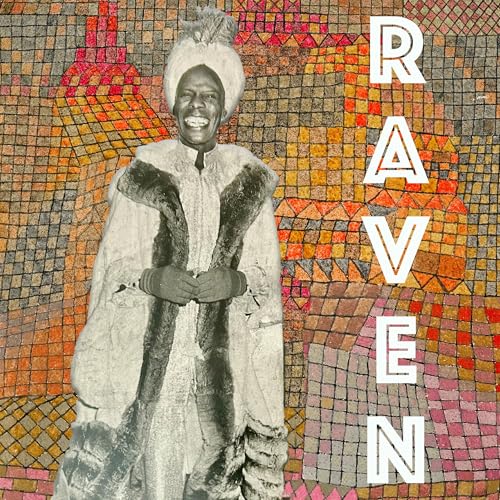
    This week, I have an interview with Gavin Whitehead, the creator and host of The Art of Crime and a new limited series, Raven. Find Gavin online: Raven The Art of Crime www.theartofcrimepodcast.com The African American Wax Museum of Harlem was established in 1989 by the eccentric artist and fashion designer Raven Chanticleer. Located in the basement of a brownstone on 164th Street, the museum featured approximately two dozen handmade wax figures depicting "heroes and sheroes" of Black history, including Frederick Douglass, Harriet Tubman, and Dr. Martin Luther King Jr. Unlike traditional wax museums that prioritize strict realism, Chanticleer utilized an anachronistic and flamboyant aesthetic to foster cultural pride. Figures were often adorned in extravagant costumes of Chanticleer's own design—such as Harriet Tubman in aviator sunglasses—intended to make historical icons feel vibrant and relatable to the local community and visiting school groups. Be sure to take time to vote for your favorite artists in Arts Madness. Go to www.WhoARTedPodcast.com/Arts-Madness to weigh in on our final four. Check out my other podcasts Fun Facts Daily | Art Smart | Rainbow Puppy Science Lab Who ARTed is an Airwave Media Podcast. If you are interested in advertising on this or any other Airwave Media show, email: advertising@airwavemedia.com Learn more about your ad choices. Visit megaphone.fm/adchoices
    Más Menos
    52 m
  • Chuck Close
    Mar 20 2026
    Chuck Close said when a problem seems overwhelming, you should break it down into smaller pieces. To tackle the photorealistic faces, Chuck Close would use a grid. He broke the image down into sections allowing him to focus on the lines, shapes, and proportions one little bit at a time. In his early works, he would erase the grid as he painted, but as he matured, he chose to lean into the grid. He not only left it visible, but in many works he emphasized it making the paintings appear almost pixilated as the viewers see every square he plotted. As a child, he wanted to be a magician, but couldn’t resist revealing how the tricks were done. For him, it was more impressive when you see the work that produces the magic, and I gotta say I agree. Check out my other podcasts Fun Facts Daily | Art Smart | Rainbow Puppy Science Lab Who ARTed is an Airwave Media Podcast. If you are interested in advertising on this or any other Airwave Media show, email: advertising@airwavemedia.com Learn more about your ad choices. Visit megaphone.fm/adchoices
    Más Menos
    8 m
  • Alfred Sisley | Flood at Port-Marly
    Mar 16 2026
    Alfred Sisley (1839–1899) was a pivotal figure in the Impressionist movement, uniquely distinguished by his unwavering devotion to landscape painting. Born in Paris to affluent British parents, Sisley initially moved to London to pursue a career in commerce but found himself captivated by the landscape works of John Constable and J.M.W. Turner at the National Gallery. Upon returning to France in 1861, he joined the studio of Charles Gleyre, where he formed foundational friendships with Claude Monet, Pierre-Auguste Renoir, and Frédéric Bazille. Together, they defied traditional academic rules by painting en plein air—outdoors—to capture the immediate, shifting effects of sunlight and weather through quick, broken brushstrokes. While his peers eventually experimented with abstraction or figure painting, Sisley remained the most consistent Impressionist, dedicated to portraying the quiet, poetic grace of the French countryside. His financial stability vanished following the Franco-Prussian War in 1870, which led to the collapse of his father’s business and forced Sisley to live in poverty, relying solely on the sale of his art. Despite participating in the first Impressionist exhibition in 1874 and subsequent shows, he achieved little commercial success during his lifetime. It was only after his death in 1899 that the art world fully recognized his genius, particularly his mastery of sky and water, as seen in his celebrated series documenting the 1876 flood at Port-Marly. Arts Madness Be sure to vote in this week's matches for Arts Madness at WhoARTedPodcast.com/Arts-Madness Check out my other podcasts Fun Facts Daily | Art Smart | Rainbow Puppy Science Lab Who ARTed is an Airwave Media Podcast. If you are interested in advertising on this or any other Airwave Media show, email: advertising@airwavemedia.com Learn more about your ad choices. Visit megaphone.fm/adchoices
    Más Menos
    12 m
  • Ludwig Mies van der Rohe | Seagram Building
    Mar 13 2026
    Ludwig Mies van der Rohe, a pivotal figure in 20th-century architecture, began his career in Germany, where he was deeply influenced by his early exposure to masonry and materials. Born in 1886, Mies refined his minimalist aesthetic, famously summarized by the motto "less is more," through his work in Berlin with modern design pioneers like Peter Behrens. His tenure as the director of the Bauhaus was cut short by the rise of the Nazi regime, leading to his relocation to the United States in 1937. In Chicago, Mies transformed the Illinois Institute of Technology (IIT) campus and solidified his influence through the International Style, which prioritized geometric simplicity, open "universal space," and the use of modern materials like steel and glass. One of Mies's most celebrated achievements is the Seagram Building in New York City, completed in 1958. Deviating from the standard skyscraper designs of the era, Mies set the building back 100 feet from the street, creating a large public plaza that signaled both corporate success and urban generosity. The building’s exterior is renowned for its use of 1,500 tons of solid bronze and meticulously designed window blinds that maintain a uniform appearance. Mies's commitment to "truth to materials" is exemplified by the non-structural bronze I-beams added to the exterior, which visually represent the building's internal steel frame while complying with local fire codes. Check out my other podcasts Fun Facts Daily | Art Smart | Rainbow Puppy Science Lab Who ARTed is an Airwave Media Podcast. If you are interested in advertising on this or any other Airwave Media show, email: advertising@airwavemedia.com Learn more about your ad choices. Visit megaphone.fm/adchoices
    Más Menos
    13 m
  • Artist Interview | Cristallina Fischetti
    Mar 9 2026
    Fischetti’s work often explores "abstract medicine"—the idea that art can serve as a vehicle for healing and spiritual inquiry. Her background in professional dance and yoga heavily informs her physical approach to painting, which she describes as a ritualistic performance. Fischetti often incorporates personal history and organic elements into her work, such as the use of wine to represent her Italian heritage or the integration of found packaging materials to challenge traditional notions of fine art. Find Christallina online: https://cristallinafischetti.com Instagram Hype-A podcast website Arts Madness 2026 This week we are voting in round 3 or our annual Arts Madness Tournament. See the results from round 2 and vote for your favorites in round 3 at WhoARTedPodcast.com/Arts-Madness Check out my other podcasts Fun Facts Daily | Art Smart | Rainbow Puppy Science Lab Who ARTed is an Airwave Media Podcast. If you are interested in advertising on this or any other Airwave Media show, email: advertising@airwavemedia.com Learn more about your ad choices. Visit megaphone.fm/adchoices
    Más Menos
    57 m