

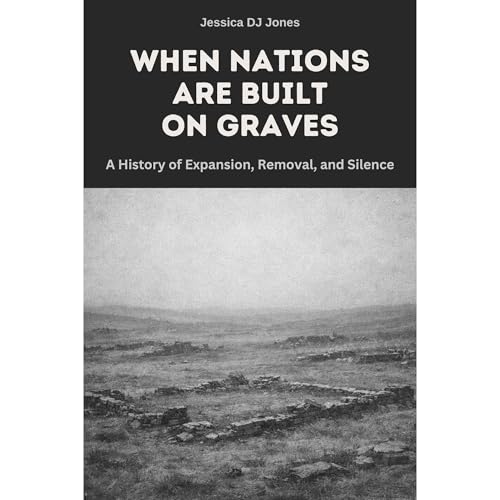
When Nations Are Built On Graves
A History of Expansion, Removal, and Silence
No se pudo agregar al carrito
Add to Cart failed.
Error al Agregar a Lista de Deseos.
Error al eliminar de la lista de deseos.
Error al añadir a tu biblioteca
Error al seguir el podcast
Error al dejar de seguir el podcast
Obtén 30 días de Standard gratis
Compra ahora por $14.99
-
Narrado por:
-
Virtual Voice
-
De:
-
Jessica Jones

Este título utiliza narración de voz virtual
Foundations matter.
Some are built on loss that never fades.
When Nations Are Built On Graves
A History of Expansion, Removal, and Silence
Modern nations often describe their origins through stories of exploration, settlement, and progress. These narratives emphasize courage and achievement while leaving unexamined the conditions that made expansion possible. What is omitted is often as important as what is remembered.
When Nations Are Built On Graves examines a recurring pattern in the formation of states: land is claimed before law is established, populations are redefined before they are removed, and violence is reframed as necessity. Rather than focusing on isolated atrocities or national guilt, this book traces structural processes that appear repeatedly across time and geography.
Through historical analysis, the book explores how discovery is converted into ownership, how treaties are written to delay rather than resolve conflict, and how legal systems are constructed after the fact to legitimize outcomes already achieved. Cultural narratives of civilization and progress function not only to explain expansion, but to normalize it. Over time, dispossession becomes invisible, absorbed into national memory as inevitability rather than choice.
The book also examines the role of institutions in maintaining silence. Education systems omit foundational conflicts, religious and moral authorities provide justification or restraint only selectively, and economic development rapidly follows removal, replacing memory with productivity. Survivors are marginalized not because their accounts are unclear, but because remembrance destabilizes foundational myths.
Rather than presenting history as a series of moral failures, When Nations Are Built On Graves treats expansion as a repeatable process shaped by incentives, power asymmetries, and institutional reinforcement. It shows how the benefits of removal are inherited by later generations who are taught to view prosperity as natural rather than contingent.
Written for readers seeking clarity rather than comfort, this book does not attempt to replace one national narrative with another. It does not argue for condemnation or redemption. Instead, it offers a framework for recognizing patterns that continue to shape political legitimacy, historical memory, and the limits of accountability in modern states.
When Nations Are Built On Graves is not a comprehensive history of any single nation. It is an examination of how nations are made—and what must be forgotten for them to endure.