Episodios

  • Spring Decisions: Timing, Nutrition, Results
    Mar 10 2026

    Today we’re tackling spring crop decisions. How do you nail the timing, get nutrition spot on, and boost your results? To answer that, we’ve got Ben Foster from RHIZA and Gavin Stewart, Fertiliser Product Manager for Scotland, and George Proctor, Contracting Operations Manager at Agrii.

    Summary:

    • Nitrogen needs to be used more efficiently as prices rise and CBAM fertiliser tax comes in. Many farms only achieve around 60% nitrogen use efficiency, but Agrii trials show variable‑rate, evidence‑based applications can lift this to 70–75%.
    • Liquid fertiliser offers accuracy and quicker uptake, especially in dry springs. Adding inhibitors like Liqui‑Safe can increase nitrogen use efficiency by ~15% and delivered a 4% yield uplift across 42 winter wheat trials.
    • Precision starts with understanding variability, not guessing it. Farmers should use Contour satellite imagery, drones, and N‑sensors to judge crop demand, identify differences in biomass, and decide whether to feed weaker or stronger areas.
    • Contract sprayers give farmers access to variable‑rate technology they may not have on their own kit. Liquid systems and modern sprayers allow accurate, low‑pressure applications that reduce crop damage and support timely operations in narrow weather windows.
    • Timing and conditions matter as much as rate. Using hyper‑local weather data in Contour helps farmers and contractors judge field conditions, hit application windows, and make sure nitrogen is applied when the crop can use it effectively.

    Más Menos
    20 m
  • Are Bats the Most Underrated Pest Control on Farm?
    Mar 3 2026

    Today we’re talking moths and asking a bold question: could bats be the game‑changing IPM tool that protects harvestable yield and boosts the bottom line for this Kent dessert‑apple farm? Richard and Fraiya Chandler of Chandler & Dunn, together with Agrii agronomist Neil Obbard, have been putting this idea to the test.

    Summary:

    Bats as natural pest control: The farm is exploring whether boosting bat populations can significantly reduce key moth pests in apple orchards, lowering reliance on insecticides and cutting production costs.

    High economic impact of moth damage: Moth species like codling moth and tortrix can cause major crop losses, and current chemical control costs the farm £500–£600 per hectare.

    Scientific evidence backs the idea: A 2022 study shows that a single brown long‑eared bat can reduce crop loss by 81–83% per hectare - a remarkable potential impact.

    Habitat improvement is key: Enhancing hedgerows, tree cover, and installing appropriate bat boxes can help attract and support different bat species, boosting their presence in orchards.

    Wider farming benefits: Using bats aligns with sustainable IPM, protects biodiversity, and may translate to benefits across other crops like plums, cherries, and blueberries.

    Más Menos
    20 m
  • Maize Under Pressure – Building Resilience into the System
    Feb 10 2026

    Growing last year’s forage proved challenging, with weather conditions hitting many crops. Maize, in particular, remains highly sensitive to in‑season pressures - yet it continues to offer major advantages when managed well. So what benefits can maize deliver, and how can growers set themselves up for success in 2026? To explore these questions, we're joined by two experts: Ben Lowe, Agrii’s National Forage Manager, and Tom Turner, Regional Sales Manager for KWS.

    Podcast summary:

    2025 growing season was highly variable, with some regions achieving excellent maize yields while others suffered severe drought and extremely poor performance. Both forage and AD growers faced big inconsistencies.

    Resilience and early maturity are key themes for 2026. Experts emphasise strong variety selection, moving to earlier‑maturing genetics, and balancing yield with forage quality to buffer against unpredictable weather.

    Seed rate decisions depend on site conditions — sheltered sites can push 100k–110k seeds/ha, exposed or drought‑prone areas benefit from reduced rates to improve stem strength, moisture availability, and harvest timing.

    Modern genetics reduce the need for plastic film in marginal areas. Advances mean ultra‑early varieties can now establish reliably even in cooler or challenging regions without film.

    Top tips from the experts: choose the right variety for your site, prioritise quality as much as yield, ensure good site selection and maturity matching, and avoid reverting to later varieties despite the temptation after drier years.

    View the 2026 maize guide here.


    Más Menos
    20 m
  • Get Your Crops Right This Spring – Nutrition, Tech and Protection Tips
    Feb 10 2026

    Crop resilience is a major talking point, but what does it really mean for this spring and the season ahead? How can farmers set crops up to deliver reliable, consistent results in a challenging growing year?

    In this episode, we are joined by Agrii’s John Miles, Seed Technical Manager, Tom Land, National Fertiliser Manager, Jonathan Trotter, Technical Trials Manager, and Jody Littleford, Technical Manager at Combinable Crop Trials. Together, they discuss how varieties, nutrition, Biosolutions and fungicides, and the latest technology can be brought together to build stronger, more resilient crops from the outset.

    Summary:

    • Disease pressure is high, with new yellow rust races overcoming resistance - growers must stay proactive with protectant fungicide strategies.
    • Nutrition must be precise, using SMN tests and biomass assessments to avoid costly nitrogen mis‑applications.
    • Tech tools like satellite imagery and variable‑rate nitrogen can improve decision‑making and input efficiency.
    • Biostimulants, including endophytes and peptide elicitors, can strengthen plant health and bolster resilience but complement, don’t replace, core agronomy.
    • Overall resilience comes from measuring, monitoring, and staying ahead, combining nutrition, chemistry, tech, and field walking.

    Download Agrii's latest insight report beyond the bottom line, tackling rising costs with smarter margins. Visit agrii.co.uk or view here.

    Más Menos
    20 m
  • Can Carbon Actually Make you Money?
    Jan 11 2026

    Considering the unpredictable nature of farm margins, what straightforward opportunities are available for farmers to earn extra income through carbon initiatives?

    Today, our experts shed light on this. Agrii’s Amy Hardwick, Sustainability and Environmental Manager, Agrii’s Neil Harper, Agronomist and Arable Technical Manager, and Alan Clifton-Holt, Farms Director at AA Clifton Ltd, who farms on Romney Marsh in Kent.

    If you would like to start exploring the initiatives available, click here to see what it could mean for your farm.


    Más Menos
    20 m
  • Accidental Counsellors and the Future of Farm Wellbeing
    Dec 9 2025

    Today we explore the Agri Wellbeing Alliance, launched at LAMMA in January to strengthen mental health and wellbeing across agriculture. A recent study led by Professor David Rose at Harper Adams University for the alliance highlights the urgent need to widen the safety net of support for farming communities, including better help for those who find themselves acting as accidental counsellors.

    Joining us today are Petra Martin from Agrii, Professor David Rose from Harper Adams University, and Sam Downey from Mates in Mind.

    Agrii can help future-proof your farm by growing a diverse range of crops together with comprehensive advice on environmental and sustainable business opportunities. For more information, visit www.agrii.co.uk/sustainability

    Más Menos
    20 m
  • Autumn Update: Building Crop Resilience to Protect Yield
    Nov 18 2025

    Today we are asking how can we build better crop resilience and rooting in forward crops to overcome the changes in variety, susceptibility, and changing weather patterns. To help us with those key questions, we have Agrii's Tim Horton, technical Manager for combinable crops, and Jodie Littleford, technical Manager for combinable crop trials. Summary:

    Building Resilience:

    • Strong root systems critical for nutrient and water uptake.
    • Use of manganese seed treatments and micronutrients (manganese, zinc).
    • Biostimulants like Inoculate (peptide-based elicitor) shown to boost crop health and yield.

    Management Tips:

    • Monitor crops closely; attention to detail is vital.
    • Early fungicide treatments for yellow rust; flexible, non-dogmatic programs.
    • Combine chemistry with nutritional and biostimulant support.

    CPD points:
    Claim 1 BASIS and NRoSO point for listening. Email info@agrii.co.uk with your membership number, full name, postcode, date of birth and the podcast title.


    Más Menos
    30 m
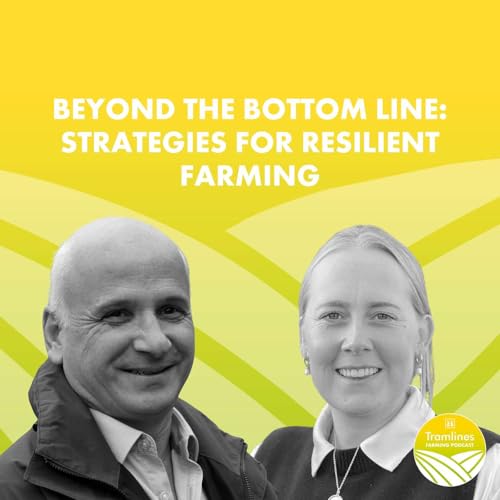
  • Beyond the Bottom Line: Strategies for Resilient Farming
    Oct 28 2025

    Today we’re talking about the challenges facing farm businesses after two very difficult years of crop establishment and a dry summer that has left many under significant financial pressure. That’s the picture here in the UK, but globally we’re seeing record harvests - and it’s not just arable enterprises under strain. Livestock producers have been severely affected too. So, what can farmers do to navigate this period and build resilience? To explore that question, we're joined by Lucy Braithwaite-Exley Scotland Origination Manager with Bunge, and Paul Pickford, Farm Business Consultant. This episode covers:

    Create a Clear Financial Plan
    Build a realistic budget and gross margin analysis to guide decisions and secure financial support. This helps manage cash flow and ensures you're prepared for seasonal input costs.

    Engage Early with Local Buyers and Merchants
    Identify local market demand to reduce haulage costs and improve profitability. Regularly speak with merchants and traders to align crop choices with buyer needs.

    Diversify Marketing Strategies
    Use tools like grain pools to manage price volatility and ensure movement and payment for a portion of your crop. This reduces risk and improves financial predictability.

    Adapt Cropping Based on Market Signals
    Monitor shifts in demand (e.g. reduced distilling sector needs in Scotland) and adjust crop rotations accordingly - consider alternatives like oats, rye, or oilseed rape where viable.

    Leverage Sustainable Practices for Financial Gain
    Implement strategies like reduced tillage, cover cropping, and efficient nutrition to unlock environmental and financial benefits. Explore pilot projects and sustainability schemes that offer rewards.

    *Please note: This podcast was recorded on 13th October 2025, and market prices may have changed since then.

    Más Menos
    20 m