Episodios

  • Why Signing a Fortune 500 Customer Too Early Can Kill You | Manish Jindal, Cloudflare & Arize
    Apr 2 2026

    What if the biggest mistake you can make as a founder is signing Apple as your first customer?

    Manish Jindal spent 10 years at Cloudflare as employee #45, helping take the company from $10 million revenue to a $60 billion public company. Manish breaks down the Cloudflare playbook: why they intentionally said “no” to Fortune 500 companies early on to protect their product, and how a single phone call from a CIO birthed their entire enterprise motion.

    Throughout his career, Manish has joined companies that already showed early product–market fit in large markets, allowing him to spend a decade helping scale them. Now as the President at Arize, he is building the “plumbing” that allows giants like Walmart and Uber to move from building AI agents to real-world production.

    We discuss why “boring” infrastructure is a more durable bet than flashy AI apps, and why owning the data remains the ultimate competitive edge. Manish also shares insights on building Go-To-Market (GTM) teams in the Cloudflare era and how that strategy has shifted in the AI era.

    If you are a founder or leader trying to scale a startup, this episode with Manish Jindal is for you.

    00:00 – Trailer
    01:00 – How Manish chose companies with early PMF
    03:45 – Founder’s belief is most important
    04:35 – Entering dev tooling when it wasn't popular
    08:20 – Never leave a Co. you believe in for wrong reasons
    09:45 – The “boring” industries that do well in Long run
    12:40 – It’s easy to build an agent, but hard to scale one
    15:06 – Why infra won’t be winner-take-all
    18:02 – The keepers of data will win
    20:20 – From million to billion in Cloudflare’s journey
    21:32 – The “holy sh*t” moment happens fast for Cloudflare
    24:30 – The CIO call that led to Cloudflare’s enterprise plan
    27:04 – $50M and $100M ARR path of Cloudflare
    28:33 – Build enterprise motion slowly or aggressively?
    29:51 – Why Cloudflare didn’t want Apple as customer
    32:10 – Early PMF at Splunk, Cloudflare, and Arize
    35:40 – Choosing only decade-long stints
    39:01 – Why Manish didn’t start his own company
    43:37 – How GTM has changed in the AI world
    54:25 – What agents need to work well in production
    01:00:51 – Which enterprise use cases qualify for AI?
    01:03:52 – What went wrong with Air Canada Agent?
    01:04:52 – How customers are discovered
    01:09:01 – Claude & Cursor are the most powerful agents today
    01:10:55 – How Manish chooses companies to invest in
    01:15:15 – Why acquisitions will become the Norm
    01:18:35 – Technology is not a moat anymore

    -------------

    India’s talent has built the world’s tech—now it’s time to lead it.
    This mission goes beyond startups. It’s about shifting the center of gravity in global tech to include the brilliance rising from India.

    What is Neon Fund?
    We invest in seed and early-stage founders from India and the diaspora building world-class Enterprise AI companies. We bring capital, conviction, and a community that’s done it before.

    Subscribe for real founder stories, investor perspectives, economist breakdowns, and a behind-the-scenes look at how we’re doing it all at Neon.

    -------------

    Check us out on:
    Website: https://neon.fund/
    Instagram: https://www.instagram.com/theneonshoww/
    LinkedIn: https://www.linkedin.com/company/beneon/
    Twitter: https://x.com/TheNeonShoww

    Connect with Siddhartha on:
    LinkedIn: https://www.linkedin.com/in/siddharthaahluwalia/
    Twitter: https://x.com/siddharthaa7

    -------------

    This video is for informational purposes only. The views expressed are those of the individuals quoted and do not constitute professional advice.

    Send us Fan Mail

    Más Menos
    1 h y 20 m
  • Investor who hasn't Changed His Thesis in 5 Funds & Saw the AI Wave Before ChatGPT | Ashmeet Sidana, Engineering Capital
    Mar 26 2026

    What does it look like to run the same playbook across five venture funds?

    That is the bet Ashmeet Sidana has made at Engineering Capital. From Fund One to Fund Five, he has written the first check into founders solving problems with Technical insight.

    His portfolio includes Rubrik, now a public company, SignalFx which was acquired by Splunk for $1 billion, and CodeRabbit, last valued at $550 million. Ashmeet runs Engineering Capital as a solo GP and the fund has been oversubscribed since Fund One.

    Ashmeet says that the most common way technical founders fail is by “playing house.” Founders who build beautifully organized systems and clean processes, but don’t obsessively seek product market fit. His view is that founders should ruthlessly prioritize finding PMF above everything else.

    Ashmeet is an investor who has seen enough cycles to know what actually compounds, and is still early-stage enough to care about the details that most people have moved past.

    00:00 – Trailer

    01:15 – Where does Engineering Capital place its bets?

    10:07 – How the VC landscape has evolved

    11:20 – Are technical founders the norm in AI?

    16:23 – Why the name Engineering Capital?

    16:50 – What every VC looks for in a founder

    21:34 – Why Founders Choose Your Term Sheet

    26:26 – Rule of 1-2 in-person meetings daily with founders

    31:42 – Does AI give younger founders an edge?

    32:59 – Founders must ruthlessly prioritize

    35:58 – The trap of “playing house”

    37:40 – PMF can change overnight, Ex: Facebook

    40:13 – 1 in 10 companies fail due to lack of PMF

    43:17 – The most valuable skill a founder can have

    44:19 – Why have a Chief Engineer at a VC firm?

    45:44 – The job of every CEO is to learn

    46:09 – Solo founders are much riskier

    48:15 – An accidental entry into VC

    49:52 – Solo GP: risks and rewards

    53:34 – $250M across funds

    54:43 – Why solo GPs work better in the US

    58:25 – Where Ashmeet’s portfolio companies are located

    01:00:57 – Be very careful of vanity metrics

    01:02:15 – Vibe coding will change the face of software

    01:03:36 – Don’t chase trends in how companies are built

    01:05:58 – $100M ARR is the outcome of a strong package

    01:06:35 – How affordable is Bay Area for young founders?

    01:11:32 – AlexNet, not ChatGPT, was the real AI inflection point

    01:12:57 – US Public Companies Are Down 50% in 40 years

    -------------

    India’s talent has built the world’s tech—now it’s time to lead it.

    This mission goes beyond startups. It’s about shifting the center of gravity in global tech to include the brilliance rising from India.

    What is Neon Fund?

    We invest in seed and early-stage founders from India and the diaspora building world-class Enterprise AI companies. We bring capital, conviction, and a community that’s done it before.

    Subscribe for real founder stories, investor perspectives, economist breakdowns, and a behind-the-scenes look at how we’re doing it all at Neon.

    -------------

    Check us out on:

    Website: https://neon.fund/

    Instagram: https://www.instagram.com/theneonshoww/

    LinkedIn: https://www.linkedin.com/company/beneon/

    Twitter: https://x.com/TheNeonShoww

    Connect with Siddhartha on:

    LinkedIn: https://www.linkedin.com/in/siddharthaahluwalia/

    Twitter: https://x.com/siddharthaa7

    -------------

    This video is for informational purposes only. The views expressed are those of the individuals quoted and do not constitute professional advice.

    Send us Fan Mail

    Más Menos
    1 h y 23 m
  • How 24,000 companies keep their AI from Breaking in Production | Rohit Agarwal, Portkey
    Mar 19 2026

    Over 1 Trillion AI tokens pass through Portkey every single day.

    Every AI product eventually runs into the same problem. The prototype works, but once it goes live the system has to manage multiple models, rising token costs, unpredictable latency, and infrastructure that was never built for AI workloads.

    That is the problem Rohit Agarwal is solving with Portkey, an AI gateway that sits between applications and the models, whether that’s GPT-4, Claude, or Gemini.

    With 24,000 companies routing their AI through Portkey, Rohit sits on ground-level data on how AI is actually being used in production. Which models enterprises are betting on. Where costs are quietly climbing. How usage patterns shift as companies move from pilots to real products.

    When AI spend surpasses cloud spend, and Rohit believes it will, the infrastructure running underneath it becomes one of the most important bets in tech. This episode explores what it takes to run AI systems at that scale.

    00:00 – Trailer
    01:05 – 500 billion AI tokens every day
    04:05 – First to call an "AI gateway"
    07:26 – Where did the Gateway insight come from?
    12:08 – How Portkey is winning this space
    13:05 – Picking the right gambles over wrong ones
    14:16 – What are LLM endpoints?
    15:21 – AI will 100% surpass cloud spend
    19:00 – Hype is coming from people still in Q&A mode
    19:33 – AI employees over humans in customer support?
    23:00 – For AI startups, traffic > revenue
    24:43 – The bubble is in valuations, not utility
    26:05 – How Rohit built his personal automations
    28:38 – Costliest model is most used now
    33:21 – What's going right and wrong for AI companies
    37:49 – Hiring a VP of sales after $15M is possible today
    39:57 – What edge does Claude have over other models?
    43:35 – Founders need a "why me vs. why Anthropic" story
    52:56 – What if Anthropic or AWS builds a gateway?
    55:41 – Predictions for the next 12 months
    59:40 – How big is the opportunity in Agents?
    01:00:48 – Startups now have to prove it's not a weekend project
    01:01:54 – Is Build v/s Buy no longer a Debate?
    01:03:50 – What would Rohit build if starting up today?
    01:05:58 – How Portkey is different from an API gateway
    01:08:26 – MCP / tool calling enables agentic workflows
    01:12:00 – Portkey's Community-driven early GTM
    01:13:34 – Startups have only 2 reasons for Open core

    -------------

    India’s talent has built the world’s tech—now it’s time to lead it.
    This mission goes beyond startups. It’s about shifting the center of gravity in global tech to include the brilliance rising from India.

    What is Neon Fund?
    We invest in seed and early-stage founders from India and the diaspora building world-class Enterprise AI companies. We bring capital, conviction, and a community that’s done it before.

    Subscribe for real founder stories, investor perspectives, economist breakdowns, and a behind-the-scenes look at how we’re doing it all at Neon.

    -------------

    Check us out on:
    Website: https://neon.fund/
    Instagram: https://www.instagram.com/theneonshoww/
    LinkedIn: https://www.linkedin.com/company/beneon/
    Twitter: https://x.com/TheNeonShoww

    Connect with Siddhartha on:
    LinkedIn: https://www.linkedin.com/in/siddharthaahluwalia/
    Twitter: https://x.com/siddharthaa7

    -------------

    This video is for informational purposes only. The views expressed are those of the individuals quoted and do not constitute professional advice.

    Send us Fan Mail

    Más Menos
    1 h y 19 m
  • The $600B Grocery Market Is Obsessed With Speed — FirstClub Is Betting on Quality | Ayyappan
    Mar 12 2026

    Is the best grocery platform one that decides what it WON’T sell?

    That is the bet Ayyappan is making with FirstClub. Fewer products. Stricter rules. While most quick commerce apps are trying to deliver orders faster, he is asking a different question. What if consumers need not “faster or cheaper”, but a retail platform where they can trust every item listed on it?

    A place where you do not have to read every label, check multiple reviews, or wonder if the top result is there because a brand paid for it. FirstClub is trying to solve a harder problem. It is trying to define what “quality” means for everyday products we consume, starting with groceries.

    India has received the highest quick commerce funding of any country in the world, at $9.24B over the last 10 years. Yet only 1% of Indians use quick commerce services today. With a large market still open for expansion and the possibility of better unit economics over time, FirstClub is building a countertrend to the hype around Indian quick commerce.

    Ayyappan brings eleven years of experience at Flipkart, and has also served as SVP at Myntra and CEO of Cleartrip. This episode is the story till here and the plans ahead for Firstclub.

    00:00 – Trailer
    01:01 – The Costco of Indian quick commerce
    04:32 – Building a counter-trend company
    06:15 – What consumers say v/s what they actually want
    09:37 – The only retail platform to Ban 200 ingredients
    12:34 – Why can’t the big players solve this?
    13:21 – A simple rule of thumb for food
    16:03 – Brand stories from FirstClub
    19:20 – Is the problem access or income?
    21:29 – Who are the 20 million FirstClub consumers?
    24:14 – Only 1% of India uses quick commerce
    26:04 – What does “quality” mean in grocery?
    32:34 – How will FirstClub monetize without brand sponsorships?
    34:53 – Do consumers behave differently across categories?
    39:30 – Why is Myntra so powerful in fashion?
    42:24 – What Myntra taught Ayyapan that Flipkart didn’t?
    43:53 – Unlearning to build for Quick commerce
    48:25 – Why Indian consumers are very experimental today
    50:59 – Is India one country when it comes to quality?
    52:43 – If Ayyappan was a product, what would he be?
    54:47 – The hardest belief to defend while building FirstClub
    56:26 – Akshayakalpa & The Whole Truth
    57:48 – Not niche, but premium

    -------------

    India’s talent has built the world’s tech—now it’s time to lead it.

    This mission goes beyond startups. It’s about shifting the center of gravity in global tech to include the brilliance rising from India.

    What is Neon Fund?
    We invest in seed and early-stage founders from India and the diaspora building world-class Enterprise AI companies. We bring capital, conviction, and a community that’s done it before.

    Subscribe for real founder stories, investor perspectives, economist breakdowns, and a behind-the-scenes look at how we’re doing it all at Neon.

    -------------

    Check us out on:

    Website: https://neon.fund/
    Instagram: https://www.instagram.com/theneonshoww/
    LinkedIn: https://www.linkedin.com/company/neon-fund/
    X: https://x.com/TheNeonShoww

    Connect with Nansi on:

    LinkedIn: https://in.linkedin.com/in/nansi-mishra
    X: https://x.com/nansi_mishra

    -------------

    This video is for informational purposes only. The views expressed are those of the individuals quoted and do not constitute professional advice.

    Send a text

    Más Menos
    1 h
  • The First AI Market With 8 Billion Potential Users | Sudarshan kamath, Smallest AI
    Mar 6 2026

    Will smaller AI models win over large language models?

    Sudarshan Kamath grew up in Mumbai, taught himself AI before most Indian companies were even hiring for it, and bought the domain "smallest.ai" for $100 in 2022, two years before the company existed. Today, he runs Smallest AI, a startup focused on real time voice AI.

    He started with self-driving cars, training large models and compressing them to run on vehicle hardware in real time. That's where he first saw what small models could do: a hundredth of the size, almost no loss in accuracy.

    Two years later he put in his own $150K, got some GPUs, and started training. Eighteen months later he had a seed round, a Series A, a seven-figure enterprise deal, and a $150M acquisition offer he turned down.

    Most of the data that goes into large models is noise. Strip it out, train small, and you get a model that matches a giant at a fraction of the size and runs in real time. That insight is what Smallest AI is built on.

    00:00 – Trailer
    00:51 – Sudarshan's journey before Smallest AI
    05:00 – Arjun Jain & Yann LeCun
    08:20 – Why build in voice AI in 2024?
    15:09 – Why move the company from India to the US?
    17:25 – Hiring talent via LinkedIn and X
    18:49 – What large US funds actually bring to startups
    21:03 – Raising a seed round with zero revenue
    26:06 – Strong intros from US VCs
    28:23 – What the first enterprise customer teaches you
    31:50 – Raising Series A with Seligman Ventures
    32:19 – The $150M acquisition offer
    34:32 – When should founders sell secondaries?
    36:24 – Who are Smallest AI's customers?
    38:28 – What are state space models?
    40:16 – Are GEPA models closer to AGI?
    41:23 – Growing 10× in three months
    48:03 – This is not a winner-takes-all market
    49:32 – Why this is a trillion-dollar market
    50:08 – Why large AI labs are not building in voice
    51:26 – What it takes to reach $100M ARR
    54:21 – The biggest goal for 2026
    57:11 – Voice costs 1000× more than text
    01:02:04 – How Smallest AI cracked large enterprises

    -------------

    India’s talent has built the world’s tech—now it’s time to lead it.
    This mission goes beyond startups. It’s about shifting the center of gravity in global tech to include the brilliance rising from India.

    What is Neon Fund?
    We invest in seed and early-stage founders from India and the diaspora building world-class Enterprise AI companies. We bring capital, conviction, and a community that’s done it before.
    Subscribe for real founder stories, investor perspectives, economist breakdowns, and a behind-the-scenes look at how we’re doing it all at Neon.

    -------------

    Check us out on:
    Website: https://neon.fund/
    Instagram: https://www.instagram.com/theneonshoww/
    LinkedIn: https://www.linkedin.com/company/beneon/
    Twitter: https://x.com/TheNeonShoww

    Connect with Siddhartha on:
    LinkedIn: https://www.linkedin.com/in/siddharthaahluwalia/
    Twitter: https://x.com/siddharthaa7

    -------------

    This video is for informational purposes only. The views expressed are those of the individuals quoted and do not constitute professional advice.

    Send us Fan Mail

    Más Menos
    1 h y 9 m
  • AI Needs to Know Why You Took THAT decision | Ashu Garg, Investor at Foundation Capital
    Feb 27 2026

    What if AI can learn the “why” behind decision making of humans?

    Ashu Garg and Jaya Gupta recently wrote one of the most discussed articles on AI this year. Their idea drew public responses from Dharmesh Shah, Aaron Levie, and Arvind Jain.

    Enterprise software has always captured what happened. It records the order, the ticket, and the approval. But it has never captured why it happened. It does not store the reasoning, the exception, or the past decisions that shaped the outcome. Ashu argues that this missing layer is the biggest opportunity in enterprise AI right now, and that the startups that capture it will be the biggest winners in AI.

    In this episode, we go deeper into what context graphs really are, how they get built, why startups have an edge over incumbents, and how close we are to seeing this work in practice.

    00:00 – Trailer
    00:32 – What are context graphs?
    02:48 – Why agents haven't lived up to the hype?
    05:18 – The "why" of Decision Making
    08:17 – How agents will store data for context graphs
    10:38 – What will be possible for Digital twins?
    14:02 – Can context graphs reveal a company's moat?
    15:50 – Guardrails on Access for agents
    19:50 – Managing agents vs being managed by agents
    23:01 – Will winners be vertical or horizontal players?
    25:56 – The future is agent swarms
    28:43 – Finding PMF is what makes a great CEO
    31:40 – What will set apart successful enterprises of 2030
    33:44 – Where Foundation Capital is investing
    35:16 – Why AI won't be winner-takes-all
    37:38 – Where will the context graph reside?
    40:45 – Will systems of record be replaced?
    42:42 – Human in the loop → hands-off execution
    44:46 – A reality check on where we are today
    46:43 – Where startups will win in orchestration

    -------------

    India’s talent has built the world’s tech—now it’s time to lead it.
    This mission goes beyond startups. It’s about shifting the center of gravity in global tech to include the brilliance rising from India.

    What is Neon Fund?
    We invest in seed and early-stage founders from India and the diaspora building world-class Enterprise AI companies. We bring capital, conviction, and a community that’s done it before.

    Subscribe for real founder stories, investor perspectives, economist breakdowns, and a behind-the-scenes look at how we’re doing it all at Neon.

    -------------

    Check us out on:
    Website: https://neon.fund/
    Instagram: https://www.instagram.com/theneonshoww/
    LinkedIn: https://www.linkedin.com/company/beneon/
    Twitter: https://x.com/TheNeonShoww

    Connect with Siddhartha on:
    LinkedIn: https://www.linkedin.com/in/siddharthaahluwalia/
    Twitter: https://x.com/siddharthaa7

    -------------

    This video is for informational purposes only. The views expressed are those of the individuals quoted and do not constitute professional advice.

    Send us Fan Mail

    Más Menos
    49 m
  • How AI Will Finally Deliver the Promise SaaS Made | Samay Kohli: From Robots to Digital Workers
    Feb 21 2026

    Samay Kohli spent 12 years at GreyOrange, scaling it to over $100 million in revenue and a $3 billion valuation at its peak, making it one of the world’s largest warehouse robotics companies. Two years ago, he started again with Budy, this time in the US senior care industry.

    In this industry, decisions are emotional, sales cycles can run for years, and multiple stakeholders are involved. While the market sits at the intersection of real estate, healthcare, and hospitality, most sales still depend on manual follow-ups and scattered tools.

    Budy builds digital workers for sales teams: AI teammates that handle follow-ups, scheduling, and lead management across CRMs, calendars, and inboxes. Instead of adding another layer of software, Budy went zero UI-UX and focused on enabling sales teams in an industry with 99% inbound leads to manage their cold leads better.

    Today, Samay joins Siddhartha (Partner at Neon Fund, and a proud investor in Budy) and shares his journey from building robots to building digital teammates for a very non-traditional industry.

    00:00 – Trailer
    01:00 – What Budy is building for senior care
    05:15 – Real Estate × Healthcare × Hospitality
    06:25 – Zero UI UX technology
    10:09 – AI teammates not assistants
    12:03 – How sales teams operated before Budy
    12:51 – A ninety nine percent inbound industry
    13:45 – The real cost of senior care homes
    15:35 – Can a CRM alone solve this
    17:55 – Direct benefits of a digital worker
    20:49 – Two founder archetypes
    22:06 – Can lights out operations become real
    24:49 – What Samay underestimated about the market
    25:58 – The largest players in the industry
    29:07 – Treat your customer’s company like your own
    30:52 – Entrepreneurship as a profession
    35:36 – Unlearnings as a second time founder
    37:30 – What digital workers actually are
    39:47 – The original promise of SaaS
    42:04 – The next decade of digital workers
    45:25 – Digital workers that read best selling books
    47:26 – Will Claude build CRMs
    49:38 – Business etiquette across the world
    55:18 – How a second time founder chooses investors
    01:01:00 – Why every team member should track the P and L
    01:02:14 – How Samay’s view on growth evolved

    -------------

    India’s talent has built the world’s tech—now it’s time to lead it.
    This mission goes beyond startups. It’s about shifting the center of gravity in global tech to include the brilliance rising from India.

    What is Neon Fund?
    We invest in seed and early-stage founders from India and the diaspora building world-class Enterprise AI companies. We bring capital, conviction, and a community that’s done it before.
    Subscribe for real founder stories, investor perspectives, economist breakdowns, and a behind-the-scenes look at how we’re doing it all at Neon.

    -------------

    Check us out on:
    Website: https://neon.fund/
    Instagram: https://www.instagram.com/theneonshoww/
    LinkedIn: https://www.linkedin.com/company/beneon/
    Twitter: https://x.com/TheNeonShoww

    Connect with Siddhartha on:
    LinkedIn: https://www.linkedin.com/in/siddharthaahluwalia/
    Twitter: https://x.com/siddharthaa7

    -------------

    This video is for informational purposes only. The views expressed are those of the individuals quoted and do not constitute professional advice.

    Send us Fan Mail

    Más Menos
    1 h y 5 m
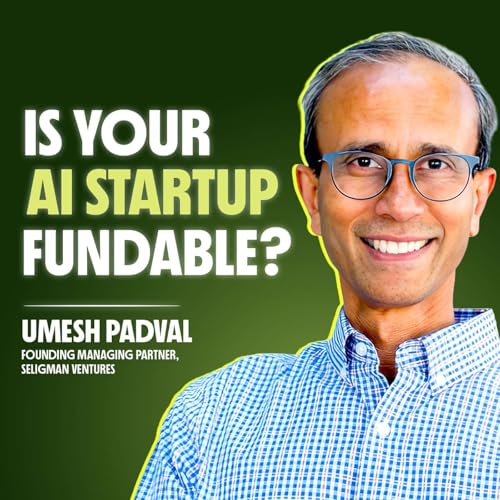
  • What Top 1% Investors Look For in AI Startups | Umesh Padval, Seligman Ventures, Ex- Bessemer
    Feb 13 2026

    Do startup valuations today make sense?

    Umesh Padval, an early investor in Cohere, now valued at about $7 billion shares why Cohere stood out at the time of his investment. He shares what he saw early that made him believe this was not just another AI model company.

    Umesh is the Founding Managing Partner, Seligman Ventures and previously at Thomvest and Bessemer Venture Partners. He brings experience from investing across multiple tech cycles, from chips to cloud to AI. Umesh talks about how deals are really done in venture capital and what he looks for when everything feels noisy and crowded in AI.

    He also shares why many strong companies are choosing to stay private and what has changed in the IPO market. Public markets now demand cash flow and durability, not just fast growth.

    Umesh talks about why open source has become a powerful sales funnel for modern AI companies. Developers become the first users, and community adoption turns into long-term enterprise revenue.

    After four decades in Silicon Valley and 20 years as a VC, Umesh shares what keeps him in building and investing.

    0:00 – How big is the scope for investing in AI startups?
    04:04 – Do unit economics justify large AI valuations?
    06:00 – Thomvest’s LLM investment thesis (Cohere case study)
    09:18 – Are CTO roles changing in AI
    11:21 – Traits of the best AI founding teams
    13:40 – Timeline to find the best founders
    16:52 – Partnership with Jyoti Bansal
    19:07 – Where is the IPO market headed?
    23:40 – Salesforce–Clari acquisition
    25:18 – Is profitability a prerequisite to go public?
    26:00 – Can the India–US corridor beat US–Israel?
    28:53 – Umesh’s investment philosophy
    31:08 – Open source as a sales funnel
    33:38 – IIT → Stanford → Startups
    41:45 – The only CEO with 60 direct reports
    43:43 – Why Jensen never does 1-on-1s?
    48:23 – What ultimately drives Umesh Padval?

    -------------
    India’s talent has built the world’s tech—now it’s time to lead it.
    This mission goes beyond startups. It’s about shifting the center of gravity in global tech to include the brilliance rising from India.

    What is Neon Fund?
    We invest in seed and early-stage founders from India and the diaspora building world-class Enterprise AI companies. We bring capital, conviction, and a community that’s done it before.
    Subscribe for real founder stories, investor perspectives, economist breakdowns, and a behind-the-scenes look at how we’re doing it all at Neon.

    -------------
    Check us out on:
    Website: https://neon.fund/
    Instagram: https://www.instagram.com/theneonshoww/
    LinkedIn: https://www.linkedin.com/company/beneon/
    Twitter: https://x.com/TheNeonShoww

    Connect with Siddhartha on:
    LinkedIn: https://www.linkedin.com/in/siddharthaahluwalia/
    Twitter: https://x.com/siddharthaa7

    -------------

    This video is for informational purposes only. The views expressed are those of the individuals quoted and do not constitute professional advice.

    Send us Fan Mail

    Más Menos
    52 m