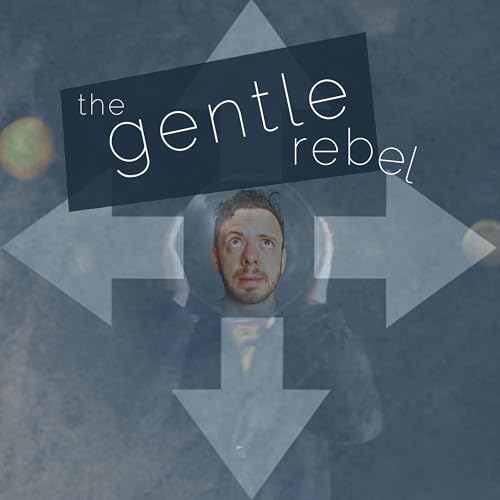
The Gentle Rebel Podcast Podcast Por Andy Mort arte de portada

The Gentle Rebel Podcast

The Gentle Rebel Podcast

De: Andy Mort
Escúchala gratis

The Gentle Rebel Podcast explores the intersection of high sensitivity, creativity, and the influence of culture within, between, and around us. Through a mix of conversational and monologue episodes, I invite you to question the assumptions, pressures, and expectations we have accepted, and to experiment with ways to redefine the possibilities for our individual and collective lives when we view high sensitivity as both a personal trait and a vital part of our collective survival (and potential).Andy Mort Arte Biografías y Memorias Ciencias Sociales Desarrollo Personal Éxito Personal
Episodios
  • Is Coaching Really a Pyramid Scheme?
    Apr 3 2026
    With increasing regularity, I see posts on social media criticising coaching as a pyramid scheme or defending it against such accusations. As people tend to do, they paint a nuanced field with a very broad brush, whichever side they support. In this episode of The Gentle Rebel Podcast, I discuss a recent argument I came across. It illustrates how the term ‘coaching’ is understood and used in two distinct ways. “I’m not sure I’ll ever understand the ‘coaches teaching coaches to coach is a pyramid scheme’ situation. It’s literally not… I want to be coached on my business by a coach. Who else would I want to learn this from?!” https://youtu.be/b86vKrEfSUY A Misunderstanding? The framing of that post somewhat mischaracterises the argument it’s pushing back against. The issue isn’t “coaches teaching coaches to coach.” I mean, who better to become a teacher than the person who knows how to do the thing they are teaching? I’ve not seen anyone seriously complaining about that. Rather, when people refer to coaches coaching coaches to coach more coaches to become coaches, they are describing something different. Having gone through an 18-month ICF-affiliated training programme myself, I often watch parts of the industry with my head in my hands. Not least because it is still unregulated and anyone can call themselves a coach. So, it’s a world I have a love/hate relationship with. This episode hopefully demonstrates why I am sticking around (for now). But also why I have great concern about the way things are heading. And I would suggest it’s incumbent on ethical coaches to take the accusations seriously and help people get a sense of these distinctions. When Coaching is Not a Pyramid Scheme Of course, it’s not a pyramid if a less experienced coach goes to a more experienced one for coaching. Someone builds experience over time. Another coach comes to them to address or develop something specific within their business or practice. Even if that coach specialises in working with coaches, those coaches will have their own ways of working, usually with clients across a range of situations. For example, coaches work with people in sport, business, the arts, career development, etc. This is how knowledge and skills spread within a field. Very normal. Coaching can be really valuable as a structured partnership that helps the client make progress on their terms. Not by telling them what to do, but by helping them identify their desired outcome. And then asking questions to help them get clear on the steps they want to take as well as preparing for potential obstacles they might anticipate along the way. When Coaching DOES Look Like a Pyramid Scheme What, then, is this pyramid of coaches coaching coaches to coach coaches? How is it different? Sixteen years ago, when I started my blog and podcast, I remember many online entrepreneurs giving away e-books and selling courses to teach people to build a dream lifestyle business. They dangled freedom from employment and four-hour workweeks, and shot their videos on beaches and in mountain-side cabins, to attract an audience to their webinars. Like Influencer Culture today, they would promise an easy-to-follow blueprint to guarantee followers the same success. These individuals taught others how to create and sell digital products that taught people how to create and sell digital products that taught…yes, you get the point. There was no meaningful substance anywhere in the chain. The money made came from aspirational marketing that shaped perceptions, sold appealing promises, and used smoke and mirrors to persuade people it was a quick route to material wealth. This is exactly what we have witnessed happen in corners of the online coaching world. It targets individuals, encouraging them to believe that becoming a coach is a quick route to financial prosperity or to escaping material insecurity. They are sold a blueprint for convincing others of the potential wealth of becoming a coach who shares the same process with them, so on and so forth until the supply of potential clients runs dry. Coaching Is Never a One Size Fits All Solution Even for coaches who find their own niche, you can tell when this sort of pyramid model is at work because they coach people to become coaches. Treating every problem with the same solution. A “relationship coach” may end up with many clients becoming coaches themselves. A “career coach” has a disproportionate number of people pivoting to follow in their footsteps in building a coaching business rather than being coached to identify and follow their own path. It concerns me when I see a coach describing how their clients have succeeded in the same ways they did. That is a dereliction of what I see as the purpose of coaching: to support each individual in defining success on their own terms and navigating their unique path towards it. Identifying Pyramid Schemes in the Coaching World How can we ...
    Más Menos
    14 m
  • Is Something Holding You Back?
    Mar 29 2026
    Join me on Saturday April 4th 2026 for a mini-zine making workshop around this theme of Expressing Your True Colours. What stops people expressing themselves authentically? This question has been on my mind over the past couple of weeks. I collected responses from a poll asking which statement feels most accurate to people at the moment. You might have seen it if you are subscribed to my mailing list or YouTube. Two statements resonated with many people. They are related. “I want to discover and clarify my own true colours.” And “I want to feel more confident expressing my true colours.” When I talk about true colours here, I mean knowing, being, and expressing ourselves in genuine, authentic, and natural ways. These aspects of ourselves may get dulled, toned down, or lost for a range of reasons. In this episode of The Gentle Rebel Podcast, I explore a few potential reasons we might hold back from expressing who we are. Let me know what I’ve missed! It is a topic that comes up a lot in my work with highly sensitive people. Here are the HSP Colour Swatches I mentioned in the episode. https://youtu.be/GKRPwTRaBbg Tiredness Kit The first answer that came to mind was tiredness. You might be exhausted from caring responsibilities, workload, or the chronic strain of functioning in a dysfunctional society. If your energy is sapped, you are running on fumes and you do whatever it takes just get through the day. There is not much left for “self-actualising”. This is obvious among those with caring responsibilities and chronic health conditions. But it is also evident among those burdened by productivity culture and the pressures to survive in an unstable economy. People might seem to be expressing themselves online, but beneath the surface is sometimes a drained, colourless exhaustion. Money Money does weird things to us. It might lead us to make choices that run counter to who we are. It corrupts our true colours, especially in a world of scarcity. Not having enough can be the difference between health and illness, life and death. Money can also make people less creative. They seek familiar models and methods to guarantee outcomes. That is a distinct dulling of our personal creative spirit. Keeping the Peace You might sacrifice your own needs, preferences, and dreams. The potential fallout of advocating for yourself does not feel worth it. I hear a lot of highly sensitive people lament this, especially if they live with those we might consider narcissistic energy vampires. The short-term relief of making yourself small can outweigh the prospect of setting boundaries around your own desires and opinions. External Authority It is tempting to focus on personal psychology. As if the only thing stopping us is ourselves. This self-help trope is not true. In repressive cultures, certain lifestyles, identities, and groups are prohibited from freely existing. It can be dangerous to express yourself. Regimes and authorities prevent people from living out their true colours. Fear of Rejection This fear may come from an internal narrative, or it might come from a real threat of being judged, excluded, or ostracised. This is a fundamental point of safety in human survival. When we experience it, we naturally make ourselves smaller. We also see people exclude themselves. They fear they are too much for others. But rather than dulling their colours in a social context, they withdraw them. They keep themselves to themselves. This can come from sound instincts or learned patterns from earlier in life. Fear of Visibility We might resist showing parts of ourselves because we do not want eyes on us. Not everyone wants to be the centre of attention. This is a big one for me. I find it uncomfortable to have the spotlight shone on me. So even if I have the urge to get up and dance, which sometimes I do, the self-consciousness usually overrides it. But the fear can extend beyond embarrassment. There is scrutiny, judgement, envy, and the loss of anonymity. These things might make expressing yourself feel unsafe. What we would feel visible doing in one place is a completely normal expectation in another. Having the Wrong People Around Us We might not feel welcome. Maybe people are bored or dismissive of our interests. Or we have different tastes. This leads us to neglect those parts of us that do not have an outlet. I have seen this a lot with communities of fans. The thing around which fans gather acts as a conduit for self-expression. The community provides a collective where it is safe to geek out without being dismissed as obsessive. On that note, some environments allow a person’s true colours to come through. This can surprise those who know them best. A child who keeps parts of themselves hidden finds a place where they feel free. The family might think they are acting out of character. The Pressure of Finding Our “True Self” Human existence is messy. It is full of contradictions. Who we are is built up ...
    Más Menos
    19 m
  • The Religion of Positive Thinking
    Mar 24 2026
    The Power of Positive Thinking promised liberation from feelings of inferiority and self-doubt. But did it simply deliver us a new set of demands and anxieties to adhere to? We often consider positive thinking as a beneficial mindset that enhances performance in sports and other activities. However, it is more than just a description of a possible behaviour. It is also the title of a 1952 book by Norman Vincent Peale. The Power of Positive Thinking builds on the New Thought movement that emerged in the 1800s. It had been a response to the effects of Calvinistic Christianity on the health and well-being of Puritanical America. Donald Trump attended Peale’s Marble Collegiate Church as a child. He admired Peale’s robust, businesslike approach to Christianity. The engaging sermons lent a sense of cosmic legitimacy to his family’s brand of hyper-individualistic capitalism. https://youtu.be/hpqbMQj7bEQ The Next Stop on the Magical Thinking Tour This episode of The Gentle Rebel Podcast is part of my meandering journey exploring the history of self-help. The Power of Positive Thinking is a valuable piece of the larger puzzle. It provides a clear context for the foundational role of American Christianity in a multi-billion-dollar industry. The book faced criticism when it was published. Leaders in the Methodist church described Peale’s followers as a cult that had ceased worshipping Christ and started worshipping success. Reinhold Niebuhr, author of the Serenity Prayer, said Peale’s teachings “corrupted” the Christian gospel. He argued Peale’s message was harmful to people. On the one hand, making them feel good, while on the other hand, stopping them from seeing and confronting the real issues at the heart of their struggles. In this episode, I refer to Barbara Ehrenreich’s 2009 book, Brightsided. Ehrenreich did an excellent job contextualising the book and outlining the history of Positive Thinking and its foundations in New Thought. The Calvinist Inheritance Positive thinking emerged from New Thought. This movement was in part a reaction to the dominance of Puritanical Calvinism in the formation of the United States. Predestination meant followers were subjected to a socially enforced depression. This centred on the limited number of seats in Heaven, which have already been allocated to those God has elected. This mindset could be said to have helped the Puritans survive the harsh conditions of the New World. At the same time, they struggled to endure the psychological demands of their own religious beliefs. The doctrine’s focus on sin, election, and damnation fostered chronic anxiety about one’s salvation, often involving severe inner terror and accompanying physical ailments. The Arrival of New Thought New Thought emerged as a response to religious melancholy, physical symptoms of despair, and the fear of eternal damnation. It proposed a new perspective on illness, viewing it as a disruption in the otherwise perfect and benevolent Mind that links all things in the universe. Although New Thought approaches to healing were ineffective against the infectious diseases devastating America at the time, they appeared to have a positive effect on those suffering from neurosthenia caused by religious depression. Mary Baker Eddy was one of Phineas Quimby’s patients. After Quimby’s death, Eddy founded Christian Science, transforming New Thought into an established religion. She taught that there is no material world, only Thought, Mind, Spirit, Goodness, Love, or, “Supply.” Illness and struggle are, therefore, temporary delusions of the mind rather than real material conditions. New Thought had cured the ailment of Calvinism and the “morbidness” linked to “the old hell-fire theology.” A new era was born, in which people were encouraged to utilise the universe as an answer to prayer and a grantor of wishes. What Remained But the transition from Calvinism to New Thought wasn’t clean. Ehrenreich suggests that Positive Thinking has retained some of Calvinism’s more harmful traits. Or perhaps we have reverted to it. There is a harsh, judgmental attitude that echoes the old religion’s condemnation of sin. Our preoccupation with productivity, hustle, self-optimisation, and personal performance carries more than a hint of the Calvinistic framework that historically tormented its adherents. This shift involves transforming a judgmental God from an external entity into an internal one, residing within us as part of ourselves. It fosters a constant sense of needing to do more to be worthy or valued. It is always striving to find an indefinable sense of well-being by improving, optimising, and controlling, as it micromanages increasingly smaller details of life, in the hope of achieving freedom, happiness, and salvation or healing. Splitting Ourselves in Two Positive Thinking splits us into two; a self to work on, and a self to do the work. We’ve all seen the ‘rules,’ ...
    Más Menos
    25 m
Todavía no hay opiniones