Episodios

  • Ep 80 - How to Turn an MVP into a Revenue Machine
    Mar 25 2026


    In this episode of Tales from the Pros, hosts Michael Georgiou and Eric Lawrence break down what really happens after you launch a Minimum Viable Product (MVP).


    For many founders, launching an MVP feels like the finish line. In reality, it’s just the beginning. The real challenge lies in turning that early product into a scalable, revenue-generating business.

    Michael and Eric walk through the proven Launchpad approach, a structured framework that outlines the journey from MVP to product-market fit and ultimately to sustainable growth. They unpack the common misconceptions founders have, why early traction is so difficult to achieve, and how customer feedback, iteration, and disciplined execution determine long-term success.

    The conversation explores how to approach the critical first 60–90 days after launch, how to identify real value through user behavior, and why many products fail when teams try to build too much, too fast, without focusing on outcomes.

    If you're building a SaaS product, launching a startup, or trying to scale an existing digital product, this episode provides a practical roadmap to move beyond the MVP and build a business that actually works.


    🎯 Highlights You Won’t Want to Miss

    • Why launching an MVP is only the first step, not the finish line
    • The biggest misconception founders have about their product vision
    • How to approach the first 60–90 days after launch
    • Why your first customers are critical to shaping your product
    • How to turn user feedback into meaningful product improvements
    • The importance of prioritization and avoiding feature overload
    • What it really takes to find product-market fit
    • How to transition from experimentation to scalable growth


    🎧 Listen and Subscribe

    • Spotify: https://open.spotify.com/show/6QkUtrcNllUkqtq1fjlwnZ
    • Apple Podcasts: https://podcasts.apple.com/us/podcast/tales-from-the-pros/id1371067192
    • YouTube: https://www.youtube.com/@Imaginovation/podcasts
    • SoundCloud: https://soundcloud.com/talesfromthepros


    💡 Key Takeaways

    • An MVP is just the starting point. Long-term success depends on iteration and execution after launch
    • Early customer feedback is one of the most valuable inputs for shaping your product direction
    • Not all feedback should be acted on. Prioritization is critical to avoid wasted time and resources
    • Product-market fit requires continuous testing, data analysis, and adaptation
    • Revenue and retention are key indicators of whether your product is truly delivering value
    • Scaling a product requires doubling down on what works and building repeatable growth systems
    • Founders must be prepared to evolve their product, and sometimes even rebuild, based on real-world insights


    🗂 Topics We Cover

    • The Launchpad framework for post-MVP growth
    • Common misconceptions about MVPs and product development
    • Getting your first customers and validating demand
    • Using feedback to guide product decisions
    • Finding product-market fit through iteration
    • Avoiding feature creep and focusing on outcomes
    • Building a scalable product and growth engine


    ⏱️ Chapters

    00:00 Launching the MVP: The Beginning of the Journey
    05:26 The biggest misconception about MVPs
    09:46 Getting your first customers
    18:01 Finding product-market fit
    24:54 Scaling and growing your business

    Más Menos
    31 m
  • Ep 79 - Building Products with AI: Hype, Reality, and What Actually Works
    Mar 11 2026


    In this episode of Tales from the Pros, hosts Michael Georgiou and Eric Lawrence sit down with Imaginovation Chief Product Officer Zach Bruno to unpack one of the most talked-about topics in technology today: building products with AI.

    AI is everywhere right now. Startups are launching “AI-powered” products every day, founders believe they can build entire businesses with a single prompt, and companies are racing to integrate AI into everything they do. But how much of this is reality, and how much is hype?

    Zach shares a grounded perspective on where AI actually delivers value today, and where it still falls short. The conversation explores the difference between AI as an idea engine versus an execution tool, why engineers using AI will be far more powerful than non-technical founders trying to “vibe code” entire products, and why incremental AI usage often works better than attempting to build a full product with AI from day one.

    The team also dives into the broader implications of AI in product development, including how companies should think about customer value, the risks of using AI purely as a buzzword, and why the future of AI is likely more about human augmentation than human replacement.

    If you're building software, launching a startup, or simply trying to understand where AI is truly useful today, this episode offers a practical perspective on navigating the AI era responsibly and strategically.


    🎯 Highlights You Won’t Want to Miss

    • The current reality of building products with AI versus the hype surrounding it
    • Why AI is better at idea generation than full product execution today
    • The difference between vibe coding and engineering-led AI development
    • When it actually makes sense to build parts of a product with AI
    • Why startups shouldn't rely on AI alone to build scalable platforms
    • The biggest risks companies overlook when implementing AI
    • How AI can dramatically improve internal workflows and operations
    • Why the future of AI is likely augmentation, not replacement


    🎧 Listen and Subscribe

    • Spotify: https://open.spotify.com/show/6QkUtrcNllUkqtq1fjlwnZ

    • Apple Podcasts: https://podcasts.apple.com/us/podcast/tales-from-the-pros/id1371067192

    • YouTube: https://www.youtube.com/@Imaginovation/podcasts

    • SoundCloud: https://soundcloud.com/talesfromthepros


    💡 Key Takeaways

    • AI is currently far stronger at idea synthesis and reasoning than executing complex product builds

    • Engineers using AI tools become significantly more productive, but AI does not replace engineering expertise

    • Building small features or fixing bugs with AI is often more effective than generating entire applications

    • Companies should focus on customer value first, not simply adding AI features for marketing purposes

    • AI can provide massive efficiency gains when applied to internal operations and workflows

    • The most powerful future for AI lies in human-AI collaboration


    🗂 Topics We Cover

    • The current state of AI in product development
    • Vibe coding vs traditional software engineering
    • AI as an idea generator versus an execution tool
    • Risks and misconceptions around AI-built products
    • Internal AI automation and operational efficiency
    • AI’s impact on creativity, work, and the future of software development


    ⏱️ Chapters

    00:00 Introduction to building products with AI
    01:30 The current state of AI in product development
    03:30 Vibe coding vs building software from scratch
    06:25 Where AI currently falls short
    08:00 Building parts of a product with AI
    10:00 AI in business operations vs customer products
    13:00 Misconceptions about AI startups
    16:30 AI as augmentation vs replacement
    18:40 The future of AI in product development
    28:40 Advice for companies considering AI

    Más Menos
    34 m
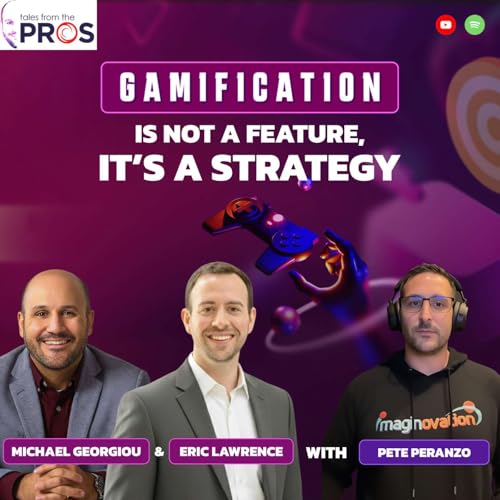
  • Ep 78 - Why Gamification Isn’t a Feature, It’s a Strategy
    Feb 26 2026

    In this episode of Tales from the Pros, Michael Georgiou and Eric Lawrence sit down with Imaginovation Co-Founder Pete Peranzo to unpack a topic that most product teams misunderstand: gamification.


    Too often, teams treat gamification like a cosmetic upgrade. Add some points. Throw in a leaderboard: a badge or two. But without a strategy, it can backfire fast.

    Pete shares real examples of what happens when gamification is implemented poorly, including a case where productivity actually dropped. The conversation explores why onboarding is the highest leverage place to design for behavior, how incremental updates sustain long term engagement, and why the next generation of the workforce will expect interactive, game-like systems by default.

    From SaaS platforms to internal tools to education software, this episode reframes gamification as a strategic design discipline rooted in psychology, data, and intentional product architecture.


    If you are building digital products and care about retention, engagement, and long-term value, this one is worth your time.


    🎯 Highlights You Won’t Want to Miss

    • Why simply adding points and badges can hurt more than help
    • What went wrong with Microsoft’s gamification attempt
    • How Salesforce increased training engagement by 500 percent
    • Why onboarding is the most powerful place to introduce gamification
    • The real difference between gamification and building a game
    • How small, consistent feature releases drive long-term retention
    • Why Millennials, Gen Z, and Gen Alpha will expect gamified systems
    • Where AI and personalization intersect with gamified product design

    🎧 Listen and Subscribe

    Spotify: https://open.spotify.com/show/6QkUtrcNllUkqtq1fjlwnZ

    Apple Podcasts: https://podcasts.apple.com/us/podcast/tales-from-the-pros/id1371067192

    YouTube: https://www.youtube.com/@Imaginovation/podcasts

    SoundCloud: https://soundcloud.com/talesfromthepros

    💡 Key Takeaways

    • Gamification only works when it aligns with user behavior and business objectives
    • Poorly implemented systems can reduce productivity instead of improving it
    • Onboarding is your first and best opportunity to create engagement
    • Data should guide how and where gamification is introduced
    • Consistent incremental updates keep users coming back
    • The future workforce expects interactive and motivating digital tools
    • AI will enhance gamification through personalization, not replace it


    🗂 Topics We Cover

    • Behavior-driven product design
    • Gamification in SaaS and internal platforms
    • Onboarding strategy and retention
    • Product iteration and incremental releases
    • Generational shifts in technology expectations
    • The future of AI and personalized digital systems


    ⏱️ Chapters

    00:00 Introduction to Pete and why gamification matters
    02:27 Where most teams get gamification wrong
    05:23 Designing onboarding for engagement
    08:40 Case studies and real-world lessons
    13:16 Sustaining engagement with incremental updates
    17:21 Gamification in new versus existing products
    20:01 AI, personalization, and the future of digital experiences
    27:15 MagicTask and practical implementation

    Más Menos
    28 m
  • Building Businesses That Run Without You | Chris Ronzio | Ep 70 (A)
    Feb 6 2026

    In this episode of Tales from the Pros, Michael Georgiou sits down with Chris Ronzio, founder and CEO of Trainual, to talk about what it really takes to build a business that can grow without breaking.

    Chris shares his journey from starting his first business at 14 to running a nationwide operation and eventually launching Trainual, a platform designed to help small businesses document their processes, train their teams, and scale with confidence. Along the way, he explains why so many founders unintentionally build themselves into a job instead of a company.

    This conversation goes deep into systems, productivity, and leadership, covering everything from bootstrapping versus raising capital to creating operational clarity, protecting personal well-being, and defining success on your own terms.

    If you are a founder or operator trying to get out of the weeds and build something sustainable, this episode offers practical insight you can actually apply.


    🎯 Highlights You Won’t Want to Miss

    • How Chris started his first business at 14 and scaled it nationwide
    • Why most founders accidentally create jobs instead of businesses
    • The real reason systems and documentation unlock growth
    • Bootstrapping versus raising capital, and when each makes sense
    • How customer stories fuel traction and brand credibility
    • Paid versus organic growth and how to build momentum early
    • What operational efficiency actually looks like in practice


    🎧 Listen and Subscribe


    Spotify: https://open.spotify.com/show/6QkUtrcNllUkqtq1fjlwnZ


    Apple Podcasts: https://podcasts.apple.com/us/podcast/tales-from-the-pros/id1371067192


    YouTube: https://www.youtube.com/@Imaginovation/podcasts


    SoundCloud: https://soundcloud.com/talesfromthepros


    💡 Key Takeaways

    • Systems create freedom, not rigidity
    • Bootstrapping builds discipline before scaling with capital
    • Customers are your strongest brand storytellers
    • Efficiency improves when revenue grows faster than headcount
    • Productivity comes from clarity, not longer hours
    • Sustainable success requires boundaries, not burnout


    🗂 Topics We Cover

    • Chris Ronzio’s entrepreneurial journey
    • Building and selling a service-based business
    • Why Trainual was created and the problem it solves
    • Bootstrapping versus venture funding
    • Customer-centric growth and testimonials
    • Paid ads versus organic marketing
    • Productivity, efficiency, and delegation
    • Defining success beyond revenue

    ⏱️ Chapters

    00:00 Chris Ronzio’s early entrepreneurial journey
    02:30 Building and scaling a nationwide video business
    05:40 Why systems and processes matter
    09:30 The origin story behind Trainual
    13:00 Bootstrapping versus raising investment
    17:00 Customer-first growth and testimonials
    20:45 Paid versus organic marketing strategies
    24:00 What operational efficiency really means
    27:30 Productivity, delegation, and avoiding burnout
    31:00 Defining success and collecting experiences

    Más Menos
    35 m
  • Ep 77 - The Kaizen Trap: When Tech Growth Outpaces Your Well-Being
    Feb 4 2026

    In this episode of Tales from the Pros, Michael Georgiou and Eric Lawrence get real about a mindset many high performers live by but rarely question: continuous improvement. What happens when Kaizen stops being a strength and starts becoming a liability?

    Drawing from personal experiences scaling Imaginovation, Michael and Eric unpack how relentless growth, overhiring, and constant optimization can quietly lead to burnout, misalignment, and costly decision-making. They explore why pausing, reflecting, and leading with intention is not a sign of weakness but a prerequisite for sustainable success.

    From leadership pressure and mental health to consistency over impulsive pivots, this conversation reframes ambition through a more human lens. If you are a founder, operator, or leader feeling the weight of always needing to “do more,” this episode offers clarity on how to grow without losing yourself or your team in the process.


    🎯 Highlights You Won’t Want to Miss

    • When Kaizen and continuous improvement start doing more harm than good
    • The hidden cost of scaling too fast and overhiring
    • Why burnout often comes from obsession, not effort
    • How impulsive pivots create chaos in sales, marketing, and product teams
    • The importance of intentional, quarterly improvement over constant change
    • Why consistency beats chasing shiny new strategies
    • How leaders can protect culture, clarity, and well-being while growing


    🎧 Listen and Subscribe

    • Spotify: https://open.spotify.com/show/6QkUtrcNllUkqtq1fjlwnZ
    • Apple Podcasts: https://podcasts.apple.com/us/podcast/tales-from-the-pros/id1371067192
    • YouTube: https://www.youtube.com/@Imaginovation/podcasts
    • SoundCloud: https://soundcloud.com/talesfromthepros

    💡 Key Takeaways

    • Continuous improvement must be intentional, not obsessive
    • Scaling too quickly can damage both people and core operations
    • Burnout is often a signal to pause, not push harder
    • Sustainable growth comes from small, consistent improvements
    • Leadership requires empathy, self-awareness, and restraint
    • Not every slowdown is a failure—sometimes it’s a correction
    • Mental health and clarity are foundational to long-term performance

    🗂 Topics We Cover

    • Kaizen and the dark side of continuous improvement
    • Burnout in founders and high-performing teams
    • Scaling mistakes and overhiring in tech companies
    • Intentional leadership and decision-making
    • Sales, marketing, and operational alignment
    • Consistency vs constant pivoting
    • Building a sustainable company culture

    ⏱️ Chapters

    00:00 Why continuous improvement can become dangerous
    02:30 Kaizen, ambition, and founder pressure
    05:40 Scaling fast, overhiring, and operational overwhelm
    10:15 Burnout, mental health, and leadership responsibility
    14:00 Obsession vs intention in growth strategies
    18:30 Sales, marketing, and alignment breakdowns
    22:50 Why impulsive pivots hurt more than help
    27:30 Intentional quarterly improvement frameworks
    31:40 Micro-improvements and sustainable execution
    34:30 Final reflections on leadership, balance, and clarity

    Más Menos
    36 m
  • Ep 76 - Leading Through Innovation: How Everflex is Redefining Physical Therapy at Scale
    Jan 14 2026

    In this episode of Tales from the Pros, Michael Georgiou and Eric Lawrence sit down with Andrew Cherry, COO of Movement for Life, to explore how innovation actually works inside a legacy healthcare organization.

    Andrew shares how COVID, clinician burnout, and access challenges forced Movement for Life to rethink traditional physical therapy delivery and why waiting on off-the-shelf solutions was no longer enough. The conversation dives into the cultural, operational, and leadership shifts required to build EverFlex, a custom platform designed to improve patient access, support clinicians, and create measurable business impact.

    From change management and internal buy-in to AI’s role in reducing decision errors without replacing human care, this episode offers a candid look at what it takes to lead through uncertainty and why patient experience, not revenue alone, became the guiding metric.

    Whether you’re a healthcare leader, operator, or founder navigating innovation in a regulated or legacy industry, this episode delivers practical insight into building technology that scales without losing the human element.

    🎯 Highlights You Won’t Want to Miss

    • Why Movement for Life chose to build instead of buy healthcare software

    • How COVID accelerated telehealth and exposed its limits in physical therapy

    • The real challenge of change management inside large organizations

    • Why AI should enhance clinicians, not replace them

    • How EverFlex generated meaningful ROI in a low-margin industry

    • What “PT vigilantes” really means and why ownership mattered

    • How patient experience became the driver of sustainable growth

    🎧 Listen and Subscribe

    • Spotify: https://open.spotify.com/show/6QkUtrcNllUkqtq1fjlwnZ

    • Apple Podcasts: https://podcasts.apple.com/us/podcast/tales-from-the-pros/id1371067192

    • YouTube: https://www.youtube.com/@Imaginovation/podcasts

    • SoundCloud: https://soundcloud.com/talesfromthepros

    💡 Key Takeaways

    • Innovation in healthcare requires cultural and leadership alignment, not just technology

    • Solving patient access and clinician burnout must happen together

    • AI is most valuable as a decision-support tool, not an automation shortcut

    • Building custom software can reduce tech sprawl and improve operational efficiency

    • Patient trust and engagement increase when technology feels human

    • Measured ROI matters, especially in time-for-money industries like physical therapy

    🗂 Topics We Cover

    • Physical therapy innovation at scale

    • Telehealth and remote therapy monitoring post-COVID

    • Change management in healthcare organizations

    • AI’s role in clinical decision-making

    • Patient access, affordability, and experience

    • EverFlex’s impact on clinics and clinicians

    • Leadership mindset shifts required to innovate


    ⏱️ Chapters

    00:00 Introduction to Andrew Cherry and Movement for Life

    03:19 Technology gaps in physical therapy

    06:45 COVID, telehealth, and access challenges

    09:10 Patient experience vs revenue growth

    12:39 Culture shifts and internal product ownership

    16:02 Change management and leadership buy-in

    20:35 Fear, innovation, and starting the work

    26:22 AI’s role in enhancing, not replacing clinicians

    32:42 EverFlex ROI and clinic impact

    37:30 Where to find Movement for Life and EverFlex

    Más Menos
    39 m
  • Ep 75 - Is Your Business Ready for Software Automation?
    Dec 17 2025

    In this episode of Tales from the Pros, Michael Georgiou and Eric Lawrence break down what software automation really means for growing businesses and how to know when an organization is actually ready for it. Moving beyond buzzwords, they share real-world examples of companies that automated successfully and others that wasted time and budget by doing it too early or without a plan.

    Drawing from years of hands-on experience, they discuss the warning signs that manual processes are slowing teams down, why disconnected systems create operational chaos, and how automation should support people rather than replace them. The episode also introduces a practical automation readiness playbook to help leaders audit operations, define ROI, and start small with high-impact pilots.

    If you are scaling a business or struggling with inefficiencies, this conversation will help you determine where automation fits, how to avoid common mistakes, and how to approach it strategically with clarity and confidence.

    🎯 Highlights You Won’t Want to Miss

    • How to tell if your business is truly ready for automation
    • The difference between automation and AI and why it matters
    • Common operational red flags that signal inefficiency
    • Why disconnected tools slow growth and increase costs
    • How to audit workflows and identify high-impact automation opportunities
    • The importance of starting small with pilot automation projects
    • How automation improves compliance, scalability, and competitiveness
    • Why automation should empower teams, not replace them

    🎧 Listen and Subscribe

    • Spotify: https://open.spotify.com/show/6QkUtrcNllUkqtq1fjlwnZ

    • Apple Podcasts: https://podcasts.apple.com/us/podcast/tales-from-the-pros/id1371067192

    • YouTube: https://www.youtube.com/@Imaginovation/podcasts

    • SoundCloud: https://soundcloud.com/talesfromthepros

    🗂 Topics We Cover

    • What smart, practical automation looks like in real businesses
    • Signs manual processes are costing time and money
    • How operational growth can outpace systems and teams
    • Why auditing workflows is the first step to automation readiness
    • How to define ROI before investing in automation
    • Common automation roadblocks and how to overcome them
    • The role of leadership and team input in automation decisions
    • Why automation is essential to remain competitive

    💡 Key Takeaways

    • Manual, repetitive work is a strong signal that automation may be needed
    • Automation must align with business goals, not trends or hype
    • Disconnected systems create inefficiency, errors, and frustration
    • Starting small with high-impact pilots reduces risk and improves ROI
    • Automation frees teams from low-value busywork
    • AI and automation are related but not the same
    • A clear audit and roadmap prevent wasted investment
    • Strategic automation strengthens long-term scalability and resilience

    ⏱️ Chapters

    • 00:00 Introduction to Practical Automation
    • 02:22 Signs Your Business Is Ready for Automation
    • 05:22 When Growth Outpaces Operations
    • 07:53 Disconnected Systems and Tool Overload
    • 10:36 Losing Competitive Advantage
    • 12:30 The Automation Readiness Playbook
    • 15:41 Involving Teams in Automation Decisions
    • 18:12 Starting Small With High-Impact Pilots
    • 20:35 Real-World Automation Case Studies
    • 23:06 Common Automation Roadblocks
    • 26:48 Automation vs AI Explained
    • 30:25 Final Takeaways and Closing Thoughts
    Más Menos
    32 m
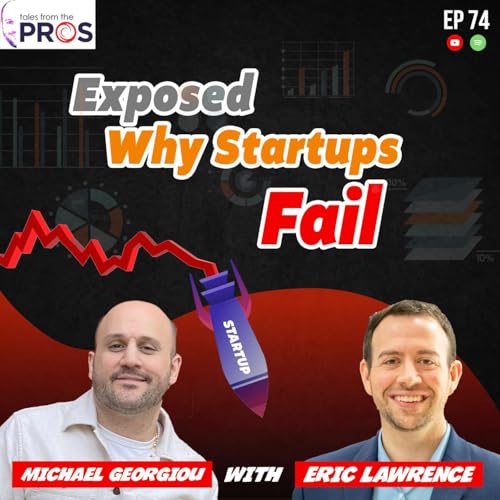
  • Ep 74 - Why SaaS Startups Fail: Lessons From the Trenches
    Nov 27 2025


    In this episode of Tales from the Pros, Michael Georgiou and Eric Lawrence open up about the hidden challenges that quietly derail SaaS startups. These issues often go unnoticed until it is too late, and they rarely have anything to do with funding or technology. Instead, the real problems show up in planning, leadership, market understanding, and the founder’s mindset.


    Drawing from real stories and years of working closely with founders, they talk about why a strong business model matters, how emotional resilience shapes decision making, and why continuous innovation is a non-negotiable part of building a lasting SaaS product.

    If you are building or growing a SaaS startup, this conversation will help you recognize the early signs, avoid common traps, and build with more clarity and confidence.


    🎯 Highlights You Won’t Want to Miss

    • The real reasons SaaS startups fail behind the scenes
    • Why planning and direction matter more than a “unique idea”
    • Market validation that actually reflects user demand
    • How mindset and emotional resilience shape every decision
    • Why branding and differentiation influence traction
    • The role of leadership in keeping teams aligned and motivated
    • How continuous innovation keeps your product alive


    🎧 Listen and Subscribe

    • Spotify: https://open.spotify.com/show/6QkUtrcNllUkqtq1fjlwnZ

    • Apple Podcasts: https://podcasts.apple.com/us/podcast/tales-from-the-pros/id1371067192

    • YouTube: https://www.youtube.com/@Imaginovation/podcasts

    • SoundCloud: https://soundcloud.com/talesfromthepros

    🗂 Topics We Cover

    • Why planning and clarity decide how fast startups grow
    • What real market validation looks like and why feedback matters
    • The emotional side of being a founder and staying resilient
    • How branding shapes trust and early adoption
    • What a sustainable SaaS business model includes
    • How leadership influences team culture and progress
    • Why innovation can never stop after launch


    💡 Takeaways

    • Poor planning and unclear direction quietly kill SaaS startups.
    • Founders need a strong, realistic mindset to get through challenges.
    • Market validation must come before building, not after.
    • Emotional resilience helps founders make better long-term decisions.
    • Good branding and differentiation help a product stand out.
    • A sustainable business model is essential for long-term success.
    • Leadership shapes team motivation, culture, and productivity.
    • Continuous innovation keeps your product relevant and competitive.

    ⏱️ Chapters

    00:00 Introduction to Silent Killers of SaaS Startups
    02:56 The Importance of Planning and Mindset
    05:57 Understanding Market Validation and User Feedback
    08:56 Navigating Challenges and Emotional Resilience
    11:55 The Role of Branding and Differentiation
    14:48 Building a Sustainable Business Model
    17:38 Leadership and Team Dynamics
    20:37 Continuous Innovation and Adaptation
    23:55 Conclusion and Key Takeaways

    Más Menos
    30 m