Plain Talk Podcast Por Forum Communications Co. arte de portada

Plain Talk

Plain Talk

De: Forum Communications Co.
Escúchala gratis

Plain Talk is a podcast hosted by Rob Port and Chad Oban focusing on political news and current events in North Dakota. Port is a columnist for the Forum News Service published in papers including the Fargo Forum, Grand Forks Herald, Jamestown Sun, and the Dickinson Press. Oban is a long-time political consultant.©2026 Forum Communications Co. Ciencia Política Ciencias Sociales Política y Gobierno
Episodios
  • 692: 'You need not be convicted for them to take and keep your property'
    Apr 3 2026

    What is civil asset forfeiture? It's the process through which law enforcement can "seize your property on the basis of suspicion that it's involved in a crime," Patrick Reasonover told us on this episode of Plain Talk. What's worse? The cops often get to keep the proceeds. Or, at least, their departments do.

    Reasonover is one of the producers of the documentary, "When Cops Become Robbers," which was recently screened by the Challey Institute at North Dakota State University. The film tells the stories of three people who had their money and property taken by law enforcement despite not having been involved in any crime. It also includes interviews with people on both sides of the issue.

    But the conclusion of the film is that civil asset forfeiture isn't anything like justice. "They need not arrest you or charge you with the crime," Reasonover said. "You need not be convicted for them to take and keep your property. You have to then prove the innocence of the property that it was not used to commit a crime or is the proceeds of a crime in order to get it back."

    In North Dakota, lawmakers have passed some reforms for civil asset forfeiture in recent legislative sessions. Police must now adhere to the "clear and convincing evidence" standard for linking seized property to a crime. There is also a conviction requirement, though it's a weak one, as it does not apply if the owner fails to contest the forfeiture in court or if the owner reaches a settlement with the state. State law also still provides a financial incentive for law enforcement to seize property by allowing them to keep the proceeds up to $200,000 per year (after which the revenues go to the state's general fund).

    Worst, perhaps, is that North Dakota still allows "equitable sharing" agreements with federal law enforcement, which is a handy way to do an end-run around state law. Reasonover says that's exactly how it was designed to work.

    "What's important to know about this equitable sharing loophole is it actually wasn't really designed as a loophole," he said. "The federal government designed this system to work exactly as it's working. They wanted to incentivize local police jurisdictions to get involved in the drug war. They wanted them to actively go out, pull over and seize money. And they wanted to incentivize them to do it."

    Local law enforcement still gets to keep the majority of the revenue from the seized property. "If they make it a federal seizure, which is super easy to do, then the local jurisdiction sends 20% of the money to the feds," Reasonover said.

    Also on this episode, me and co-host Chad Oban talk about the Afroman kerfuffle, the problem with always "backing the blue," and a conspiracy theory about the Byron Noem revelations.

    If you want to participate in Plain Talk, just give us a call or text at 701-587-3141. It's super easy — leave your message, tell us your name and where you're from, and we might feature it on an upcoming episode. To subscribe to Plain Talk, search for the show wherever you get your podcasts or use one of the links below.

    Apple Podcasts | Spotify | YouTube | Pocket Casts | Episode Archive

    Más Menos
    57 m
  • 691: $36 million in North Dakota revenues for every $1 dollar in oil prices
    Apr 1 2026

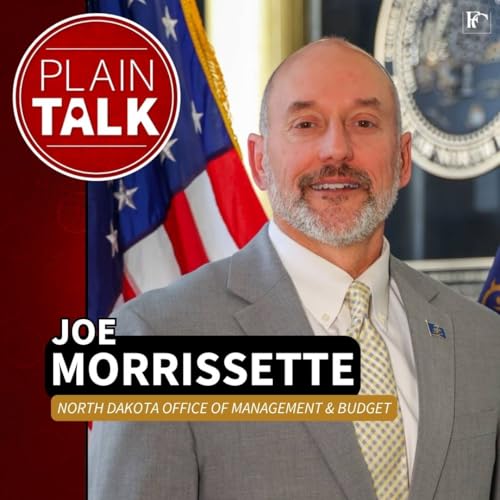
    How hard is it to do revenue forecasts for the State of North Dakota, which is heavily dependent on revenues from commodity-driven industries like agriculture and energy? On this Plain Talk, Joe Morrissette, director of the Office of Management and Budget, gave one example: For 1$ that oil prices move, there's a roughly $36 million swing in state revenues.

    The war in Iran hasn't just driven oil prices $1 over projects. It's as much as $30 over, with no real certainty on where it will level off. "It's a significant significant swing in the state's financial picture in just a short time," Morrissette said.

    Still, all that additional revenue isn't expected to change production activity -- oil and gas producers aren't going to invest heavily in chasing a price that's probably not going to be sustained -- and doesn't change the state's budget picture all that much.

    "Even though we've got this inflow of oil tax revenues, it's really not changing significantly," he said. "Changing a little bit, but not significantly changing our budget challenge in the next biennium."

    Also on this episode, co-host Chad Oban and I react to all the controversy stemming from the North Dakota Republican Party's divisive and dismal state convention. The populist activists who now control the party are attacking incumbents for not attending the convention, yet many of them have skipped past conventions, and even campaigned against convention-endorsed candidates.

    Former lawmaker Rick Becker, for instance, participate in a press conference that was critical of incumbents for skipping the convention. Yet Becker skipped the 2026 vacation to take a vacation in Belize. In 2024, he campaigned against convention-endorsed candidate Alex Balazs for the U.S. House. In 2022, he campaigned against convention-endorsed Sen. John Hoeven in the U.S. Senate race.

    Plus, we react to some listener feedback, including one message which argues that Democrats ought to use the votes some Republican lawmakers cast against approving a school meals bill against them this cycle.

    If you want to participate in Plain Talk, just give us a call or text at 701-587-3141. It's super easy — leave your message, tell us your name and where you're from, and we might feature it on an upcoming episode. To subscribe to Plain Talk, search for the show wherever you get your podcasts or use one of the links below.

    Apple Podcasts | Spotify | YouTube | Pocket Casts | Episode Archive

    Más Menos
    1 h y 5 m
  • 690: 'Life's good in North Dakota'
    Mar 27 2026

    In the world of journalism, it's a truth that we can tend to focus on the negative. "Safe airplane landings aren't news," the adage goes.

    There's a reason for that. The proverbial airplanes are supposed to land safely. When they don't, and when people and property are hurt, we want to know what happened, and why it happened, and who is responsible. Sometimes, though, it behooves us to talk about the planes that land safely.

    When we report about economic development programs, we tend to focus on the fails. The marginal companies that gobbled up lots of public dollars and then went out of business, or got preferential treatment because they were owned and operated by someone related to someone else in a position of power in government.

    We need to tell those stories, but sometimes we also need to tell the success stories.

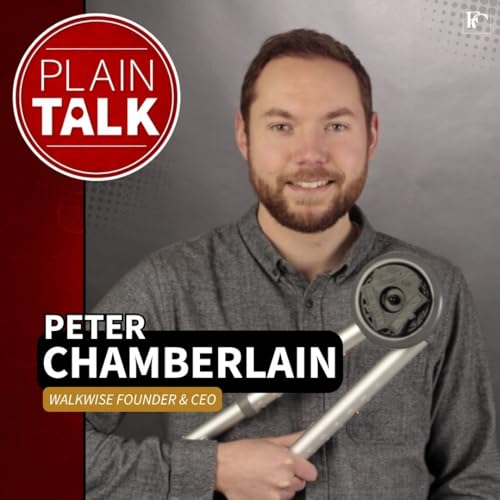
    Peter Chamberlain is the founder and CEO of WalkWise, a North Dakota-based startup that sells a product that attaches to the walkers and canes of the elderly and infirm, allowing family and medical professionals to track activity, monitor movement, and be alerted when there might be a problem.

    Chamberlain doesn't have any strong roots in North Dakota. What drew his business and his family here was the opportunities made available by the state's economic development efforts. "This is the world's first and only smart mobility aid attachment," Chamberlain told us of his product on this episode of Plain Talk.

    "I feel very confident in saying I would not be here today, WalkWise would not exist today, if it weren't for the programs that exist in North Dakota, that frankly don't exist other places," he added. "Life's good in North Dakota."

    It's not just the direct investment and support he's received through endeavors like the Legacy Fund's in-state investment program. Chamberlain also credits "ecosystem builders" working in the Commerce Department and elsewhere who helped him connect with people and other businesses, including a manufacturer in tiny Cayuga, North Dakota, where the WorkWise product is made.

    He emphasized how much he likes working with a local manufacturer because he can physically visit the plant and the owners are "invested personally" in the product's success.

    Also on this episode, me and co-host Chad Oban talk about the upcoming NDGOP convention, the party's efforts to keep me from attending to report on the event, and whether political parties ought to continue to have special access to the state ballot.

    If you want to participate in Plain Talk, just give us a call or text at 701-587-3141. It's super easy — leave your message, tell us your name and where you're from, and we might feature it on an upcoming episode. To subscribe to Plain Talk, search for the show wherever you get your podcasts or use one of the links below.

    Apple Podcasts | Spotify | YouTube | Pocket Casts | Episode Archive

    Más Menos
    59 m
Todavía no hay opiniones