Episodios

  • What Great Leaders Do Differently Under Extreme Pressure
    Mar 31 2026

    Leaders love to frame AI transformation as a technology problem. It’s cleaner that way—tools, roadmaps, implementation plans. But what Anouk Brack lays out here is less flattering and far more consequential: this is a biological stress test, and most leadership teams are quietly failing it.

    Under constant uncertainty and pressure, your nervous system defaults to survival mode. That means the very capabilities you’re counting on—strategic thinking, self-reflection, sound judgment—start to degrade. Not dramatically. Subtly. You keep moving, keep deciding, keep “leading.” But you’re doing it with a shrinking field of view and a growing pile of bad bets.

    Related Links:

    • Join the People Managing People Community
    • Subscribe to the newsletter to get our latest articles and podcasts
    • Connect with Anouk:
      • LinkedIn
      • Leadership Embodiment
      • AnoukA Training

    Support the show

    Más Menos
    47 m
  • Corporate Retail Therapy: Why More AI Tools Won’t Help
    Mar 24 2026

    Your leadership team doesn’t have a strategy problem—it has an execution problem disguised as one. The offsite went great, the vision is crisp, and the slides look expensive. But somewhere between “bold initiative” and “Tuesday morning,” nobody translated strategy into what people should actually do. That gap? That’s where most organizations quietly stall.

    Tom Healy argues that L&D is the missing link leaders keep ignoring. Not because it’s ineffective—but because it’s unglamorous. CEOs will talk endlessly about growth, retention, and performance, yet fail to connect those outcomes to how people are trained, onboarded, and supported day-to-day. Meanwhile, AI is making content creation trivial. The real work—the uncomfortable, strategic clarity about culture, behavior, and expectations—is still being skipped.

    Related Links:

    • Join the People Managing People Community
    • Subscribe to the newsletter to get our latest articles and podcasts
    • Connect with Tom:
      • LinkedIn
      • PeopleOps360
      • mentumm

    Support the show

    Más Menos
    48 m
  • AI Can Make a Good Job Feel Too Small
    Mar 17 2026

    When turnover is low, leadership loves to call it stability. Jay Caldwell makes the more uncomfortable point: sometimes it is just fear with better optics. In this conversation, he and David unpack why “quiet staying” can become a serious organizational liability in an AI era—especially when people are still hitting goals, still showing up, and still slowly draining the place of experimentation, risk-taking, and fresh thinking.

    They also get into the deeper workforce consequences of AI adoption: why broad rollouts often create anxiety instead of momentum, why the most AI-engaged employees may be the most likely to leave, and why cutting entry-level hiring might solve a short-term budget problem while quietly wrecking your future talent pipeline.

    Related Links:

    • Join the People Managing People Community
    • Subscribe to the newsletter to get our latest articles and podcasts
    • Check out this episode’s sponsor: Intuit QuickBooks Payroll
    • Connect with Jay:
      • LinkedIn
      • ADP

    Support the show

    Más Menos
    41 m
  • Why Expertise Is Becoming Cheap—and What Leaders Must Build Instead
    Mar 10 2026

    If your organization looks successful on paper but feels strangely tense in practice, there’s a good chance fear—not excellence—is quietly running the show. In this episode, David Rice talks with Brave Together author Chris Deaver about how fear disguises itself in high-performing workplaces: polished presentations, perfect metrics, and meetings where nobody laughs—and nobody challenges anything either.

    Their conversation explores what happens when organizations reward superhero behavior, visibility over collaboration, and certainty over curiosity. The result is brittle excellence and teams that quietly fracture under pressure. The alternative, Deaver argues, is building cultures of co-creation—where leaders shift from being the smartest person in the room to becoming integrators, connectors, and context builders. In a world reshaped by AI and constant disruption, the real advantage isn’t information anymore—it’s shared wisdom, deep empathy, and the courage to build together.

    Related Links:

    • Join the People Managing People Community
    • Subscribe to the newsletter to get our latest articles and podcasts
    • Connect with Chris:
      • LinkedIn
      • Lead with a Question podcast
    • Check out Chris’ book: Brave Together

    Support the show

    Más Menos
    57 m
  • Why Every Org Should Be Investing in Predictive AI
    Mar 3 2026

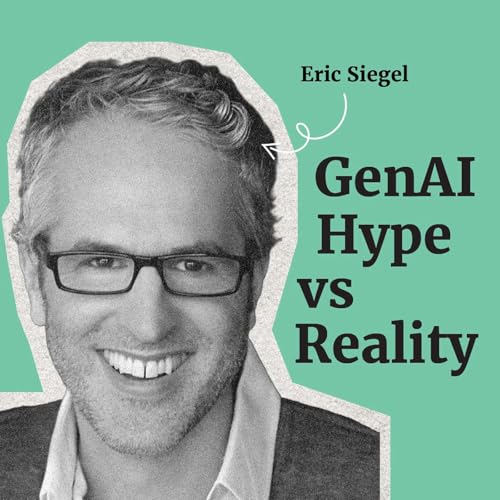
    Businesses are pouring millions into generative AI—chatbots, copilots, “agents”—while quietly ignoring the other half of the AI stack that’s been delivering measurable value for decades. Predictive AI doesn’t write poetry. It predicts who’s going to churn, which transaction is fraud, and which customer is worth contacting. It calculates probabilities and helps you act on them at scale. Not glamorous. Just effective.

    In this conversation, Eric Siegel—author of The AI Playbook and founder of Machine Learning Week—makes a subversive claim: most organizations should be investing at least as much in predictive AI as generative AI. The problem isn’t the math. It’s the gap between tech and business. Companies celebrate models as value. But the model isn’t the value. Acting on predictions is.

    Related Links:

    • Join the People Managing People Community
    • Subscribe to the newsletter to get our latest articles and podcasts
    • Check out this episode’s sponsor: Deel
    • Connect with Eric:
      • LinkedIn
      • Gooder AI
    • Check out Eric’s book: The AI Playbook

    Support the show

    Más Menos
    34 m
  • Why Mindset Beats Skill in AI Transformation
    Feb 24 2026

    You were told AI would clear your calendar. Instead, you’re answering 800 chats a day and wondering what, exactly, you accomplished. Productivity is up. So is the volume. You 10x your output and somehow inherit 10x the work. Welcome to the hamster wheel.

    In this episode, Eliza Jackson, COO at ButcherBox, and I unpack the real transformation behind AI at work. It’s not about learning a new tool. It’s about unlearning how you work. It’s about rethinking what you own versus what you delegate. And it’s about building the kind of resilience and mindset that don’t show up on a résumé—but determine whether your team can survive what’s coming.

    Related Links:

    • Join the People Managing People Community
    • Subscribe to the newsletter to get our latest articles and podcasts
    • Connect with Eliza on LinkedIn
    • Check out ButcherBox

    Support the show

    Más Menos
    45 m
  • Why AI Power Users Will Outpace Everyone Else
    Feb 17 2026

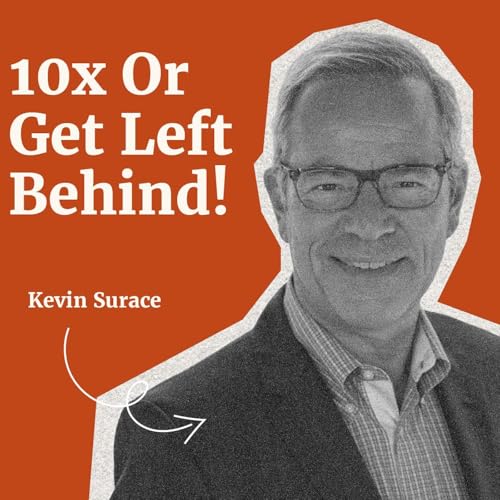
    Most employees are using about 1% of what AI can actually do. Not because they’re lazy. Not because they lack access. But because no one has shown them how to think with it. Meanwhile, somewhere in Silicon Valley, a 23-year-old is running a startup like they’ve got 28 PhDs sitting beside them—for a penny a minute. That gap isn’t theoretical. It’s operational. And it’s widening by the hour.

    In this conversation, Kevin Surace and I dig into what that gap really means—for your productivity, your profession, and your relevance. From three-paragraph prompts to million-dollar consulting projects replicated in minutes, we explore why this wave looks familiar (desktop computers, the internet, Excel) and why it’s moving faster than all of them. Resistance isn’t noble. It’s career-limiting.

    Related Links:

    • Join the People Managing People Community
    • Subscribe to the newsletter to get our latest articles and podcasts
    • Check out this episode’s sponsor: Deel
    • Connect with Kevin on LinkedIn
    • Check out Kevin’s website and Appvance.ai

    Support the show

    Más Menos
    41 m
  • What We’re Getting Wrong About AI and Productivity
    Feb 10 2026

    So yeah—your dashboards look great. Your team’s shipping faster, summarizing more, “getting leverage” with AI… and all the while you might be quietly trading away the one asset you can’t buy back on a subscription plan: human judgment.

    In this episode, I’m joined by Dr. Vivienne Ming—neuroscientist, entrepreneur, and an “AI realist” who has zero patience for utopian hype or Skynet fan fiction. Vivienne lays out a clean fork in the road: cognitive automation (AI does the thinking for you) vs. cognitive augmentation (AI makes you think better—often by making the work harder). If your AI strategy is mostly about convenience, this is your gentle-ish warning that convenience is not a strategy. It’s a sedative.

    Related Links:

    • Join the People Managing People Community
    • Subscribe to the newsletter to get our latest articles and podcasts
    • Connect with Vivienne on LinkedIn

    Support the show

    Más Menos
    56 m