Mongabay Newscast Podcast Por Mongabay.com arte de portada

Mongabay Newscast

Mongabay Newscast

De: Mongabay.com
Escúchala gratis

Mongabay's award-winning podcast features inspiring scientists, authors, journalists and activists discussing global environmental issues from climate change to biodiversity, rainforests, wildlife conservation, animal behavior, marine biology and more.© 2025 Ciencia Ciencias Biológicas Historia Natural Naturaleza y Ecología
Episodios
  • The 'lonely conservationist' advocating for better care of workers
    Apr 7 2026

    Jessie Panazzolo was given a stuffed gorilla when she was 3, and from then on, she always wanted to be a conservationist. But a reasonable career track of being gainfully employed or on a livable wage almost doesn't exist in the sector, she explains to me this week on the Mongabay Newscast. She details the dwindling career prospects, the grueling conditions conservationists must endure, and the mental toll they're taking on themselves.

    Following Jeremy Hance's reporting on the mental health crisis afflicting conservationists, I contacted Panazzolo to gain more insight into her journey in the conservation sector and how she came to lead a community of like-minded professionals who had heartbreaking stories about pursuing their passions.

    Panazzolo has been fired for being sick, twice. And had trees thrown at her by orangutans. But these are far from the only struggles she and other conservationists have faced.

    "I've been chased by tigers or have orangutans rip trees out of the ground and chucked in my direction. But all of these are seen as like not normal risks that you'd put in risk assessments."

    She founded The Lonely Conservationists and Earth Carer Care to provide resources to conservationists of all walks of life and to offer workshops to conservation NGOs on improving working conditions and caring for their employees.

    "I wanted to make sure that there was light shed on a range of struggles faced in the conservation industry and give more weight to the need to start to address these. And ever since then, I've been running workshops for NGOs and for teams … to help their teams to look after themselves and each other and build resilience."

    Please take a minute to let us know what you think of our podcast, here.

    Mike DiGirolamo is the host & producer for the Mongabay Newscast based in Sydney. Find him on LinkedIn and Bluesky.

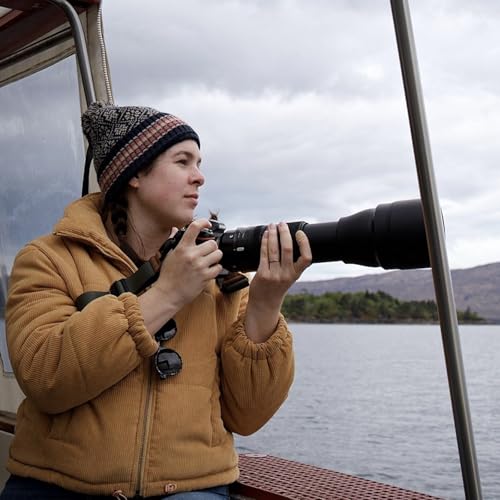
    Image Credit: Jessie Panazzolo. Image courtesy of Jessie Panazzolo.

    —-

    Timecodes

    (00:00) The 'unfair' job of conservation

    (13:49) Creating a community for conservation workers

    (18:39) Not all NGOs are on board

    (25:22) How conservation has changed

    (36:52) Fighting for nature in a world working against it

    Más Menos
    46 m
  • The conservation sector must speak truth to power, says political ecologist
    Mar 31 2026

    The people and policies that control how humans treat the natural world are increasingly dominated by a small class of elite political entities and corporations, argues our guest, political ecologist Bram Buscher at Wageningen University in the Netherlands, on this week's Newscast. This power, he says, is concentrated on platforms that have no allegiance to fact or truth, but rather serve only what increases their bottom line. Understanding this power dynamic and speaking truth to it is essential for the environmental movement to succeed.

    "If you keep on doing the same kind of things and not take the root causes, the root structural forms of power into account, you may have nice terms like nature-based solutions, ecosystem services, natural capital, but they don't actually challenge the power structures to change," he says.

    That structure he refers to as "platform capitalism." Tasks humans used to do through various options or pathways are now gate-kept by tech companies. These companies have monopolized these platforms, including social media, generative artificial intelligence, and search engines that prioritize data collection over sincere citizen engagement. This makes it difficult for the environmental movement's message to find an open audience. In some cases, people cannot tell the difference between what is real and what is not anymore.

    Buscher has written his thoughts in his book The Truth About Nature: Environmentalism in the Era of Post-Truth Politics and Platform Capitalism, which explains why "speaking facts to power" does not fundamentally change the policies currently failing the environment. Speaking truth to power, Buscher argues, is the only way to truly address the root causes of environmental destruction.

    "Unless we understand how power works … also authoritarian power … we can't go beyond it and or speak truth to it. To do something deliberately and consciously different."

    Please take a minute to let us know what you think of our podcast, here.

    Banner image: Wallace's Passage between Gam and Waigeo islands in Raja Ampat, Indonesia. Image by Rhett A. Butler/Mongabay.

    —-

    Timecodes

    (00:00) What is political ecology?

    (12:31) Why conservation is inherently political

    (17:03) What is 'speaking truth to power'?

    (29:35) Understanding 'platform capitalism'

    (42:02) How to speak truth to power

    (53:24) Convivial conservation

    Más Menos
    1 h y 1 m
  • A year after the shuttering of USAID conservation projects fight to stay afloat
    Mar 24 2026

    When then-U.S. president John F . Kennedy created the United States Agency for International Development in 1961, it was meant primarily to administer health and food aid around the world. In the decades since, USAID expanded to become one of the world's largest financial contributors to conservation, providing nearly $400 million annually before the end of 2024.

    However, that money is now completely gone after the current president, Donald Trump, gutted and shut down the agency in one of his first acts upon returning to office in January 2025. Since then, an estimated 834,000 people have lost their lives as a result of the ending of health programs, two-thirds of them likely children, according to an analysis from Impact Counter. Much of the agency's health focus was on HIV/AIDS treatment and prevention.

    "Support for HIV/AIDS treatment, malaria control and other initiatives have saved an estimated 91 million lives just over the past 20 years," says environmental reporter Michelle Nijhuis.

    Nijhuis, who joins Mongabay's podcast this week, says it's a similar story on the conservation front, with projects around the world suddenly losing their main — and in many cases their only — source of funding.

    She notes that "$400 million [was] going toward really creative … successful conservation projects in some of the most endangered habitats in the world [that] were also stopped abruptly."

    The impact is being felt in places and communities that relied on this funding, such as Ethiopia, the Congo Basin, the Amazon and Indonesia. Also affected are many of the world's largest conservation NGOs, some of which received tens of millions of dollars from USAID annually. The long-term damage from this, Nijhuis says, is very difficult to measure.

    "Some of the effects we're already seeing, but some of the effects are going to be much slower to appear, much harder to measure," she says, "and in many ways we will not know what we've lost."

    Michell Nijhuis is also the author of the recent book Beloved Beasts: Fighting for Life in an Age of Extinction.

    Initiatives mentioned by Nijhuis:

    One Earth Partners

    Reimagining Conservation Project

    Please take a minute to let us know what you think of our podcast, here.

    Mike DiGirolamo is the host & producer for the Mongabay Newscast based in Sydney. Find him on LinkedIn and Bluesky.

    Image Credit: The WeMUNIZE program in Nigeria, significantly disrupted by aid cuts, used digital record keeping and community engagement to increase early childhood immunizations. Image by KC Nwakalor for USAID/Digital Development Communications via Flickr (CC BY 2.0).

    —-

    Timecodes

    (00:00) How USAID funded conservation

    (05:10) Human health and conservation fallout after USAID shuts down

    (13:52) Large NGOs feel the impact

    (21:39) 'We will not know what we lost'

    (31:45) How conservation groups are surviving

    (37:34) The bright spots

    Más Menos
    49 m
Todavía no hay opiniones