The Intercept Briefing Podcast Por The Intercept arte de portada

The Intercept Briefing

The Intercept Briefing

De: The Intercept
Escúchala gratis

Cut through the noise with The Intercept’s reporters as they tackle the most urgent issues of the moment. The Briefing is a weekly podcast delivering news, incisive political analysis and deep investigative reporting, hosted by The Intercept’s journalists and contributors including Jessica Washington, Akela Lacy, and Jordan Uhl.


Hosted on Acast. See acast.com/privacy for more information.

The Intercept
Ciencia Política Política y Gobierno
Episodios
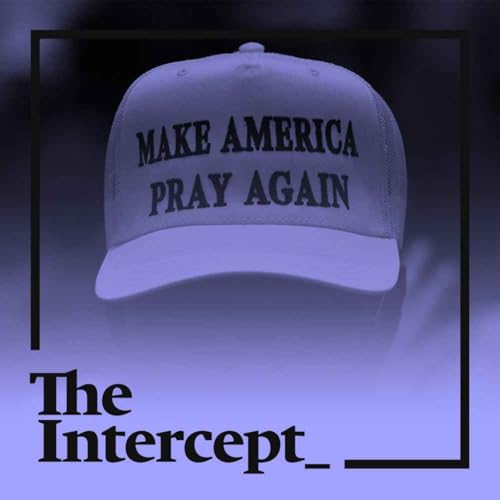
  • Trump’s Holy War Abroad and at Home
    Apr 3 2026

    Vote here to help The Intercept Briefing win its first Webby Award for best news and politics podcast.

    Show description: After more than a month into the U.S.–Israel conflict with Iran, President Donald Trump addressed the nation directly for the first time on Wednesday about why he dragged the country into an unprovoked illegal war. During his wide-ranging speech, Trump made numerous false claims, including repeatedly emphasizing the nuclear threat Iran posed.

    The reasons the Trump administration have given for partnering with Israel in this war have been varying and at times include religious undertones, especially from Defense Secretary Pete Hegseth. Hegseth regularly infuses Christian right rhetoric in how he speaks about the war on Iran and the military more broadly.

    During a recent religious service at the Pentagon, Hegseth prayed for God to give U.S. troops “wisdom in every decision, endurance for the trial ahead, unbreakable unity, and overwhelming violence of action against those who deserve no mercy.”

    “Hegseth belongs to a denomination called the Communion of Reformed Evangelical Churches. ... [He] believes that he is carrying out a spiritual and actual war to vanquish a Christian nation's enemies and protect and promote a Christian nation,” explains investigative journalist Sarah Posner, who covers the religious right, on The Intercept Briefing. “For Hegseth, biblical law is the only law he feels obligated to obey. The law of war, international law governing military conflicts, and human rights and civilian rights in war — he believes don't apply to him.”

    This week on the podcast, Posner speaks to host Jessica Washington about how various factions of the Christian right are shaping U.S. foreign and domestic policies.

    “I don't think the mainstream media has ever taken the Christian right seriously enough. They have consistently viewed Trump's relationship with white evangelicals as ranging from harmless to purely transactional. When in fact, I think that they're very deeply ideologically embedded with one another,” she says.

    Listen to the full conversation of The Intercept Briefing on Apple Podcasts, Spotify, YouTube, or wherever you listen.

    Keep our investigations free and fearless at theintercept.com/join.

    Hosted on Acast. See acast.com/privacy for more information.

    Más Menos
    40 m
  • Protesting the Smash-and-Grab Presidency With Nikhil Pal Singh
    Mar 27 2026
    Donald Trump’s second term has been broadly defined by an overwhelming sense of chaos. Every week the U.S. finds itself in a new crisis of the president’s making. The war in Iran and the broader Middle East is stretching into its fourth week, as the administration prepares to send thousands of troops to the region for a possible ground invasion. The U.S. oil blockade on Cuba has plunged the country deeper into a humanitarian crisis. The Department of Homeland Security sent ICE to airports across the country on Monday to allegedly assist TSA agents who have gone without pay due to a partial government shutdown over congressional efforts to apply the most minimal of reforms to ICE. Meanwhile, Trump’s sons are backing a new drone company vying for a Pentagon contract as the president and his family have amassed about $4 billion in wealth this term, according to the Wall Street Journal. “It’s a constant stream of violence, corruption, spectacle,” Nikhil Pal Singh tells The Intercept Briefing. “They smash, grab, move on. But I think now they've actually broken something.” The professor of social and cultural analysis at New York University and the author of several books, including “Race and America’s Long War” joins host Akela Lacy in a conversation about protests and movement-building in the latest Trump era.Trump “said the real enemy — the real threat — was within. He reversed the Bush priority, which said, we fight the terrorists over there so we don't have to fight them at home. And instead said, no, we actually have to bring the fight home. And he brought the fight home,” says Singh. “The idea there then also is that Americans themselves — that is us — we need to be governed violently first and foremost.”“What we saw in Minneapolis and in Chicago and other places is almost like a really spontaneous emergence of that civic energy where people are basically like, ‘No, this is not OK in my city,’” says Singh. With the upcoming nationwide No Kings protests on Saturday, Lacy brings up the challenges of protesting under the second iteration of the Trump administration, and whether it's fair to question the efficacy of protests at a time when they're being met with paramilitary forces.“We've lived through a period where the protests against the war in Gaza were pretty brutally suppressed by the Democratic Party and by the very institutions that the Trump administration is trying to destroy,” notes Singh. For there to be long-term meaningful change during this increasingly hostile environment to dissent or opposition, big alliances are needed, including with parts of the Trump coalition, he says. “Those kinds of cross-class alliances that cross the parties that are oriented around what we might call left economic populist politics and anti-war politics are going to have to be built.”Listen to the full conversation of The Intercept Briefing on Apple Podcasts, Spotify, YouTube, or wherever you listen.Keep our investigations free and fearless at theintercept.com/join. Hosted on Acast. See acast.com/privacy for more information.
    Más Menos
    43 m
  • “Liberate Their Bodies From Their Souls”: The Lies That Sell the Iran War
    Mar 20 2026

    From the White House to Iran’s former crown prince, proponents of the U.S.–Israel war on Iran sell it to the American people — and Iranians themselves — as a crusade for liberation. Instead, the regime remains in place as the death toll grows, environmental hazards proliferate, and civilian infrastructure is decimated.

    As if the destruction inside Iran itself wasn't enough, the war is starting to have serious ramifications for the global economy and, more to the point, expanding into neighboring countries.

    Lebanon, in particular, has come into Israel’s crosshairs, with increasing Israeli incursions and missile strikes deeper into the country. The number of dead there is approaching 1,000 with Israeli missiles razing entire apartment blocks in central Beirut this week and a ground invasion getting underway. More than 1 million Lebanese people have been displaced.

    “I think the Lebanese are suffering now, and there's not really anyone who's trying to save them,” says Afeef Nessouli, a Beirut-based journalist, speaking to The Intercept Briefing. “They know that, and they know that they're just political pawns who are always at the worst end of the stick along with Palestine.” He adds, “The fear is that [Israel] will occupy south of Litani [River] ... and just take people's homes, take their land, and never give it back, make settlements for their country.”

    “It's been really stunning to watch that so many people fall for this idea of ‘This is a human rights intervention’ — and yet it's accomplished through massive human rights violations,” says Ali Gharib, a senior editor at The Intercept. Commenting on Israel's strategy of making failed states out of its adversaries in the region, he notes, the Israelis “don't need [Reza] Pahlavi to work. They don't need him to go in there and become this democratic leader. They just need him to lead a movement that damages the regime enough to put Iran into some kind of fractured state or state failure where it's not a threat to Israel anymore.”

    “We've had in the last 20 to 25 years, especially since the Iraq War in 2003, a lobby pushing for regime change in Iran,” says Sanam Naraghi-Anderlini, a veteran peace strategist. “The Iraq version of regime change ended up being a catastrophe from a U.S. perspective, but actually from an Israeli perspective and from a Saudi perspective, and even from a UAE perspective, the decimation of Iraq has been a success because if Iraq had turned out to be a liberal democracy, it would've challenged Israel on the question of Palestine. It would've challenged Saudi Arabia on the question of Islam and what is Islam.”

    It’s a region in upheaval, and at the center are Israeli and American fictions about liberatory bombs.

    “I've been on podcasts with Israeli journalists where they're telling me the Iranians wanted us to go in and liberate them,” says Naraghi-Anderlini, “And my response to them is: Liberate their bodies from their souls?”

    Listen to the full conversation of The Intercept Briefing on Apple Podcasts, Spotify, YouTube, or wherever you listen.

    Keep our investigations free and fearless at theintercept.com/join.

    Hosted on Acast. See acast.com/privacy for more information.

    Más Menos
    47 m
Todas las estrellas
Más relevante
Excellent information and guests with an unbroken moral compass. Calm consideration of ideas - versus the hysterical delivery of some that is just too much for my nervous system.

Excellent

Se ha producido un error. Vuelve a intentarlo dentro de unos minutos.