Episodios

  • Rachel Delhaise, Chief Sustainability Officer: Convex: Insurance’s critical role in global resilience (402)
    Apr 12 2026

    Introduction

    In this episode, Matthew Grant speaks with Rachel Delhaise, Chief Sustainability Officer at Convex, about what climate sustainability really looks like inside a modern insurance business.

    While attention may have shifted elsewhere, the underlying challenges have not gone away. Rachel offers a clear view of how insurers are continuing to respond through underwriting decisions, risk modelling and long-term investment thinking.

    Rachel joined Convex in the early stages of the business to build its sustainability approach from the ground up. Her role spans three core areas: identifying opportunities in the transition, strengthening how climate risk is understood and managed and supporting cutting-edge carbon science research. Together, these reflect a broader shift in how insurers are positioning themselves as active participants in enabling change.

    The conversation explores how insurance is supporting emerging technologies such as carbon capture and storage, where underwriting plays a critical role in making projects viable. Rachel also shares how the industry is approaching increasingly complex risks, from wildfire to flood, in a world where historical data is no longer a reliable guide.

    Drawing on her experience across underwriting, investment and industry collaboration, she explains why the fundamentals of risk still matter, even as new tools and models emerge. She also highlights the growing influence of insurance thinking across the wider financial system, as banks and investors begin to grapple with physical climate risk in more sophisticated ways.

    At the heart of the discussion is a simple but important idea: insurance has a unique ability to enable progress, but only if it is brought into the conversation early and used intelligently.

    In this conversation, Rachel shares:

    • Why sustainability remains a core strategic priority, even as public attention fluctuates
    • How insurers are supporting the transition through underwriting and investment, not just policy statements
    • What it takes to insure emerging areas like carbon capture and storage
    • Why pricing, rather than capacity, is often the real constraint in renewable energy insurance
    • How insurers are adapting to climate risk with limited historical data
    • Why understanding exposure and vulnerability is still fundamental to modelling future risk
    • What the protection gap reveals about global resilience and economic stability
    • How insurance expertise is shaping how banks and investors assess climate risk
    • Why involving insurers earlier can significantly improve the success of large projects

    Rachel’s recommendations

    • Podcast: Fossil vs Future
    • Book: The Ministry for the Future by Kim Stanley Robinson

    If you like what you’re hearing, please leave us a review on whichever platform you use or contact Matthew Grant on LinkedIn.

    Sign up to the InsTech newsletter for a fresh view on the world every Wednesday morning.

    Más Menos
    28 m
  • Sasha Haco, CEO & Co-founder: Unitary: From black holes to bordereaux: building AI agents for insurance (401)
    Apr 5 2026

    In this episode, Robin Merttens speaks with Sasha Haco, CEO and Co-founder of Unitary, about how AI is being applied in practical, high-impact ways across insurance operations.

    Sasha’s route into the industry is far from typical. With a background in astrophysics and no prior experience in insurance, she set out to build something tangible using AI, focusing on real-world problems rather than theoretical ones.

    What began as a mission to make the internet safer has evolved into a fast-growing platform that automates some of the most manual and time-consuming processes in insurance. From bordereaux handling to claims and policy administration, the focus is on removing repetitive work without requiring insurers to overhaul their existing systems.

    Drawing on her experience building Unitary from the ground up, Sasha shares a clear and practical perspective on where AI is delivering value today, how insurers can get started quickly and what it takes to stand out in an increasingly competitive market.

    At the heart of the discussion is a simple idea: meaningful progress often starts with tackling the most overlooked and operationally painful tasks.

    In this conversation, Sasha shares:

    • Why coming from outside insurance can unlock new ways of solving entrenched problems
    • How virtual agents can replicate human workflows across legacy systems without integration
    • Where insurers are seeing the fastest returns from automation today
    • Why speed to ROI is becoming a defining factor in AI adoption
    • How trust and customer outcomes are emerging as key competitive advantages
    • What it takes to build and scale in a crowded AI landscape
    • Why the biggest barrier to automation is often mindset, not technology

    If you like what you’re hearing, please leave us a review on whichever platform you use or contact Robin Merttens on LinkedIn.

    Sign up to the InsTech newsletter for a fresh view on the world every Wednesday morning.

    Más Menos
    18 m
  • Partners' Chat: 400 episodes later: are we still human or just AI? (400)
    Mar 29 2026

    In this episode, Matthew Grant and Robin Merttens hit the 400-episode mark and ask a slightly uncomfortable question: after all these conversations, are we still human or just very convincing AI?

    What follows is a sharp, unscripted reflection on how the industry has evolved from early insurtech scepticism to today’s surge of enthusiasm around generative AI. But beneath the milestone moment is a more interesting story, how insurance has shifted from resisting technology to almost over-embracing it, and what happens next when the tools are no longer the problem.

    Drawing on years at the centre of the market’s innovation community, Matthew and Robin explore the move from experimentation to execution, why “grown-up AI” is now the real challenge and where genuine commercial value is starting to emerge.

    In this conversation, Matthew and Robin share:

    • Why the industry has gone from fighting technology to actively chasing it
    • What “grown-up AI” really means and why governance and orchestration now matter more than new tools
    • How underwriters and brokers are finally seeing immediate value from AI in their day-to-day work
    • The risk of being overwhelmed by point solutions and what happens without a coherent strategy
    • The two very different playbooks for building AI businesses and which one is gaining traction
    • Why revenue is arriving faster for startups and how that is reshaping investment dynamics
    • What is fuelling the current boom in MGAs and why now feels like a defining moment
    • The contrasting rise of younger founders and experienced operators launching their own ventures
    • Why much of the market is still writing familiar risks and what that says about true innovation
    • Whether insurers are losing their appetite for harder, more unusual risks
    • How community, curiosity and shared learning continue to underpin real progress in insurance
    • And why, despite everything, face-to-face conversations still matter more than ever

    If you like what you’re hearing, please leave us a review on whichever platform you use or contact Matthew Grant or Robin Merttens on LinkedIn.

    Más Menos
    23 m
  • Martha Dreiling, Co-founder & President: Reserv: Rethinking claims: from ‘boring but brilliant’ AI to real industry change (399)
    Mar 22 2026

    In this episode, Robin Merttens is joined by Martha Dreiling, Co-founder and President of Reserv, to explore how AI is actually transforming claims, and why the biggest breakthroughs are happening in places most people overlook.

    With a background spanning FinTech, InsurTech and risk analytics, Martha brings a practical perspective on how data and technology can improve decision-making, not just automate existing processes. At Reserv, she’s helping build a claims model that combines operational efficiency with quality, while challenging long-standing assumptions about how claims should be handled and paid for.

    In this conversation, Martha shares:

    • Why the most valuable AI in claims is “boring but brilliant”, not flashy
    • How continuous monitoring is quietly improving claims outcomes at scale
    • Why efficiency alone is no longer enough, and what it takes to deliver quality alongside it
    • How claims data is becoming a critical input into underwriting and pricing decisions
    • The challenge of legacy systems and why data fragmentation still holds the industry back
    • What real AI adoption looks like, and why execution is starting to outpace strategy
    • How AI is exposing misaligned incentives in traditional time-and-expense TPA models
    • Why insurers need to rethink how they pay for claims services in an AI-driven world
    • The shift from technology transformation to human and workflow transformation
    • How reducing administrative burden can refocus claims handlers on empathy and judgement
    • Why better claims operations ultimately matter for affordability and customer outcomes

    If you like what you’re hearing, please leave us a review on whichever platform you use or contact Robin Merttens on LinkedIn.

    Sign up to the InsTech newsletter for a fresh view on the world every Wednesday morning.

    Más Menos
    28 m
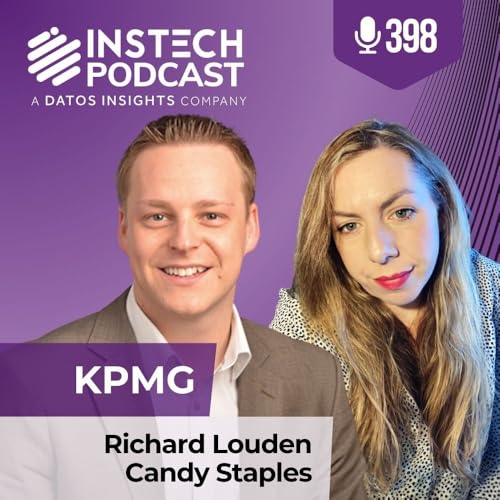
  • Candy Staples & Richard Louden: KPMG: The tax playbook for insurance and insurtech (398)
    Mar 15 2026

    In this episode, Matthew Grant is joined by Richard Louden, Partner (Indirect Tax Financial Services) at KPMG, and Candy Staples, Director (Innovation Reliefs and Incentives), to explore a topic that many insurance and InsurTech businesses underestimate until it becomes expensive: tax.

    While tax is often viewed as a back-office concern for finance teams, it can have a significant strategic impact on how insurance businesses operate, scale and ultimately exit. From the complexities of VAT and Insurance Premium Tax (IPT) to the opportunities created by R&D tax incentives and the Patent Box regime, the conversation highlights both the risks of getting tax wrong and the upside of approaching it proactively.

    Richard brings more than two decades of experience advising insurers and intermediaries on indirect tax. He explains why VAT behaves differently in insurance compared with most industries, and why misunderstandings around exemptions, commissions and international services regularly create costly problems for growing businesses.

    Candy focuses on the more positive side of the equation: how innovation incentives can help companies recover the cost of developing new technology. For InsurTech firms investing heavily in product development, these incentives can represent a meaningful source of funding and cash flow if captured correctly.

    At the heart of the discussion is a simple message: tax is not just about compliance. Managed properly, it can influence profitability, operational efficiency and investment decisions across the insurance value chain.

    In this conversation, Richard and Candy share:

    • Why VAT behaves differently in insurance and why exempt supplies can quietly increase operating costs
    • The common misconception that commission structures automatically determine VAT treatment
    • How the reverse charge mechanism on overseas services often creates unexpected liabilities
    • Why start-ups have a strategic advantage when designing tax processes from day one
    • How R&D tax credits can return meaningful cash to companies investing in innovation
    • Why capturing technical challenges and development work early is critical for successful claims
    • How the Patent Box regime can reduce corporation tax on profits linked to patented technology
    • Why tax incentives should be considered alongside broader decisions about where companies locate teams, IP and development hubs

    KPMG are also hosting post-ITI drinks in London with Insurtech UK to navigate the headwinds of today's economic and regulatory challenges facing insurers and insurtechs alike over cocktails, food and conversation. Click here to register your interest: https://insurtechuk.org/events/0319-one-last-stop-from-headwinds-to-happy-hour/

    Additionally KPMG Actuarial have released a white paper on Smarter Pricing, Smarter Insurance. How integrated data, AI and governance transform underwriting and growth. Download to read here: https://m.marketing.kpmg.uk/webApp/Smarter_pricing_Smarter_insurance_whitepaper

    If you like what you’re hearing, please leave us a review on whichever platform you use or contact Matthew Grant on LinkedIn.

    Sign up to the InsTech newsletter for a fresh view on the world every Wednesday morning.

    Más Menos
    32 m
  • Portfolio underwriting in 2026 (397)
    Mar 8 2026

    In this episode, Robin Merttens moderates a panel with Tessa Wardle of QBE, Emily Stanford of Gallagher and Jonathan Spry of Envelop Risk, recorded live at the InsTech London event Some lead, others follow: Smart underwriting and broking strategies for 2026.

    As algorithmic underwriting and portfolio solutions reshape the London Market, insurers, brokers and reinsurers are rethinking how risk is placed, followed and managed at scale. Facilities are multiplying, digital trading models are emerging and data is becoming the foundation of increasingly automated underwriting decisions.

    Drawing on perspectives from underwriting, broking and reinsurance, the panel explores what portfolio underwriting really looks like in practice today. They discuss how facilities are evolving, why broker strategies are changing and what it takes to run sustainable portfolio capacity in a market that is becoming more digital and more data-driven.

    At the centre of the discussion is a growing tension between ambition and infrastructure. The market wants faster placement, smarter capital allocation and more algorithmic decision-making, yet many firms are still wrestling with fragmented data, legacy systems and inconsistent standards.

    In this conversation, Tessa, Emily and Jonathan share:

    • Why portfolio solutions have become one of the fastest-growing models in the London Market
    • How brokers are evolving their placement strategies as facilities and pre-placed capacity expand
    • Why selecting the right portfolio leader is critical for long-term facility performance
    • How improving data quality is becoming a prerequisite for digital trading and algorithmic underwriting
    • Why incentives across brokers, carriers and reinsurers matter when it comes to better data
    • How AI is reshaping risk, creating new liability exposures and changing how insurers analyse emerging threats
    • Why capital providers are increasingly demanding greater transparency and portfolio insight

    If you like what you’re hearing, please leave us a review on whichever platform you use or contact Robin Merttens on LinkedIn.

    Sign up to the InsTech newsletter for a fresh view on the world every Wednesday morning.

    Más Menos
    23 m
  • Nicola Turner & Alex Ley: Scrub AI: Rethinking Build vs Buy in insurance (396)
    Mar 1 2026

    In this episode, Matthew Grant sits down with Nicola Turner and Alex Ley, co-founders of Scrub AI, to explore one of the most pressing strategic questions facing insurers today: Build vs Buy in the age of generative AI.

    Five years into building an AI-driven data cleansing platform for carriers and brokers, Nicola and Alex have seen the market shift from scepticism to urgency. Boardrooms are now asking how AI is being embedded into underwriting workflows, and whether those capabilities should be developed internally or sourced from specialists.

    Drawing on their experience building deterministic AI models for exposure data and catastrophe modelling, they offer a grounded perspective on what works, what breaks and where the real risks sit.

    At the heart of the discussion is a simple truth: getting to 80% is easy. Getting the final 20% right is where strategy, domain expertise and long-term thinking matter most.

    In this conversation, Nicola and Alex share:

    • Why Build vs Buy has intensified as generative AI moves from experimentation to executive priority
    • How investor pressure and board-level scrutiny are shaping AI strategy inside large carriers
    • Why generative AI can accelerate development but does not remove the complexity of insurance data
    • The danger of plausible but wrong outputs in exposure management and catastrophe modelling
    • Why deterministic AI still plays a critical role in delivering consistent, renewal-ready data
    • How inconsistent data cleaning can distort underwriting decisions and renewal pricing
    • The hidden cost of technical debt when insurers attempt to build internally
    • Why maintaining and iterating ai tools is often harder than building the first version

    If you like what you’re hearing, please leave us a review on whichever platform you use or contact Matthew Grant on LinkedIn.

    Sign up to the InsTech newsletter for a fresh view on the world every Wednesday morning.

    Más Menos
    32 m
  • Frank Perkins, Founder & CEO: inari: Building the modern MGA (395)
    Feb 22 2026

    In this episode, Robin Merttens sits down with Frank Perkins, CEO and Co-founder of inari, to explore what it really takes to build and scale a modern MGA in 2026.

    From founding an insurance business himself to leading a technology company serving specialist MGAs across Europe, Frank brings a rare dual perspective. He understands both the pressure of getting premium through the door and the responsibility of building systems that underwriters actually want to use.

    As private equity capital accelerates into the sector and niche, digital-first MGAs proliferate across continental Europe, the conversation turns to speed, integration and the quiet evolution of the underwriting workbench.

    In this conversation, Frank shares:

    • Why technology literacy is now firmly in the hands of business users, not just IT departments
    • How the rise of highly specialised MGAs is reshaping what underwriting platforms need to deliver
    • Why “rip and replace” transformation programmes are giving way to orchestration and coexistence
    • How AI is materially accelerating integrations and onboarding, cutting rollout times from months to days
    • The difference between generic AI tooling and insurance-specific intelligence
    • Why speed of execution is becoming a defining competitive advantage
    • What a tightening market cycle will mean for operational efficiency
    • Why continental Europe may offer the next major growth wave for MGAs
    • How culture and domain expertise can matter as much as code in a crowded market

    If you like what you’re hearing, please leave us a review on whichever platform you use or contact Robin Merttens on LinkedIn.

    Sign up to the InsTech newsletter for a fresh view on the world every Wednesday morning.

    Más Menos
    22 m