Episodios

  • Tokenizing the Barrel: Rewiring Oil Markets from Molecule to Money
    Apr 15 2026

    The global oil market still runs on a horribly fragmented system where physical barrels, paper contracts, and financial settlement operate in parallel but disconnected layers. Transactions are dependent on manual processes, emails, PDFs, and handshake relationships built over decades. For a trillion dollar industry, the core trading infrastructure remains slow, opaque, and largely inaccessible for all but the largest players.

    This creates real operational and financial constraints. Settlement delays can stretch to 90 days, tying up working capital and exposing companies to liquidity risk. Market access is hobbled by lengthy know-your-customer processes and high barriers to entry.

    Here in the spring of 2026, with the Strait of Hormuz blocked, these inefficiencies add up to systemic challenges that will make eventual recovery much harder than it needs to be.

    It's time for a new approach, one that digitizes the physical barrel itself. By tokenizing crude oil into smaller, tradable units, markets can accelerate settlement, improve transparency, and broaden participation. Imagine a token that represents a real, physical quantity of oil, enabling traceability across the supply chain and creating a new layer of market visibility. This also opens the door to fractional ownership and new forms of capital access that were previously unavailable.

    In this episode, I am speaking with Baron Lamarre, co-founder of INDEX, the International Digital Exchange, about how tokenization could fundamentally reshape oil trading. We explore the inefficiencies of today's system, the mechanics of turning barrels into digital assets, and why this shift could materially improve cash flow, transparency, and market access across the energy sector.

    👤 About The Guest

    Baron Lamarre is a petroleum economist and energy trading professional with more than 20 years of experience in the oil and gas industry. He began his career at Petronas, where he worked across operations, logistics, and trading, managing products such as fuel oil, LPG, gasoline, crude oil, and naphtha.

    Over a 15-year tenure, he handled large-scale international trading portfolios, selling millions of barrels per month to major global buyers.

    Baron is now co-founder of INDEX, the International Digital Exchange, where he is focused on applying tokenization and blockchain technologies to modernize oil trading infrastructure.

    🌐 website: https://indexlitro.com

    ☎️ Contact: emily@energentmedia.net

    ⚒️ Additional Tools & Resources

    🎬 Go backstage and check out my studio:

    https://geoffreycann.com/mystudio/

    🎓 Take my one day digital strategy training course for oil and gas:

    https://www.udemy.com/course/digital-oil-and-gas/?referralCode=0161D4D49AB75735A185

    🔗 Connect with Me

    🖥️ Blog series: https://digitaloilgas.substack.com/

    🎧 Podcast: https://geoffreycann.com/broadcast/

    💼 LinkedIn: https://www.linkedin.com/in/advocate-digital-innovation-for-energy/

    🤬 X (formerly Twitter): https://x.com/geoffreycann

    🎤 Contact for Lectures and Keynotes

    I speak regularly on these and other topics. Contact me to book a brief call about your upcoming event needs:

    https://geoffreycann.com/contact/

    ⚠️ Disclaimer

    The views expressed in this podcast are my own and do not constitute professional advice.

    Más Menos
    40 m
  • How to Reduce Waste in Capital Projects: Using Execution Intelligence To Fix Broken Coordination
    Mar 25 2026
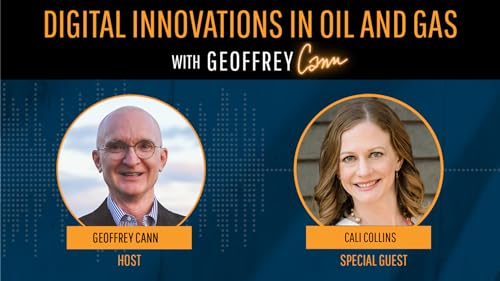
    Large-scale capital projects sit at the heart of the oil and gas industry, and across all infrastructure sectors (power, petrochemicals, rail, water, telecoms). These projects require tight coordination of people, equipment, and timelines, often under pressure to deliver quickly and safely. Despite heavy investment in planning tools and scheduling systems, the day-to-day reality remains fragmented, with teams working across disconnected systems and making decisions in isolation. The issue is not a shortage of data, but a lack of connected context. Teams make decisions that work locally, but cannot see the ripple effects across the broader project. When disruptions occur, such as missing materials or shifting priorities, organizations fall back on manual replanning, pulling experts together to work through scenarios. The result is familiar: delays, rework, misalignment, and a persistent focus on reacting to problems rather than anticipating them. A new approach is emerging that focuses on execution intelligence, not just planning. These systems sit across existing tools, capture real-time context, and use AI to recommend next steps while keeping humans in control. Instead of replacing systems like P6, they enhance them, helping teams understand what matters most today and how decisions impact the wider system. This allows experienced staff to apply judgment more effectively, while also enabling less experienced team members to make better decisions faster. In this episode, I am speaking with Cali Collins, Chief Product Officer at Optimality, about how fragmented decision-making slows down capital projects and why execution—not planning—is where projects succeed or fail. We explore how AI can surface hidden dependencies, improve decision quality, and help teams navigate complex trade-offs in real time. 👤 About The Guest Cali Collins is the Co-Founder and Chief Product Officer of Optimality, an AI-native decision infrastructure platform redefining how organizations structure, optimize, and scale decision-making in an era of overwhelming data and competing priorities. She is an experienced product leader with a background spanning AI infrastructure, knowledge systems, estimating, enterprise transformation, and large-scale capital project execution. Cali specializes in translating complex operational challenges into scalable product strategies, bridging business, technical architecture, and real-world execution across both startups and Fortune 50 environments. ⚒️ Additional Tools & Resources 🌐 Website: https://optimalitypro.com 💼 LinkedIN: https://www.linkedin.com/company/optimalitypro/ 📧 Email Cali: cali@optimalitypro.com 🎬 Go Backstage https://geoffreycann.com/mystudio/ 🎓 Take My one day course https://www.udemy.com/course/digital-oil-and-gas/?referralCode=0161D4D49AB75735A185 🔗 Connect with Me 🖥️ Blog series: https://digitaloilgas.substack.com/ 🎧 Podcast: https://geoffreycann.com/broadcast/ 💼 LinkedIn: https://www.linkedin.com/in/advocate-digital-innovation-for-energy/ 🤬 X (formerly Twitter): https://x.com/geoffreycann 🎤 Contact Me I speak regularly on these and other topics. Contact me to book a brief call about your upcoming event needs: https://geoffreycann.com/contact/ ⚠️ Disclaimer The views expressed in this podcast are my own and do not constitute professional advice.
    Más Menos
    30 m
  • The Carbon Credibility Crisis: We Need Trustworthy Carbon Data
    Mar 18 2026

    One thing I've learned from producing lots of videos is that you can't really trust with your own eyes what you see presented to you anymore. Green screens, video editing, and AI are so good now, and so inexpensive, that anyone can create compellingvideo content of scenes that didn't happen in real life.

    As a result, I'm now very skeptical of claims that companies make that they don't offer to back up. Consider the 'organic' chicken at the butcher shop. How do you really know that the chicken has led an exemplary life free from chemicals, pesticides, and growth hormones?

    Carbon emissions fall into this category. Carbon dioxide, the invisible by-product of engine output and cement making, has become the poster child for energy transition. Today, producers and (some) consumers are expected to not only reduce carbon emissions but account for them with surgical precision. Yet we need to face an uncomfortable fact: carbon data lacks credibility.

    It's assembled from fragmented systems, manually reported and manipulated, or derived from engineering models. It's no wonder that financial markets are skeptically treating carbon credits with such low valuations. Carbon accounting is a hot mess.

    ⚒️ Additional Tools & Resources

    🎬 Go backstage and check out my studio:

    https://geoffreycann.com/mystudio/

    🎓Take my one-day digital strategy training course for oil and gas:

    https://www.udemy.com/course/digital-oil-and-gas/?referralCode=0161D4D49AB75735A185

    🔗 Connect with Me

    📘Blog series: https://digitaloilgas.substack.com/

    🎧 Podcast: https://geoffreycann.com/broadcast/

    💼 LinkedIn: https://www.linkedin.com/in/advocate-digital-innovation-for-energy/

    🐦 X: https://x.com/geoffreycann

    🎤 Contact for Lectures and Keynotes

    I speak regularly on these and related topics. Contact me to book a brief call about your upcoming event needs.

    👉 https://geoffreycann.com/contact/

    ⚠️ Disclaimer

    The views expressed in this podcast are my own and do not constitute professional advice.

    Más Menos
    8 m
  • How to Spot Cyber Attacks on Physical Assets
    Mar 4 2026

    Industrial operations have spent decades optimizing for safety, reliability, and uptime. Control systems, sensors, and field equipment were designed to be stable and predictable, often isolated from the outside world. Cybersecurity, by contrast, evolved largely in IT environments, on a separate track, with different tools, assumptions, and incentives.

    That separation is no longer holding. Operational technology is becoming more connected, more digital, and more automated. Sensors stream data to the cloud, vendors require remote access, and AI-driven tools increasingly influence operational decisions. At the same time, cyber threats are moving faster, targeting physical systems with the potential for real-world safety and production impacts.

    One response is data meshing: combining traditional cyber telemetry with operational data such as vibration, maintenance history, and asset performance to create a richer, more reliable picture of what is really happening inside industrial environments. When these signals are viewed together, anomalies surface faster, false positives drop, and attacks become harder to hide.

    In this episode, I'm speaking with Ian Bramson, VP of Global Industrial Cybersecurity at Black & Veatch, and Keon McEwen, Head of Solutions Development for Industrial Cybersecurity. We discuss why the old idea of the air gap is fading, how safety and cybersecurity are converging, what data meshing really means in practice, and why points of operational change are the right moment to rethink cyber risk.

    👥 About the Guests

    Ian Bramson is Vice President of Global Industrial Cybersecurity at Black & Veatch. He has spent more than two decades working at the intersection of digital transformation, cybersecurity, and critical infrastructure, with prior roles spanning consulting, energy, and operational technology environments. Ian focuses on helping industrial organizations manage cyber risk as systems become more connected and automated.

    Keon McEwen is Head of Solutions Development for Industrial Cybersecurity at Black & Veatch. With a background in programming PLCs and operational systems, Keon bridges OT and cyber disciplines, designing practical security solutions that account for how industrial assets actually operate in the field.

    🌐 Black and Veatch

    🛠️ Additional Tools & Resources

    🎬Go backstage and check out my studio

    https://geoffreycann.com/mystudio/

    🎓 Take my one-day digital strategy course for oil and gas

    https://www.udemy.com/course/digital-oil-and-gas/?referralCode=0161D4D49AB75735A185

    🔗 Connect with Me

    📘 Blog: https://digitaloilgas.substack.com/

    🎧 Podcast: https://geoffreycann.com/broadcast/

    💼 LinkedIn: https://www.linkedin.com/in/advocate-digital-innovation-for-energy/

    🐦 X: https://x.com/geoffreycann

    🎤 Contact for Lectures and Keynotes

    I speak regularly on digital innovation, cybersecurity, and energy systems.

    Book a brief call about your upcoming event here:

    👉 https://geoffreycann.com/contact/

    ⚠️ Disclaimer

    The views expressed in this podcast are my own and do not constitute professional advice.

    Más Menos
    32 m
  • Data Quality Is Your Bottleneck: Fix The Foundation Before Scaling AI
    Feb 25 2026

    Oil and gas companies generate enormous volumes of operational, geological, and production data. Despite this abundance, much of that data remains fragmented, inconsistent, and difficult to trust. Teams often spend a significant portion of their time preparing datasets rather than analyzing them. The result is delayed decision-making, inflated costs, and reduced operational agility.

    The core complication lies in data quality, data governance, and data readiness. Duplicate records, null values, drift, and structural inconsistencies make it difficult to move quickly from raw data to actionable insight. Asset teams frequently work semi-independently, each rebuilding transformation processes from scratch. Without reliable data foundations, scaling analytics, automation, or advanced modelling becomes difficult and costly.

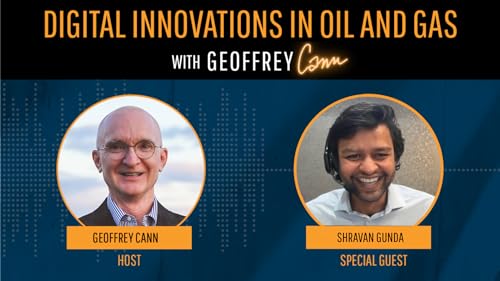
    In this episode, I'm in conversation with Shravan Gunda, CEO of Kaarvi, to discuss how a structured approach to data ingestion, anomaly detection, ETL transformation, and data lineage can reduce time-to-insight from weeks to hours. He outlines how upstream teams can standardize workflows, support governance requirements such as SOC 2, and deploy platforms either on-premises or via SaaS. Clean, trusted data is a prerequisite for accelerating analytics and enabling more advanced digital capabilities.

    👤 About the Guest

    Shravan Gunda is the CEO of Kaarvi, an enterprise data platform focused on data quality, governance, transformation, and observability. He previously worked in senior technology roles supporting national oil companies and has extensive experience managing large-scale industrial datasets across upstream environments.

    🌐 Website: Kaarvi.ai

    💼 Shravan Gunda on LinkedIn

    📊 Download the white paper: Operationalizing Agentic AI Across The Entire Data Life Cycle

    ⚒️ Additional Tools & Resources

    🎬 Go backstage and check out my studio:

    https://geoffreycann.com/mystudio/

    🎓Take my one-day digital strategy training course for oil and gas:

    https://www.udemy.com/course/digital-oil-and-gas/?referralCode=0161D4D49AB75735A185

    🔗 Connect with Me

    📘Blog series: https://digitaloilgas.substack.com/

    🎧 Podcast: https://geoffreycann.com/broadcast/

    💼 LinkedIn: https://www.linkedin.com/in/advocate-digital-innovation-for-energy/

    🐦 X: https://x.com/geoffreycann

    🎤 Contact for Lectures and Keynotes

    I speak regularly on these and related topics. Contact me to book a brief call about your upcoming event needs.

    👉 https://geoffreycann.com/contact/

    ⚠️ Disclaimer

    The views expressed in this podcast are my own and do not constitute professional advice.

    Más Menos
    35 m
  • Stranded Gas Has A Job Now: Why Pad Electrification With Gas Wins
    Feb 18 2026

    Diesel generators have long been the default answer for powering upstream and midstream oil and gas sites. They are familiar, mobile, and deeply embedded in operating practice. Even in regions with abundant natural gas, operators often rely on fleets of diesel gens to run pumps, wireline units, and auxiliary equipment, treating gas as either waste or something to move to market while importing fuel to keep operations running.

    That status quo is becoming harder to defend. Diesel is expensive, noisy, logistically complex, and increasingly misaligned with emissions rules, carbon pricing, and community expectations. Operators face growing pressure to cut operating costs, reduce flaring, and lower emissions, while still maintaining reliability in the field. Yet infrastructure change moves slowly, driven more by habit and organizational friction than by technical limits.

    In this episode I'm speaking with Michael Lawson, Vice President of Business Development at Enterprise Group, about using stranded or low-value natural gas to electrify well pads and industrial sites. We discuss replacing dozens of diesel generators with a single gas-turbine microgrid, the economics of site electrification, what kinds of gas streams can be used, and why mindset, not technology, is often the real barrier. It's a practical conversation about cost, reliability, emissions, and why electricity is quietly becoming the enabler of digital innovation in the field.

    👤 About the Guest

    Michael Lawson is Vice President of Business Development at Enterprise Group. Based in Calgary, he has more than two decades of experience across upstream and midstream oil and gas. His current work focuses on site electrification, deploying natural-gas turbines and microgrids to displace diesel power at industrial and energy work sites.

    📧 Contact Michael: michael.lawson@enterprisegrp.ca

    🌐 https://enterprisegrp.ca

    #michaelcjlawson

    ⚒️ Additional Tools & Resources

    🎬 Go backstage and check out my studio:

    https://geoffreycann.com/mystudio/

    🎓Take my one-day digital strategy training course for oil and gas:

    https://www.udemy.com/course/digital-oil-and-gas/?referralCode=0161D4D49AB75735A185

    🔗 Connect with Me

    📘Blog series: https://digitaloilgas.substack.com/

    🎧 Podcast: https://geoffreycann.com/broadcast/

    💼 LinkedIn: https://www.linkedin.com/in/advocate-digital-innovation-for-energy/

    🐦 X: https://x.com/geoffreycann

    🎤 Contact for Lectures and Keynotes

    I speak regularly on these and related topics. Contact me to book a brief call about your upcoming event needs.

    👉 https://geoffreycann.com/contact/

    ⚠️ Disclaimer

    The views expressed in this podcast are my own and do not constitute professional advice.

    Más Menos
    31 m
  • Why Data Centers Need One View Across Power, Facilities, and IT
    Feb 11 2026

    Data centers have shifted from supporting enterprise IT to running large parts of the digital economy. They now host AI model training, AI inference, and many critical digital services. As this shift accelerates, data centers are placing greater demands on power systems and operations teams. Managing energy use, uptime, and physical infrastructure has become central to how these facilities operate.

    The challenge is that data center growth is moving faster than the tools used to manage it. Many operators still depend on legacy monitoring systems and spreadsheets to understand complex environments. These approaches struggle with rising power density, sustainability targets, and security requirements. At the same time, data sovereignty and grid access are influencing where new infrastructure can be built.

    In this episode, I speak with Jad Jebara, CEO and co-founder of Hyperview, about how data center operations are changing. We discuss why cloud-native platforms are replacing legacy tools for managing power, facilities, IT, and OT systems. Jad explains how improved operational visibility supports security, efficiency, and scalability. We also explore what these shifts mean for energy companies and oil and gas producers supplying power to this growing infrastructure.

    👤 About the Guest

    Jad Jebara is the CEO and co-founder of Hyperview, a cloud-native platform designed to manage and optimize critical digital infrastructure. He is a CPA and CMA with a master's degree in professional accounting from the University of Texas at Austin. Jad previously helped scale a global hosting company from $35 million to over $600 million in revenue, overseeing large-scale infrastructure operations across multiple regions.

    🌐 https://www.hyperviewhq.com

    💼 https://www.linkedin.com/in/jadjebara/

    ⚒ Additional Tools & Resources

    🎬 Go backstage and check out my studio:

    https://geoffreycann.com/mystudio/

    🎓 Take my one day digital strategy training course for oil and gas:

    https://www.udemy.com/course/digital-oil-and-gas/?referralCode=0161D4D49AB75735A185

    🔗 Connect with Me

    🖥 Blog series: https://digitaloilgas.substack.com/

    🎧 Podcast: https://geoffreycann.com/broadcast/

    💼 LinkedIn: https://www.linkedin.com/in/advocate-digital-innovation-for-energy/

    🤬 X (formerly Twitter): https://x.com/geoffreycann

    🎤 Contact for Lectures and Keynotes

    I speak regularly on these and related topics. Contact me to book a brief call about your upcoming event needs:

    https://geoffreycann.com/contact/

    ⚠️ Disclaimer

    The views expressed in this podcast are my own and do not constitute professional advice.

    Más Menos
    33 m
  • Money Under the Mattress
    Jan 21 2026
    Oil and gas operators have always known that surplus equipment is part of doing business. Projects get cancelled. Long-lead items are over-ordered. Assets are parked in yards, warehouses, and sea cans "just in case." Over time, those decisions quietly turn into idle capital sitting on balance sheets, often forgotten until space runs out or write-downs loom. What's changed is the cost of ignoring it. Tight capital markets, tariffs, long lead times, and supply chain friction make surplus harder to justify. At the same time, operators face pressure to improve capital efficiency, demonstrate sustainability, and recover value from assets that still have useful life. Leaving equipment to rust is no longer neutral. It is a choice with a price tag. There is, however, a better way. With the right data, photos, documentation, and market reach, surplus assets can be exposed to real demand, often well beyond the local buyer network. Digital marketplaces create price discovery, expand the buyer pool across industries and geographies, and turn forgotten inventory into cash, faster than expected. In this episode, I'm joined by Xochi Schumann, an account executive in the Energy Division at Liquidity Services. We talk about why surplus builds up, why data really is money, how digital marketplaces like AllSurplus change recovery outcomes, and why many operators are discovering real value hiding in plain sight. #Surplus #InvestmentRecovery #AssetRecovery #CircularEconomy #OilAndGas #FleetManagement #AssetDisposition 🗣️ About the Guest Xochi Schumann is an account executive with Liquidity Services, working in the Energy Division. She brings more than 30 years of oil and gas experience, including a decade in operations at a turnkey drilling company, where inventory management was a core responsibility. That background gives her a practical, operator-level view of how surplus builds up and how it can be monetized. Today, she helps energy companies convert surplus equipment into liquidity through AllSurplus' global digital marketplace. 🔗 Connect with Xochi Schumann LinkedIn: https://www.linkedin.com/in/xochis email: Xochi.Schumann@liquidityservices.com website: https://liquidityservices.com/energy-surplus-asset-sales Liquidity Services: https://www.linkedin.com/company/liquidity-services-inc AllSurplus: https://www.linkedin.com/company/allsurplus ⚒️ Additional Tools & Resources: 🎬 Go backstage and check out my studio: 👉 https://geoffreycann.com/mystudio/ 🎓 Take my one day digital strategy training course for oil and gas: 👉 https://www.udemy.com/course/digital-oil-and-gas/?referralCode=0161D4D49AB75735A185 🔗 Connect with Me: 🖥️ Blog series: https://digitaloilgas.substack.com/ 🎧 Podcast: https://geoffreycann.com/broadcast/ 📇 Linkedin: https://www.linkedin.com/in/advocate-digital-innovation-for-energy/ 🤬 X: https://x.com/geoffreycann 🎤 Contact for Lectures and Keynotes: I speak regularly on these and other topics. Contact me to book a brief call about your upcoming event needs. Click here 👉 https://geoffreycann.com/contact/ ⚠️ Disclaimer: The views expressed in this podcast are my own and do not constitute professional advice.
    Más Menos
    26 m