Resumen del Editor

The Commonwealth Club of California is the nation's largest public affairs forum. The nonpartisan and nonprofit Club produces and distributes programs featuring diverse viewpoints from thought leaders on important topics. The Club's weekly radio broadcast — the oldest in the U.S., since 1924 — is carried on hundreds of stations. Our website features audio and video of our programs. This podcast feed is usually updated multiple times each week.
All rights reserved
Episodios
  • CLIMATE ONE: Two Stories That Prove Change Is Possible
    Apr 17 2026
    We are living through a time where big positive change seems unachievable, but there are two instances from the recent past that prove change is possible. For over a century, Indigenous people along the Klamath River fought to protect their way of life, and the salmon they depend on. Their persistence helped remove four dams and restore hundreds of miles of river. In Los Angeles, decades of science, activism, and policy turned toxic smog into cleaner air. Both stories reveal that progress takes persistence, coalition-building, and time. But when communities push and institutions respond, meaningful change is possible. Guests: Amy Bowers Cordalis, Yurok Tribe member, Author, The Water Remembers Ann Carlson, Professor of Environmental Law, UCLA; Author, Smog and Sunshine: The Surprising Story of How Los Angeles Cleaned Up Its Air For show notes and related links, visit ⁠https://www.climateone.org/podcasts⁠ Highlights: 00:00 – Intro 02:26 – Amy Bowers Cordalis on the river and salmon 06:63 – Amy Bowers Cordalis on Uncle Ray 12:53 – Amy Bowers Cordalis on witnessing the effects of the dams 16:04 – Amy Bowers Cordalis on the lowest salmon run 2218 – Amy Bowers Cordalis on getting to destroy the dams 28:18 – Amy Bowers Cordalis on seeing the river come back to life 34:13 – Ann Carlson on the state of LA air 37:58 – Ann Carlson on the first steps towards cleaning the air 40:14 – Ann Carlson on getting from pineapples to smog 44:27 – Ann Carlson on the Mothers of East LA 52:40 – Ann Carlson on why it the book is important now ********** Support Climate One by going ad-free! By subscribing to Climate One on ⁠Patreon⁠, you’ll receive exclusive access to all future episodes free of ads, opportunities to connect with fellow Climate One listeners, and access to the Climate One Discord. Sign up today at ⁠patreon.com/ClimateOne⁠. Ad sales by ⁠Multitude⁠. Contact them for ad inquiries at ⁠multitude.productions/ads⁠ Learn more about your ad choices. Visit megaphone.fm/adchoices
    Más Menos
    1 h
  • CLIMATE ONE: Press Start: Video Games and the Climate Crisis
    Apr 10 2026
    About half the global population spends some amount of their leisure time playing games, whether it’s a board game after dinner with friends or online role-playing experience through an alternate world. While many video and board games have long incorporated elements we can imagine in a climate-altered future — such as resource scarcity, conflict, and survival — some in the industry are working to shift players’ mindsets towards protecting nature and reducing their own climate impacts in the process. Daybreak is a cooperative board game about stopping climate change. Cities: Skylines lets players do urban planning with climate-friendly policies such as offering free public transportation or implementing congestion pricing. And the UN’s Environment Programme is backing the Playing for Planet Alliance, which awards games that spark engagement while delivering an environmental message. How can games encourage people to explore climate realities and possible futures in a way that allows greater engagement, rather than anxiety and despair? Guests: Jacob Geller, Author; Video Essayist Laura Carter, CEO and Founder, TreesPlease Games Sam Barratt, Chief of Youth, Education and Advocacy, UN Environment Programme For show notes and related links, visit https://www.climateone.org/podcasts Highlights: 00:00 – Intro 00:30 – Kousha and Ariana play a video game 05:00 – Jacob Geller on video games and climate themes 11:00 – World-building games that employ climate solutions and strategies 21:30 – Laura Carter on her early love of games and environmental issues 26:00 – LongLeaf Valley and storytelling in games 33:30 – Why build tree-planting into the gameplay 40:00 – Sam Barratt on why video games medium is so critical for engagement 46:30 – Playing for the Planet Alliance and Green Games Jam 52:00 – Why it’s important for games industry to decarbonize 58:00 – Climate One More Thing ********** Support Climate One by going ad-free! By subscribing to Climate One on ⁠Patreon⁠, you’ll receive exclusive access to all future episodes free of ads, opportunities to connect with fellow Climate One listeners, and access to the Climate One Discord. Sign up today at ⁠patreon.com/ClimateOne⁠. Ad sales by ⁠Multitude⁠. Contact them for ad inquiries at ⁠multitude.productions/ads⁠ Learn more about your ad choices. Visit megaphone.fm/adchoices
    Más Menos
    1 h y 3 m
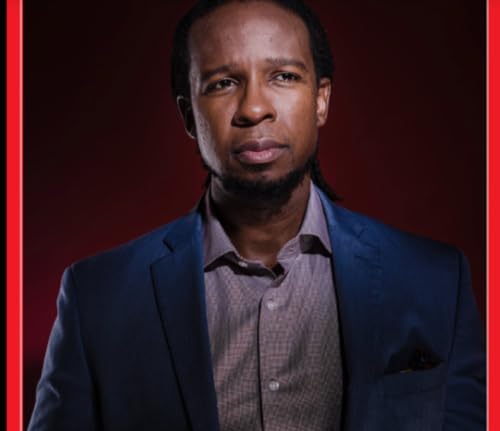
  • Dr. Ibram X Kendi: The Origins of Our Authoritarian Age
    Apr 10 2026
    What is “great replacement theory” and how did it come to be a powerful fuel for right-wing nationalist groups in the United States and around the world? When white marchers in Charlottesville, Virginia, chanted “You will not replace us,” it was probably the first time most Americans had heard the phrase. But a string of mass shooters around the world—in Oslo and Christchurch, Buffalo, El Paso, and Pittsburgh—all claimed their crimes were a defense against “white genocide.” These incidents only scratch the surface of this ascendant idea: Popular and ruling politicians in every region of the world have been expressing some version of great replacement theory, eroding democratic norms in the name of preventing demographic change and claiming to restore national greatness. Variations on the theory have been around for centuries, but it was given this name by a French novelist in 2011 who believed Black and Brown immigrants were “invading” Europe, brought there by shadowy elites to “replace” Europe’s white population. Politicians and theorists—in the United States, the United Kingdom, Germany, Chile, Hungary, Australia and elsewhere—repackaged the conspiracy as a story of “globalists” welcoming “migrant criminals” and diversity initiatives to take away the jobs, cultures, electoral power, and the very lives of white people. Over time, great replacement theory has expanded the threatened categories to include citizens, men, Jews, Christians, heterosexuals, and ethnic majorities in various countries. All are targeted with the message that they are under an existential attack that only a strongman can prevent. Ibram X. Kendi, author of the new book Chain of Ideas, returns to the Club to explore the roots of great replacement theory and its various mutations around the world. He says the controversial theory has brought humanity into this authoritarian age, but we can free ourselves from it. Come find out how. Learn more about your ad choices. Visit megaphone.fm/adchoices
    Más Menos
    1 h y 7 m
Todas las estrellas
Más relevante
This story is really important because it deals with the survival of the American experiment and a functioning democracy. Everyone should listen to this.

This story is important. Everyone should listen.

Se ha producido un error. Vuelve a intentarlo dentro de unos minutos.