Episodios

  • Episode 543 - Stan Szymanski and Susan O'Neal: What VFX Talent Actually Needs to Look Like Now
    Apr 6 2026

    The job market for visual effects and CG artists has not just contracted, it has fundamentally restructured. The skills that guaranteed a career five years ago are not the skills that will get anyone hired today, and the people who understand that shift most clearly are the ones placing talent for a living. Stan Szymanski and Susan Thurman O'Neal, arguably the two best-known recruiters working in VFX, return to CG Garage to talk with Christopher Nichols and Daniel about what is actually happening in the hiring landscape and what artists at every career stage should be doing about it.

    The conversation covers the death of the specialist assembly line, the rise of the generalist, and why there are almost no generalists left in the United States. Stan and Susan get specific: what the three open roles Susan is actively recruiting for right now tell us about where the industry is heading, why the recruiter's job today looks more like casting director than HR function, why a medieval history degree may be more valuable to an AI prompter than a Maya certification, and what both of them tell artists who want to resist AI entirely. The framing question underneath all of it is the one Sean Connery asks Kevin Costner in The Untouchables: what are you prepared to do?

    Links:

    Stan Szymanski LinkedIn >

    Susan Thurman O'Neal LinkedIn >

    Stan's previous episode (429) >

    Susan's previous episode (512) >

    Otis College of Art and Design >

    This episode is sponsored by:

    Center Grid Virtual Studio

    Kitbash 3D (Use promocode "cggarage" for 10% off)

    Más Menos
    1 h y 27 m
  • Episode 542 - Refuge VFX: How a Portland Boutique Landed Fallout, Shogun, and One Piece
    Mar 30 2026

    Portland, Oregon is not where you expect to find a VFX studio with credits on Fallout, One Piece, Shogun, and The Peripheral. Fred Ruff built Refuge VFX there anyway, starting with six freelancers crammed into an office barely big enough to breathe in, and grew it into one of the more interesting independent shops working in streaming today. The secret, if there is one, is that Refuge treats every sequence as a storytelling problem before it is ever a technical problem. On Fallout, they blocked out shots the production couldn't afford to ask for and sent them anyway. On The Peripheral, they redesigned alien characters mid-production to keep a show from looking like a Doctor Who budget episode. That is not how most VFX shops operate, and that difference is the whole point.

    This conversation with Fred and Alex Theisen, Refuge's Executive Producer, gets into how that philosophy actually runs a business, what the streaming bubble burst felt like from inside a mid-sized independent, and where AI fits into a professional VFX pipeline right now (short answer: not where clients think it does). Fred makes a sharp argument that AI is not making productions cheaper anytime soon, and that the industry's obsession with the cost question is the wrong frame entirely. Daniel Thron co-hosts.

    Links:

    Refuge VFX >

    Fallout (Amazon Prime Video) >

    Shōgun (FX/Hulu) >

    One Piece (Netflix) >

    The Peripheral (Amazon Prime Video) >

    This episode is sponsored by:

    Center Grid Virtual Studio

    Kitbash 3D (Use promocode "cggarage" for 10% off)

    Más Menos
    1 h y 26 m
  • Episode 541 - Ashay Javadekar: The Clapperboard Is 100 Years Old and Nobody Fixed It
    Mar 23 2026

    Most filmmaking tools are built by engineers who have never made a film. Ashay Javadekar has done both. A PhD chemical engineer who directed two internationally awarded independent features on shoestring budgets, he approaches filmmaking the way he approaches any hard system: find the broken process, understand it from first principles, and build something better. Eagle Slate, his iPad-based smart production slate, is the direct result of that instinct. It creates a unique audio-visual fingerprint for every take, embedding metadata directly into camera and audio files with no extra hardware, no cloud upload required, and no handwritten take sheet that someone has to reconcile in post.

    What makes the conversation with Chris worth your time is the reasoning behind the tool, not just the tool itself. Ashay traces the problem back to where the clapperboard actually came from, why it worked beautifully in the film era, and how the digital transition silently turned a solved problem into a metadata nightmare no one properly fixed. He also explains how Eagle Nest, the companion media-scanning platform, builds a writable metadata lake that connects on-set data directly to NLEs (non-linear editors) and MAMs (media asset management systems), and why he sees this as the opening move in a much larger mission: removing the technical ceiling that stops capable storytellers from iterating fast enough to get good.

    Links:

    Ashay Javadekar >

    Ashay on IMDb >

    Eagle Studio / Eagle Slate >

    Ashay's film "DNA" (2019) >

    This episode is sponsored by:

    Center Grid Virtual Studio

    Kitbash 3D (Use promocode "cggarage" for 10% off)

    Más Menos
    56 m
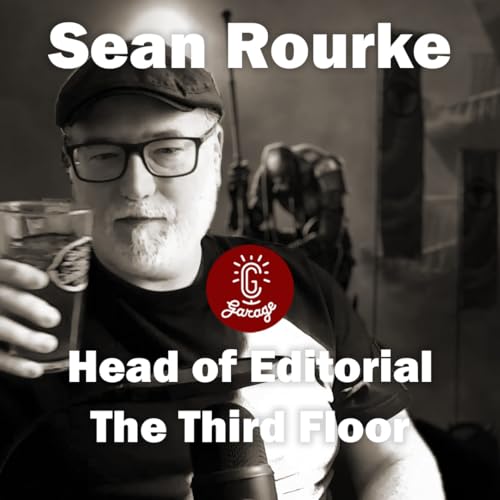
  • Episode 540 - Sean Rourke: The Third Floor and the Tuesday Night Writers Group
    Mar 16 2026

    There's a Tuesday night writers group that has quietly shaped the careers of some seriously talented people working in Hollywood right now, and CG Garage is slowly pulling back the curtain on it. Sean Rourke is the second member of that group to come on the show, following Andy Cochrane, and his path through the industry is one of the more unlikely and instructive ones you'll hear. He spent 12 years as Head of Editorial at The Third Floor, the previz studio behind some of the biggest films in production, and he got there by being the only person in the building who remembered how to unjam a three-quarter-inch tape deck. What followed was a career built on dying technology, accidental promotions, and a consistent instinct for being exactly where the creative work was happening.

    Co-host Daniel Thron and Sean dig into what previz editorial actually is and why it attracts the kind of people who want to direct, how audiences have been quietly rewired by streaming into expecting 10-hour stories and now feel cheated by a 2-hour film, and what AI tools actually look like inside a working production pipeline versus the buzzword version that investors keep funding. Sean also teaches Comic-Con Film School, a four-day filmmaking fundamentals class he has run every year for 20 straight years, and makes a sharp case for why film school still matters even when every specific tool it teaches goes obsolete. And if you follow vampire cinema at all, he runs a YouTube channel called The Vampire's Castle, just scored an interview with Jason Patric about The Lost Boys that has apparently never happened before, and is very pleased about recent awards-season developments.

    Links:

    Sean Rourke / The Vampire's Castle YouTube >

    Sean Rourke >

    The Third Floor (Previz) >

    Andy Cochrane on CG Garage >

    Ben Hansford (AI educator, USC) on CG Garage >

    This episode is sponsored by:

    Center Grid Virtual Studio

    Kitbash 3D (Use promocode "cggarage" for 10% off)

    Más Menos
    1 h y 51 m
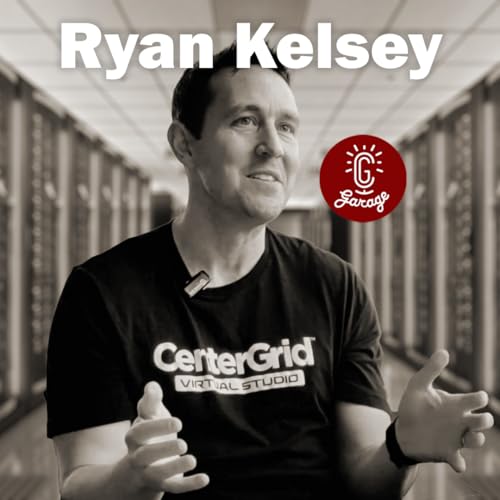
  • Episode 539 - Ryan Kelsey on Why Boutique Cloud is the Secret Weapon for Indie VFX Studios
    Mar 9 2026

    Most people who end up in VFX spent years obsessing over frames and film. Ryan Kelsey spent 13 years in telecom in Cincinnati, selling fiber and managed IT services, before stumbling into an industry where studios win Oscars and go bankrupt in the same month. That collision of worlds turns out to be exactly the perspective the business needs right now.

    Ryan is VP of Sales at Center Grid Virtual Studio, and his outsider's eye cuts through a lot of the noise around cloud infrastructure for creative studios. Why are small VFX shops still running overheating GPU racks in their back offices? Why does a freelancer getting a big render job have nowhere obvious to turn? Why does everyone talk about AI compute without knowing what they're actually doing with it? This conversation, recorded live at the HPA (Hollywood Professional Association) Tech Retreat, ranges from the broken economics of fixed-bid VFX work to what a genuinely boutique cloud partner looks like compared to the AWS-sized behemoths, to Chris's teenage son dragging his friends to see Chainsaw Man while the industry insists nobody goes to the movies anymore.

    Links:

    Ryan Kelsey LinkedIn >

    Center Grid Virtual Studio >

    HPA Tech Retreat >

    Scott Ross book >

    This episode is sponsored by:

    Center Grid Virtual Studio

    Kitbash 3D (Use promocode "cggarage" for 10% off)

    Más Menos
    1 h y 12 m
  • Episode 538 - Jess Loren on Gaussian Splats, AI Actors, and the Real Future of Virtual Production
    Mar 2 2026

    Jess Loren has built one of the most-followed voices in the entertainment technology space on LinkedIn, and she has earned it by calling industry shifts before they become consensus. Her read on Gaussian splats as a genuine production tool, not a novelty, is proving correct. As co-founder of Global Objects and a board member of the Visual Effects Society, Jess has spent the last year turning that conviction into working pipelines: partnering with XGrid as California's media and entertainment distributor, building Go Scout for collaborative splat-based location scouting, and installing a virtual production wall inside ISS (Independent Studio Services) where filmmakers can shoot a full day on LED for $6,000, props included.

    Recorded live at the HPA (Hollywood Professional Association) Tech Retreat in Palm Springs, this conversation covers why polygons are giving way to splats, how AI is quietly restructuring VFX workflows, the uncomfortable reality of synthetic actors and deepfake-flooded social feeds, and what happens when a research lab asks you to find 40,000 random objects for training data and you realize the answer is a prop house. Jess also breaks down Global Objects' partnership with ISS to digitize the world's largest prop library, creating 3D assets destined for Fab, Turbo Squid, and eventually, robot training sets.

    //links//

    Jess Loren on LinkedIn >

    Global Objects >

    Independent Studio Services (ISS) >

    XGrid >

    Visual Effects Society >

    HPA Tech Retreat >

    This episode is sponsored by:

    Center Grid Virtual Studio

    Kitbash 3D (Use promocode "cggarage" for 10% off)

    Más Menos
    Aún no se conoce
  • Episode 537 - Lights, Camera, VidViz! Richard Crudo Joins Chris and Daniel to Plan Our Western: June July
    Feb 23 2026

    Here is a radical idea: what if you rehearsed the movie before you shot it? Not storyboards. Not an animatic. Live actors, real cameras, and actual creative decisions being made in the room. That is what Chris Nichols and Daniel Thron have been doing on June July, and cinematographer Richard Crudo, ASC joined them to find out if it actually works.

    Richard brings perspective from the Coen Brothers' dime-store ingenuity on Raising Arizona (yes, an Arri 2C strapped to a two-by-four), decades navigating the film-to-digital transition, and a long-standing argument that the industry has built a priesthood around tech complexity that actively gets in the way of the story. What he found in the VidViz sessions was the opposite: a blue screen, a rough key in OBS, and a team moving fast enough to make creative breakthroughs that quietly rewrote the arc of the entire film. One actor's performance changed the screenplay without changing a single line of dialogue. That kind of discovery does not happen in a pipeline. It happens in a room.

    Links:

    Monstrous Moonshine >

    Richard Crudo on IMDB >

    Chaos Vantage >

    Chaos Arena >

    This episode is sponsored by:

    Center Grid Virtual Studio

    Kitbash 3D (Use promocode "cggarage" for 10% off)

    Más Menos
    1 h y 7 m
  • Episode 536 - Stop Waiting for the Studio to Save You: Andy Cochrane on the New Media Frontier
    Feb 16 2026

    Why are we still waiting for a green light from people who do not understand our craft? This reality is at the heart of our conversation with Andy Cochrane, a creative who has spent twenty years navigating the collapsing bridges of the entertainment industry. Andy takes us through the trenches of his career, from the grueling 70-hour weeks as a runner on CSI: Miami to the high-stakes visual effects world of Asylum and Terminator Salvation. We discuss the hard realization that being a "button pusher" in a massive pipeline is no longer a safe bet, and why the most vital work is now happening in the "weird stuff" between traditional film and immersive technology.

    The future of storytelling belongs to the tactical generalists who are willing to build their own labs rather than wait for a studio to discover them. We look at how Markiplier bypassed the traditional, expensive studio marketing machine by leveraging his own fanbase to bring Iron Lung to life, and why artist-driven projects like Everything Everywhere All at Once have become the new blueprint for success. Andy breaks down his current mission in Santa Monica, where he is bypassing traditional distribution models to create "Loud Movies," an open-source medium that prioritizes human experience over corporate commodification. It is a deep dive into why the most important tool in your kit isn't a new piece of software, but the willingness to keep moving while the building collapses around you.

    The CG Pro Show >

    Andy Cochrane on LinkedIn >

    Andy Cochrane on IMDB >

    Mark Duplass: The Cavalry is not Coming >

    This episode is sponsored by:

    Center Grid Virtual Studio

    Kitbash 3D (Use promocode "cggarage" for 10% off)

    Más Menos
    1 h y 49 m