Episodios

  • #133 - Build the Learning Machine: AI Adoption, Flow Metrics, and the Future of the CTO Role with Eric Bowman
    Dec 15 2025
    Eric Bowman (CTO @ King.com, previously CTO at TomTom and VP Engineering at Zalando) returns to the alphalist podcast to unpack what “agentic engineering” really means in practice—and how to introduce it to teams without turning it into a mandate. We talk about the uncomfortable trade-offs behind “YOLO mode” tooling, why adoption should feel voluntary even when you set explicit goals (like “five AI-assisted commits” as a company-level key result), and why the real opportunity isn’t just faster coding—it’s building a learning system that relentlessly reduces time-to-learning and time-to-value. The conversation spans practical rollout patterns, DORA/value-stream thinking, Toyota’s Andon-cord mindset applied to software, multi-agent decision support with MCP, and why the CTO role may keep converging with product as AI pushes organizations to optimize for iteration speed over output volume.
    Más Menos
    57 m
  • #132 - Clarity Over Tooling: Velocity & Building Teams Without Drama with Loïc Houssier // CTO @ Superhuman Mail
    Nov 27 2025
    What drives execution velocity—better tools or better clarity? Loïc Houssier, CTO of Superhuman Mail (post-Grammarly acquisition), argues that most velocity problems stem from unclear team missions, not inadequate tooling. From steering DocuSign's French acquisition through complex carve-out negotiations to building Superhuman's offline-first architecture with a 100-millisecond interaction rule, Loïc shares hard-won lessons about engineering metrics that actually matter (PR per engineer per week trends over absolutes), when to resist microservices (until it's genuinely painful), and why promotion frameworks determine product quality. Technical leaders will learn how vertical team alignment eliminates dependencies, why guild structures maintain consistency without blocking speed, and how European safety nets create under-appreciated opportunities for technical risk-taking.
    Más Menos
    54 m
  • #131 - AI Product Strategy: When to Build and When to Wait with Matthias Keller // CPO @ Kayak
    Nov 13 2025
    Matthias Keller, Chief Product Officer at Kayak, shares hard-won lessons about AI product strategy and knowing when to invest in emerging platforms. With a PhD in computer engineering from ETH Zurich and 12 years at Kayak, Matthias has lived through multiple waves of AI hype—from Alexa voice skills in 2016 to today's LLM revolution. He discusses the strategic calculus of early platform bets, the painful lessons from experiments that didn't pan out, and how to recognize when technology has truly shifted. The conversation covers navigating distribution challenges when competing with giants like Google and ChatGPT, balancing first-mover advantage with execution realities, and how LLMs are democratizing AI development for engineering teams. Matthias emphasizes the critical framework: "if you build it, they may come—if you don't build it, they won't come."
    Más Menos
    52 m
  • #130 - From PhD Research to DuckDB: Building the Next Generation of Analytical DBs with Mark Raasveldt // CTO @ DuckDB
    Oct 16 2025
    Mark Raasveldt, co-founder and CTO of DuckDB Labs, shares his journey from academic research at CWI Amsterdam to creating one of the most innovative analytical databases of the last decade. Mark discusses the technical challenges of building DuckDB from scratch, the philosophy behind embedded analytical databases, and why single-node performance still matters in our cloud-first world. He provides insights into open source business models, the evolution of data formats like Parquet, and how DuckDB is democratizing high-performance analytics for developers everywhere.
    Más Menos
    53 m
  • #129 - $32B Lessons: Building CTO Teams, Rapid Innovation, and Staying Customer-Connected with Solal Raveh
    Sep 18 2025
    What does it take to build a company worth $32 billion? Solal Raveh, CTO Product Infrastructure at Wiz, shares hard-won lessons from scaling technical teams during one of the fastest-growing security companies in history. Learn how Wiz evolved their CTO office from traditional team building to rapid innovation incubation, why geographic team cloning failed spectacularly, and how staying customer-connected drives product decisions. Discover the three-fold mission of modern CTO roles, the shift from measuring finished features to tracking innovation velocity, and why technical leaders must balance automation expertise with people-first thinking. Technical leaders will gain insights into organizing global remote teams around domain expertise, implementing 3-hour threat response cycles, and building enterprise-ready infrastructure while maintaining startup agility.
    Más Menos
    48 m
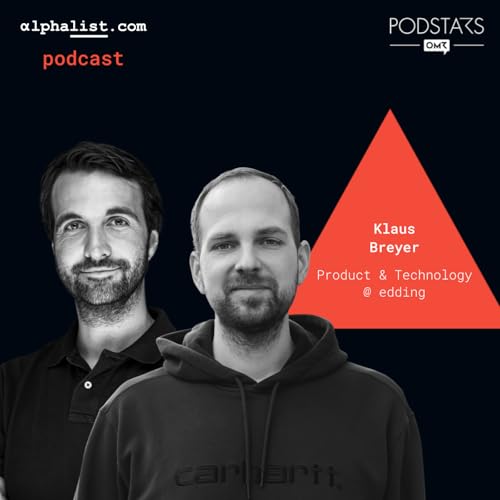
  • #128 - From Tickets to Problems: Klaus Breyer // Head of Product & Technology @ Edding
    Sep 4 2025
    You know how agile transformations always promise better collaboration but somehow teams end up chasing tickets like a factory assembly line? Klaus Breyer from Edding has some thoughts on why this keeps happening—and what actually works instead. Klaus's path to leading product and technology at Germany's most famous pen company wasn't exactly traditional. Before Edding, he spent years managing 40-person World of Warcraft raids (yes, really) and running startups. Now he's applying those lessons to build software teams that actually solve problems instead of just completing tasks. The conversation digs into Shape Up methodology, but more importantly, Klaus explains the mindset changes needed to stop treating software development like an assembly line. His team at Edding has built some pretty cool stuff too—like a B2B driver license verification system using invisible conductive ink that smartphones can read. What you'll learn: • Why "give me a ticket" thinking kills collaboration (even in tiny teams) • How 6-week cycles help teams focus on one problem without distractions • The art of separating problems from solutions before jumping into code • Why late-stage compromises usually mean your team isn't really collaborating • When senior teams can ditch tickets entirely and just... work • Klaus's templates for getting everyone aligned on what problems are worth solving
    Más Menos
    56 m
  • #127 - Kelsey Hightower's Unfiltered Truths: 25 Years of Infrastructure, DevOps, and Retiring at 42
    Aug 7 2025
    What happens when a distinguished engineer who shaped the cloud-native landscape decides to retire at 42? Kelsey Hightower, a pivotal figure in the Kubernetes community and former Google engineer, shares brutally honest insights from his 25-year journey. This isn't a conversation about the next hype cycle; it's a masterclass in the timeless principles of infrastructure, maintenance, and technical strategy. From the fallacy of technology replacement to the hard business realities that should drive engineering decisions, Kelsey provides a minimalist's guide to navigating complexity. Learn why most companies should embrace managed services, why engineers who can't link commits to revenue are at risk, and what the future of AI really means for the systems we build and maintain. Technical insights for CTOs and engineering leaders: - 🏗️ System Accumulation: Why new technology rarely replaces the old, leading to a complex, multi-generational stack that must be maintained. - ☁️ Managed Services: The economic and expertise-driven argument for outsourcing infrastructure management. - 🔄 Evolutionary Architecture: How to avoid the trap of making permanent technology decisions on day one. - 💰 Business-Driven Engineering: The critical need for engineers to understand revenue, and for CTOs to use business metrics to guide technical priorities. - 🤖 The AI Reality: A grounded take on how AI will impact software, and the fundamental system evolution required for it to reach its true potential."
    Más Menos
    1 h y 1 m
  • #126 - AI Transformation at Scale: Practical Adoption Across 150+ Engineers with Peter Gostev // Head of AI @ Moonpig
    Jul 24 2025
    How do you drive meaningful AI transformation across 150 software engineers without mandates or force? Peter Gostev, Head of AI at Moonpig, reveals the technical strategies and organizational approaches behind scaling AI adoption from 130 to 400+ users while navigating the gap between industry hype and implementation reality. From managing complex integration challenges where 80% of AI projects involve traditional software engineering to implementing three-pillar strategies (tool adoption, automation workflows, experimental features), Peter shares hard-earned insights on building AI capabilities through process re-engineering rather than simple automation. Technical insights for CTOs and engineering leaders: • 🏗️ Portfolio approach: balancing quick wins with experimental high-impact projects • ⚡ Prototype-first methodology for validating AI solutions before full development • 🤖 Reality gap between agentic AI hype and production deployment complexity • 👥 Organic adoption strategies that scale without top-down mandates • 🔧 Custom GPT frameworks for non-technical subject matter experts • 📊 Why most AI work is integration, scaffolding, and deployment—not just AI • 🔄 Process re-engineering with AI: changing workflows rather than automating existing inefficiencies
    Más Menos
    1 h y 6 m