Episodios

  • Episode 271: The Wild Pantry, Part III - Dehydrating and Drying
    Apr 14 2026
    Summary: Explore the ancient and modern techniques of drying and dehydrating food, its scientific principles, and practical applications in wild food lifestyle. Learn how to preserve, enhance, and utilize wild ingredients through drying methods. - ⁠⁠⁠⁠⁠⁠⁠⁠⁠⁠Leave a Review of the Podcast⁠⁠⁠⁠⁠⁠⁠⁠⁠⁠ - ⁠⁠⁠⁠⁠⁠⁠⁠⁠⁠Buy our Wild Fish and Game Spices⁠⁠⁠⁠⁠⁠⁠⁠⁠⁠ ⁠⁠⁠⁠⁠⁠⁠⁠⁠⁠The Art of Venison Sausage Making ⁠⁠⁠⁠⁠⁠Recipes: ⁠Lone Star Jerky⁠ ⁠Maple Whisky Trout Jerky⁠ ⁠How to Make Heart Jerky⁠ ⁠Kimi’s Kitchen Cookbook⁠ Chapters: 00:00 The Art of Drying: A Historical Perspective 03:10 Scientific Principles of Drying Food 06:09 Modern Techniques for Food Drying 08:57 Safety and Nutritional Aspects of Dried Foods 12:14 Practical Applications: Drying Wild Game and Fish 24:29 The Art of Drying Mushrooms 27:45 Exploring Dehydrated Ingredients 30:04 Jerky: A Versatile Snack 32:50 Creative Jerky Recipes 36:05 Innovative Drying Techniques 39:02 Mushroom Drying Essentials 42:29 Cured and Smoked Fish Recipes Takeaways: History and cultural significance of drying food Scientific principles behind drying and water activity Techniques and equipment for drying food at home Food safety considerations in drying and dehydrating Enhancing flavor and nutrition through drying Keywords: Food preservation, drying, dehydrating, wild food, food science, jerky, mushrooms, fish, food safety, culinary techniques Added clips: How Does Freeze Drying Work? Safely Dehydrating and Freeze Drying Foods Learn more about your ad choices. Visit megaphone.fm/adchoices
    Más Menos
    48 m
  • Episode 270: The Wild Harvest Report - April 2026
    Apr 9 2026
    Summary: A comprehensive overview of April's seasonal activities across North America, focusing on hunting, fishing, foraging, and cooking wild foods. The report highlights regional differences, key species in season, and practical tips for outdoor enthusiasts and cooks. - ⁠⁠⁠⁠⁠⁠⁠⁠⁠⁠Leave a Review of the Podcast⁠⁠⁠⁠⁠⁠⁠⁠⁠⁠ - ⁠⁠⁠⁠⁠⁠⁠⁠⁠⁠Buy our Wild Fish and Game Spices⁠⁠⁠⁠⁠⁠⁠⁠⁠⁠ ⁠⁠⁠⁠⁠⁠⁠⁠⁠⁠The Art of Venison Sausage Making⁠⁠⁠⁠⁠⁠⁠⁠⁠⁠ Chapters: 00:00 Introduction to Wild Harvesting and Seasonal Changes 01:07 April's Momentum: Spring Awakens 02:35 Southeast Fishing and Foraging Insights 04:01 Deep South: Refining Patterns in Nature 05:25 Rocky Mountain Transitions: Spring's Arrival 06:51 Midwest: Ice Out and New Opportunities 07:22 Northeast: Transitioning into Spring 08:25 Canada's April: A Month of Transition 09:08 Foraging Summary and Kitchen Reflections Takeaways: Seasonal wildlife activity in April Regional differences in hunting and fishing Foraging for wild greens and mushrooms Cooking with fresh wild ingredients Keywords: Wild food, hunting, fishing, foraging, spring season, North America, wildlife, recipes, conservation, outdoor activities Learn more about your ad choices. Visit megaphone.fm/adchoices
    Más Menos
    12 m
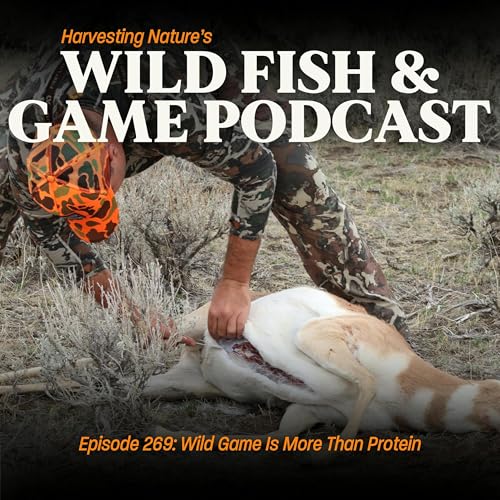
  • Episode 269: Wild Game Is More Than Protein
    Mar 31 2026
    Summary: This episode explores the full value of wild animals beyond just protein, emphasizing traditional and cultural uses of all animal parts, including fat, marrow, organs, and connective tissues. It highlights how modern diets and hunting practices can benefit from a holistic approach to animal utilization. - ⁠⁠⁠⁠⁠⁠⁠⁠⁠⁠Leave a Review of the Podcast⁠⁠⁠⁠⁠⁠⁠⁠⁠⁠ - ⁠⁠⁠⁠⁠⁠⁠⁠⁠⁠Buy our Wild Fish and Game Spices⁠⁠⁠⁠⁠⁠⁠⁠⁠⁠ ⁠⁠⁠⁠⁠⁠⁠⁠⁠⁠The Art of Venison Sausage Making⁠⁠⁠⁠⁠⁠⁠⁠⁠⁠ Chapters: 00:00 The Value of the Whole Animal 02:05 Cultural Shifts in Protein Consumption 05:25 Historical Perspectives on Animal Parts 09:26 The Importance of Fat and Connective Tissue 18:28 Nutritional Insights Beyond Muscle Meat 25:30 The Broader Nutritional Spectrum 32:03 Practical Applications in Cooking Takeaways: Full animal utilization in hunting and cooking Historical and cultural perspectives on animal parts Nutritional benefits of offal, marrow, and connective tissue Keywords: Wild game, full animal utilization, traditional cuisine, connective tissue, collagen, offal, nutrition, hunting, cooking techniques References: International Food Information Council — 2023 Food & Health Survey USDA — Dietary Guidelines for Americans Vilhjalmur Stefansson — The Fat of the Land Cordain et al., American Journal of Clinical Nutrition — Evolutionary diets research Khatri M, et al. 2021. The effects of collagen peptide supplementation on body composition, collagen synthesis, and recovery from joint injury and exercise: a systematic review. Campos LD, et al. 2023. Collagen supplementation in skin and orthopedic diseases: A review of the literature. Latoch A, et al. 2024. Edible Offal as a Valuable Source of Nutrients in the Diet—A Review. Fuerniss HF, et al. 2024. Nutrient Analysis of Raw United States Beef Offal Items. Joy JM, et al. 2024. A Review on Fish Skin-Derived Gelatin. de Paz-Lugo P, et al. 2018. High glycine concentration increases collagen synthesis…McCarty MF, et al. 2018. Dietary Glycine Is Rate-Limiting for Glutathione Synthesis… Learn more about your ad choices. Visit megaphone.fm/adchoices
    Más Menos
    34 m
  • Episode 268: Wild American Foodscapes - Newfoundland
    Mar 24 2026
    Summary: Justin and Adam explore Newfoundland's unique food landscape shaped by environmental constraints, historical fishing practices, and cultural resilience. From wild fish and seal to the impact of ecological management and market forces, discover how this remote island balances abundance with sustainability. - ⁠⁠⁠⁠⁠⁠⁠⁠⁠⁠Leave a Review of the Podcast⁠⁠⁠⁠⁠⁠⁠⁠⁠⁠ - ⁠⁠⁠⁠⁠⁠⁠⁠⁠⁠Buy our Wild Fish and Game Spices⁠⁠⁠⁠⁠⁠⁠⁠⁠⁠ ⁠⁠⁠⁠⁠⁠⁠⁠⁠⁠The Art of Venison Sausage Making Special Guests Mark Kurlansky Lori McCarthy⁠⁠⁠⁠⁠ Jenn Shears Chapters 00:00 The Landscape of Newfoundland's Food System 02:09 Historical Context of Indigenous Food Practices 04:58 The Impact of European Arrival on Food Systems 07:05 The Role of Seal in Newfoundland's Culture and Economy 10:47 Wildlife Management and Public Perception 13:10 The Nutritional Value of Seal Meat 16:59 The Collapse of the Cod Fishery and Its Aftermath 21:46 Migration and Shifts in Food Systems 24:13 Resilience and Continuity in Food Practices 26:56 Sustainable Eating in Newfoundland Takeaways: Environmental constraints shaping food systems Historical and cultural significance of fishing and hunting Impact of policies on local food and economy Keywords: Newfoundland, wild food, seal hunting, cod fishery, sustainable fishing, food culture, ecological management, wild game, food preservation, ocean health Learn more about your ad choices. Visit megaphone.fm/adchoices
    Más Menos
    30 m
  • Episode 267: What If the Grocery Stores Didn’t Open Tomorrow?
    Mar 10 2026
    Summary: Explore the fragility of our food systems and the importance of community resilience. This episode examines historical and modern disruptions to food supply, the interconnectedness of grocery stores, and how hunters and individuals can prepare for potential crises. - ⁠⁠⁠⁠⁠⁠⁠⁠⁠⁠Leave a Review of the Podcast⁠⁠⁠⁠⁠⁠⁠⁠⁠⁠ - ⁠⁠⁠⁠⁠⁠⁠⁠⁠⁠Buy our Wild Fish and Game Spices⁠⁠⁠⁠⁠⁠⁠⁠⁠⁠ ⁠⁠⁠⁠⁠⁠⁠⁠⁠⁠The Art of Venison Sausage Making⁠⁠⁠⁠⁠⁠⁠⁠⁠⁠ Chapters: 00:00 The Thought Experiment: What if Grocery Stores Closed? 02:08 Historical Stress Tests: The Great Depression and WWII 04:00 COVID-19 and the Distribution Shock 06:14 The Ecosystem of Grocery Supply Chains 07:28 Personal Food Security: What Do You Have? 08:27 The Global Network Behind Local Groceries 11:16 Relying on Pantry Staples and Local Food 13:45 The Importance of Seeds and Salt for Resilience 15:01 Environmental Factors and Food Accessibility 16:44 Week One: Managing Food with Pantry and Freezer 17:34 Hunters and Overharvesting Risks 19:26 Wildlife and Ecosystem Impact of Food Crises 21:24 Human Behavior and Law in Crisis Situations 24:10 The Limits of Hunting and Food Independence 27:36 Long-Term Food Scarcity and Agriculture Challenges 30:29 Traditional Food Preservation Techniques 32:20 Reviving Cultural Food Skills for Resilience 36:28 Community Over Individualism in Crises 39:18 The Future of Food Security and Cultural Memory Takeaways: Our food system works because it operates constantly; any interruption cracks the foundation. Grocery stores are complex ecosystems, not just buildings, reliant on global logistics and infrastructure. In crises, reliance on local skills like hunting, gardening, and food preservation becomes crucial. Community cooperation and shared knowledge are key to resilience in food security. Practicing traditional food preservation techniques strengthens cultural memory and preparedness. Keywords: Food security, grocery stores, resilience, hunting, self-reliance, supply chain, community, wild food, crisis preparedness, sustainability Learn more about your ad choices. Visit megaphone.fm/adchoices
    Más Menos
    39 m
  • Episode 266: The Wild Harvest Report - March 2026
    Mar 3 2026
    Summary: The March Food for Field Bulletin discusses the seasonal shifts in hunting, fishing, and foraging across North America, highlighting the transition from winter to spring. It covers regional variations in wildlife activity, migration patterns, and culinary adaptations as fresh ingredients become available. - ⁠⁠⁠⁠⁠⁠⁠⁠⁠⁠Leave a Review of the Podcast⁠⁠⁠⁠⁠⁠⁠⁠⁠⁠ - ⁠⁠⁠⁠⁠⁠⁠⁠⁠⁠Buy our Wild Fish and Game Spices⁠⁠⁠⁠⁠⁠⁠⁠⁠⁠ ⁠⁠⁠⁠⁠⁠⁠⁠⁠⁠The Art of Venison Sausage Making ⁠⁠⁠⁠⁠⁠⁠⁠⁠⁠ Recipes: Green Chile Snow Goose Burgers Korean Snow Goose Potstickers (Mandu) Instant Pot “Pot Likker” Venison and Spring Greens Braised Duck Soupy Rice with Chopped Greens and Mushrooms Stewed Dandelion Greens with Chickpeas and ‘Nduja Chapters: 00:00 Introduction to March's Wild Harvest Report 03:06 Southeast and Deep South Seasonal Changes 05:52 Southwest and Rockies: Transitioning Conditions 09:14 Pacific Northwest and Midwest Migration Patterns 09:47 Northeast and Canada: Winter's Last Grasp Takeaways: March is a transition month for wildlife and foragers. Turkey season opens in parts of the Southeast. Predator movement increases with breeding seasons. Peak snow goose migration occurs in March. Wind affects hunting and fishing strategies. March is wet in the Pacific Northwest, aiding productivity. Snow goose conservation seasons dominate in the Midwest. Ice fishing continues where conditions are safe. Culinary practices shift from winter to spring ingredients. March is a transitional kitchen month, blending old and new. Keywords: March, hunting, fishing, foraging, seasonal shifts, wildlife, migration, cooking, conservation Learn more about your ad choices. Visit megaphone.fm/adchoices
    Más Menos
    11 m
  • Episode 265: The Wild Pantry, Part II - Salting and Curing
    Feb 26 2026
    Summary In this episode, Justin Townsend and Adam Berkelmans explore the ancient art of food preservation through salting and curing. They discuss the historical significance of salting, the science behind how it works, and practical applications for home cooks. The conversation delves into the unique considerations for salting fish, the impact of salt on texture and flavor, and the importance of precision in curing. They emphasize that while salting and curing can enhance food, they require careful attention and quality ingredients. The episode concludes with a focus on integrating these techniques into a modern wild pantry approach. - ⁠⁠⁠⁠⁠⁠⁠⁠⁠⁠Leave a Review of the Podcast⁠⁠⁠⁠⁠⁠⁠⁠⁠⁠ - ⁠⁠⁠⁠⁠⁠⁠⁠⁠⁠Buy our Wild Fish and Game Spices⁠⁠⁠⁠⁠⁠⁠⁠⁠⁠ ⁠⁠⁠⁠⁠⁠⁠⁠⁠⁠The Art of Venison Sausage Making⁠⁠⁠⁠⁠⁠⁠⁠⁠⁠ Links How To: DIY Cure Chamber Chapters 00:00 The Art of Food Preservation 05:19 Understanding the Science of Salting 13:23 Practical Applications of Salting at Home 21:09 Salting Fish: Unique Considerations 29:42 The Impact of Salting on Texture and Flavor 37:27 Curing and Salting: A Wild Pantry Approach Takeaways You can preserve food without electricity. Salting was historically about keeping food stable, not just flavor. Curing requires precision and measurement, not guesswork. Salt controls water activity, inhibiting microbial growth. Dry brining is an accessible method for home cooks. Fish responds to salt faster than red meat. Curing and salting require attention and intention. Quality of ingredients is crucial for successful curing. Salt can enhance flavor and texture in cooking. Freezing and salting are complementary preservation methods. Keywords Food preservation, curing, salting, wild game, fish, home cooking, food safety, preservation methods, salting science, wild pantry Learn more about your ad choices. Visit megaphone.fm/adchoices
    Más Menos
    43 m
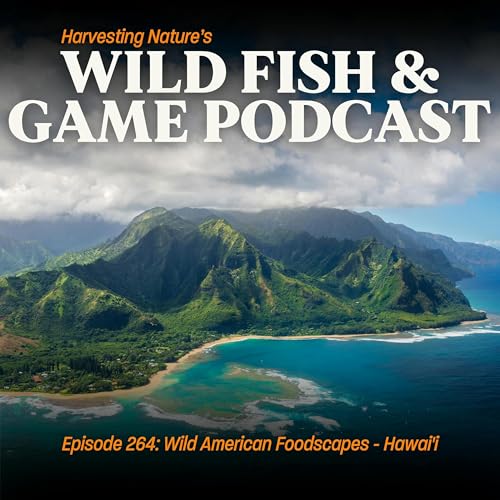
  • Episode 264: Wild American Foodscapes - Hawai'i
    Feb 19 2026
    Summary Justin and Adam are joined by several guests for a conversation exploring the intricate relationship between food and culture in Hawaii, emphasizing the historical significance of traditional practices, the impact of introduced species, and ongoing efforts to revive indigenous food systems. They highlight the importance of sustainability, stewardship, and the cultural memory embedded in food practices, while addressing the challenges posed by modern dependency on imported food. - ⁠⁠⁠⁠⁠⁠⁠⁠⁠⁠⁠Leave a Review of the Podcast⁠⁠⁠⁠⁠⁠⁠⁠⁠⁠⁠ - ⁠⁠⁠⁠⁠⁠⁠⁠⁠⁠⁠Buy our Wild Fish and Game Spices⁠⁠⁠⁠⁠⁠⁠⁠⁠⁠⁠ ⁠⁠⁠⁠⁠⁠⁠⁠⁠⁠⁠The Art of Venison Sausage Making Special Guests Lei Wann Kealoha Domingo Audrey Wilson Chapters 00:00 The Ancient Connection of Food and Land in Hawaii 01:23 Understanding Hawaii's Food Landscape 02:15 The Significance of Taro and Poi 04:11 Polynesian Agricultural Innovations 06:24 The Impact of Introduced Species on Ecosystems 08:45 Cultural Practices in Foraging and Hunting 10:47 Traditional Aquaculture and Food Evolution 11:17 The Practicality of Poke and Food Waste 13:41 Seasonal Gathering and Environmental Awareness 16:59 Historical Shifts in Food Sovereignty 19:24 Food Memory and Practical Sovereignty 21:41 The Fragility of Hawaii's Food Systems 24:53 The Importance of Cultural Practices in Conservation 26:48 Reviving Traditional Knowledge and Practices 28:56 Supporting Local Food Systems 30:11 The Tension of Food Dependency in Modern Hawaii Takeaways Hawaii's food culture is deeply intertwined with its land and history. Taro and poi are central to Hawaiian identity and genealogy. Polynesian settlers created sophisticated agricultural systems. Introduced species have drastically altered Hawaii's ecosystems. Foraging practices reflect a deep respect for nature and conservation. Aquaculture has ancient roots in Hawaiian culture. Poke originated from practical uses of fish, minimizing waste. Seasonal changes dictate gathering practices and food availability. Food sovereignty has been compromised by historical shifts in land control. Cultural practices are essential for conservation and sustainability. Keywords Hawaii, food culture, indigenous practices, sustainability, taro, poi, aquaculture, food sovereignty, cultural revival, environmental awareness Music Pauoa Like Ka Lehua, Raymond Kane Ulupalakua, Ku'ulei's Own Hole Waimea (mele hula), Kaulaheaonamiku Kiona Fair Hawaii, Tony Ku with Tomomi Sugiura Learn more about your ad choices. Visit megaphone.fm/adchoices
    Más Menos
    34 m