

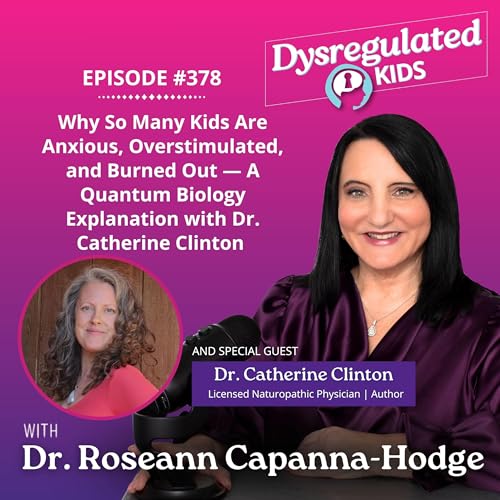
Why So Many Kids Are Anxious, Overstimulated, and Burned Out — A Quantum Biology Explanation with Dr. Catherine Clinton | Emotional Dysregulation | E378
No se pudo agregar al carrito
Add to Cart failed.
Error al Agregar a Lista de Deseos.
Error al eliminar de la lista de deseos.
Error al añadir a tu biblioteca
Error al seguir el podcast
Error al dejar de seguir el podcast

Why So Many Kids Are Anxious, Overstimulated, and Burned Out — A Quantum Biology Explanation with Dr. Catherine Clinton | Emotional Dysregulation | E378
-
Narrado por:
-
De:
Discover why so many kids are anxious, overstimulated, and burned out through a quantum biology lens with Dr. Catherine Clinton. Learn practical insights to support emotional regulation, guided by Dr. Roseann Capanna-Hodge, expert in Regulation First Parenting™ and childhood dysregulation.
So many parents feel exhausted watching their children struggle with racing thoughts, sensory overload, and anxious feelings. You’re not alone—kids today are navigating a world far more overstimulating than when we were growing up, and parental burnout is real.
In this episode, I discuss with Dr. Katherine Clinton about small, actionable steps parents can take to improve emotional regulation, sleep, and overall mental health for their children and themselves.
Why do so many kids feel burnt out and overwhelmed today?
The modern world is relentless. Screens, schedules, and constant stimulation leave young people with 30 “tabs” open in their heads. Dr. Clinton explains that quantum biology—how energy from light, sound, and electromagnetic fields impacts our bodies—helps us understand why children are more anxious and struggling with mood, focus, and sleep.
Takeaways:
- Children practice self-regulation naturally when they experience stillness and boredom—a step many mental health professionals say helps prevent racing thoughts and panic attacks.
- Daily physical activity outdoors supports neurotransmitters like serotonin and dopamine, helping kids focus and feel calm. This also gives parents the chance to tend to their own needs, which is essential if you want to be a better parent.
- Feeling burnt out isn’t a moral failing—it’s a normal reaction to overstimulation.
Parent example: A fifth grade student who played outside daily felt calmer and less irritable compared to peers who spent all their free time on screens.
How can sleep and light affect children’s emotional health?
Sleep and circadian rhythm are foundational for regulating mood, immune function, and inflammation.
When children get enough restorative sleep, it creates a sense of stability that supports their life at home, at school, and in relationships. Poor sleep can lead to depression or other challenges that are more than just a phase—they are not a normal part of healthy development.
Morning sunlight exposure cues dopamine and serotonin, while evening red or infrared light supports mitochondrial function and restorative sleep. Overexposure to blue light at night can decrease melatonin by 90%, disrupting bedtime routines and creating racing thoughts at night.
Tips:
- Go outside in natural light within 30 minutes of waking.
- Reduce overhead lights and screens before bed; consider blue light blocking glasses.
- Use warm, red-toned lights in the evening to cue relaxation.
Parent example: Parents who swapped overhead lights for salt lamps and dimmed screens noticed children sleeping deeper and